

Sports
Fantasy football waiver wire: The key players to add before Week 2


Things change quickly in fantasy football, and ESPN is here to help. Each Monday, before the current NFL week ends, we will identify players available in at least 50% of ESPN standard leagues worthy of your attention, from standard formats to deeper options. The NFL is a weekly league, and player valuation and roles seldom remain stagnant, for positive and negative. It does not matter how you acquire players for your championship fantasy rosters, just that you get them.
Quarterback
Michael Penix Jr., Atlanta Falcons (rostered in 20% of ESPN leagues): The Falcons probably don’t want Penix to routinely throw 42 times a week, but he was up to the task in Sunday’s loss to the Tampa Bay Buccaneers. RB Bijan Robinson saw a mere 12 rushing attempts and Penix wasn’t known as a runner, either in college or during his rookie season. He rushed only seven times over his three starts last season. On Sunday, he rushed six times for 21 yards, including an impressive 4-yard, desperation scramble for a score in the fourth quarter. Let’s see if he continues showing this aggressive mentality in Week 2 against the Minnesota Vikings.
Daniel Jones, Indianapolis Colts (4.9%): Speaking of running, Jones was a top-10 fantasy QB for the 2022 New York Giants because of his legs (708 rushing yards, 7 TDs). Two rough seasons followed, but on Sunday, in his first start for the Colts, Jones bulldozed his way for a pair of 1-yard scores. Jones also looked strong throwing the football (272 passing yards), and he was sacked only once by what sure looks like a brutal Miami Dolphins defense. We shouldn’t be so dismissive of Jones returning to fantasy relevance, because he sure was relevant in Week 1.
Trevor Lawrence, Jacksonville Jaguars (39.5%): Lawrence didn’t have to do much to topple the Carolina Panthers, but chances are he will need to deliver more points in a Week 2 road tilt at the Cincinnati Bengals, who aren’t exactly a top defensive unit. As we have seen before, Lawrence is certainly capable of more and he remains far too available for someone who has borderline QB1 upside.
Aaron Rodgers, Pittsburgh Steelers (8.7%): Give Rodgers credit for four touchdown passes and mistake-free football in a revenge win over the New York Jets. However, the Steelers must do a better job protecting the immobile Rodgers, as he was sacked four times and knocked down on six other occasions. Let’s remember that Rodgers finished last season as the No. 15 fantasy QB, averaging 15.1 PPR points per game. He certainly can do that again.
Deep-league options/streamers
-
Perhaps few would consider Cleveland Browns starter Joe Flacco (2.5%) for a Week 2 road game against the Baltimore Ravens, but he did throw 45 times for 290 yards on Sunday against the Bengals. That is volume, and while Flacco is no Josh Allen, the Ravens did permit 41 points on Sunday night. Don’t count Flacco out.
-
It wasn’t a good Week 1 outing for Miami Dolphins starter Tua Tagovailoa (31.7%), but he has produced solid numbers against his Week 2 opponent (New England Patriots) in the past, and the game is at home. It seems early to call this his “last chance” in fantasy, but things often change quickly.
-
Russell Wilson scored 11.12 PPR points and, all things considered, it could have been worse. A full 10 starting QBs had scored fewer points entering Monday. Still, now is already the time to add rookie Jaxson Dart in deeper formats, where every starting QB matters. Dart’s opportunity looms — and perhaps soon.
0:59
Eric Karabell: Michael Penix Jr. definitely a top-20 fantasy QB
Eric Karabell breaks down his positive fantasy takeaways from Michael Penix Jr. in Week 1.
Running back
Dylan Sampson, Cleveland Browns (32.8%): Sampson scored 17.3 PPR points against the Bengals, mainly due to eight receptions for 64 yards. He turned his 12 rushing attempts into a mere 29 yards, though the Browns struggled to run, averaging just 2.0 yards per carry. Sampson, selected in the fourth round out of Tennessee, was hardly as celebrated as fellow rookie Quinshon Judkins, the second-round pick, but we still don’t know if the recently signed Judkins suits up in Week 2. Perhaps Judkins simply takes over when he is active, but that seems unlikely. Add Sampson in case he is the lead back and it makes sense, even after one week, to move on from veteran Jerome Ford.
Isaac Guerendo, San Francisco 49ers (7.7%): What? 49ers star Christian McCaffrey (calf) not only suited up on Sunday, but he garnered an awesome, NFL-leading 31 touches and turned them into 23.2 PPR points. All true, but the mere fact that McCaffrey entered the weekend hampered yet again (and it is yet again) by some ailment must concern both the 49ers and fantasy managers alike. McCaffrey played, but we may never be 100% confident about him again after last season.
Guerendo (shoulder) suited up on Sunday and handled a kickoff return, but nothing on offense. Former Washington Commanders starter Brian Robinson Jr. (53.1%, but falling) earned 10 touches, with little impact. Still, while Guerendo may be just as brittle as McCaffrey, he is so talented, and we cannot ignore possibility. Stash him away just in case.
Deep-league options/streamers
-
Colts rookie DJ Giddens may not earn 12 rushing attempts in games that aren’t blowouts, but he did run effectively. If we continue to attack McCaffrey’s physical liabilities, it seems only fair to point out Colts starter Jonathan Taylor has missed 16 games over the past three seasons.
-
The New Orleans Saints rushed 22 times on Sunday. Starter Alvin Kamara had only half of them. That doesn’t mean you must add Kendre Miller, but he ran well. He is next in line and, even in a rough offense, he may matter in fantasy.
-
Steelers rookie Kaleb Johnson appears headed for the sad town of “dropsville” in so many fantasy leagues, though perhaps he lands on the good side at some point this season. Former Eagles backup Kenneth Gainwell (1.9%) handled 10 touches — only three short of starter Jaylen Warren. That’s far closer than most expected.
0:50
How impressive was Dylan Sampson’s fantasy performance?
Field Yates and Daniel Dopp discuss Dylan Sampson’s impressive Week 1 fantasy performance.
Wide receiver
Quentin Johnston, Los Angeles Chargers (3.6%): Johnston’s 24.9 PPR points from Friday’s win over the Kansas City Chiefs in Brazil reminded us of the upside, though we saw his inconsistency last season (albeit with eight touchdowns). Johnston may be third in line for targets behind star Ladd McConkey and the still-excellent Keenan Allen … and don’t the Chargers want to run more? They probably do, so don’t drop a top-50 player to get Johnston.
JuJu Smith-Schuster, Kansas City Chiefs (1%): Someone must catch Patrick Mahomes‘ passes in the short-term, but it won’t be the suspended Rashee Rice for another five games, and it may not be the injured Xavier Worthy (shoulder) for a while, too. Smith-Schuster hasn’t been a fantasy factor since 2022, but he and Hollywood Brown (just at the threshold at 50%) may be valuable for the rest of September. The Chiefs will host the Eagles in a Week 2 Super Bowl revenge game and the Eagles lacked a meaningful pass rush (and a second viable cornerback) in their opener.
Calvin Austin III, Steelers (2.3%): Do you know who the other Steelers starting WR is after DK Metcalf? This fellow caught one of the four Rodgers TD passes, scored 17 PPR points (more than Metcalf) and sure seems safe for targets. It is premature to call Austin a WR3 option, but we should add him first and then find out later.
Kayshon Boutte, New England Patriots (0.5%): Speaking of volume, QB Drake Maye threw 46 passes. Boutte was his top option — not newcomer Stefon Diggs. If Maye throws this much in Week 2 against the Dolphins, who defended so poorly on Sunday, Boutte may continue his success.
Cedric Tillman, Browns (42.7%): Tillman reeled in Cleveland’s lone receiving touchdown and he saw just as many targets as the much-ballyhooed Jerry Jeudy. With Flacco at QB, Tillman may have some sneaky WR3 upside on occasion.
Deep-league options/streamers
Tight end
Harold Fannin Jr., Browns (0.8%): Fannin, a third-round pick this year, sure wasn’t eased into action. He and starter David Njoku were on the field together quite a bit, and Fannin caught seven of nine targets for 63 yards and 13.6 PPR points. Don’t drop Njoku, of course, but — again — with Flacco throwing a ton, fellows like Fannin have value.
Juwan Johnson, New Orleans Saints (1.2%): Johnson, 28, has been a popular streamer in past seasons, even finishing among the top-10 tight ends in PPR scoring in 2022. Remember, Taysom Hill (knee) is out until at least Week 5.
Deep-league options/streamers
-
Two of the top three tight ends in most fantasy drafts left Sunday games prematurely. Raiders star Brock Bowers (knee) claims that he is fine and will play in Week 2’s second Monday night game. 49ers star George Kittle (hamstring) seems more likely to miss time. Veteran Jake Tonges (0.0%) caught the first three passes of his career, including one for a touchdown. He becomes more popular in Week 2 against the Saints if Kittle sits.
-
Pittsburgh’s Jonnu Smith (22.6%) caught a Rodgers TD and Pat Freiermuth (11.2%) didn’t, but you’re just guessing if you assume the same thing happens next week, or the week after.
Defense
Green Bay Packers (37.5%): It’s probably fair to say that the Packers would have been one of the top-drafted units in ESPN leagues had the stunning Micah Parsons trade occurred a month ago. The Packers held the Detroit Lions to two field goals until the final minute of a dominating 27-13 win. The Lions averaged 33 PPG last season. The Packers host Washington on Thursday, which is not a great fantasy matchup and on a short week. It shouldn’t stop fantasy managers from adding this D/ST.
Indianapolis Colts (32.2%): Fantasy managers were already down on numerous Dolphins (Tagovailoa, RB De’Von Achane, WR Tyreek Hill), but still, holding Miami sans a point until late in the game is impressive. The Colts host Bo Nix and the Broncos in Week 2 and that’s also a positive matchup.
Deep-league options/streamers
-
The 49ers D/ST (19%) scored 10 fantasy points at Seattle. They can probably score more in Week 2 against the Saints. San Francisco has a favorable schedule this season.
-
The Dallas Cowboys, sans Parsons, lost in Philadelphia to open the season and their D/ST forced nary a turnover, scoring only a solitary fantasy point. Still, next up are the lowly Giants. They aren’t the Eagles. Assume there will be some turnovers.
NEWYou can now listen to Fox News articles!
The New England Patriots were supposed to be “mid,” as Rob Gronkowski told Fox News Digital, but instead, they looked like the Pats of yesteryear.
New England stunned the football world with a 14-3 record and going all the way to the Super Bowl, led by second-year quarterback Drake Maye.
Sure, New England perhaps benefited from an easy schedule in the regular season, and in the playoffs, they faced Jarrett Stidham instead of Bo Nix. The Super Bowl was not pretty, as they took a beating from the Seattle Seahawks.
CLICK HERE FOR MORE SPORTS COVERAGE ON FOXNEWS.COM
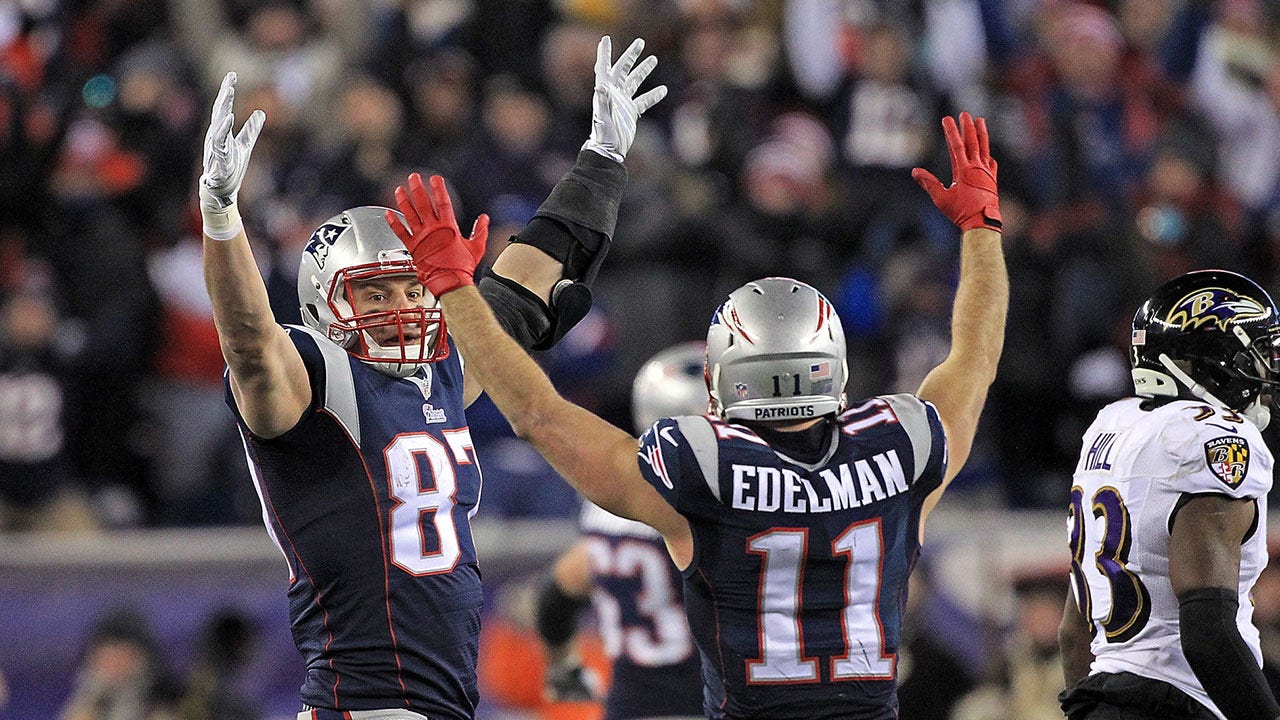
New England Patriots wide receiver Julian Edelman raises his hands in celebration with tight end Rob Gronkowski after throwing a touchdown pass to wide receiver Danny Amendola during the third quarter of the NFL divisional playoff football game at Gillette Stadium on Saturday, Jan. 10, 2015. (Matt Stone/MediaNews Group/Boston Herald via Getty Images)
But Gronkowski and one of his former teammates do not believe the 2025 Pats were any sort of fluke.
“What the New England Patriots did this season was incredible. And they’re just going to keep on building on that from here on and going into next year, I’m sure they’re going to be making the playoffs on a consistent basis now,” Gronk told Fox News Digital. “That’s the expectation. They got the quarterback, they got the coach, they got the ownership, they got the foundation now, and you’re going to see them competing at a high level every single year now, which is great for Patriot fans.”
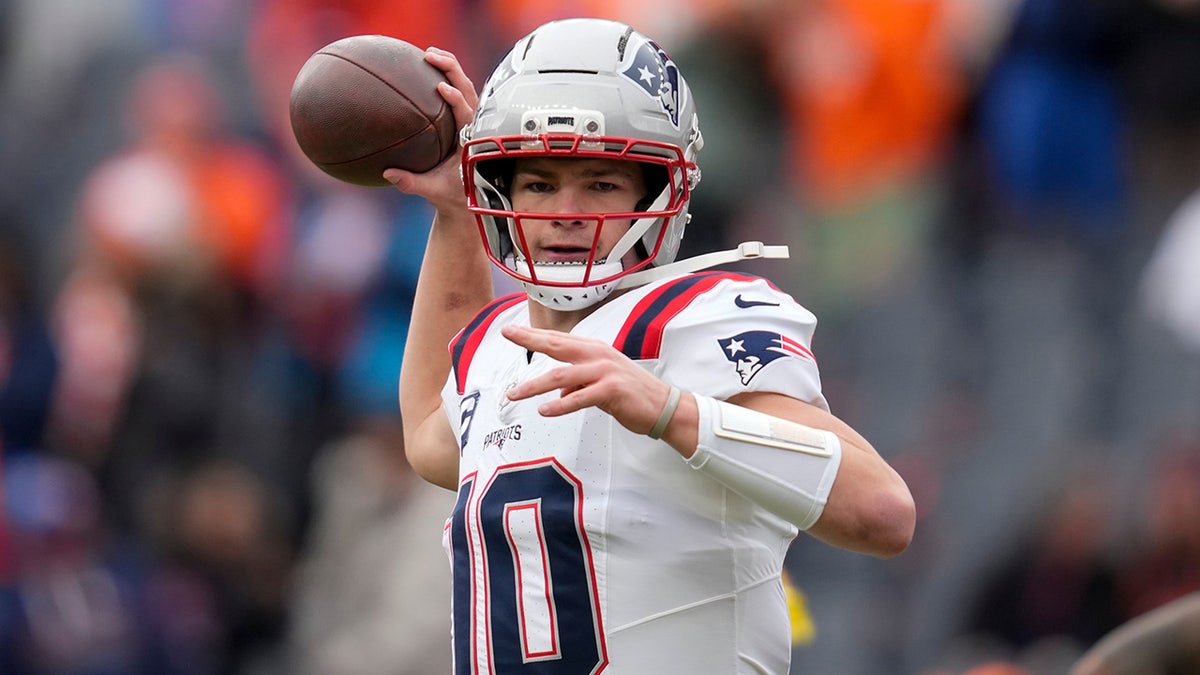
New England Patriots quarterback Drake Maye (10) warms up prior to the AFC Championship NFL football game against the Denver Broncos, Sunday, Jan. 25, 2026, in Denver. (AP Photo/Ashley Landis)
The Patriots have simply built the next generation of success, and Gronkowski sees the same in Infiniti and their newly-released QX65. Gronk and Julian Edelman were on hand at Grand Central Terminal in New York for the unveiling.
KYLIE KELCE REVEALS HER ‘DOS AND DON’TS’ OF TALKING TO POSTPARTUM WOMEN: ‘OH, I’M SO SERIOUS’
“I’ve always been about showing up at big moments and putting in the work behind the scenes, and that’s what stood out to me with the Infiniti. They’re really being intentional about how they move forward and what they’re building next. That’s how you got to be as a football player, as an athlete, you got to be very intentional and in order to stay at the top of your game and be able to compete at a top level. And that’s what Infiniti is doing.”
“I was fortunate enough in my career to play in a lot of big moments, and that’s exactly what you see with the Infiniti,” Edelman added. “How they are so detailed and have a purpose for everything that they do. When you look at the design of the car, the back, the interior’s spacious, very detailed. I mean, it’s just something that’s been so cool. It’s been a fun experience.”
Edelman, too, is “very confident” that the new-look Pats are here to stay.
“Anytime you got a head coach, a quarterback, an owner, and a GM working together and unison, it seems like every free agent they signed had a big moment, big role on the team. There was a lot of great things that happened.”
Edelman did warn Patriots fans to temper expectations just a bit and not expect another 14-win season. However, he does expect a more sound product on the field.
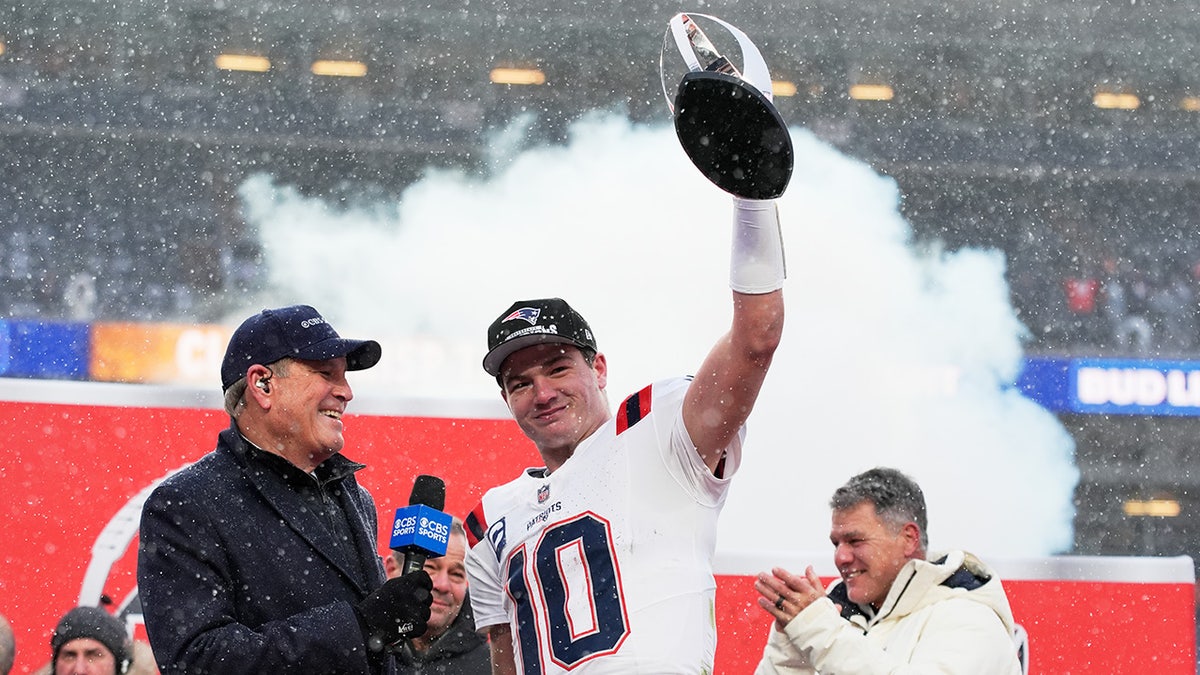
New England Patriots quarterback Drake Maye celebrates with the AFC championship trophy after the AFC championship game between the Denver Broncos and the New England Patriots in Denver, Colorado, on Jan. 25, 2026. (AP Photo/John Locher)
CLICK HERE TO GET THE FOX NEWS APP
“it’s time on task. You know, time on task with the quarterback. Get him ready with the offensive line, getting that offensive line kind of fixed up and get them working together more. I mean, they’re a young group. So I’m really excited for the Patriots this year,” he said.
“I think they’re for real. They may go out and not have as many wins, but I think they’re going to be a better football team this year.”
Follow Fox News Digital’s sports coverage on X, and subscribe to the Fox News Sports Huddle newsletter.
Sports
Alex Vesia, Dodgers pitcher who lost infant daughter, gets standing ovation after scoreless return to mound
NEWYou can now listen to Fox News articles!
Perhaps for the first time in 2026, Alex Vesia felt some normalcy on Friday night.
The Los Angeles Dodgers pitcher made his return to the pitcher’s mound in his first Major League outing since his infant daughter died just five days after she was born.
Before the World Series, the left-hander left the team to deal with a “deeply personal matter” and did not pitch in the Fall Classic.
CLICK HERE FOR MORE SPORTS COVERAGE ON FOXNEWS.COM
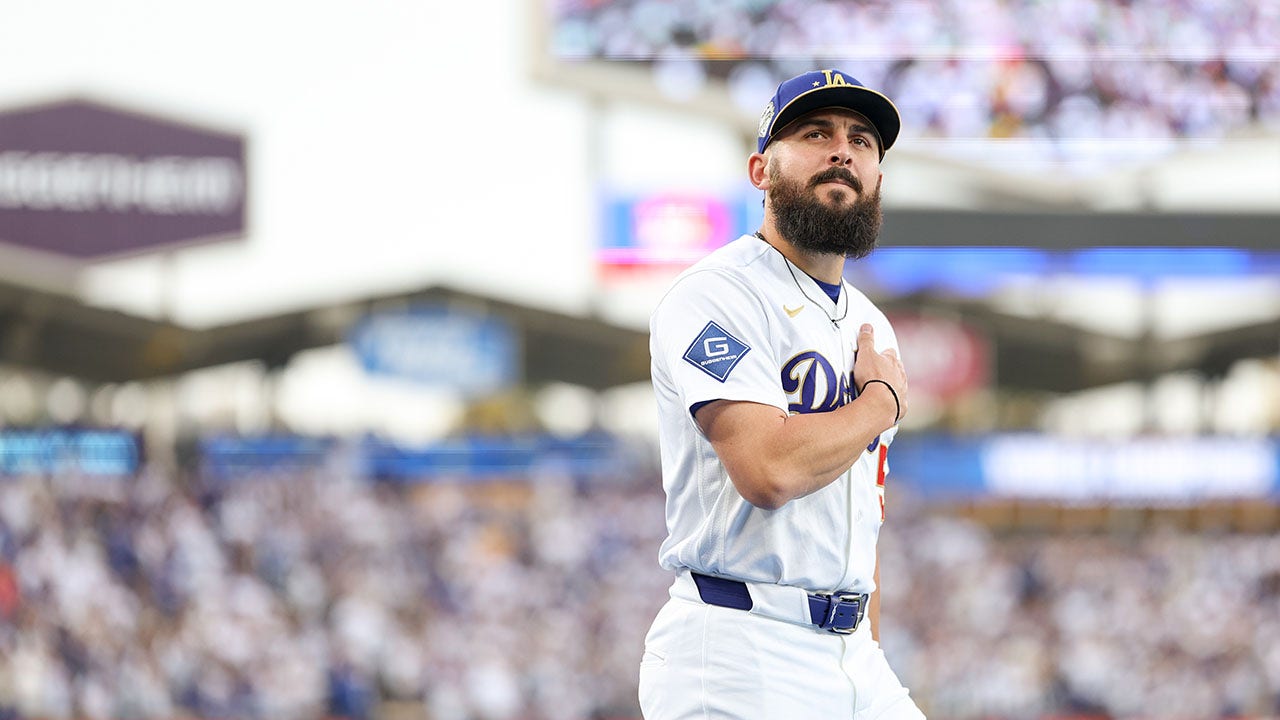
Los Angeles Dodgers relief pitcher Alex Vesia celebrates after the seventh inning of a baseball game against the Arizona Diamondbacks, Friday, March 27, 2026, in Los Angeles. (AP Photo/Mark J. Terrill)
Days after the Dodgers won the World Series, he and his wife announced their infant daughter had died.
Vesia returned to the team during spring training and then entered the Dodgers’ game against the Arizona Diamondbacks in the seventh inning of a 4-4 tie.
It was quite the spot for Vesia to return, but given his 2.36 ERA over the last two seasons, it was no sweat. He left a runner stranded on second base and kept the D-Backs scoreless en route to the team’s 5-4 win over their division rival.
Vesia let out a yell and pointed toward the Dodgers’ family section while getting a standing ovation from the crowd.
Vesia was wearing a customized pink glove with his daughter’s name, Sterling Sol, stitched on it, along with her birthday and his wife’s first initial, K for Kayla, embroidered on the glove’s ring finger.
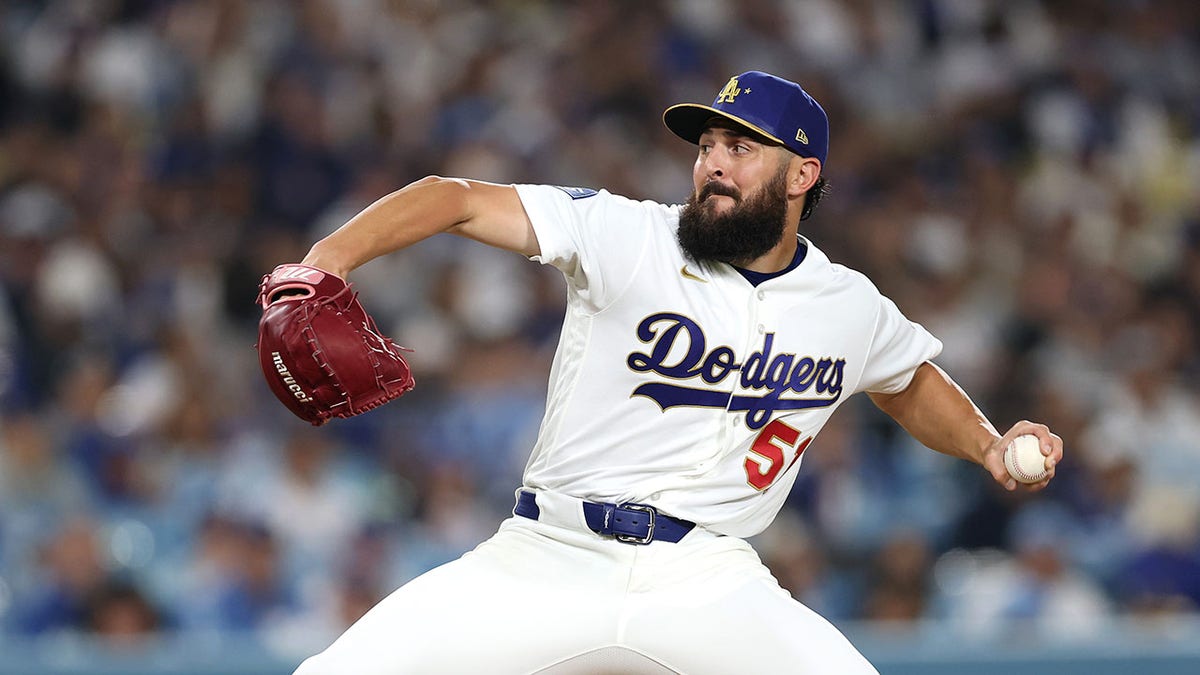
Alex Vesia of the Los Angeles Dodgers pitches against the Arizona Diamondbacks during the sixth inning at Dodger Stadium on March 27, 2026, in Los Angeles, California. (Luke Hales/Getty Images)
DODGERS PITCHER’S WIFE LIVES THROUGH ‘BITTER SWEET’ OPENING DAY MONTHS AFTER INFANT DAUGHTER’S DEATH
“What I would give to have my Sterling girl here, carrying her in my heart always,” Kayla said in an Instagram post earlier this week to celebrate a “bitter-sweet” opening day.
Sterling passed between Game 2 and Game 3 when the series was tied at one game apiece. During the Fall Classic, relievers from the Toronto Blue Jays wrote Vesia’s jersey number, 51, on their hats.
In his first news conference of the year in spring training, Vesia called his wife “the strongest person that I know” and “a support system for me every bit as much as I am for her.”
“Life can change in an instant. For us, 10 minutes is all it took,” Vesia said in February. “Sterling Sol was the most beautiful girl in the world. We got to hold her, change her diaper, read to her and love her. Our time together was far too short. Kay and I will keep those precious moments and memories to ourselves.
“Stepping away from the team, the brothers that I go to war with every day, was difficult, but it was also an easy decision because my family needed me. We still watched every pitch of the World Series, and for us in so many ways, that was a light in our darkness.
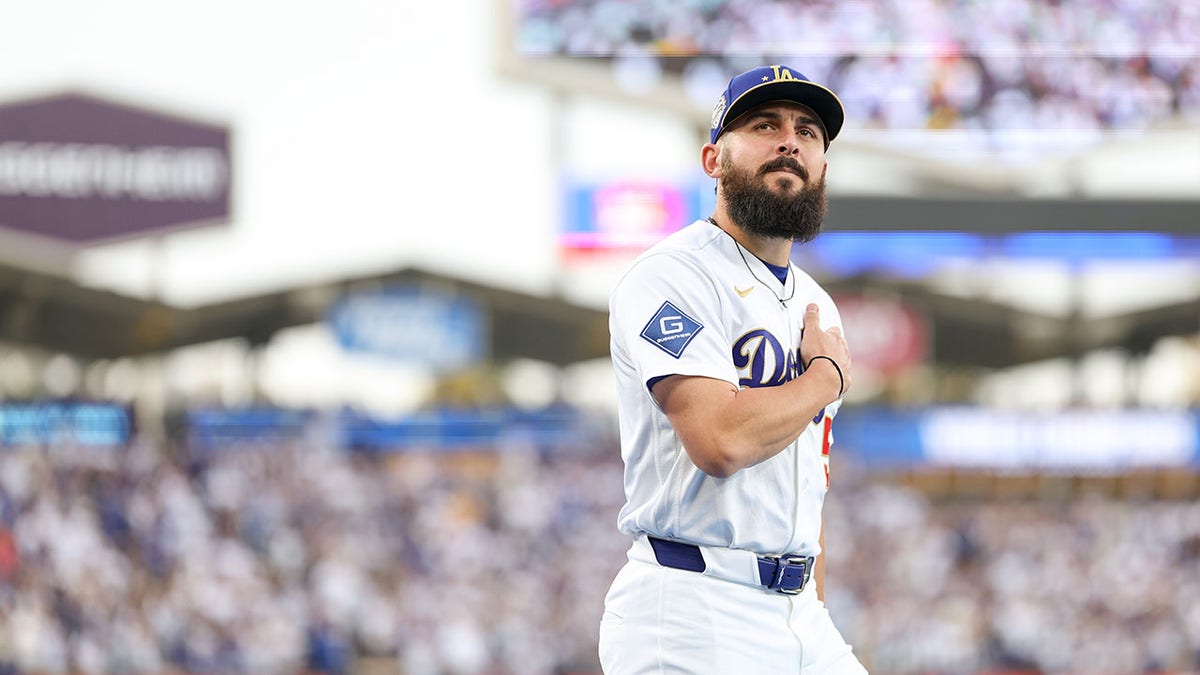
Alex Vesia of the Los Angeles Dodgers thanks the crowd during the 2025 Back-to-Back World Champions Ring Ceremony prior to the game between the Arizona Diamondbacks and the Los Angeles Dodgers at UNIQLO Field at Dodger Stadium on Friday, March 27, 2026, in Los Angeles, California. (Jessie Alcheh/MLB Photos via Getty Images)
CLICK HERE TO GET THE FOX NEWS APP
“I was not prepared to not bring my baby girl home, but we’re carrying her with us every day. It’s been hard, but we’re doing OK.”
The back-to-back reigning World Series champions are 2-0 to start the MLB season.
Follow Fox News Digital’s sports coverage on X, and subscribe to the Fox News Sports Huddle newsletter.
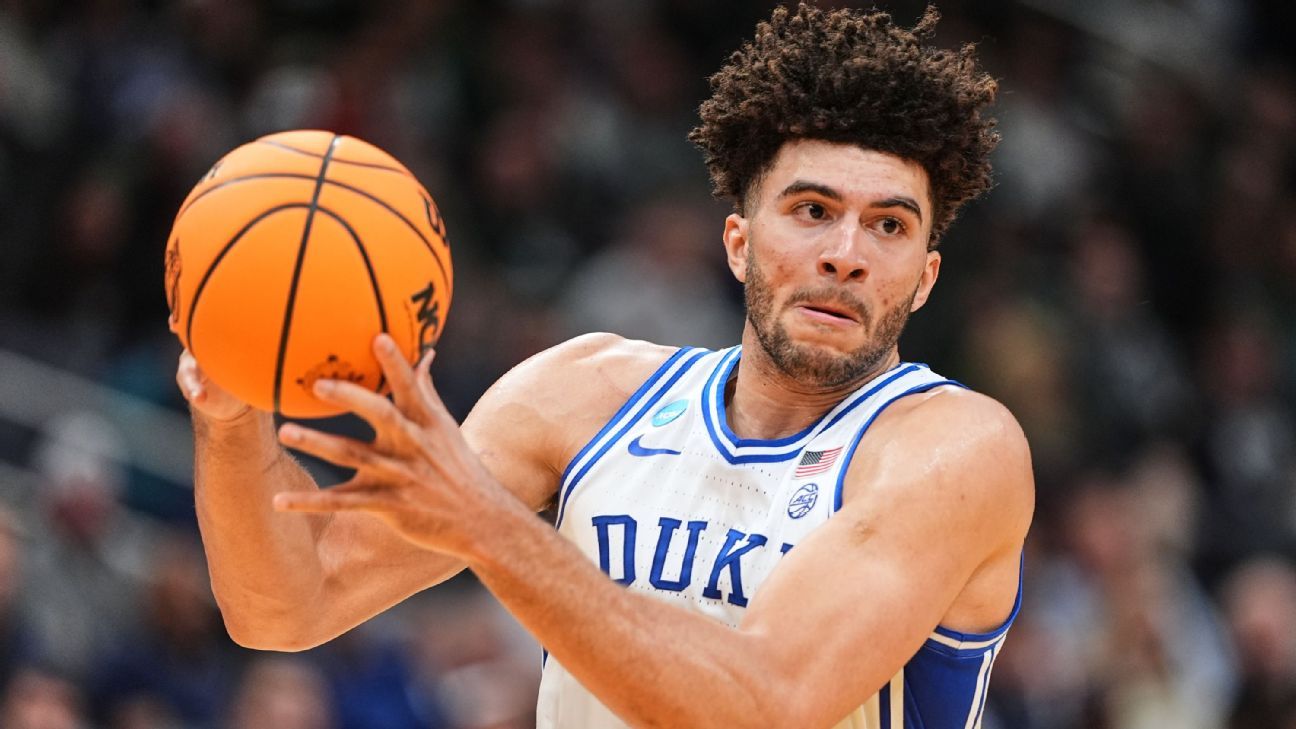
Five months into the 2025-26 season, only eight teams remain. Each team has a chance to go to Indianapolis to play in the Final Four, provided it wins one more game.
At the start of the campaign, many would have believed all of these programs had a chance to play in the penultimate weekend of the season — with the exception of 9-seed Iowa. But it might have been difficult to believe the way they all got here.
Duke played through major injuries to advance to the Elite Eight. Arizona is there without a singular star, but a team full of selfless standouts who can all lead the Wildcats in scoring on any night. Michigan has three players who are 6-foot-9 or taller in the starting rotation — a contrast to the small-ball era so many within the game have touted. Illinois is led by a freshman who was overlooked on the recruiting circuit and several European talents.
Then, there are those Hawkeyes — a team that was 3-7 in its last 10 games entering the NCAA tournament but has reached the Elite Eight for the first time in 39 years.
The truth is, however, that there’s a lot of chalk among the last eight teams. A ton of resilience, too. Let’s rank the squads in the Elite Eight.
All times Eastern
How the regional finals were set


1. Arizona Wildcats
Original seed: No. 1 (West)
Tournament results: Def. No. 16 Long Island 92-58 (first round); def. No. 9 Utah State 78-66 (round of 32); def. No. 4 Arkansas 109-88 (Sweet 16)
Arizona has been chasing greatness all season. The Wildcats not only handed John Calipari the worst NCAA tournament loss of his career in Thursday’s lopsided Sweet 16 win over Arkansas, but it was also the first time a team (Arizona) had 60 paint points and 30 free throws in a single NCAA tournament game since 2000, per ESPN Research. But that dominant effort against the SEC tournament champion is only new if you haven’t been watching college basketball. The Wildcats shot 50% from inside the arc in their season-opening win over Florida. They beat Alabama — one of the best offensive teams in America — by 21 points in December, with the Tide recording just 99 points per 100 possessions. There was a 23-point victory over Kansas in February and a 16-point triumph over Iowa State days later. The Wildcats have made a lot of statements to support the case that they’re the team to beat, the team that could be the last one standing because of its ability to play a complete game: Arizona is fourth in adjusted offensive efficiency and third in adjusted defensive efficiency. It’s also difficult for opponents to know who to target because of their depth. Veteran Jaden Bradley? Freshman star Brayden Burries? Freshman star Koa Peat — who, after a strong start to the season, faced a rough patch — is averaging 16.6 points through three NCAA tournament games.
Up next: vs. Purdue (Saturday, 8:49 p.m., TBS/truTV)

2. Michigan Wolverines
Original seed: No. 1 (Midwest)
Tournament results: Def. No. 16 Howard 101-80 (first round); def. No. 9 Saint Louis 95-72 (round of 32); def. No. 4 Alabama 90-77 (Sweet 16)
Three years ago, Dusty May didn’t want to leave Florida Atlantic because life was good in Boca Raton. He lived a few miles from campus and rode his bike to work every day. But the opportunity to lead a Big Ten powerhouse was too much to pass up, and he accepted the Michigan job in 2024. Even then, he didn’t leave it all behind. There’s a tie between the 2022-23 Owls, who made a run to the Final Four, and this year’s Wolverines, who are a win away from the school’s first run to the Final Four since 2018: interior defense. May’s FAU squad held opponents to a 46.6% clip in the paint, one of the top marks in America that season, per Synergy Sports. His Michigan team this season is clocking in at 48.9% in that metric. In Friday’s Sweet 16 win, it held Alabama — which entered the game ranked top three in offensive efficiency — to just 31 shots, 23 of which were 3-pointers. That’s a by-product of May’s suffocating interior defense, a staple of his best teams. And it’s proof the Wolverines aren’t just tough around the rim on defense; they make opponents think twice about trying to score in the post in the first place.
Up next: vs. Tennessee (Sunday, 2:15 p.m., CBS)

3. Illinois Fighting Illini
Original seed: No. 3 (South)
Tournament results: Def. No. 14 Penn 105-70 (first round); def. No. 11 VCU 76-55 (round of 32); def. No. 2 Houston 65-55 (Sweet 16)
Illinois proved with Thursday’s Sweet 16 win against Houston that it can reach a level on offense even the best defenses in America can’t stop. A 17-0 run early in the second half created separation between the two teams, with the Cougars spending the rest of the game trying to close the gap. David Mirkovic and Keaton Wagler became the first freshman teammates to record double-doubles in the NCAA tournament since freshmen became eligible for to play in the postseason in the 1972-73 season, per ESPN Research. But while Illinois’ offensive strength has been its most appealing quality, Brad Underwood’s team is a true national title contender because of its ability to stall opposing teams. Since the start of the Big Ten tournament, the Illini have been a top-25 defensive team nationally, per BartTorvik. They’re also eighth in the country in adjusted defensive efficiency and seventh in adjusted offensive efficiency since the start of the NCAA tournament. Those are important metrics to consider. Eight of the past 10 national champions were ranked top 11 in both categories. If balance is the ticket to a title, Illinois is in a good spot.
Up next: vs. Iowa (Saturday, 6:09 p.m., TBS/truTV)

4. Duke Blue Devils
Original seed: No. 1 overall (East)
Tournament results: Def. No. 16 Siena 71-65 (first round); def. No. 9 TCU 81-58 (round of 32); def. No. 5 St. John’s 80-75 (Sweet 16)
The close call against St. John’s wasn’t anything the Blue Devils hadn’t experienced: Remember the clutch effort late in a one-point win over Florida? Being tied with Michigan State near the two-minute mark not long after that? They had two tougher than expected games against Florida State in the regular season and in the ACC tournament. There was the battle with Michigan in Washington, D.C, too. Free throws sealed a win over Virginia in the ACC tournament title game. A first-round tussle with 16-seed Siena and a slow start against TCU in the second. The one constant through all of these tough games has been Cameron Boozer. He dominated at the high school, AAU and now the collegiate level. He provides his team with confidence in the most desperate situations and has the Blue Devils equipped to get through tough times — even if it’s someone else stepping up. Against the St. John’s in Friday’s Sweet 16 game, Caleb Foster somehow thrived (11 points on 5-for-7 shooting after halftime), despite having suffered a broken foot 20 days ago. Isaiah Evans (25 points) was brilliant. Maliq Brown (four blocks) did more to disrupt this game defensively than he’ll get credit for. And Cameron Boozer (22 points, 10 rebounds, three assists) was just Cameron Boozer. Nobody gets afraid on this team when adversity hits.
Up next: vs. UConn (Sunday, 5:05 p.m., CBS)

5. Purdue Boilermakers
Original seed: No. 2 (West)
Tournament results: Def. No. 15 Queens University 104-71 (first round); def. No. 7 Miami 79-69 (round of 32); def. No. 11 Texas 79-77 (Sweet 16)
Few coaches in college basketball have suffered the amount of basketball heartbreak as Matt Painter. In 2009-10, star Robbie Hummel suffered a season-ending injury late in the season that cost the Boilermakers a chance to compete for a national title. In 2019, former Purdue star Carsen Edwards scored 42 points and still couldn’t beat eventual champion Virginia in overtime. Painter once again reached the national title game in 2024 with Wooden Award winner Zach Edey — but ran into the bulldozer known as UConn on its way to its second straight national title. None of those Purdue squads, however, were as hot as this current crew. During the Boilermakers’ seven-game winning streak, Braden Smith is averaging 9.5 assists and Trey Kaufman-Renn looks like an All-American again while averaging 17.8 points. The group is second in adjusted offensive efficiency (60% from inside the arc, 38% from the 3-point line) during this stretch. And now Painter will have another shot at getting over the hump.
Up next: vs. Arizona (Saturday, 8:49 p.m., TBS/truTV)

6. UConn Huskies
Original seed: No. 2 (East)
Tournament results: Def. No. 15 Furman 82-71 (first round); def. No. 7 UCLA 73-57 (round of 32); def. No. 3 Michigan State 67-63 (Sweet 16)
Men’s college basketball has had a multitude of legendary coaches over the 60-plus years since John Wooden led UCLA in the 1960s and ’70s. Mike Krzyzewski won five national titles. Roy Williams retired with three. Rick Pitino has two rings with two different teams. Bill Self and Billy Donovan have a pair of championships. Hurley has a real chance to win his third national championship in four years, which would be an unprecedented feat in the modern history of the sport and a greater challenge than anything Wooden ever faced during his time. Because Hurley’s chasing this third title with a third different roster. The team that held off Michigan State on Friday night in the Sweet 16 does not resemble the teams he had in 2023 or 2024. Alex Karaban is the only holdover from those back-to-back title teams. There’s still a significant similarity between all three groups: They were all better when they played a free-flowing style, executed great defense and pushed the pace. It’s how the 2026 Huskies achieved an early double-digit lead over the Spartans and overcame a sloppy stretch in the second half. They also proved that, even with their recent lack of efficiency (they entered Friday ranked 74th in adjusted offensive efficiency since March 1), they can outlast and attack any opponent to advance.
Up next: vs. Duke (Sunday, 5:05 p.m., CBS)

7. Tennessee Volunteers
Original seed: No. 6 (Midwest)
Tournament results: Def. No. 11 Miami (Ohio) 78-56 (first round); def. No. 3 Virginia 79-72 (round of 32); def. No. 2 Iowa State 76-62 (Sweet 16)
It’s no secret that Texas decided Rick Barnes hadn’t kept up with the times and that the game had left him behind when the school fired him in 2015. His dismissal came after a string of first-weekend exits and a seven-year gap between his Elite Eight appearances. But when he accepted the Tennessee job that same year, Barnes — who has been a head coach since 1987 — didn’t change his philosophy. He has always believed smart shots, suffocating defense at every spot on the floor and a bruising approach to rebounding were the keys to victory and long-term success. He has coupled that attitude with a recognition that playmakers win games at the highest level. He found Dalton Knecht and Chaz Lanier in the transfer portal in back-to-back years. This year, his Vols are the top offensive rebounding team in America. Nate Ament is a projected lottery pick. Maryland transfer Ja’Kobi Gillespie has been Barnes’ most reliable addition. The formula has resulted in Tennessee’s third consecutive Elite Eight appearance.
Up next: vs. Michigan (Sunday, 2:15 p.m., CBS)

8. Iowa Hawkeyes
Original seed: No. 9 (South)
Tournament results: Def. No. 8 Clemson 67-61 (first round); def. No. 1 Florida 73-72 (round of 32); def. No. 4 Nebraska 77-71 (Sweet 16)
The 3-point line was introduced in Division I men’s basketball in the 1986-87 season by the NCAA’s rules committee. It was a wild idea at the time, from Ed Steitz, a member of the committee, whose research suggested it could revolutionize the game. That season, the Hawkeyes attempted 382 3-pointers — and made 39% of them. They went 5 for 11 from beyond the arc in their 93-91 Sweet 16 victory against Oklahoma that season. They’re now back in the Elite Eight for the first time in 39 years because they rediscovered the power of the 3. Ben McCollum’s group has already taken 818 shots from beyond the arc this season. Since March 11, nearly 50% of its field goal attempts have been 3s. It has made 37.4%, a top-40 mark nationally. Yes, the Sweet 16 win over Nebraska on Thursday was the result of the Hawkeyes’ resilience and second-half defense. But really, the only way they stayed close in the game was because of those 3s (13-for-30, 43%) — the same way the last Iowa team won this round.
Up next: vs. Illinois (Saturday, 6:09 p.m., TBS/truTV)

India opposes China-led IFD pact’s inclusion; flags risks to WTO framework and core principles – The Times of India

Patriots’ Super Bowl appearance was no fluke, team legends say: ‘They’re for real’

Middle East crisis: Jubilant FoodWorks reports some Domino’s outlets affected by LPG shortage – The Times of India

-
 Business1 week ago
Flipkart group CFO to leave co amid IPO plans – The Times of India
-

 Fashion1 week ago
China’s textile & apparel exports surge 17% to $50 bn in Jan-Feb 2026
-

 Sports1 week ago
Rating Adidas’ 2026 World Cup away shirts: Argentina, Spain, Mexico and more
-

 Sports1 week ago
American Conference Commissioner Tim Pernetti thanks Trump for Army-Navy game executive order
-
Tech1 week ago
The Corsair 4000D RS PC Case Keeps Your System Cool
-

 Tech1 week ago
Gamers Hate Nvidia’s DLSS 5. Developers Aren’t Crazy About It, Either
-

 Tech1 week ago
‘Uncanny Valley’: Nvidia’s ‘Super Bowl of AI,’ Tesla Disappoints, and Meta’s VR Metaverse ‘Shutdown’
-
 Business4 days ago
Property Play: Home flippers see smallest profits since the Great Recession, real estate data firm says