Connect with us

Sports

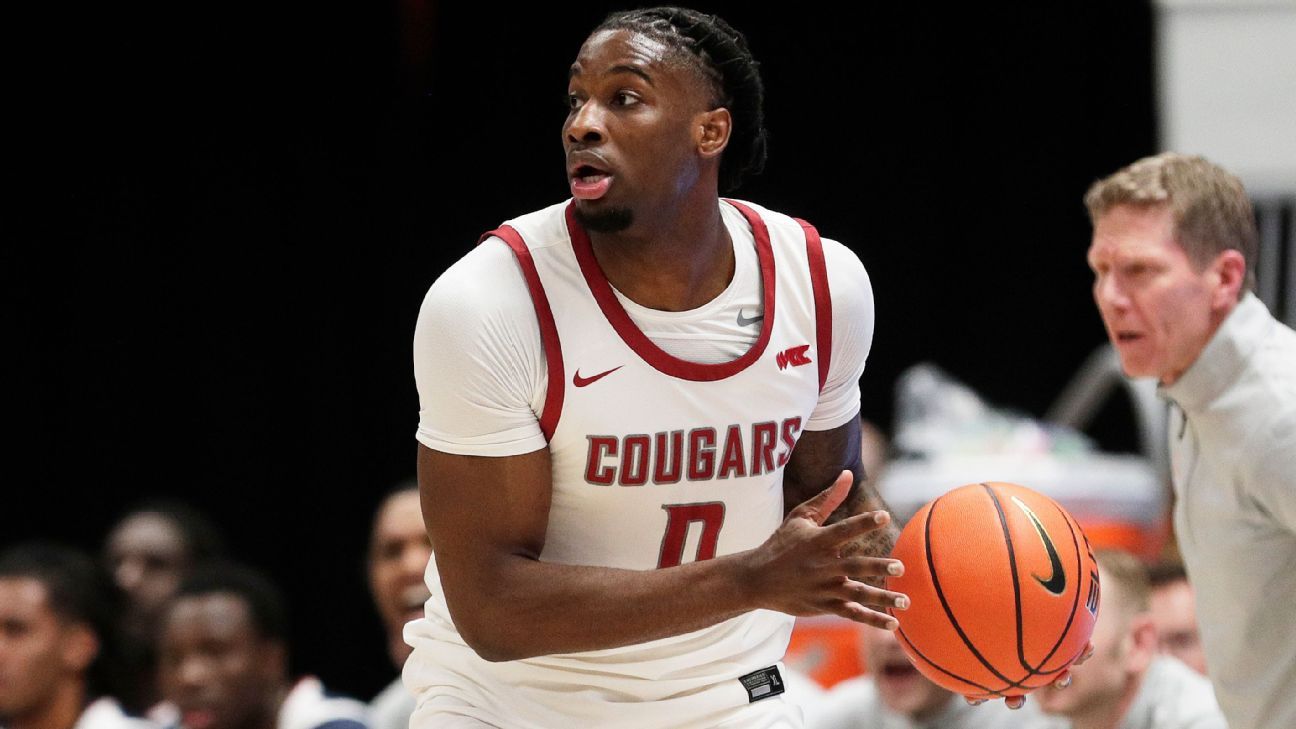
FCS national championship preview: Illinois State, Montana State starving for title

Published

on

FCS national championship preview: Illinois State, Montana State starving for title
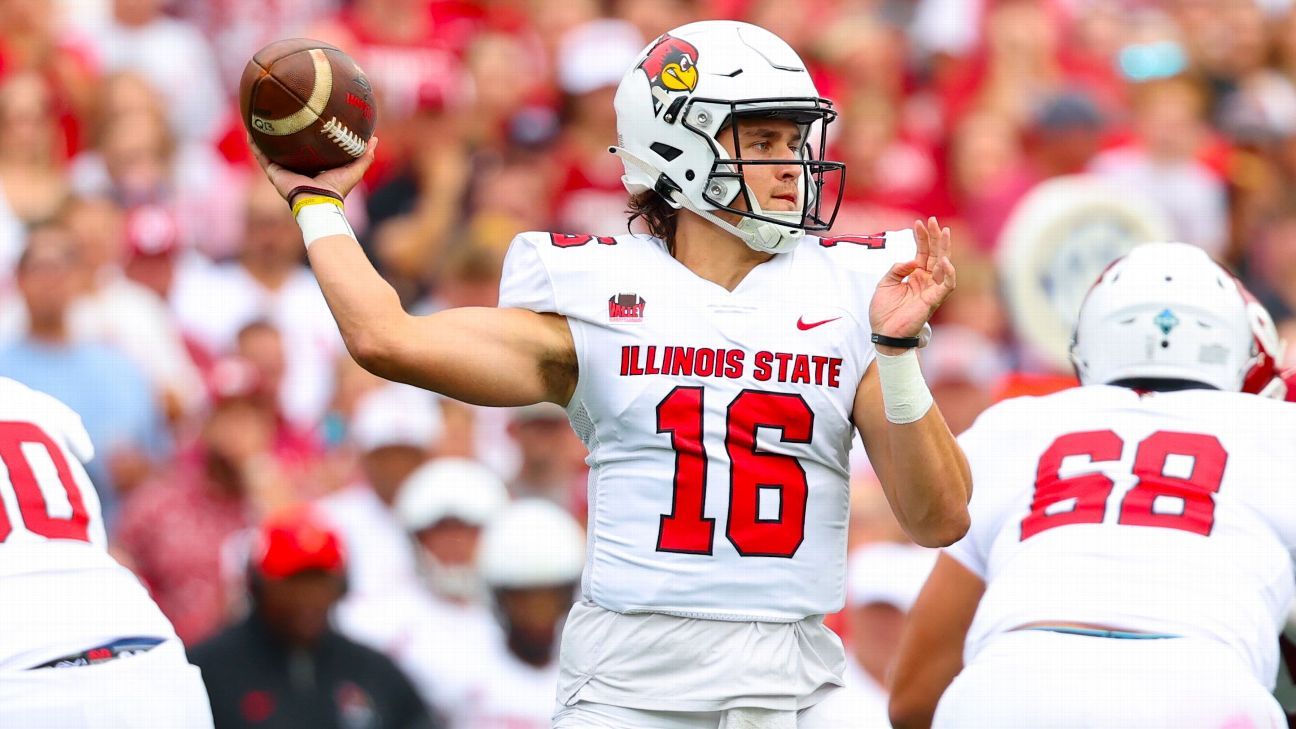

Illinois State came within 37 seconds of a national title in 2014 but couldn’t keep North Dakota State out of the end zone. After getting thumped by NDSU in the 2021 title game, Montana State returned last season and tried everything it could to erase an early deficit against the mighty Bison. The Bobcats came up three points short.

Both ISU’s and MSU’s ambitions have been held back by the Goliath of FCS, but thanks to an all-timer of an upset, one will win the 2025 national title. Brock Spack’s ISU Redbirds knocked out a particularly strong NDSU squad in the round of 16, erasing a late 14-point deficit and nailing a well-timed 2-point conversion. And with the bracket busted, the Redbirds kept rolling: They pulled off two more road upsets — they’re the first team to win four road games in a single playoff run — and rode a rapidly improving defense to a spot in their first title game since the 2014 heartbreaker.

Montana State, meanwhile, is in its third title game in five seasons. With a mix of new blood and stalwarts from last year’s oh-so-close squad, the Bobcats have won 13 straight, and they outclassed rival Montana in the semifinals. They’ve waited more than 40 years for a follow-up to their 1984 national title, and they came achingly close to the mountaintop last season. Now all they have to do is beat a team of destiny.

On Monday night in Nashville (7:30 ET, ESPN), two teams yearning to take advantage of the best title chance they might ever have will square off. Here’s everything you need to know about a fascinating FCS finale.

How they got here

No. 2 Montana State Bobcats

Record: 13-2

SP+ rankings: third overall, fourth on offense, ninth on defense

First-team all-conference selections: RG Titan Fleischmann (6-foot-4, 300 pounds, Jr.), NT Paul Brott (6-3, 300, Sr.), edge Kenneth Eiden IV (6-1, 250, Sr.), SS Caden Dowler (6-0, 205, Sr., Big Sky Defensive Player of the Year)

Key regular-season results: lost to No. 2 South Dakota State 30-24, def. No. 10 Northern Arizona 34-10, def. No. 9 UC Davis 38-17, def. No. 2 Montana 31-28

Playoff run: def. Yale 21-13, def. No. 7 Stephen F. Austin 44-28, def. No. 3 Montana 48-23

Including a Week 1 blasting by Oregon, Montana State averaged a pretty mortal 23.8 points over the first four games of the season. As always, the run game was strong from the start — the Bobcats have gained at least 189 yards on the ground against every FCS opponent and have topped 225 yards 10 times — but new quarterback Justin Lamson, a Stanford transfer, averaged just 4.3 yards per pass attempt (including sacks) against Oregon and South Dakota State, and he had only three touchdown passes in the first four games.

Over his past 11 games, however, Lamson has thrown for 2,157 yards (13.4 per completion) with a 21-to-1 TD-to-INT ratio. Complement a dynamite run game with an error-free and occasionally explosive passing game, and you’re going to be awfully hard to stop. MSU has averaged 43.3 points per game in these 11 contests and has allowed just 13.9 per game in its past 13. The Bobcats found fifth gear, and they’ve stayed there, really having to sweat against only Montana in the regular-season finale and Yale in their first playoff game.

Illinois State Redbirds

Record: 12-4

SP+ rankings: 10th overall, 11th on offense, 28th on defense

First-team all-conference selections: WR Daniel Sobkowicz (6-3, 205, Sr.), LT Jake Pope (6-7, 300, Sr.), LB Tye Niekamp (6-3, 240, Jr., Missouri Valley Defensive Player of the Year), CB Shadwel Nkuba II (6-1, 190, Sr.)

Key regular-season results: lost to No. 1 North Dakota State 33-16, lost to No. 25 Youngstown State 40-35, def. No. 21 South Dakota 21-13, def. No. 15 South Dakota State 35-21, lost to No. 24 Southern Illinois 37-7

Playoff run: def. No. 16 Southeastern Louisiana 21-3, def. No. 1 North Dakota State 29-28, def. No. 8 UC Davis 42-31, def. No. 12 Villanova 30-14

Brock Spack has brought incredible reliability to ISU; in 17 seasons in Normal, his Redbirds have won at least six games 14 times and at least 10 five times. ISU had won three FCS playoff games in its history before he arrived in 2009 — and has won 12 since. But that 2014 title game run was starting to seem pretty far in the rearview mirror. The Redbirds hadn’t made it past the quarterfinals since then, and they had reached the playoffs only once in the 2020s.

Illinois State won four in a row late in the regular season to all but clinch a playoff spot, and the offense provided plenty of sterling moments. But even with star linebacker Tye Niekamp, the defense didn’t really look the part, and a humbling 37-7 loss to Southern Illinois in the regular-season finale gave no indication of what was to come. The Redbirds were only 21st in SP+ heading into the playoffs, and they’ve been projected underdogs in every game they’ve played.

They’ve redefined “peaking late,” however. They’ve overachieved against SP+ projections by 7.2 points per game on offense and by 14.1 on defense, and after four immaculate road wins, here they are.


Can ISU keep the magic formula going?

Based on pregame SP+ projections, ISU had a 0.3% chance of winning its four playoff games — and that doesn’t even begin to crack the degree of difficulty involved in beating North Dakota State while throwing five interceptions. But just about everyone in the Redbirds’ lineup has come through when required. Quarterback Tommy Rittenhouse indeed threw five picks in Fargo, but he also has thrown eight touchdown passes in the past three games. Seven of those went to Daniel Sobkowicz, who has 29 catches for 403 yards in four playoff games, scored twice against NDSU and went for 150 yards against UC Davis. (Sobkowicz also threw a TD pass to Rittenhouse against Southeastern Louisiana.) Lead back Victor Dawson, meanwhile, has 517 rushing yards (5.3 per carry) in the playoffs after producing 734 (4.8) in 12 regular-season games.

The defense ranked 56th in SP+ when the playoffs began but has transformed into something pretty remarkable. Southeastern Louisiana averaged 33.3 points per game in the regular season but finished with more interceptions thrown (four) than points scored against the Redbirds. NDSU gained 78 yards on its first snap, a long catch-and-run from Bryce Lance, but gained just 101 additional yards. UC Davis, with one of the best offenses in the country, scored 10 points in the first four minutes and 14 in the final three, but scored just once in seven drives in between as ISU was seizing control with a 35-7 run. Villanova turned three early trips into ISU territory into just six points and trailed by 24 when it finally got moving again late.

Niekamp has been as reliable as ever in the playoffs, but so many others have contributed when needed, from tackles Garret Steffen and Jake Anderson (6.5 TFLs and five sacks) to corners Shadwel Nkuba II and Cam Wilson (one INT, seven breakups, a TFL, a forced fumble and a fumble recovery) to safety CJ Richard Jr. (two picks, a breakup and a fumble recovery). This has been a 2007 or 2011 New York Giants type of run, with an occasionally error-prone QB coming up big in critical moments and an increasingly confident and disruptive defense taking over for growing swaths of time.

If you can hold NDSU to less than 200 yards, you can do it to pretty much anyone, but obviously it will be an enormous challenge pinning down a Montana State offense that has scored at least 31 points in 11 of its past 13 games. One wouldn’t figure the odds of success here are high, but if there’s one thing we’ve learned, it’s that the Redbirds don’t care much about the odds.


So MSU will close the deal this time … right?

Last year’s title game loss felt like such a missed opportunity for Montana State. NDSU hadn’t been at its absolute best in 2024, and Brent Vigen’s Bobcats had an unbeaten and particularly brilliant squad led by All-Americans (and soon-to-be departees) such as quarterback Tommy Mellott — the Walter Payton Award winner and a sixth-round NFL draft pick — plus fullback/tight end Rohan Jones, offensive linemen Marcus Wehr and Conner Moore, and defensive end Brody Grebe. They were going to get hit by attrition, and NDSU really wasn’t. It was time for them to break through, but a poor start in the title game prevented it.

Even if the losses were to Oregon and South Dakota State, an 0-2 start in 2025, combined with NDSU’s immediate brilliance, reinforced the idea that MSU’s time had passed. But you never know what will happen if you just keep trying to improve. Justin Lamson found his rhythm after the slow start, and when it was time for the Bobcats to shift into a new gear, they did so.

Going back to the end of the regular season, they have played five straight games against playoff teams — including four against quarterfinalists and top-eight seeds (Montana twice, Stephen F. Austin and UC Davis) — and have won those five games by an average of two touchdowns. Lamson has completed 72% of his passes and thrown for 886 yards, with 334 non-sack rushing yards plus 12 combined TDs, in these five games, and running backs Adam Jones (the dual threat) and Julius Davis (the workhorse) have combined for 856 rushing yards, 120 receiving yards and 9 touchdowns. Slot receiver Taco Dowler hasn’t always had much to do, but he caught a game-turning 87-yard touchdown pass in the semifinals, and wideouts Dane Steel and Chris Long have come through as well.

Against a strong group of offenses in this five-game run — among others, Montana is second in offensive SP+, and UC Davis is eighth — MSU’s defense has allowed 21.8 points per game and 5.1 yards per play (not dominant, but well below these opponents’ season averages) and has pounced beautifully on mistakes: The Bobcats have made 18 sacks and forced 11 turnovers, scoring on three of them. Safety Caden Dowler reeled in pick-sixes in each of the last two regular-season games, and linebacker Bryce Grebe‘s 40-yard pick-six finished off the semifinal blowout.

Caden Dowler might be the biggest story of the game: He’s the best safety in FCS — and maybe the best player on either of these rosters — and he has made 6 picks with 4 breakups, 6.5 TFLs and 2 forced fumbles this season. But he left the semifinal win with an injured arm, and although Vigen expressed optimism about his availability, it’s a race against time, and he might not be 100 percent even if he plays.


Projecting the title game

DraftKings projection: Montana State 33.5, Illinois State 23.0 (MSU -10.5, over/under 56.5 points)

SP+ projection: Montana State 33.2, Illinois State 24.8

Per SP+, Montana State has about a 70% chance of winning this one, which means we can almost think of this as having three equally likely outcomes: a tight ISU win, a reasonably tight MSU win and a comfortable MSU win. If ISU can control the ball with Dawson, and if Rittenhouse avoids picks, the Redbirds could score enough to give themselves a chance. But the Redbirds’ margin for error isn’t great, as they’ll also have to continue overachieving drastically on defense against a peaking MSU attack.

It’s hard to bet against Spack’s Redbirds considering the odds they’ve defied just to get to this point. But it’s also pretty easy to see this as Montana State’s moment. The Bobcats just keep inching closer and closer, and thanks to ISU, the typical final boss isn’t waiting in the final. If you squint just right, both of these teams have a “team of destiny” vibe. Only one will lift the trophy, however.


Source link

Continue Reading
Click to comment

Leave a Reply

Your email address will not be published. Required fields are marked *

Sports

His lack of filter earned him figure skating fame. It also got him canceled.

Published

on


David Lease was a guilty pleasure in a sport that loves drama but avoids conflict. Then came the crash.


Source link

Continue Reading

Sports

Let’s play myth-busters for the NFL playoffs: 14 teams, 14 things that aren’t quite right

Published

on

Let’s play myth-busters for the NFL playoffs: 14 teams, 14 things that aren’t quite right


The NFL playoff field is set, and you know these teams. For months, you’ve been watching them, talking about them and drawing conclusions about them. But some of those conclusions are wrong.

It’s not your fault. The week-to-week nature of the NFL lends itself quite naturally to missing the forest for the trees. You see a team one week, notice something about it, watch that same team a week or so later and notice the same thing again. And then you just figure that thing to be true — that it’s part of what defines that team.

But what we’re doing here — with the 18-week regular season concluded and four months’ worth of data to sort through — is step back, look at the bigger picture and figure out which of the things we think we know about each playoff team might not, in fact, be true. For some of these teams, our conclusions might be encouraging. For some, they might be cause for concern. But hopefully this offers at least a little bit of a different way to look at all 14 playoff teams as they get ready to prove us all right or wrong (or a little of both).

So here are our annual playoff myth-busters, with a big assist from ESPN researcher Paul “Hembo” Hembekides and the ESPN Research team. Let’s start with the NFC, and teams are ordered by seeding.

Jump to a team:
BUF | CAR | CHI | DEN | GB
HOU | JAX | LAC | LAR | NE
PHI | PIT | SF | SEA

NFC

Myth: Their run game isn’t good enough.

The Seahawks finished the season ranked 27th in the NFL in offensive rush EPA, which backs up the seasonlong narrative that they weren’t running the ball consistently well and relied too much on their (admittedly outstanding) defense and wide receiver Jaxon Smith-Njigba. Seattle scored the third-most points of any team in the regular season but finished outside the top 10 in rushing yards per game despite tying for third in rush attempts. Its 4.1 yards per carry was better than only seven teams (although three of those clubs also made the playoffs).

Why it’s a myth: They’ve run the ball a lot better over the second half of the season.

From Weeks 10 through 18, Seattle’s running backs ranked fourth in the league in offensive rush EPA, behind only those of the Ravens, Rams and Patriots. Kenneth Walker III and Zach Charbonnet combined for 2,183 scrimmage yards. Yes, other teams use two-back rotations that were more productive this season. The Rams’ Kyren Williams and Blake Corum combined for 2,315 scrimmage yards. The Steelers’ Jaylen Warren and Kenneth Gainwell had 2,314. But the point is not that Seattle runs the ball better than anyone, it’s that it runs it well enough — and better as the season has gone along.

Smith-Njigba is a brilliant and vital player, but his highest target-share game of the season came in a September loss to the 49ers. The Seahawks’ offense began to ask more of its run game and less of Sam Darnold, Smith-Njigba and the pass game in the second half, and conclusions we were drawing about them in the first half might not hold up in the playoffs.


Myth: Caleb Williams‘ inaccuracy hurts the offense.

The Bears had a dominant run game this season. Their defense excelled at taking the ball away. And Williams — their brilliantly talented second-year quarterback — made some fourth-quarter magic in big wins. But his completion percentage of 58.1 is abysmal and ranked 32nd in the league among qualified starters. In this day and age, it’s tough to imagine a team winning a Super Bowl with a quarterback who isn’t completing 60% of his passes.

Why it’s a myth: Williams has improved significantly at avoiding negative plays.

Williams led the NFL with 40 throwaways, which obviously affect completion percentages but aren’t necessarily a bad thing. Five of the top seven completion percentage games of his season actually came in Bears losses, while they won nine of his 10 worst. He had the league’s second-lowest pressure-to-sack ratio (behind Brock Purdy), his pressure-to-interception ratio was third best, and he threw nine touchdowns when pressured (behind only Justin Herbert‘s 10) to just one interception. Sure, his completion percentage when pressured was 36.4 and surely drags down the overall number. But that doesn’t tell the whole story.

New coach Ben Johnson stressed to Williams when he got the job last year that, while avoiding interceptions was something he did well as a rookie, there were other negative plays he had to get better at avoiding if he and the offense wanted to have success. And Williams is doing an excellent job of staying away from interceptions and sacks, especially when he has faced pressure this season. That’s a benefit to the offense no matter what the overall completion percentage says.

play

2:20

Should the Bears be worried about the Packers matchup?

Damien Woody, Dan Orlovsky and Rex Ryan discuss why the Bears could run into trouble in their wild-card matchup with the Packers.


Myth: Saquon Barkley is the key to the offense.

This time last season, the Eagles were a juggernaut on their way to a Super Bowl title. The key to the whole thing was Barkley’s historic season. He had 2,005 rushing yards, 2,283 total yards from scrimmage and 15 total touchdowns in the 2024 regular season to lead an Eagles offense that was one of the best and most efficient in the league. This season, Barkley’s production dipped significantly, down to 1,140 rushing yards, 1,413 scrimmage yards and 9 total touchdowns. An Eagles team that was fourth in offensive efficiency in 2024 ranked 19th in that same category in 2025.

Why it’s a myth: It’s actually Jalen Hurts.

While last season’s offense seemed to center around Barkley and the Eagles’ ability to generate explosive plays in the run game, this season’s offense seems to much more closely follow the performance of the team’s Super Bowl MVP quarterback. Barkley is averaging 91.5 scrimmage yards in Eagles wins this season and 81.4 in losses. He’s averaging 3.9 yards per carry in wins and 4.7 in losses. Seven of his touchdowns have come in the Eagles’ 11 wins, whereas he has five in losses. In other words, there doesn’t seem to be evidence of a dramatic difference in Barkley’s performance in wins versus his performance in losses.

Hurts, on the other hand, sees a great deal more variance. In Eagles wins, Hurts has a 64.2 QBR, a 5.1 completion percentage over expected (NFL Next Gen Stats), 19 touchdown passes and zero interceptions. In losses, he has a 38.2 QBR, a 0.1 CPOE, 6 touchdown passes and 6 interceptions. Just a lot of evidence to suggest that Philadelphia’s success in 2025 is tied much more closely to Hurts’ performance than it is to what Barkley does.


Myth: They can’t possibly beat the Rams again.

Carolina’s Week 13 home upset of the Rams was one of the more surprising results of the entire regular season. The Rams came in as the hottest team in the league, having won six games in a row to get to 9-2. They had beaten the 49ers, Seahawks and Buccaneers in the previous three weeks and seemed poised to take control of the NFC playoff race. But on that rainy Sunday in Charlotte, Matthew Stafford threw two early interceptions and lost a crucial late-game fumble. Bryce Young threw two fourth-down touchdowns (and one third-down TD pass), and the Panthers got out with a 31-28 victory.

It felt a little fluky at the time, and with the Panthers limping to their division title with an 8-9 record, it feels unlikely to happen again in the wild-card round.

Why it’s a myth: The Panthers can kind of beat anyone.

Sure, they can also lose to anyone. They were 8-9, after all. But Carolina had eight wins as an underdog this season, by far the most in the NFL. (The Steelers, Bears, Jaguars and Falcons each had five.) The Panthers will be the seventh team with a record of .500 or worse to host a wild-card game. Of the previous six, four won the contest.

The 2008 Chargers beat the Colts. The 2010 Seahawks beat the defending Super Bowl champion Saints in the Marshawn Lynch “Beast Quake” game. The Tim Tebow Broncos of 2011 knocked off the Steelers. And the 2014 Panthers beat the Cardinals. The last two teams to host a wild-card game with a regular-season record of .500 or worse did lose — the 2020 Washington Football Team to the Buccaneers and the 2022 Buccaneers to the Cowboys. But the overall record of 4-2 certainly shows it can be done.

Carolina’s big wide receivers were a problem for the Rams’ cornerbacks in the first matchup and could be again if the Panthers can do a good enough job of keeping the Rams’ rush off Young. All I’m saying is it wouldn’t be the most stunning potential upset of the first round.


Myth: Matthew Stafford should win MVP because Drake Maye played a soft schedule.

It appears the MVP race is down to Rams veteran Stafford and Patriots second-year star Maye. The knock on Maye has been that he didn’t beat anyone especially good. The only teams in the playoff field the Patriots beat this season were the Bills (to whom they also lost) and the Panthers (who finished the season with a losing record).

Stafford led the league with 4,707 passing yards and 46 touchdown passes, threw eight interceptions and had a Total QBR of 71.0 — fourth best in the league. Maye had 4,394 passing yards, 31 touchdown passes, 8 interceptions and a league-leading Total QBR of 77.2.

Why it’s a myth: Maye has just simply been better.

Total QBR adjusts for opponent quality in its calculation, so the fact that Maye finished first in the league in that category and Stafford fourth has nothing to do with strength of schedule. It also should matter that Maye played better against the soft parts of his schedule than Stafford did against his. Just look at games against NFC South opponents. The Patriots went 4-0 in those matchups, and Maye turned the ball over a total of three times. The Rams went 2-2 against the NFC South, and Stafford turned it over six times, including the fumble that probably cost the Rams the game against Carolina.

Overall, Maye was considerably better than Stafford in common opponent games. They played six of them. Maye was 6-0 with an 81.6 QBR and a 4.3 touchdown-to-interception ratio. Stafford was 4-2 with a 57.8 QBR and a 2.3 touchdown-to-interception ratio against those teams.

The only number that shows Stafford obviously better than Maye this season is the touchdown passes. But don’t forget that a somewhat stunning 16 of Stafford’s touchdown passes were 4 yards or less (Maye had nine) and eight came from the 1-yard line (Maye had three). Maye also had four rushing touchdowns, while Stafford hasn’t had one since 2022.

Give the award to Stafford if you want, but don’t do it because of relative strength of schedule. Maye had the better year, even once we adjust for that.

play

1:25

Why Orlovsky is ‘slightly’ worried about Bo Nix in playoffs

Dan Orlovsky and Rex Ryan break down the concerns they have for Bo Nix and the Broncos heading into the playoffs.


Myth: Christian McCaffrey just had his best season as a 49er.

In a season in which it felt like every significant player on the 49ers missed time with injury, McCaffrey did not. He played in all 17 games and was second in the league in yards from scrimmage with 2,126. That included 1,202 rushing yards on 311 carries and 924 receiving yards on 102 catches. Only five players in the league caught more passes than McCaffrey; four were wide receivers and one was a tight end. The next highest reception total among running backs in 2025 was Bijan Robinson’s 79.

McCaffrey also had 17 total touchdowns (10 rushing, seven receiving), which put him third in the league behind Jonathan Taylor and Jahmyr Gibbs. Simply put, CMC was a rock when the Niners needed one. The only year in his career in which he posted more scrimmage yards was his 2019 season in Carolina, and the only two years in which he had more touchdowns were 2019 and his 2023 season in San Francisco.

Why it’s a myth: Well, 2023 happened … but his efficiency also wasn’t great this season.

McCaffrey averaged only 3.9 yards per carry this season. That figure ranked 39th in the NFL, right behind Isiah Pacheco and ahead of Chuba Hubbard. And the 49ers’ run game was very average, ranking 22nd in rush EPA. McCaffrey’s contributions as a receiver are what made his season special and helped win fantasy leagues and drag the banged-up 49ers into the playoffs. But overall, his 2025 season doesn’t hold a candle to 2023.

The starkest difference is in early-down efficiency. On first and second down in 2023, McCaffrey averaged 5.4 yards per carry, had 1,337 rushing yards and scored 14 rushing touchdowns. This season, those same numbers were 3.9 yards per carry, 1,064 rushing yards and 7 rushing touchdowns. Workmanlike, for sure, but not spectacular.

Again, McCaffrey was what the 49ers needed him to be this season — a volume eater and target mismatch in the passing game. But he’s not the explosive early-down difference-maker that he was a couple of years ago when the 49ers made it all the way to overtime in the Super Bowl.


Myth: They don’t have a true No. 1 wide receiver.

Packers coach Matt LaFleur had that famous quote a little over a year ago about how he wants “to vomit” when people ask him about his No. 1 wide receiver. LaFleur’s point was that it doesn’t matter — that he and QB Jordan Love trust whoever’s out there and that he kind of likes having an interchangeable group of WRs that he can mix and match depending on the week and the opponent.

The Packers didn’t have a single receiver with more than 55 catches, 724 yards or 6 touchdowns in 2025. Last season, their team leaders in those categories had 55 catches, 857 yards and 7 touchdowns. The year before it was 64, 793 and 8. You get the idea.

Why it’s a myth: Christian Watson.

Watson missed the first six games of this season while recovering from a knee injury, which has been his biggest problem as a pro. He returned around the same time that the Packers lost tight end Tucker Kraft to a season-ending injury and helped fill in a lot of the explosive-play element their offense lost when Kraft went down. Love’s QBR is 77.7 when Watson is on the field and 69.5 when he’s not. His completion percentage over expectation is 5.5% when Watson is on the field and 2.5% when he’s not, per Next Gen Stats. His touchdown-to-interception ratio is 5.5 with Watson and 3.0 without. And in the 10 weeks this season in which Watson has played, Love’s QBR of 76.7 is the second best in the NFL, behind only Purdy.

The 34th pick in the 2022 draft, Watson has the profile of a No. 1 WR. Injuries have kept him from consistently performing like one, but when he’s out there, the effect he has on Love and the offense makes a strong case that he is a WR1.

AFC

Myth: Their record in close games is going to catch up with them.

The Broncos were 11-2 this season in games decided by eight points or fewer. They are proud of this. They do not view it as luck, and coach Sean Payton has said as much in news conferences. Players on the team have told me when I’ve covered their games this season that this was a major point of emphasis in their offseason. They were 2-6 in one-score games last season and wanted to be the kind of team that finished close contests off. They believe they’re better equipped than their opponents to stay strong in the fourth quarter and make game-deciding plays in game-deciding moments — especially in home games at Denver’s high altitude.

All of that might be true, but decades’ worth of data says this is the kind of thing that’s prone to regression and won’t stay the case if we give it long enough. Just look at the Chiefs, who went 11-0 in one-score games last season (12-0 if you count the playoffs) and were 1-9 in one-score contests in 2025. If it can catch up to Patrick Mahomes and Andy Reid, you have to think it could catch up to anyone.

Why it’s a myth: It isn’t the 2026 season quite yet.

The natural regression to the mean when it comes to a team’s record in one-score games doesn’t have to happen in the same season. Over the past 10 seasons, 11 of the 20 teams to participate in the Super Bowl have had winning percentages better than .700 in their one-score games in that regular season. I just mentioned the Chiefs, but the Eagles — the team that beat them in the Super Bowl — were also 8-2 in one-score regular-season games in 2024. In 2022, when those same two teams met in the Super Bowl, the Chiefs had been 7-3 and the Eagles 7-1 in one-score games that regular season. The last Broncos team to win the Super Bowl, going back 10 years, was 9-3 in one-score games that regular season. The Panthers team they beat in that Super Bowl had gone 7-1 in one-score games.

Payton’s point has seemed to be that there’s some sort of art to winning close games, and that really good teams are just better at it. There’s also a mentality a team can develop over the course of a season that convinces it that it’s good at such a thing, and that could help in the critical moments in a league in which the week-to-week margins are so small. Point is, we have a lot of history that tells us teams that are great in one-score games can and do get to the Super Bowl.

play

2:04

Stephen A.: The Steelers got lucky in win over Ravens

Stephen A. Smith explains why his enthusiasm for the Steelers is tempered after they defeated the Ravens to win the AFC North.


Myth: The Patriots’ run defense is going to be a liability in the playoffs.

New England’s run defense was a big talking point early in the season. Until Tampa Bay’s Sean Tucker got 53 yards against the Pats in Week 10, no opposing running back had reached 50 rushing yards in a game. From Weeks 1 through 11, they ranked fifth in the NFL with 2.2 yards allowed before first contact per rush and 14th with a defensive rush success rate of 57.7%.

But from Weeks 12 through 17, the Patriots had one of the worst run defenses in the league. Over that six-week stretch, New England ranked 31st with 3.0 yards before first contact allowed per rush and 32nd with a 45.2% defensive rushing success rate. A team such as Buffalo, which rushed for 118 yards in its Week 5 loss to the Pats and 168 in its Week 15 victory in Foxborough, could be positioned to take advantage of a weakened Pats defense in a postseason matchup.

Why it’s a myth: Milton Williams.

The big defensive tackle signed a four-year, $104 million deal with the Patriots in March in free agency. He got injured in the team’s Week 11 game against the Jets and didn’t return until Sunday’s season finale against the Dolphins. That likely explains a lot about why the Patriots struggled so badly against the run from Weeks 12 through 17. New England spent big to sign Williams, who was drawing interest from multiple teams, and the numbers when he’s on the field vs. when he’s not indicate why that was a good idea — and why his return bodes extremely well for New England’s chances of shoring up that run defense in the playoffs. The Pats also expect to have injured linebacker Robert Spillane back in time for the postseason, which will help even more.


Myth: Trevor Lawrence is fixed and one of the best QBs in the league.

Lawrence threw 15 touchdown passes against just one interception in his final six games of the regular season. The Jaguars won their last eight games to secure a division title, and entering Sunday, they were still in position to potentially get the 1-seed in the AFC playoffs (though they did not). The first pick in the 2021 NFL draft, Lawrence appears to finally be living up to his potential under first-year coach Liam Coen and has led the Jaguars to their second 13-win season in team history — first this century.

Why it’s a myth: The stats say Lawrence is pretty much the same guy he has always been.

Lawrence’s Total QBR for the season was 58.3, 15th best in the league and just a smidge ahead of where he has always been. From 2022 to 2024, his year-by-year Total QBR numbers were 56.1, 56.9 and 56.1. His completion percentage over expectation (Next Gen Stats) last season was minus-4.0, which ranked 33rd in a 32-team league. This year? It was minus-2.7, which ranked 28th.

Now, this isn’t a criticism. Heck, the guy who’s 33rd in CPOE is Caleb Williams, and his team is the No. 2 seed in the NFC playoffs. But the idea that Lawrence is playing better than he ever has isn’t supported by the underlying numbers. Coen should be given credit for figuring out the whole picture around him and putting him in an offense that minimizes his weaknesses and maximizes his strengths. The Jaguars’ rushing differential has seen the greatest year-over-year improvement of any team in the league. They were outgained by 525 rushing yards last season, and their rush differential was plus-501 this season.

Lawrence is the same player he has always been, just with a better structure around him. It’s not necessarily that he’s fixed; it’s that maybe the Jaguars are.


Myth: This is still a classic Steelers defense.

T.J. Watt returned from a punctured lung for the regular-season finale against the Ravens. Cameron Heyward played inspired football Sunday night at age 36, looking determined to make sure this wasn’t his or Aaron Rodgers‘ final game. Nick Herbig. Alex Highsmith. Patrick Queen. Jalen Ramsey. The names, man. The names give it the feel of a vintage Steelers, big-play defense that can get after quarterbacks and get the big stops in the big moments.

Only five teams in the league had more sacks than the Steelers’ 48. Only three had more takeaways than their 27.

Why it’s a myth: This team is way too reliant on sacks and turnovers.

The Steelers ranked 14th in the league in opponent points allowed per drive at 2.1 — which is fine, kind of middle of the pack. On drives on which they didn’t record a sack, however, that average points per drive goes up to 2.5, which ranked 23rd in the league. Their defense basically doesn’t win unless it gets a sack.

The team also isn’t great at scoring when it doesn’t generate a turnover. Pittsburgh scored the 15th-most points in 2025, but it was third in scoring off turnovers behind only the Jaguars and Bears. A whopping 25.4% of Pittsburgh’s points this season came off turnovers. Only the Browns (25.8%) had a higher such percentage, and they scored only 279 points (the Steelers had 391).

There is no doubt the Pittsburgh offense needs its defense’s help. And the defense provided enough to get this team to 10 wins and a division title when Baltimore’s rookie kicker missed from 44 yards Sunday night. But it feels like another season in which the playoff competition is going to make Pittsburgh look very run-of-the-mill.


Myth: C.J. Stroud isn’t the same player he was two years ago.

In 2023 when the Texans snagged the division title, Stroud was Offensive Rookie of the Year and finished in the top 10 in MVP voting. He threw for 4,108 yards that season, along with 23 touchdown passes and only five interceptions. But his production dipped in 2024. And this season, he missed three games with a concussion and is averaging about the same number of passing yards (217.2) as he did last season (219.2). He also threw just 19 touchdowns and eight interceptions.

Why it’s a myth: He’s still great when it matters and still isn’t getting much help.

Stroud had the seventh-best QBR in the fourth quarter and the seventh best on third down in the entire league. He also had the seventh-best QBR when outside the pocket, which is of particular importance because the overhauled Houston offensive line still isn’t doing much to protect him. That unit ranked 30th in pass block win rate, ahead of only the Lions and Chargers.

The OL also ranked dead last in run block win rate, which backs up the numbers that say the Texans’ run game isn’t helping anything, either. Houston’s 108.9 rushing yards per game ranked 22nd in the league. It ranked 28th in the league at 3.9 yards per rush and 24th in the league in yards before first contact per rush.

The Texans are winning with defense, but when their offense has a good game, it tends to be because of Stroud, not in spite of him.


Myth: Their run defense will keep them from getting to the Super Bowl.

Buffalo has struggled to stop the run all season. Only the Commanders, Giants, Jets and Bengals allowed more rushing yards this season than the 136.2 per game the Bills did. No one allowed more rushing touchdowns than the 24 Buffalo allowed, either. And it was 26th in defensive rush success rate and 31st in defensive rush EPA. No matter how you slice it, the Bills’ run defense this season was terrible.

Why it’s a myth: They might not have to play a great running team in the playoffs.

With Baltimore failing to make it into the field, the Patriots are the only playoff team besides Buffalo that ranked in the top 10 in the NFL in rushing yards per game. (And they had to run for 243 in Sunday’s regular-season finale to get there.) The Chargers ranked 12th, the Broncos 16th, the Jaguars 20th, the Texans 22nd and the Steelers 26th.

Buffalo wouldn’t be the worst run defense ever to reach the Super Bowl. (The 2006 Colts allowed 173 rushing yards per game in the regular season and were worse across the board in just about every metric.) But it would be one of the worst. The good news is, there isn’t a team in the AFC that’s nearly as good at running the ball as the Bills are.


Myth: They ask too much of Justin Herbert to carry their offense.

The story of the Chargers’ season has centered on their offensive line injuries. Both starting tackles, Rashawn Slater and Joe Alt, have been out with season-ending injuries for quite some time. Even though he sat out the final game, Herbert was contacted 206 times — 34 more times than the next most contacted QB in the league (Maye). Only Geno Smith and Cam Ward were sacked more than the 54 times Herbert was dropped. He threw the most touchdowns when pressured (10) of anyone in the league, but only Joe Flacco and Sam Darnold threw more interceptions (7) when pressured than Herbert’s six.

Why it’s a myth: Their offense isn’t that pass-heavy.

The Chargers dropped back to pass on 48.8% of their offensive plays, the 20th-highest rate in the league. Heck, the Steelers had a higher percentage of pass plays than the Chargers. Just 63.6% of their offensive yardage came via the pass, which was also the 20th-highest figure in the league.

The Chargers ranked 12th in the league in rushing yards per game, even with their top two running backs having missed huge chunks of the season with injury. They’re just kind of a middle-of-the-road offense overall. Herbert does get hit too much, but it’s not because they’re putting him in an unusual number of vulnerable situations.


Source link

Continue Reading

Sports

Pakistan take on Sri Lanka in first T20I of three-match series – SUCH TV

Published

on

Pakistan take on Sri Lanka in first T20I of three-match series – SUCH TV


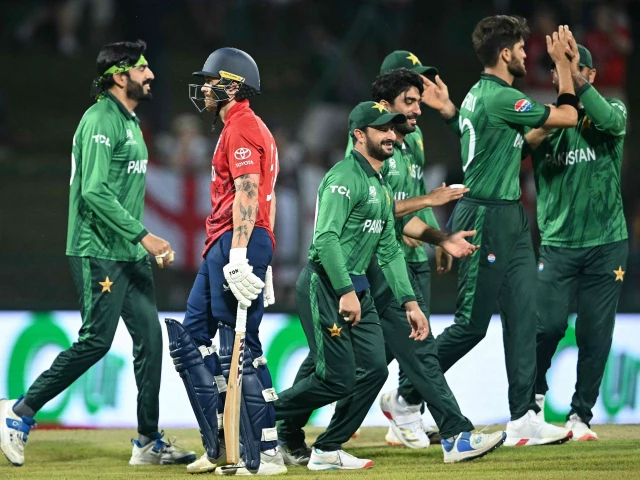
The first T-20I of the three-match series between Pakistan and Sri Lanka will be played at Rangiri Dambulla International Stadium, Dambulla, Sri Lanka today.

The first match is scheduled to start at 6:30 PM PST.

Salman Agha and company will be looking to get used to the conditions because they will play all of their games of the ICC T20 World Cup 2026 in Sri Lanka.

 Though Pakistan are without some key faces like Babar Azam, Haris Rauf, and Shaheen Afridi, who are playing in the BBL. But they still have a strong squad.

 Similarly, Sri Lanka are ready to produce some good games as they have almost all players ready.

On the other hand, Pakistan team skipper Salman Ali Agha has expressed the hope that the players will perform well.

“The series will enable us to adjust to the weather and conditions of Sri Lanka ahead of the upcoming ICC T20 World Cup 2026.”

“We have good players in our squad who are future prospects. We want to give them opportunities, and I am hopeful they will deliver strong performances in the series.”

The other two matches will be played on 9 and 11 January as preparations intensify for the World Cup to be held in India and Sri Lanka from 7 February to 8 March. The first ball of the match will be bowled at 7pm local time.

The series will help the national selection committee finalize Pakistan’s 15-member squad for the mega event.

Pakistan will play all their WC fixtures in Sri Lanka, making the forthcoming series a vital opportunity to adapt to local conditions.

Salman Ali Agha will continue to lead the T20I side.

The side has already won two tri-series tournaments and bilateral T20I series against Bangladesh, West Indies and South Africa in 2025 under Agha’s leadership.

In the recent times, Pakistan have won three of the last five T20Is against Sri Lanka, which include win in the knockout match of the ACC Men’s T20 Asia Cup in Dubai and tri-series final in Rawalpindi.

 Pakistan:

Sahibzada Farhan, Saim Ayub, Fakhar Zaman, Salman Ali Agha (C), Usman Khan (WK), Shadab Khan, Mohammad Nawaz, Faheem Ashraf, Naseem Shah, Abrar Ahmad, Salman Mirza.

Sri Lanka:

Pathum Nissanka, Kamil Mishara, Kusal Mendis (WK), Kusal Perera, Charith Asalanka, Dasun Shanaka (C), Kamindu Mendis, Wanindu Hasaranga, Maheesh Theekshana, Dushmantha Chameera, Matheesha Pathirana.


Source link

Continue Reading

Trending