

Sports
FCS national championship preview: Illinois State, Montana State starving for title

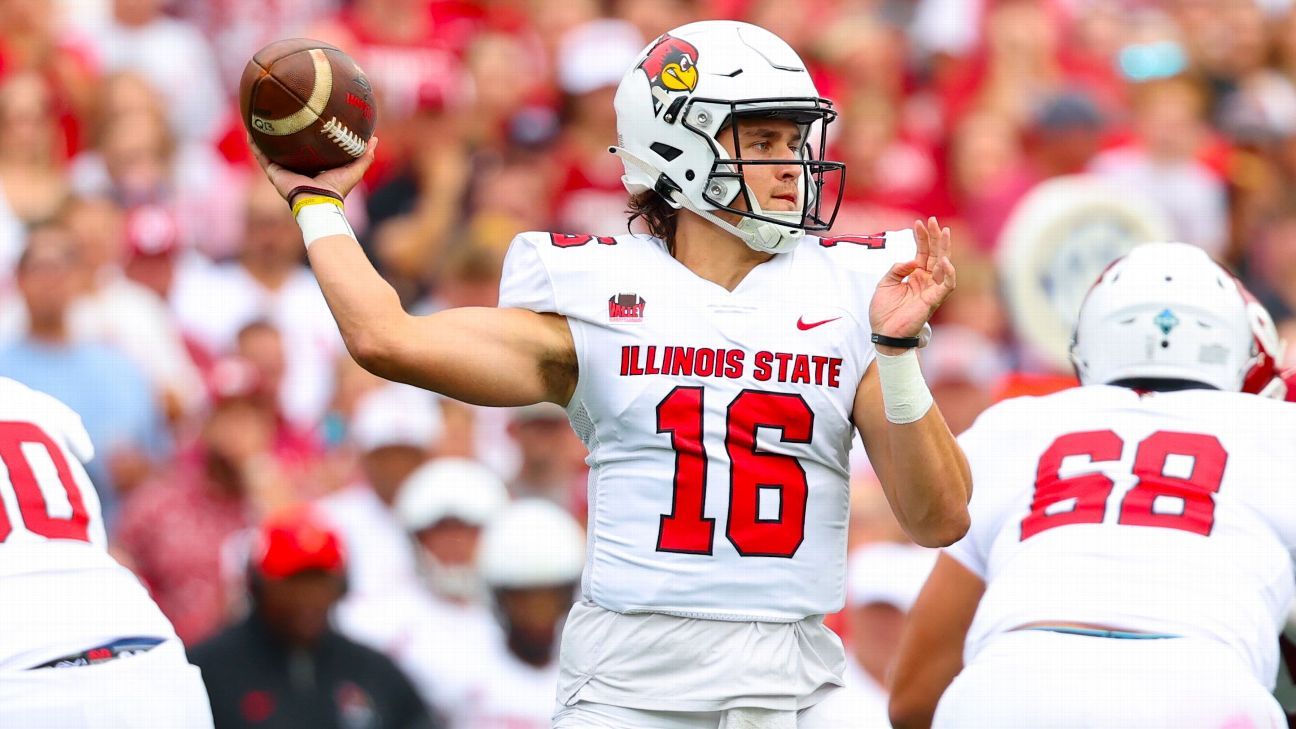
Illinois State came within 37 seconds of a national title in 2014 but couldn’t keep North Dakota State out of the end zone. After getting thumped by NDSU in the 2021 title game, Montana State returned last season and tried everything it could to erase an early deficit against the mighty Bison. The Bobcats came up three points short.
Both ISU’s and MSU’s ambitions have been held back by the Goliath of FCS, but thanks to an all-timer of an upset, one will win the 2025 national title. Brock Spack’s ISU Redbirds knocked out a particularly strong NDSU squad in the round of 16, erasing a late 14-point deficit and nailing a well-timed 2-point conversion. And with the bracket busted, the Redbirds kept rolling: They pulled off two more road upsets — they’re the first team to win four road games in a single playoff run — and rode a rapidly improving defense to a spot in their first title game since the 2014 heartbreaker.
Montana State, meanwhile, is in its third title game in five seasons. With a mix of new blood and stalwarts from last year’s oh-so-close squad, the Bobcats have won 13 straight, and they outclassed rival Montana in the semifinals. They’ve waited more than 40 years for a follow-up to their 1984 national title, and they came achingly close to the mountaintop last season. Now all they have to do is beat a team of destiny.
On Monday night in Nashville (7:30 ET, ESPN), two teams yearning to take advantage of the best title chance they might ever have will square off. Here’s everything you need to know about a fascinating FCS finale.

How they got here
 No. 2 Montana State Bobcats
Record: 13-2
SP+ rankings: third overall, fourth on offense, ninth on defense
First-team all-conference selections: RG Titan Fleischmann (6-foot-4, 300 pounds, Jr.), NT Paul Brott (6-3, 300, Sr.), edge Kenneth Eiden IV (6-1, 250, Sr.), SS Caden Dowler (6-0, 205, Sr., Big Sky Defensive Player of the Year)
Key regular-season results: lost to No. 2 South Dakota State 30-24, def. No. 10 Northern Arizona 34-10, def. No. 9 UC Davis 38-17, def. No. 2 Montana 31-28
Playoff run: def. Yale 21-13, def. No. 7 Stephen F. Austin 44-28, def. No. 3 Montana 48-23
Including a Week 1 blasting by Oregon, Montana State averaged a pretty mortal 23.8 points over the first four games of the season. As always, the run game was strong from the start — the Bobcats have gained at least 189 yards on the ground against every FCS opponent and have topped 225 yards 10 times — but new quarterback Justin Lamson, a Stanford transfer, averaged just 4.3 yards per pass attempt (including sacks) against Oregon and South Dakota State, and he had only three touchdown passes in the first four games.
Over his past 11 games, however, Lamson has thrown for 2,157 yards (13.4 per completion) with a 21-to-1 TD-to-INT ratio. Complement a dynamite run game with an error-free and occasionally explosive passing game, and you’re going to be awfully hard to stop. MSU has averaged 43.3 points per game in these 11 contests and has allowed just 13.9 per game in its past 13. The Bobcats found fifth gear, and they’ve stayed there, really having to sweat against only Montana in the regular-season finale and Yale in their first playoff game.

Record: 12-4
SP+ rankings: 10th overall, 11th on offense, 28th on defense
First-team all-conference selections: WR Daniel Sobkowicz (6-3, 205, Sr.), LT Jake Pope (6-7, 300, Sr.), LB Tye Niekamp (6-3, 240, Jr., Missouri Valley Defensive Player of the Year), CB Shadwel Nkuba II (6-1, 190, Sr.)
Key regular-season results: lost to No. 1 North Dakota State 33-16, lost to No. 25 Youngstown State 40-35, def. No. 21 South Dakota 21-13, def. No. 15 South Dakota State 35-21, lost to No. 24 Southern Illinois 37-7
Playoff run: def. No. 16 Southeastern Louisiana 21-3, def. No. 1 North Dakota State 29-28, def. No. 8 UC Davis 42-31, def. No. 12 Villanova 30-14
Brock Spack has brought incredible reliability to ISU; in 17 seasons in Normal, his Redbirds have won at least six games 14 times and at least 10 five times. ISU had won three FCS playoff games in its history before he arrived in 2009 — and has won 12 since. But that 2014 title game run was starting to seem pretty far in the rearview mirror. The Redbirds hadn’t made it past the quarterfinals since then, and they had reached the playoffs only once in the 2020s.
Illinois State won four in a row late in the regular season to all but clinch a playoff spot, and the offense provided plenty of sterling moments. But even with star linebacker Tye Niekamp, the defense didn’t really look the part, and a humbling 37-7 loss to Southern Illinois in the regular-season finale gave no indication of what was to come. The Redbirds were only 21st in SP+ heading into the playoffs, and they’ve been projected underdogs in every game they’ve played.
They’ve redefined “peaking late,” however. They’ve overachieved against SP+ projections by 7.2 points per game on offense and by 14.1 on defense, and after four immaculate road wins, here they are.
Can ISU keep the magic formula going?
Based on pregame SP+ projections, ISU had a 0.3% chance of winning its four playoff games — and that doesn’t even begin to crack the degree of difficulty involved in beating North Dakota State while throwing five interceptions. But just about everyone in the Redbirds’ lineup has come through when required. Quarterback Tommy Rittenhouse indeed threw five picks in Fargo, but he also has thrown eight touchdown passes in the past three games. Seven of those went to Daniel Sobkowicz, who has 29 catches for 403 yards in four playoff games, scored twice against NDSU and went for 150 yards against UC Davis. (Sobkowicz also threw a TD pass to Rittenhouse against Southeastern Louisiana.) Lead back Victor Dawson, meanwhile, has 517 rushing yards (5.3 per carry) in the playoffs after producing 734 (4.8) in 12 regular-season games.
The defense ranked 56th in SP+ when the playoffs began but has transformed into something pretty remarkable. Southeastern Louisiana averaged 33.3 points per game in the regular season but finished with more interceptions thrown (four) than points scored against the Redbirds. NDSU gained 78 yards on its first snap, a long catch-and-run from Bryce Lance, but gained just 101 additional yards. UC Davis, with one of the best offenses in the country, scored 10 points in the first four minutes and 14 in the final three, but scored just once in seven drives in between as ISU was seizing control with a 35-7 run. Villanova turned three early trips into ISU territory into just six points and trailed by 24 when it finally got moving again late.
Niekamp has been as reliable as ever in the playoffs, but so many others have contributed when needed, from tackles Garret Steffen and Jake Anderson (6.5 TFLs and five sacks) to corners Shadwel Nkuba II and Cam Wilson (one INT, seven breakups, a TFL, a forced fumble and a fumble recovery) to safety CJ Richard Jr. (two picks, a breakup and a fumble recovery). This has been a 2007 or 2011 New York Giants type of run, with an occasionally error-prone QB coming up big in critical moments and an increasingly confident and disruptive defense taking over for growing swaths of time.
If you can hold NDSU to less than 200 yards, you can do it to pretty much anyone, but obviously it will be an enormous challenge pinning down a Montana State offense that has scored at least 31 points in 11 of its past 13 games. One wouldn’t figure the odds of success here are high, but if there’s one thing we’ve learned, it’s that the Redbirds don’t care much about the odds.
So MSU will close the deal this time … right?
Last year’s title game loss felt like such a missed opportunity for Montana State. NDSU hadn’t been at its absolute best in 2024, and Brent Vigen’s Bobcats had an unbeaten and particularly brilliant squad led by All-Americans (and soon-to-be departees) such as quarterback Tommy Mellott — the Walter Payton Award winner and a sixth-round NFL draft pick — plus fullback/tight end Rohan Jones, offensive linemen Marcus Wehr and Conner Moore, and defensive end Brody Grebe. They were going to get hit by attrition, and NDSU really wasn’t. It was time for them to break through, but a poor start in the title game prevented it.
Even if the losses were to Oregon and South Dakota State, an 0-2 start in 2025, combined with NDSU’s immediate brilliance, reinforced the idea that MSU’s time had passed. But you never know what will happen if you just keep trying to improve. Justin Lamson found his rhythm after the slow start, and when it was time for the Bobcats to shift into a new gear, they did so.
Going back to the end of the regular season, they have played five straight games against playoff teams — including four against quarterfinalists and top-eight seeds (Montana twice, Stephen F. Austin and UC Davis) — and have won those five games by an average of two touchdowns. Lamson has completed 72% of his passes and thrown for 886 yards, with 334 non-sack rushing yards plus 12 combined TDs, in these five games, and running backs Adam Jones (the dual threat) and Julius Davis (the workhorse) have combined for 856 rushing yards, 120 receiving yards and 9 touchdowns. Slot receiver Taco Dowler hasn’t always had much to do, but he caught a game-turning 87-yard touchdown pass in the semifinals, and wideouts Dane Steel and Chris Long have come through as well.
Against a strong group of offenses in this five-game run — among others, Montana is second in offensive SP+, and UC Davis is eighth — MSU’s defense has allowed 21.8 points per game and 5.1 yards per play (not dominant, but well below these opponents’ season averages) and has pounced beautifully on mistakes: The Bobcats have made 18 sacks and forced 11 turnovers, scoring on three of them. Safety Caden Dowler reeled in pick-sixes in each of the last two regular-season games, and linebacker Bryce Grebe‘s 40-yard pick-six finished off the semifinal blowout.
Caden Dowler might be the biggest story of the game: He’s the best safety in FCS — and maybe the best player on either of these rosters — and he has made 6 picks with 4 breakups, 6.5 TFLs and 2 forced fumbles this season. But he left the semifinal win with an injured arm, and although Vigen expressed optimism about his availability, it’s a race against time, and he might not be 100 percent even if he plays.
Projecting the title game
DraftKings projection: Montana State 33.5, Illinois State 23.0 (MSU -10.5, over/under 56.5 points)
SP+ projection: Montana State 33.2, Illinois State 24.8
Per SP+, Montana State has about a 70% chance of winning this one, which means we can almost think of this as having three equally likely outcomes: a tight ISU win, a reasonably tight MSU win and a comfortable MSU win. If ISU can control the ball with Dawson, and if Rittenhouse avoids picks, the Redbirds could score enough to give themselves a chance. But the Redbirds’ margin for error isn’t great, as they’ll also have to continue overachieving drastically on defense against a peaking MSU attack.
It’s hard to bet against Spack’s Redbirds considering the odds they’ve defied just to get to this point. But it’s also pretty easy to see this as Montana State’s moment. The Bobcats just keep inching closer and closer, and thanks to ISU, the typical final boss isn’t waiting in the final. If you squint just right, both of these teams have a “team of destiny” vibe. Only one will lift the trophy, however.
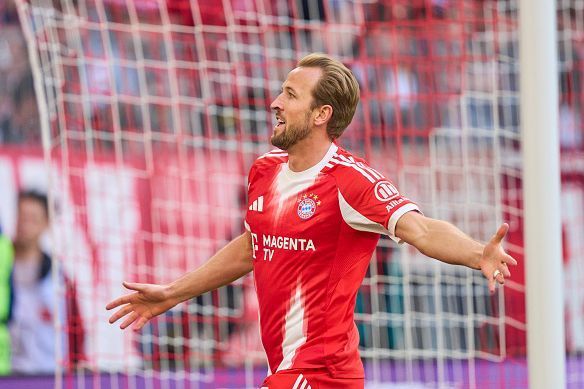
Harry Kane has reiterated that Bayern Munich still have “a lot to play for” this season after winning the Bundesliga title following their 4-2 thrashing of Stuttgart on Sunday.
The England international was substituted on at half time to bag his 31st goal, taking his tally to 51 across all competitions for Bayern this season, the most by any player for a top-five league side since Erling Haaland in 2022-23 (52).
After retaining the title — Bayern’s 13th in 14 seasons — an overjoyed Kane shared his ambitions for the remainder of the season.
“It’s been a fantastic season for us to finish the league off in the way we have with the goals that we scored.” Kane said.
“It’s a credit to the mentality of the boys, from the first game to the last we just keep pushing.
“We still have a lot to play for in other competitions, but all the hard work and days together this makes it worth it to be champions again.”
Kane, Michael Olise and Luis Díaz have a combined 94 goal contributions between them this season — the most by a trio on record (since 1988) in the Bundesliga.
– The numbers behind Harry Kane’s record-breaking Bundesliga season for Bayern Munich
– Bayern Munich retain Bundesliga title after thrashing Stuttgart
– Who has won Bundesliga? All-time German soccer winners list
Kane celebrated the trio’s chemistry: “It’s special, I feel like the relationship just get stronger and stronger, it grows every time we play and train with each other.
“There is still a lot to play for we feel good every time when we’re on the pitch.
Two more trophies are up for grabs for Vincent Kompany’s side, with a semifinal against Bayer Leverkusen in the German Cup to play next as well as a highly-anticipated clash against Paris Saint-Germain in the Champions League semifinals.
Kompany, who has now won the Bavarian club’s 34th and 35th Bundesliga crowns, hailed the opportunity to keep winning trophies.
“The numbers are great, but it’s not over yet,” Kompany said.
“We keep going. It’s also a question of mentality. We always give our all, whether in pre-season or for a competitive fixture and I don’t want to stop yet.
“We’ve got crucial weeks to come. We’re excited, but also know how tough it’ll be. Our belief is there, and that’s very valuable in football.”
Additional information from PA contributed to this report.
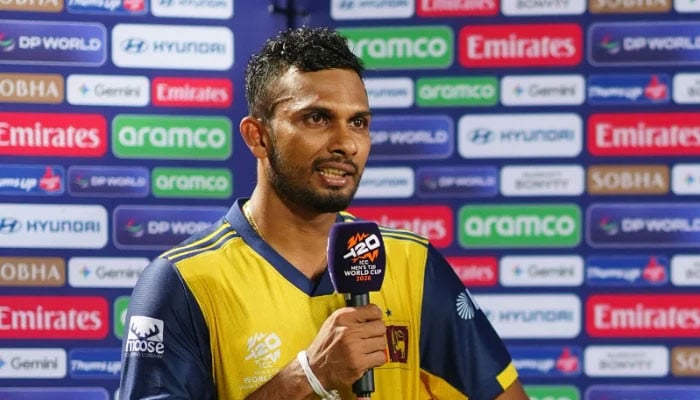
The Pakistan Cricket Board (PCB) has imposed a one-year ban on Sri Lanka’s Dasun Shanaka from participation in the next edition of the Pakistan Super League (PSL), citing contractual violations.
Shanaka was signed by defending champions Lahore Qalandars for Rs7.5 million in the accelerated round of the inaugural players auction, held in February this year.
But just three days before the commencement of the ongoing PSL 11, the franchise confirmed that the Sri Lankan all-rounder has withdrawn due to personal reasons and was replaced by Australia’s Daniel Sams in the squad.
In a statement, the PCB said it conducted a comprehensive assessment of recent contractual developments involving Shanaka and Lahore Qalandars, after the player withdrew from the tournament on March 21, 2026.
The board concluded that the unilateral withdrawal amounted to a clear breach of the player registration terms and the tripartite agreement. It further noted that the reasons cited for the withdrawal were not covered under the existing contractual framework.
While acknowledging Shanaka’s expressions of regret and his stated desire to continue playing in Pakistan, the PCB said the nature of the breach required regulatory action to safeguard the integrity and exclusivity of the league.
As a result, the PCB confirmed that Shanaka has been barred from participating in PSL 12, effective immediately.
Meanwhile, in a statement released by the PCB, the Sri Lankan all-rounder issued an apology to Pakistani fans and the wider cricket community.
“I deeply regret my decision to withdraw from the HBL PSL and offer my sincere apologies to the people of Pakistan, the fans of HBL PSL, and the wider cricket community,” Shanaka was quoted as saying by the PCB.
“The HBL PSL is a prestigious tournament, and I fully understand the disappointment caused by my actions. To the loyal fans of Lahore Qalandars, I am truly sorry for letting you down.”
He further clarified that he had no intention of joining any other franchise league at the time of his withdrawal from the PSL, urging that he has great respect for Pakistani fans and expressing his hope to make his return to the marquee league soon.
“I must clarify that at the time I withdrew from the PSL I had no intention of joining any other tournament. I have the greatest respect for Pakistani Fans and have always enjoyed my time in Pakistan. I hope to return to the HBL PSL in the future with renewed dedication and the trust of the fans.”
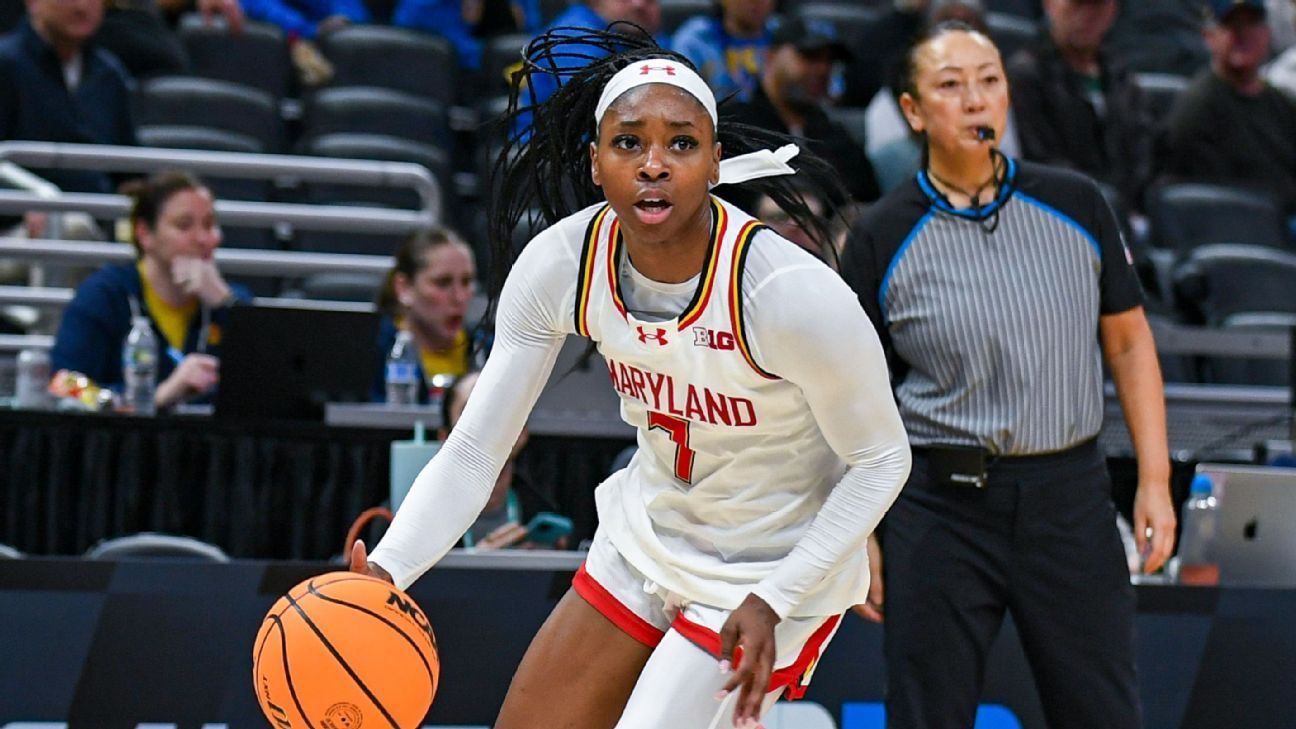
Just under a month ago, Maryland Terrapins guard Oluchi Okanawa went viral for an intense moment with her coach Brenda Frese in their 74-66 loss to the North Carolina Tar Heels in the NCAA Women’s Basketball tournament.
Now, she is headlining what appears to be a rebuild of the Nigeria women’s basketball program.
Okananwa, the Terrapins star player, was having a dreadful third quarter where she turned the ball over multiple times, missed three free throws and missed a layup before getting yanked by Frese.
What followed turned out to be one of the most viral moments of March Madness. Frese went forehead-to-forehead with the guard in an intense coaching moment, telling her star Terrapin “I believe in you, but you got to want this moment!”
Oluchi went back into the game, immediately scored, got a steal and ended up with 21 points in a remarkable turnaround. She said after the game that she welcomed the intensity of the coaching moment.
“Coach understands I’m a competitor at heart,” she said. “I’ve told her this before, and I’ll keep on telling her this forever. I love to be coached hard. That’s what she does with me every single day.”
Less than four weeks later, Okananwa is now top of the list on the Nigeria women’s basketball team, as they named a 21-player training camp roster ahead of a series of friendlies against WNBA opposition, part of preparations for the 2026 FIBA Women’s Basketball World Cup in Berlin.
Far from routine, the squad named by head coach Rena Wakama, appears to be a clear indication that D’Tigress are fully in refresh season, with a wave of NCAA-based players called up, led by Okananwa and Texas Tech’s Stephanie Okechukwu, the tallest player in the history of NCAA women’s basketball at 7 feet 1 inch.
Both players are part of a total of 15 players on that roster picked from fourteen different US programs. Of those, Okananwa and Okechukwu are the undisputed picks of a bunch spanning Power Four programs, the Ivy League and the junior college ranks.
It is the most concentrated draw on the NCAA pipeline in D’Tigress history and comes in the wake of the departure of former captain Sarah Ogoke, as the NBBF looks to lower the age of the team with players like Ezinne Kalu, Promise Amukamara, and Victoria Macaulay the other side of 30.
Okananwa, a junior, earned AP and WBCA All-America honorable mention honors this season after averaging 17.8 points, 5.4 rebounds and a Big Ten-leading 74 steals in 33 starts for the Terrapins. She led Maryland in scoring in 28 of 33 games and reached 20 points or more in 14 outings.
With her talent, Okananwa could well be the face and future of Nigeria women’s basketball.
Okechukwu, the 7-foot-1 center from Umunneochi, Nigeria, who attended high school in Japan, signed with Texas Tech in January as the tallest player in the history of NCAA women’s basketball.
She did not play during the 2025-26 season due to NCAA eligibility complications related to her academic transcripts, but remains enrolled at Texas Tech and is expected to compete beginning next season.
Stanford are the only program to contribute more than one player. They are Shay Ijiwoye, a sophomore guard from Phoenix, Arizona, who appeared in 32 games for the Cardinals last season, averaging 2.7 points, 2.1 rebounds and 1.3 assists.
Her teammate Nora Ezike, a freshman forward from La Grange, Illinois, made her Nigeria debut at the FIBA U19 World Cup in Brno, Czechia, last July, where she opened with 25 points on 8-for-8 shooting in Nigeria’s first-ever U19 World Cup victory against China. She played in nine games off the Stanford bench in 2025-26.
Another addition is Uche Izoje, who may be college basketball’s most compelling origin story. The 6-foot-3 center from Asaba, Delta State, left Nigeria at age 13 to play basketball in Japan, spent two seasons with Chanson V-Magic in the Women’s Japan Basketball League as a two-time All-Star and 2024 Rookie of the Year, then arrived in the United States for the first time to play at Syracuse.
In her debut college season she averaged 15.6 points, 9.2 rebounds and a conference-leading 2.6 blocks per game, capping a standout debut season by winning ACC Rookie of the Year and going on to score 23 points in 25 minutes against Iowa State in the first round of the NCAA Tournament. Hall of Famer Geno Auriemma called her “the best player we’ve seen this year.”
Miami freshman forward Danielle Osho, a four-star recruit from Dacula, Georgia and a two-time Georgia state high school champion, also earns a call-up. Osho averaged 2.5 points and 2.9 rebounds in her first college season with the Hurricanes.
Despite the seemingly overwhelming number of NCAA-related rookies, the squad is held together by an experienced core of vets that include Kalu, Amukamara, Macaulay, Nicole Enabosi and Pallas Kunayi-Akpanah.
But they are also missing just as much experience, including the leadership of captain Amy Okonkwo, who signed a training camp contract with the Dallas Wings after averaging 11.0 points, 3.1 rebounds and 1.4 steals across eight appearances in her WNBA debut with the franchise in 2025.
Elizabeth Balogun is in a similar position with the Toronto Tempo. Murjanatu Musa is also absent, competing instead with Basket Landes at the EuroLeague Women’s Final Six in Zaragoza, Spain, where she is in the running for the MVP in only her first season in that competition.
Despite this influx of largely young and untested players, Kunayi-Akpanah says the objective for those three games in the States is clear.
“These aren’t just exhibition games,” she said. “These are games for us to test our plays, our systems and how we communicate under pressure. Basically, everything we’ve been building. All is to arrive in our best shape for the World Cup in September.”
D’Tigress face the Los Angeles Sparks on April 25, the Minnesota Lynx on April 27, and the Indiana Fever on May 2 as part of their preparations for the 2026 FIBA World Cup, which begins September 4 in Berlin, Germany.
Nigeria qualified as AfroBasket champions, but were still required to take part in World Cup qualifying tournament where they went 2-3.
Still, those results were sufficient to maintain their eighth-place standing in the FIBA Women’s World Rankings with 700.3 points and D’Tigress remain the only African nation ranked inside the global top 10.
Full training camp roster:
Promise Amukamara, Shay Ijiwoye, Donanu Regina, Jerni Kiaku, Ezinne Kalu, Oluchi Okananwa, Gabby White, Nora Ezike, Victoria Macaulay, Vivian Iwuchukwu, Pallas Kunayi-Akpanah, Suzie Rafiu, Danielle Osho, Nicole Enabosi, Maryam Dauda, Rita Igbokwe, Stephanie Okechukwu, Uche Izoje, Vera Ojenuwa, Favour Nwaedozi and Blessing Ejiofor.
D’Tigress College Future:
Shay Ijiwoye – Stanford
Donanu Regina – Barton Community College
Jerni Kiaku – Indiana University Hoosiers
Oluchi Okananwa – Maryland
Gabby White – UVA transferring to UNC
Nora Ezike – Stanford
Vivian Iwuchukwu – USC Trojans
Suzie Rafiu – Columbia University
Danielle Osho – Miami Hurricanes
Maryam Dauda – U South Carolina Gamecocks
Rita Igbokwe – Ole Miss
Stephanie Okechukwu – Texas
Uche Izoje – Syracuse
Vera Ojenuwa – UGA
Favour Nwaedozi – Mississippi State

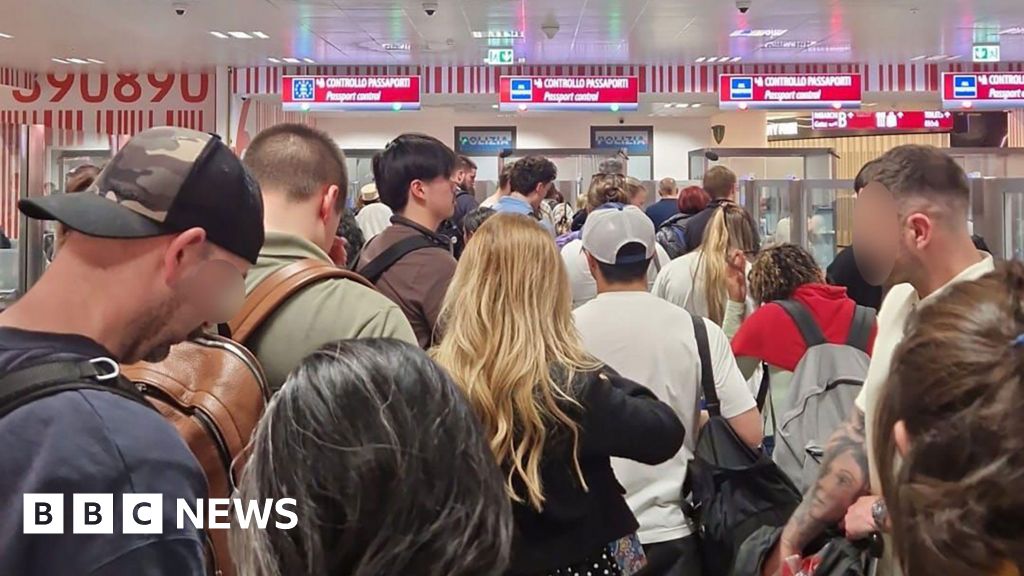
Ryanair flight from Milan to Manchester leaves passengers behind due to border delays

Harry Kane vows Bayern Munich have ‘a lot to play for’ after Bundesliga title

Hyundai’s New Ioniq 3 Has Hot-Hatch Looks, but Can It Beat BYD?

-

 Fashion4 days ago
France’s LVMH Q1 revenue falls 6%, shows resilience amid Iran war
-

 Sports1 week ago
The case for Man United’s Fernandes as Premier League’s best
-

 Entertainment1 week ago
Palace left in shock as Prince William cancels grand ceremony
-
 Business1 week ago
UK could adopt EU single market rules under new legislation
-

 Entertainment5 days ago
Is Claude down? Here’s why users are seeing errors
-

 Fashion1 week ago
Energy emerges as biggest cost driver in textile margins
-
 Business1 week ago
Delta Air Lines unveils first new Delta One suite in premium cabin arms race
-

 Tech1 week ago
A Lot of Shops Won’t Fix Electric Bikes. Here’s Why