

Business
FDI Easing Not For Chinese firms; To Benefit Entities With Minority Chinese Holding: Report

Last Updated:
As per the amended press note 3, investors with non-controlling LBC beneficial ownership of up to 10 per cent shall be permitted under the automatic route.




The Union Cabinet on March 10 made changes in the press note 3 of 2020. Under the press note, investors from countries sharing land borders with India had to seek mandatory approval to invest in any sector.
Overseas companies having Chinese shareholding of up to 10 per cent will be eligible to invest in India under the automatic route across sectors; however, the relaxed FDI norms will not apply to entities registered in China/Hong Kong or other countries sharing land borders with India, a senior official said on Wednesday.
Earlier, foreign firms with shareholders from these land border nations owning even a single share had to seek mandatory approval to invest in India in any sector.
The Union Cabinet on March 10 made changes in the press note 3 of 2020 in this regard. Under the press note, investors from countries sharing land borders with India had to seek mandatory approval to invest in any sector.
“All the restrictions for investors from land bordering countries (LBCs) are still applicable. There is no relaxation so far as entities or investors in LBCs are concerned. This relaxation is only for entities in non-LBCs and having beneficial owners from LBCs below 10 per cent and non-controlling stake… so there are no relaxations so far as investments from LBCs are concerned,” Joint Secretary in the department for promotion of industry and internal trade (DPIIT) Jai Prakash Shivahare told reporters here.
He further explained that if a firm from a country sharing a land border with India provides technology and holds even one per cent stake, through which it may exercise some form of control, the investment will still require approval through the government route.
As per the amended press note, investors with non-controlling LBC beneficial ownership of up to 10 per cent shall be permitted under the automatic route as per the applicable sectoral caps, entry routes, and other conditions.
Such investments will be subject only to the reporting of relevant information or details by the investee entity to the DPIIT.
The government has, however, announced an expedited clearance to foreign direct investment (FDI) proposals of companies from China and other countries sharing land borders with India.
Proposals for LBC investments in specified sectors and activities of manufacturing in capital goods, electronic capital goods, electronic components, polysilicon and ingot-wafer, advance battery components, rare earth permanent magnets and rare earth processing shall be processed and decided within 60 days.
DPIIT Secretary Amardeep Singh Bhatia said that this list can be expanded or reduced by a committee of secretaries headed by the cabinet secretary.
At present, about 600 applications are under the press note 3.
When asked what would happen to those applications, the secretary said many would fall under either of the two categories – below the 10 per cent threshold and the expedited mechanism.
Those covered under the below-10 per cent limit can proceed with the investment after the notification is issued and subsequently file the required information, while those who want to come under the expedited mechanism can resubmit their applications.
A specific mechanism has been laid down for expedited approvals to ensure that the 60-day timeline is followed, as it would provide certainty to probable investors, Bhatia said.
“Now we are providing a non-PN3 route for those which are below the threshold of ownership and control…If a company from LBC wants to invest in India, in that case, the PN3 route will apply,” he said, adding that the concept of beneficial ownership (BO) is relevant for companies that are located outside the land border-sharing nations.
He added that companies like BlackRock were seeking the easing of the press note. The benefit of the expedited process can be availed by a company outside LBCs also.
“In the expedited process, some steps have been done away with…but broadly, as far as the security clearances are required, political clearance is required, that process will remain in place,” the secretary said.
He informed that a portal is being prepared so that applicants can file the information and go ahead with their investments.
For others, like in specified sectors, there is a separate provision in the portal that is being made so that they will get clearances within 60 days.
When asked about the criteria followed to identify the specified sectors, he said, in these areas, “we found that we need to increase manufacturing in India”.
“We need manufacturing to take place in India, whether it is a sewing machine or whether it is an Industry 4.0 machine which are assembling solar cells, or whether it is switchgear and so on. So, these are areas in which we feel there is a large scope of partnership, and joint ventures…But having said that, this is not a watertight compartment,” Bhatia said.
That is why the flexibility is there to add or subtract sectors.
The changes approved by the cabinet will be notified by the DPIIT and the Department of Economic Affairs. After that, it will come into effect.
“We will try to get it done as soon as possible,” he added.
(This story has not been edited by News18 staff and is published from a syndicated news agency feed – PTI)
March 11, 2026, 18:08 IST
Read More

Business
Reliance to fund oil refinery in US; Donald Trump calls it ‘historic $300 billion deal’ – The Times of India

MUMBAI: Reliance Industries (RIL) will bankroll the first new oil refinery project in the US in 50 years, marking one of its biggest overseas bets and a return to the American energy market after four years.America First Refining (AFR), the startup developing the refinery at the Brownsville port in Texas, said it received a “nine-figure investment from a global supermajor at a 10-figure valuation” in Feb but did not name the investor. “For the first time in half a century, the US will build a new refinery designed specifically for American shale oil,” said AFR chairman & founder John Calce.US President Donald Trump, announcing the refinery project on his social media platform Truth Social, named RIL as the investor and called the investment by India’s largest privately held energy company “tremendous”.This announcement comes after RIL exited the upstream oil and shale gas business in the US in 2021.Construction of the 168,000-barrels-per-day shale oil refinery is expected to begin in the second quarter of this year.
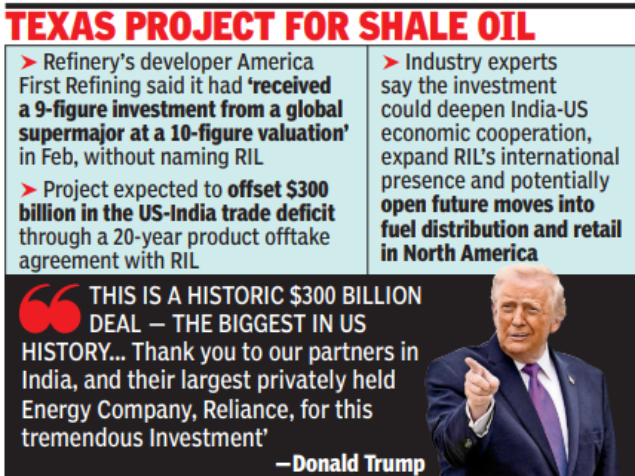
‘Opportunity for Indian co to enter US refining ecosystem’AFR also said the “same global supermajor” had signed a 20-year agreement to purchase the refinery’s output.The project is also expected to help narrow India’s trade surplus with the US, an issue that has long been a point of concern for Trump. “This is a historic $300 billion deal, the biggest in US history,” read Trump’s post on Truth Social.According to AFR, the figure reflects the long-term offtake arrangement under which the global supermajor will purchase 1.2 billion barrels of shale oil valued at $125 billion and 50 billion gallons of refined petroleum products such as gasoline, diesel and jet fuel worth about $175 billion. Combined, the transactions are expected to improve the US trade balance by $300 billion, it said.Analysts noted that the actual equity investment in the refinery itself has been described as a “nine-figure” sum, implying several hundred million dollars, while the project valuation is in the “ten-figure” range, indicating that the capital commitment is likely to remain below $1 billion.The Texas refinery will mark RIL’s second greenfield investment outside India. In 2021, the company announced a partnership with Abu Dhabi National Oil Company (ADNOC) to build a $2 billion petrochemicals plant in the UAE.Industry experts say the project could deepen economic cooperation between India and the US. M S Banani, joint managing director of Axiom Gas Engineering, a fuel station developer, said Texas is one of the world’s most important energy hubs, hosting major companies such as ExxonMobil, Chevron, Shell and BP.“Establishing a refinery there provides direct access to crude supply and one of the largest fuel markets globally,” Banani said. “RIL has extensive experience in processing heavy and sour crude at its Jamnagar refinery complex, which gives it a strong technical advantage in refining diverse crude grades, including those available from regions such as Venezuela.”From a business perspective, the investment represents an opportunity for an Indian company to enter the American refining ecosystem and potentially expand into fuel distribution and retail in the future, Banani added.“It reflects both the growing global presence of Indian industry and the strengthening strategic partnership between India and the US.”The development coincides with volatility in global oil prices driven by the intensifying conflict in West Asia. However, the announcement had little impact on RIL’s shares. At close of trading, the stock was down 1.3% at Rs 1,391 on the BSE. RIL did not comment on the announcement.

“Absolute travesty” for family targeted by thieves, as oil price rises – and reports of price gouging – prompt watchdog to act.
Source link
Stock prices in London closed lower on Wednesday as uncertainty around the length of the war in the Middle East persisted and fears of higher inflation loomed.
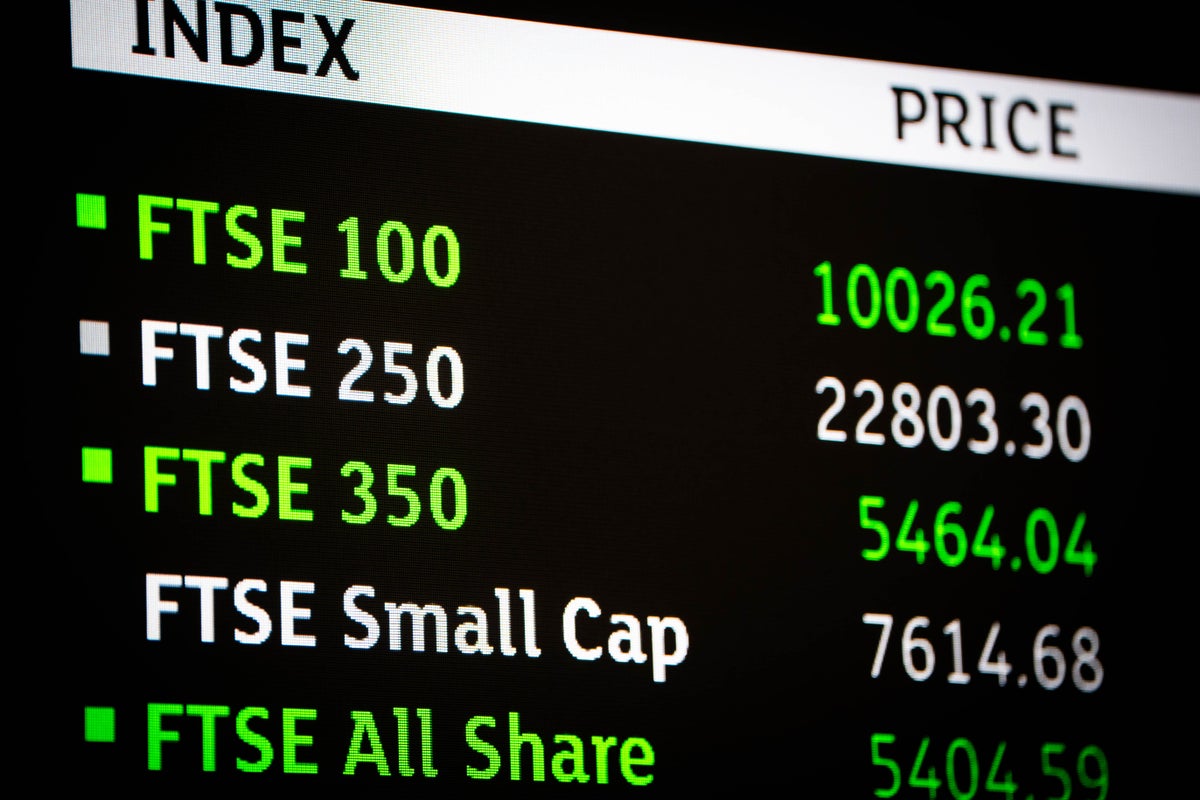
The FTSE 100 index closed down 58.47 points, 0.6%, at 10,353.77. The FTSE 250 ended down 110.93 points, 0.5%, at 22,381.34, and the AIM all-share closed down 5.19 points, 0.7%, at 773.61.
In European equities on Wednesday, the Cac 40 in Paris closed down 0.2%, while the Dax 40 in Frankfurt ended 1.4% lower.
The pound fell to 1.3410 US dollars on Wednesday afternoon from 1.3458 at the equities close on Tuesday. The euro stood lower at 1.1571 dollars from 1.1648.
Stocks came under pressure on Wednesday as Iran continued to target energy infrastructure and shipping in the conflict with the US and Israel.
The US warned Iranians that it considers civilian ports in the Strait of Hormuz to be legitimate targets, alleging the Tehran government was using the facilities for military operations.
“The Iranian regime is using civilian ports along the Strait of Hormuz to conduct military operations that threaten international shipping,” the US military said in a statement.
“Civilian ports used for military purposes lose protected status and become legitimate military targets under international law.”
Meanwhile, the International Energy Agency said its member countries would unlock 400 million barrels of oil from their reserves – the biggest such release ever – to ease the impact of the Middle East war.
“The oil market challenges we are facing are unprecedented in scale, therefore I am very glad that IEA member countries have responded with an emergency collective action of unprecedented size,” IEA executive director Fatih Birol said in a statement.
Brent oil was higher at 91.93 dollars a barrel on Wednesday afternoon from 87.92 late Tuesday.
Oil majors climbed on the FTSE 100 as Shell shares rose 2.0% and BP was up 2.9% and led the blue-chip index.
Stocks in New York were lower. The Dow Jones Industrial Average was down 0.8%, the S&P 500 index was 0.2% lower, and the Nasdaq Composite fell slightly.
The yield on the US 10-year Treasury widened to 4.21% on Wednesday from 4.11% on Tuesday. The yield on the US 30-year Treasury stretched to 4.85% from 4.75%.
Analysts said US inflation “remains too firm” for the Federal Reserve to provide more support to the labour market, as consumer price inflation was steady in February, though this is likely to change later in the year.
The Bureau of Labour Statistics said consumer prices grew 2.4% on-year last month, in line with expectations cited by FXStreet, and matching January’s increase.
Back in London, Legal & General shares fell the most on the FTSE 100 and were down 6.8%.
Mixed results took the shine off a record share buyback and showed there remains “more work to do”, analysts said.
The London-based insurer and asset manager said core operating profit rose 5.9% to £1.62 billion in 2025 from £1.53 billion in 2024, below £1.65 billion Visible Alpha consensus.
RBC Capital Markets said the miss was driven by a mix of weaker Institutional Retirement and Asset Management business, as well as slightly higher group debt costs.
The broker said the Asset Management miss is “particularly surprising” given the increase in consensus estimates in company complied consensus between December and March.
Solvency II net surplus generation rose to £1.26 billion from £1.20 billion, which JPMorgan said was 2% below consensus on an adjusted basis.
RBC said although core operating profit was only “marginally weaker” than expectations, Solvency II was a “significant” miss, while further asset write-downs in Asset Management contributed to a net income miss.
More positively, L&G said it will begin a £1.2 billion share buyback programme this week, the largest in its history and ahead of £1.1 billion consensus, as part of plans to return around £P2.4 billion to shareholders over the next year.
On the FTSE 250 index, Balfour Beatty led the way as shares jumped 8.9%.
The construction firm said its long-term outlook remained positive amid “strong visibility” from its order book, as it recommended a higher dividend amid a statutory pretax profit jump.
Balfour Beatty said pretax profit surged 51% to £323 million in 2025 from £214 million in 2024.
The company recommended a final dividend per share of 9.8 pence for 2025, up 13% from 8.7p in 2024. This would bring the total payout for 2025 to 14p, up 12% from 12.5p.
Hochschild Mining sank 7.2% after it reported significant revenue and profit growth for last year, as its increased dividend was lower than markets had expected.
The London-based gold and silver miner – which has projects in Argentina, Brazil and Peru – said revenue rose 25% to 1.18 billion dollars in 2025, from 947.7 million dollars in 2024.
Hochschild declared a final dividend of 5.00 US cents, more than doubled from 1.94 cents per share for 2024.
Gold fell to 5,172.30 dollars an ounce on Wednesday from 5,228.60 at Tuesday’s close.
The biggest risers on the FTSE 100 were BP, up 14.45p at 514.00p, Rentokil Initial, up 11.30p at 467.30p, Shell, up 63.50p at 3,244.00p, Hikma Pharmaceuticals, up 18.00p at 1,215.00p, and InterContinental Hotels Group, up 1.90p at 133.45p.
The biggest fallers on the FTSE 100 were Legal & General, down 17.50p at 241.00p, Smiths Group, down 118.00p at 2,482.00p, ICG, down 71.00p at 1,527.00p, Fresnillo, down 138.00p at 3,654.00p, and Endeavour Mining, down 172.00p at 4,616.00p.
On Thursday’s economic calendar are US weekly jobless figures, as well as trade balance and building permits data.
Thursday’s UK corporate calendar sees full-year results for savings, insurance and investments firm M&G and publisher Informa.


Sources: Syracuse to hire Toledo’s Bryan Blair as next AD

Was rapper close to her?
Reliance to fund oil refinery in US; Donald Trump calls it ‘historic $300 billion deal’ – The Times of India

-

 Politics5 days ago
India let Iran warship dock the day US sank another off Sri Lanka, say officials
-

 Sports5 days ago
Pakistan set for FIH Pro League debut | The Express Tribune
-
 Business5 days ago
Restaurant group changes name after bid to buys pubs across the UK
-

 Entertainment5 days ago
Harry Styles kicks off new era with ‘One Night Only’ comeback show
-
 Business5 days ago
Home heating oil: ‘Most of my pension has gone on home heating oil’
-

 Sports5 days ago
Winners and losers of the 2026 NHL trade deadline
-

 Entertainment5 days ago
Kanye ‘Ye’ West trips during trial: ‘Is he asleep?’
-

 Entertainment1 week ago
US launches military operations in Ecuador amid ongoing Iran War