

Business
Govt to ensure financial stability | The Express Tribune

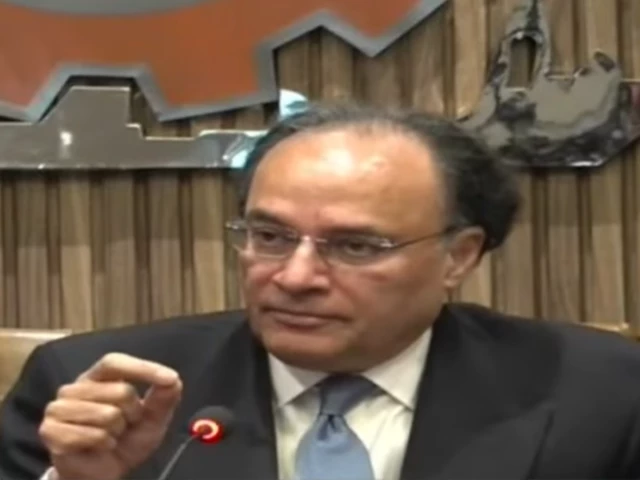
Financial Minister Muhammad Aurangzeb speaking at the Pakistan Economic Growth Conference organised by the Federation of Pakistan Chambers of Commerce and Industry (FPCCI) in Islamabad, Feb 14, 2026. PHOTO: LIVESTREAM
ISLAMABAD:
Federal Minister for Finance Muhammad Aurangzeb held a virtual meeting with the Pakistan Banks’ Association (PBA) to discuss the evolving economic and financial situation in light of regional developments and the importance of close coordination between the government, the State Bank of Pakistan and the banking sector to ensure financial stability and uninterrupted financial services.
The finance minister highlighted the government’s ongoing monitoring of the situation and the steps being taken to assess its potential economic implications.
He shared that the government had established a high-level coordination mechanism comprising key economic ministries and relevant institutions to review developments on a continuous basis. The forum is closely examining developments in global markets, particularly in relation to supply chains and energy markets, while assessing their potential impact on key macroeconomic indicators.
Muhammad Aurangzeb informed the participants that regular scenario analysis was being undertaken to evaluate possible implications for inflation, external accounts and broader economic stability. He emphasised that authorities remain focused on ensuring continuity of essential supplies and maintaining macroeconomic stability while responding to developments in a timely and prudent manner.
He noted that the government was engaged with relevant stakeholders and international partners as part of efforts to safeguard the country’s economic interests.
The finance minister highlighted the importance of coordinated decision-making and close engagement with key sectors of the economy during periods of uncertainty. In that regard, he appreciated the role of the financial sector in maintaining confidence and ensuring the smooth functioning of financial markets.
He encouraged the banking industry to continue supporting businesses and customers while maintaining responsible risk management practices. He also underscored the importance of operational resilience and effective communication within the financial sector to provide uninterrupted financial services.
Aurangzeb reaffirmed the commitment to maintaining open channels of communication with the banking industry and other stakeholders. He assured meeting participants that the government would continue to work closely with the State Bank and the financial sector to respond to developments in a coordinated and timely manner.
Earlier, PBA Chairman Zafar Masud briefed the finance minister on the banking sector’s internal consultations and preparedness measures undertaken in response to the evolving situation. He shared that the banking industry had convened discussions to review potential implications for financial markets and operational continuity, with a focus on uninterrupted services to customers and businesses.
Masud said the banking industry had put in place a coordination framework to facilitate timely consultation and information sharing among financial institutions. The industry is also engaging with key financial system stakeholders for a smooth functioning of financial services and payment infrastructure.
He added that the banking sector would remain in close contact with the State Bank and other relevant institutions while continuing regular consultations within the industry to monitor developments.
The PBA chairman underlined the importance of continued coordination between the government, the central bank and the banking sector to support financial market stability and facilitate trade and financial flows. He noted that engagements with international banking partners and financial institutions remain important to build confidence in financial transactions and support essential economic activity.
Export competitiveness, industrial growth
Separately, the finance minister met a delegation of leading textile and apparel exporters and industry stakeholders, led by Pakistan Regional Economic Forum Chairman Haroon Sharif, to discuss measures aimed at strengthening export competitiveness, facilitating investment and supporting industrial growth.
The minister stressed that strengthening export-led sectors remains central to Pakistan’s economic revival strategy. He noted that enhancing productivity, encouraging innovation and improving global competitiveness of Pakistan’s key industries were critical to expanding exports, creating employment opportunities and sustaining long-term economic growth.
He reaffirmed the government’s commitment to maintaining close engagement with industry stakeholders to ensure that economic policies remain responsive to the needs of the business community while supporting sustainable and inclusive growth. He also underscored the importance of modernisation, technological upgrading and value addition in strengthening Pakistan’s export competitiveness.
The delegation called for aligning fiscal and regulatory policies with Pakistan’s competitive strengths in order to accelerate export-led growth and enhance industrial productivity. They highlighted that value-added segments require focused policy attention and targeted support in light of the evolving global market dynamics and increasing regional competition.
Industry representatives sought a streamlined and growth-oriented taxation and compliance framework that could facilitate re-investment, business expansion and ease of doing business. They demanded such policies that encourage modernisation through technology adoption and digital transformation, while addressing structural bottlenecks that affect industrial efficiency and export competitiveness.
Business leaders also advocated a review of labour cost structures and regulatory levies to ensure that Pakistan’s export-oriented industries remain competitive in international markets. Rationalising such costs, they noted, would support increased production capacity, employment generation and sustained export growth.





Intellia Therapeutics, building exterior and company sign, Cambridge, Massachusetts, USA.
Spencer Grant | Universal Images Group | Getty Images
Intellia Therapeutics said its Crispr-based treatment for a rare swelling condition met its goals in a late-stage trial, marking a milestone for the field of gene editing and putting the company on track to seek approval from the U.S. Food and Drug Administration.
The company’s treatment uses Nobel Prize-winning technology Crispr to edit DNA and turn off the gene that controls production of a peptide that’s overactive in people with hereditary angioedema, causing them to experience potentially life-threatening swelling attacks. Intellia’s treatment is administered once through an hourslong infusion, making the edits directly in the liver.
Intellia said the one-time treatment reduced attacks by 87% compared with a placebo, meeting the study’s main goal. Six months after treatment, 62% of patients were free from attacks and weren’t using other therapies, Intellia said.
The company described the safety and tolerability of the treatment as “favorable,” reporting the most common side effects were infusion-related reactions, headaches and fatigue. Analysts were closely watching safety in the trial since a patient in a separate trial of a different treatment from Intellia died. That patient developed a liver injury and ultimately died from septic shock following an ulcer, according to the company.
“When you think about where we started with Crispr, just 12 years ago with some of the fundamental insights, I think there was a lot of talk about what might be possible, and we’ve had reports along the way in terms of milestones, but this is the first Phase 3 data in any indication with in vivo Crispr where you’re actually changing a gene that causes disease,” said Intellia CEO John Leonard.
The only FDA-approved Crispr-based medicine comes from Vertex Pharmaceuticals. Called Casgevy, the gene editing is done outside the body, or ex vivo. The process requires collecting a person’s blood cells, making the edits outside the body, then reinfusing them back into a patient. Intellia’s treatment, meanwhile, makes the edits inside the body, or in vivo.
Intellia said it has started a rolling application with the FDA and plans to complete the filing in the second half of this year. The company expects to launch the treatment in the U.S. in the first half of next year, if it’s approved.
If approved, Intellia’s treatment, lonvoguran ziclumeran, will compete with about a dozen other chronic drugs for HAE. Despite the allure of a one-time treatment, genetic medicines haven’t always been a commercial successes. BioMarin withdrew its gene therapy for Hemophilia A because of weak sales, for example.
Leonard said there are important differences between the two, like the fact that BioMarin’s therapy faced questions about how long the effects would last. In contrast, he said Intellia hasn’t seen a single case in almost six years where the effects diminished over time.
Despite the results, he’s reluctant to call Intellia’s treatment a functional cure.
“I think this is a tipping point for the disease and tipping point for Crispr-based in vivo therapy where you can make a change [and] it’s permanent,” Leonard said. “And, as far as we can tell, we don’t have a single patient in this program or other program where there’s been any waning of the effect of what we did to the gene or the effect of what we’ve seen with the clinical aspects of the disease itself. So it’s pretty exciting.”
Clarification: This story has been updated to clarify that a patient in a separate trial of a different treatment from Intellia developed acute liver injury and ultimately died from septic shock following an ulcer.

While many airlines say they are raising prices due to high fuel costs, József Váradi says European airlines are trying to boost demand
Source link
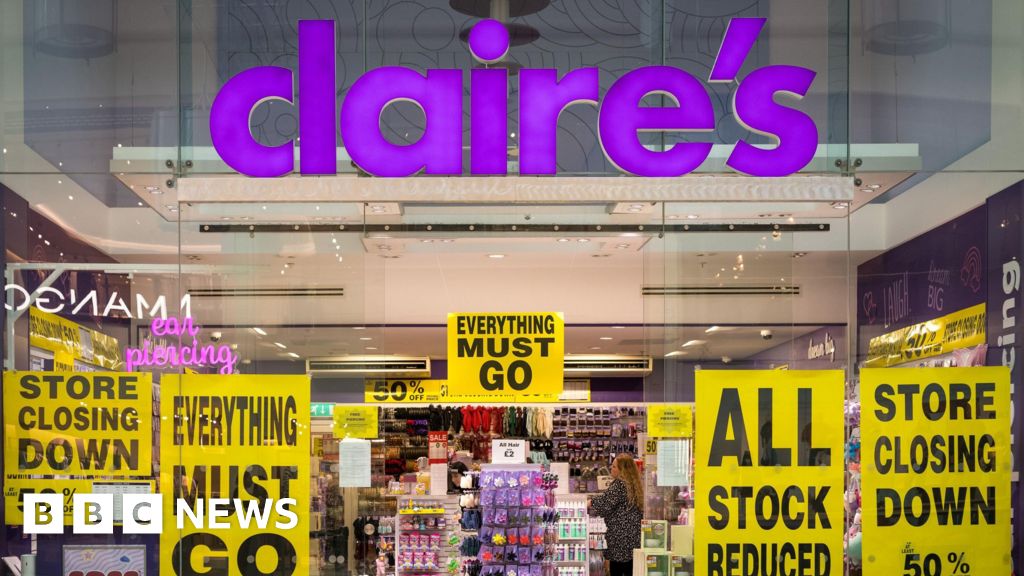
All of the chain’s standalone stores have stopped trading in the UK and Ireland.
Source link


King Charles and the Trumps unite at White House for a historic tea meeting

This M5 MacBook Air Discount Has Renewed My Faith in Cheap Laptops for 2026

Norway joins Type 26 Frigate Programme to boost NATO naval power

-

 Sports1 week ago
NCAA men’s gymnastics championship: All-time winners list
-

 Sports1 week ago
WWE WrestleMania 42 Night 2: Live match results and analysis
-

 Politics7 days ago
UK’s Starmer seeks to deflect blame over Mandelson appointment
-

 Fashion1 week ago
UK’s Sosandar returns to profitability amid robust FY26 performance
-

 Entertainment1 week ago
Lee Anderson, Zarah Sultana kicked out of UK Parliament for calling PM ‘liar’
-
 Business1 week ago
How Trump’s psychedelics executive order could unlock stalled cannabis reform
-
 Business1 week ago
No fuel shortage: Govt assures 100% domestic LPG, PNG, CNG supply amid Hormuz energy crunch – The Times of India
-

 Sports1 week ago
Quetta Gladiators opt to bowl after winning toss against Peshawar Zalmi in PSL 11 clash