

Business
FTSE 100 falls as Iran war lifts inflation fears


Stock prices in London closed lower on Wednesday as uncertainty around the length of the war in the Middle East persisted and fears of higher inflation loomed.
The FTSE 100 index closed down 58.47 points, 0.6%, at 10,353.77. The FTSE 250 ended down 110.93 points, 0.5%, at 22,381.34, and the AIM all-share closed down 5.19 points, 0.7%, at 773.61.
In European equities on Wednesday, the Cac 40 in Paris closed down 0.2%, while the Dax 40 in Frankfurt ended 1.4% lower.
The pound fell to 1.3410 US dollars on Wednesday afternoon from 1.3458 at the equities close on Tuesday. The euro stood lower at 1.1571 dollars from 1.1648.
Stocks came under pressure on Wednesday as Iran continued to target energy infrastructure and shipping in the conflict with the US and Israel.
The US warned Iranians that it considers civilian ports in the Strait of Hormuz to be legitimate targets, alleging the Tehran government was using the facilities for military operations.
“The Iranian regime is using civilian ports along the Strait of Hormuz to conduct military operations that threaten international shipping,” the US military said in a statement.
“Civilian ports used for military purposes lose protected status and become legitimate military targets under international law.”
Meanwhile, the International Energy Agency said its member countries would unlock 400 million barrels of oil from their reserves – the biggest such release ever – to ease the impact of the Middle East war.
“The oil market challenges we are facing are unprecedented in scale, therefore I am very glad that IEA member countries have responded with an emergency collective action of unprecedented size,” IEA executive director Fatih Birol said in a statement.
Brent oil was higher at 91.93 dollars a barrel on Wednesday afternoon from 87.92 late Tuesday.
Oil majors climbed on the FTSE 100 as Shell shares rose 2.0% and BP was up 2.9% and led the blue-chip index.
Stocks in New York were lower. The Dow Jones Industrial Average was down 0.8%, the S&P 500 index was 0.2% lower, and the Nasdaq Composite fell slightly.
The yield on the US 10-year Treasury widened to 4.21% on Wednesday from 4.11% on Tuesday. The yield on the US 30-year Treasury stretched to 4.85% from 4.75%.
Analysts said US inflation “remains too firm” for the Federal Reserve to provide more support to the labour market, as consumer price inflation was steady in February, though this is likely to change later in the year.
The Bureau of Labour Statistics said consumer prices grew 2.4% on-year last month, in line with expectations cited by FXStreet, and matching January’s increase.
Back in London, Legal & General shares fell the most on the FTSE 100 and were down 6.8%.
Mixed results took the shine off a record share buyback and showed there remains “more work to do”, analysts said.
The London-based insurer and asset manager said core operating profit rose 5.9% to £1.62 billion in 2025 from £1.53 billion in 2024, below £1.65 billion Visible Alpha consensus.
RBC Capital Markets said the miss was driven by a mix of weaker Institutional Retirement and Asset Management business, as well as slightly higher group debt costs.
The broker said the Asset Management miss is “particularly surprising” given the increase in consensus estimates in company complied consensus between December and March.
Solvency II net surplus generation rose to £1.26 billion from £1.20 billion, which JPMorgan said was 2% below consensus on an adjusted basis.
RBC said although core operating profit was only “marginally weaker” than expectations, Solvency II was a “significant” miss, while further asset write-downs in Asset Management contributed to a net income miss.
More positively, L&G said it will begin a £1.2 billion share buyback programme this week, the largest in its history and ahead of £1.1 billion consensus, as part of plans to return around £P2.4 billion to shareholders over the next year.
On the FTSE 250 index, Balfour Beatty led the way as shares jumped 8.9%.
The construction firm said its long-term outlook remained positive amid “strong visibility” from its order book, as it recommended a higher dividend amid a statutory pretax profit jump.
Balfour Beatty said pretax profit surged 51% to £323 million in 2025 from £214 million in 2024.
The company recommended a final dividend per share of 9.8 pence for 2025, up 13% from 8.7p in 2024. This would bring the total payout for 2025 to 14p, up 12% from 12.5p.
Hochschild Mining sank 7.2% after it reported significant revenue and profit growth for last year, as its increased dividend was lower than markets had expected.
The London-based gold and silver miner – which has projects in Argentina, Brazil and Peru – said revenue rose 25% to 1.18 billion dollars in 2025, from 947.7 million dollars in 2024.
Hochschild declared a final dividend of 5.00 US cents, more than doubled from 1.94 cents per share for 2024.
Gold fell to 5,172.30 dollars an ounce on Wednesday from 5,228.60 at Tuesday’s close.
The biggest risers on the FTSE 100 were BP, up 14.45p at 514.00p, Rentokil Initial, up 11.30p at 467.30p, Shell, up 63.50p at 3,244.00p, Hikma Pharmaceuticals, up 18.00p at 1,215.00p, and InterContinental Hotels Group, up 1.90p at 133.45p.
The biggest fallers on the FTSE 100 were Legal & General, down 17.50p at 241.00p, Smiths Group, down 118.00p at 2,482.00p, ICG, down 71.00p at 1,527.00p, Fresnillo, down 138.00p at 3,654.00p, and Endeavour Mining, down 172.00p at 4,616.00p.
On Thursday’s economic calendar are US weekly jobless figures, as well as trade balance and building permits data.
Thursday’s UK corporate calendar sees full-year results for savings, insurance and investments firm M&G and publisher Informa.

Intellia Therapeutics, building exterior and company sign, Cambridge, Massachusetts, USA.
Spencer Grant | Universal Images Group | Getty Images
Intellia Therapeutics said its Crispr-based treatment for a rare swelling condition met its goals in a late-stage trial, marking a milestone for the field of gene editing and putting the company on track to seek approval from the U.S. Food and Drug Administration.
The company’s treatment uses Nobel Prize-winning technology Crispr to edit DNA and turn off the gene that controls production of a peptide that’s overactive in people with hereditary angioedema, causing them to experience potentially life-threatening swelling attacks. Intellia’s treatment is administered once through an hourslong infusion, making the edits directly in the liver.
Intellia said the one-time treatment reduced attacks by 87% compared with a placebo, meeting the study’s main goal. Six months after treatment, 62% of patients were free from attacks and weren’t using other therapies, Intellia said.
The company described the safety and tolerability of the treatment as “favorable,” reporting the most common side effects were infusion-related reactions, headaches and fatigue. Analysts were closely watching safety in the trial since a patient in a separate trial of a different treatment from Intellia died. That patient developed a liver injury and ultimately died from septic shock following an ulcer, according to the company.
“When you think about where we started with Crispr, just 12 years ago with some of the fundamental insights, I think there was a lot of talk about what might be possible, and we’ve had reports along the way in terms of milestones, but this is the first Phase 3 data in any indication with in vivo Crispr where you’re actually changing a gene that causes disease,” said Intellia CEO John Leonard.
The only FDA-approved Crispr-based medicine comes from Vertex Pharmaceuticals. Called Casgevy, the gene editing is done outside the body, or ex vivo. The process requires collecting a person’s blood cells, making the edits outside the body, then reinfusing them back into a patient. Intellia’s treatment, meanwhile, makes the edits inside the body, or in vivo.
Intellia said it has started a rolling application with the FDA and plans to complete the filing in the second half of this year. The company expects to launch the treatment in the U.S. in the first half of next year, if it’s approved.
If approved, Intellia’s treatment, lonvoguran ziclumeran, will compete with about a dozen other chronic drugs for HAE. Despite the allure of a one-time treatment, genetic medicines haven’t always been a commercial successes. BioMarin withdrew its gene therapy for Hemophilia A because of weak sales, for example.
Leonard said there are important differences between the two, like the fact that BioMarin’s therapy faced questions about how long the effects would last. In contrast, he said Intellia hasn’t seen a single case in almost six years where the effects diminished over time.
Despite the results, he’s reluctant to call Intellia’s treatment a functional cure.
“I think this is a tipping point for the disease and tipping point for Crispr-based in vivo therapy where you can make a change [and] it’s permanent,” Leonard said. “And, as far as we can tell, we don’t have a single patient in this program or other program where there’s been any waning of the effect of what we did to the gene or the effect of what we’ve seen with the clinical aspects of the disease itself. So it’s pretty exciting.”
Clarification: This story has been updated to clarify that a patient in a separate trial of a different treatment from Intellia developed acute liver injury and ultimately died from septic shock following an ulcer.

While many airlines say they are raising prices due to high fuel costs, József Váradi says European airlines are trying to boost demand
Source link
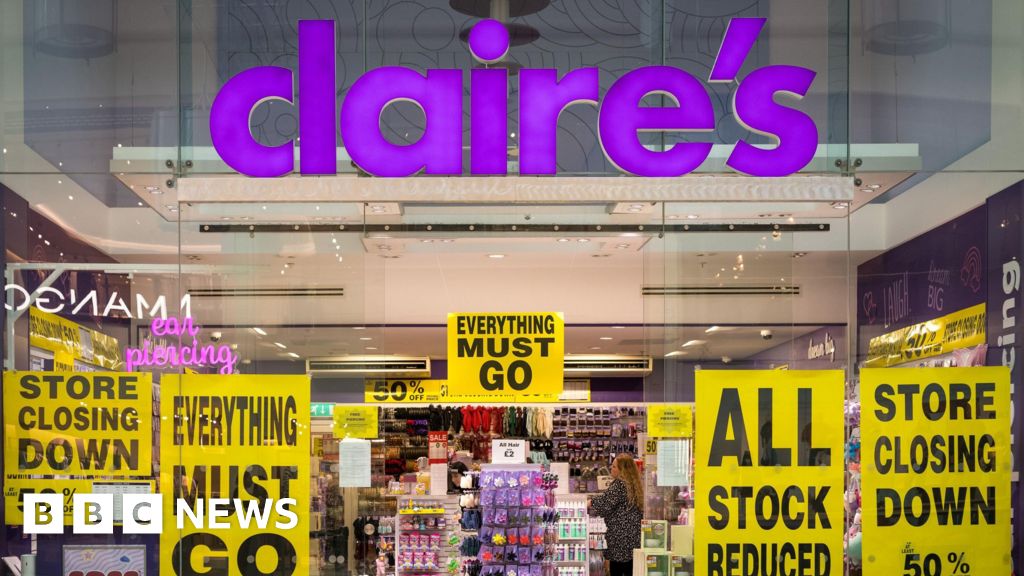
All of the chain’s standalone stores have stopped trading in the UK and Ireland.
Source link


This M5 MacBook Air Discount Has Renewed My Faith in Cheap Laptops for 2026

Norway joins Type 26 Frigate Programme to boost NATO naval power

Trump calls for Jimmy Kimmel to be fired over jokes made before White House Correspondents’ Dinner shooting

-

 Sports1 week ago
NCAA men’s gymnastics championship: All-time winners list
-

 Sports1 week ago
WWE WrestleMania 42 Night 2: Live match results and analysis
-

 Politics7 days ago
UK’s Starmer seeks to deflect blame over Mandelson appointment
-

 Fashion1 week ago
UK’s Sosandar returns to profitability amid robust FY26 performance
-

 Entertainment1 week ago
Lee Anderson, Zarah Sultana kicked out of UK Parliament for calling PM ‘liar’
-
 Business1 week ago
No fuel shortage: Govt assures 100% domestic LPG, PNG, CNG supply amid Hormuz energy crunch – The Times of India
-
 Business1 week ago
How Trump’s psychedelics executive order could unlock stalled cannabis reform
-

 Sports1 week ago
Quetta Gladiators opt to bowl after winning toss against Peshawar Zalmi in PSL 11 clash