

Business
February home sales see small rebound, but supply growth is ‘sluggish’


Home sales made a small gain to start the year, but higher mortgage rates now could throw cold water on the spring season.
Existing home sales in February rose 1.7% from January to a seasonally adjusted, annualized rate of 4.09 million units, according to the National Association of Realtors. Sales were down 1.4% from February of last year.
This count represents closed sales, so deals were likely inked in December and January, when mortgage rates fell a bit and stayed solidly in a low range near 6% on the 30-year-fixed mortgage. Rates were about a full percentage point higher the year before.
“Despite the modest gain in home sales, actual housing demand remains muted relative to wage growth and job gains,” Lawrence Yun, chief economist for the Realtors, said in a release. “Wage growth is now outpacing home price growth by almost four percentage points. Mortgage rates are also measurably lower compared to a year ago.”
Yun also noted that there are over 6 million more jobs now than there were in 2019, yet home sales per year are down by 1 million.
Lower mortgage rates helped improve affordability slightly, but low inventory is still a significant headwind. There were 1.29 million units for sale at the end of February, an increase of 2.4% from January and 4.9% from February 2025. At the current sales pace, that is a 3.8-month supply, unchanged from January. A six-month supply is considered a balanced market between buyer and seller.
More sellers who delisted their homes last fall, due to slower sales and weak consumer confidence, are relisting their homes now, according to Redfin, a real estate brokerage. Nearly 45,000 homes that were delisted last year were relisted for sale in January. That is the highest January figure since Redfin began tracking this metric a decade ago and represents a record 3.6% of homes that were on the market in January.
“Inventory is growing, but sluggishly,” Yun said. “If demand picks up notably in the coming months and outpaces supply growth, home prices will inevitably rise. That is why increasing supply is so important to help limit home price growth, improve housing affordability, and boost transactions.”
Tight supply, however, is keeping prices just barely higher. The median price of a home sold in February was $398,000, an increase of 0.3% year over year. Sales continue to be strongest in the highest price category, properties listed at $1 million or above. Sales were down sharply on the lowest end of the market.
It continues to take longer to sell a home, at 47 days, up from 42 days one year ago. First-time buyers represented 34% of total sales, an increase from 31% a year ago. Investors made up 16% of sales, unchanged from a year ago.


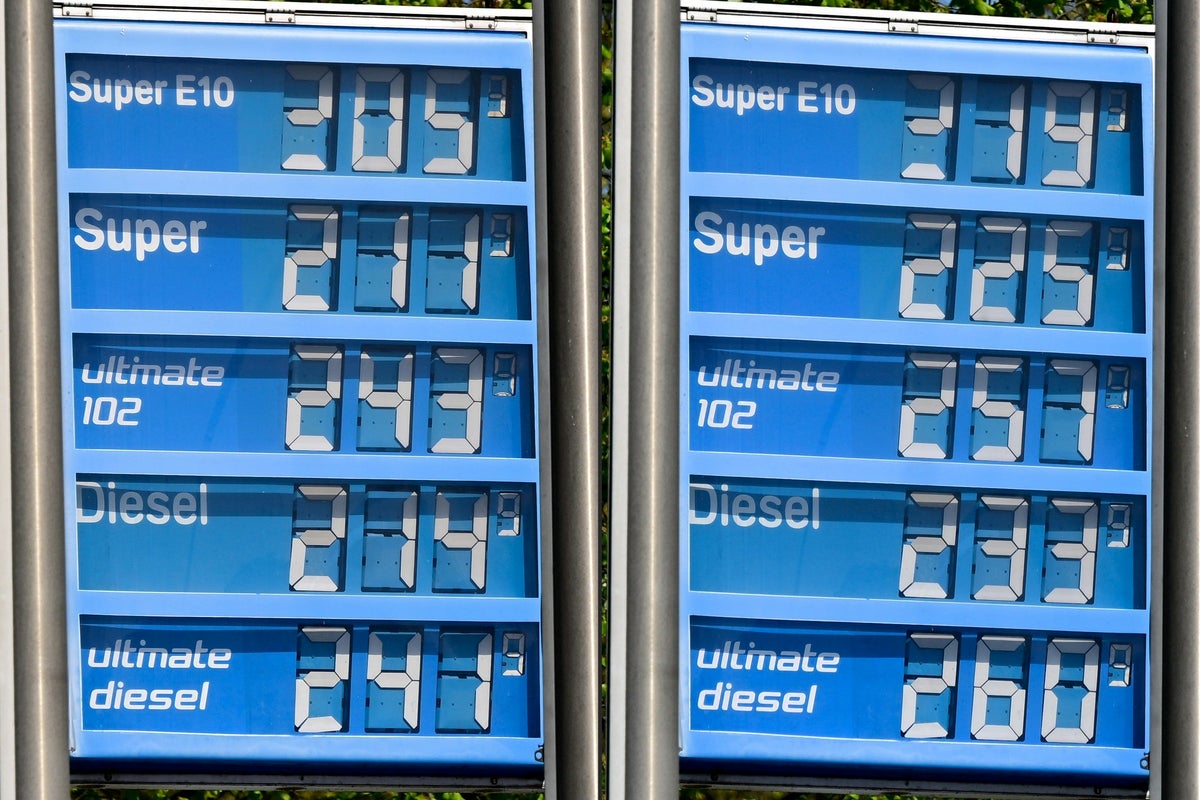
Oil prices jumped on Tuesday as Donald Trump weighed Iran’s latest proposal to end the war.
The US president is unhappy with the latest Iranian proposal, a US official said on Monday. Iranian sources disclosed that Tehran’s proposal avoided addressing its nuclear programme until hostilities cease and Gulf shipping disputes are resolved.
Trump’s displeasure with the Iranian offer leaves the conflict deadlocked, with Iran shutting shipping flows through the Strait of Hormuz, which typically carries supply equal to about 20 per cent of global oil and gas consumption, and the US keeping in place its blockade of Iranian ports.
Brent crude rose to $108.13 per barrel, hovering near a three-week high, while US West Texas Intermediate went up to $96.48.
Both benchmarks are well above pre-war levels. Brent was trading at $72 before the US-Israeli war on Iran began on 28 February.
Asian stocks were broadly subdued at the opening. While MSCI’s broadest index of Asia-Pacific shares outside Japan was down 0.12 per cent, hovering near the record high it touched on Monday, Nikkei fell 0.5 per cent.
The S&P 500 eked out modest gains on Monday and was on course for a nearly 10 per cent gain for April. US stock futures were 0.1 per cent higher in Asian hours.
Indian shares are set to open lower on Tuesday, with GIFT Nifty futures pointing to the benchmark Nifty 50 opening below Monday’s close of 24,092.70. Both Nifty and Sensex snapped a three-session losing run on Monday, led by a rebound in technology stocks, but the broader momentum remained constrained by unresolved tensions around the Strait of Hormuz.
Elevated oil prices are a particular headwind for India, the world’s third-largest crude importer, heightening inflation risks, pressuring economic growth and widening the country’s import bill.
Foreign portfolio investors offloaded domestic stocks worth Rs 11.5bn ($122m) on Monday, extending their selling streak to a sixth straight session.
Vessel crossings showed signs of recovery over the weekend, according to the maritime intelligence firm Windward, but analysts warned increased movement was yet to translate into a surge in oil and gas flows.
Iran reportedly offered to end its blockade of the waterway without addressing its nuclear programme, passing the proposal to Washington through Pakistani mediators. But Mr Trump has made ending Iran’s atomic programme a condition for any deal.
Central banks are also in focus this week, with the Bank of Japan, the US Federal Reserve, the Bank of England, and the European Central Bank all due to announce policy decisions. All are expected to hold rates steady, but markets will be watching closely for signals about how policymakers plan to respond to the inflationary pressure from the war.
“The BOJ is likely to stay highly sensitive to market volatility,” Fred Neumann, chief Asia economist at HSBC, told Reuters. “Our base case remains one single 25 basis point hike this year in July, but a June rate rise becomes more likely if the Strait of Hormuz is still effectively closed after mid-May.”
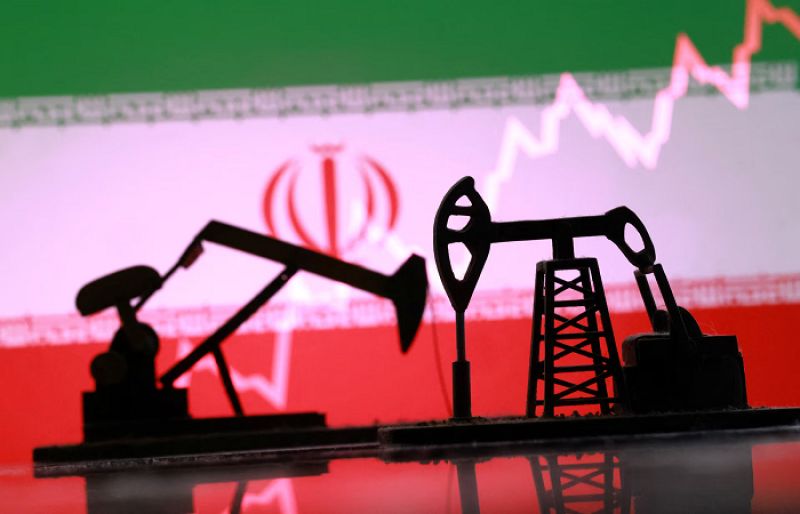
Oil prices extended their gains on Tuesday as efforts to end the US-Iran war appear stalled, with the crucial Strait of Hormuz waterway still mainly shut, keeping energy supplies from the key Middle East producing region out of the reach of global buyers.
US President Donald Trump is unhappy with the latest Iranian proposal aimed at ending the war, a US official said on Monday.
Iranian sources disclosed on Monday that Tehran’s proposal avoided addressing its nuclear program until hostilities cease and Gulf shipping disputes are resolved.
Trump’s displeasure with the Iranian offer leaves the conflict deadlocked, with Iran shutting shipping flows through the Strait of Hormuz, which typically carries supply equal to about 20% of global oil and gas consumption, and the US keeping in place its blockade of Iranian ports.
Brent crude futures for June climbed 45 cents, or 0.4%, to $108.68 a barrel, after gaining 2.8% in the previous session to its highest close since April 7. The contract is up for a seventh day.
US West Texas Intermediate (WTI) crude for June rose 58 cents, or 0.6%, to $96.96, after gaining 2.1% in the previous session.
An earlier round of negotiations between the US and Iran collapsed last week following failed face-to-face talks.
“For oil traders, it’s not the rhetoric that matters any more, but the actual physical flow of crude oil through the Strait of Hormuz, and right now, that flow remains constrained,” Fawad Razaqzada, market analyst at City Index and FOREX.com, said in a note.
Razaqzada added that even if a resolution is reached, production outages and logistical challenges mean recovery could take months.
Ship-tracking data revealed significant disruptions in the region, with six Iranian oil tankers forced to turn back due to the US blockade.
However, a liquefied natural gas tanker managed by the United Arab Emirates’ Abu Dhabi National Oil Co did cross the Strait of Hormuz and appears to be near India, ship-tracking data showed on Monday.
Before the US-Israeli war on Iran, which began on February 28, between 125 and 140 vessels transited the strait daily.

The General Motors global headquarters at Hudson’s Detroit in Detroit, Michigan, US, on Monday, Jan. 12, 2026.
Jeff Kowalsky | Bloomberg | Getty Images
DETROIT – General Motors is set to report its first-quarter earnings before the bell Tuesday.
Here’s what Wall Street is expecting, based on a survey of analysts by LSEG:
- Earnings per share: $2.62 adjusted
- Revenue: $43.68 billion
Those results would mark a roughly 1% decline in revenue compared with a year earlier and a 5.8% decrease in adjusted earnings per share.
GM’s 2025 first-quarter results included $44.02 billion in revenue, net income attributable to stockholders of $2.78 billion, and adjusted earnings before interest and taxes of $3.49 billion.
Aside from earnings and any changes to the automaker’s 2026 guidance, investors will be monitoring effects from the Iran war, tariff impacts and additional charges related to the automaker’s pullback in all-electric vehicles.
After announcing $7.6 billion in EV write-downs last year, the automaker said it expected additional charges but at a lower level than in 2025.
GM’s 2026 earnings guidance is better than its expectations and results from last year. It includes net income attributable to stockholders of between $10.3 billion and $11.7 billion; adjusted earnings before interest and taxes of $13 billion to $15 billion; and EPS of between $11 and $13 for the year.


Buckingham Palace issues ‘disappointing’ update on King Charles amid threat

Trump not happy with latest Iran proposal to end war, says US official

World Cup FAQ: How Are Penalties Awarded And What Are The Rules?

-

 Sports1 week ago
NCAA men’s gymnastics championship: All-time winners list
-

 Sports1 week ago
WWE WrestleMania 42 Night 2: Live match results and analysis
-

 Fashion1 week ago
UK’s Sosandar returns to profitability amid robust FY26 performance
-

 Politics7 days ago
UK’s Starmer seeks to deflect blame over Mandelson appointment
-
 Business1 week ago
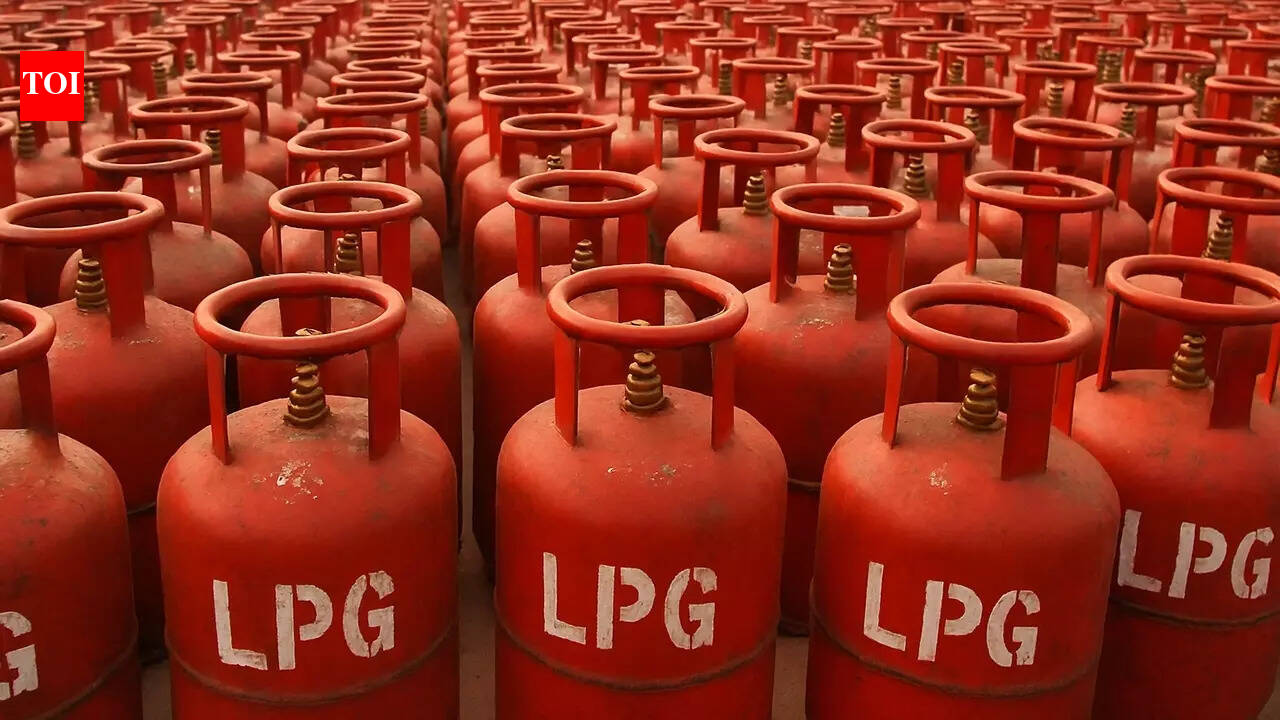
No fuel shortage: Govt assures 100% domestic LPG, PNG, CNG supply amid Hormuz energy crunch – The Times of India
-

 Entertainment1 week ago
Lee Anderson, Zarah Sultana kicked out of UK Parliament for calling PM ‘liar’
-
 Business1 week ago
How Trump’s psychedelics executive order could unlock stalled cannabis reform
-

 Sports1 week ago
Quetta Gladiators opt to bowl after winning toss against Peshawar Zalmi in PSL 11 clash