

Business
Federal Reserve board nomination: Senate panel clears Trump pick Stephen Miran; Democrats flag loyalty test risk – The Times of India

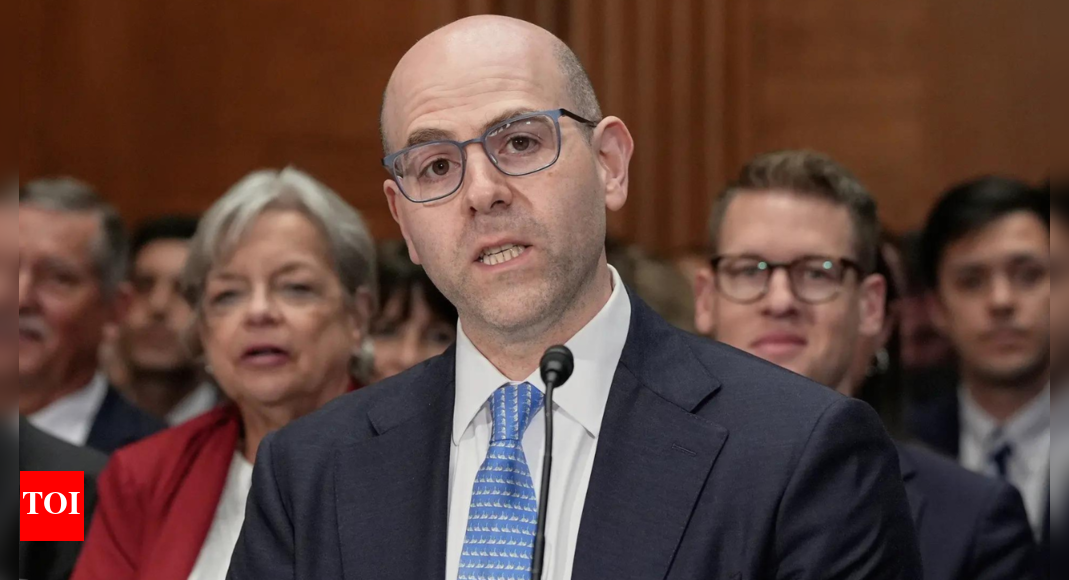
A US Senate committee on Wednesday advanced the nomination of President Donald Trump’s choice for the Federal Reserve board, Stephen Miran, despite concerns that he may not resign from the White House even if confirmed.Miran, who chairs the White House Council of Economic Advisers (CEA), cleared the Senate Banking Committee by a narrow 13-11 vote, with Democrats opposing the move, AFP reported. The approval paves the way for his full Senate confirmation, which could allow him to join the central bank’s Federal Open Market Committee (FOMC) in time for its September 16–17 policy meeting, AFP reported.Senator Elizabeth Warren, the top Democrat on the banking committee, criticised the nomination, warning it “sets up an obvious Trump loyalty test.” She argued that Miran’s rate votes could decide whether he is able to return to the White House role once his short Fed term ends.If confirmed, Miran would fill a short-term Fed vacancy lasting slightly over four months until January 2026. At his hearing, Miran said he only intended to take a leave of absence from the CEA during that period but later told lawmakers he would resign if nominated and confirmed for a longer term.Democratic lawmakers issued a letter after his testimony, warning that any decisions he took at the Fed would be seen as an attempt “to satisfy the demands of the President” and safeguard his White House position. Warren also expressed concern that he had not guaranteed to step down at the end of the short term if confirmed.The Fed’s seven-member board of governors holds 12 voting seats on the FOMC, which sets US interest rates. Since cutting rates in December, the Fed has kept policy steady this year while monitoring the effects of Trump’s sweeping tariffs on inflation. Analysts now expect a rate cut next week, citing limited tariff impact on prices but growing weakness in the jobs market.


Rodney Benson, a media professor at New York University, called the deal “concerning”, would leave America’s largest media companies further concentrated in the hands of conservatives. Many of those owners, including the Ellison family, have separate, non news-related business interests that depend on government contracts or regulation and are therefore particularly vulnerable to pressure, he adds.
On Friday morning, groups representing roughly 700,000 tech workers within Amazon, Google, and Microsoft, all companies that have their own contracts with the Defence Department, signed an open letter urging the companies they worked for to also “refuse to comply” with the Pentagon’s demands.
Business
India, EU Commit To Provide Most-Favoured Nation Treatment For 5 Yrs, Shows Provisional FTA Text
Last Updated:
The Department of Commerce had announced that India will receive MFN treatment in committed services sectors for a period of five years from the Agreement’s entry into force




India announced a landmark FTA with the European Union in January.
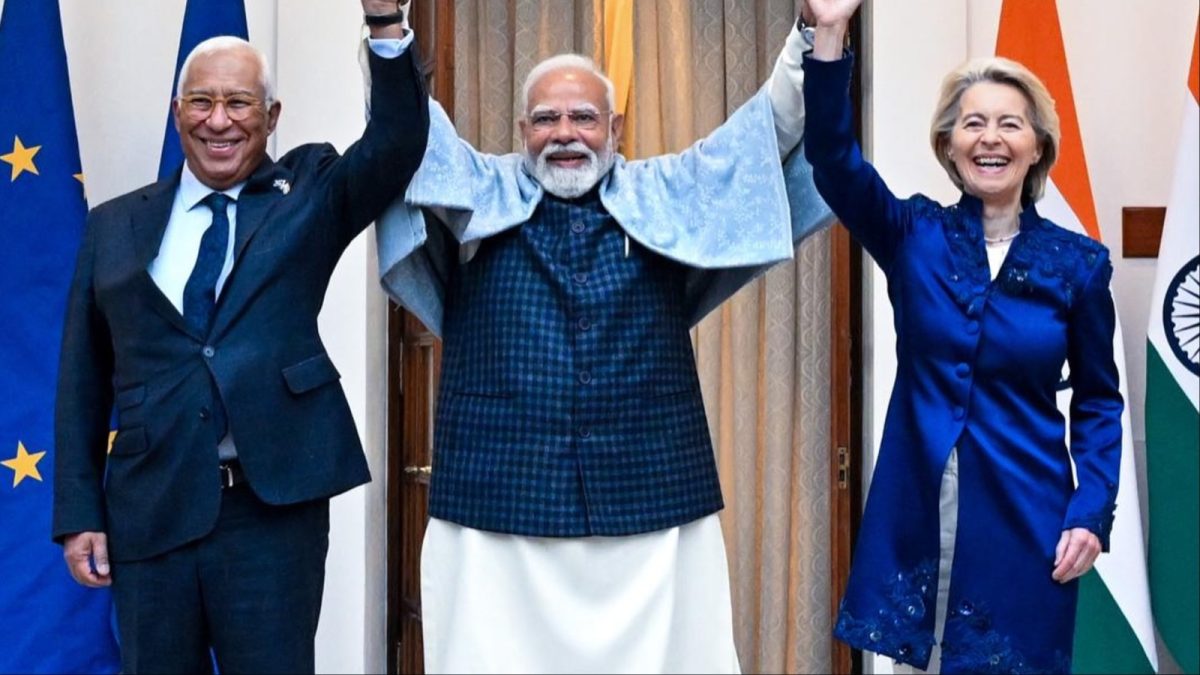
Weeks after India and the European Union (EU) clinched a historic free trade agreement (FTA) after nearly two decades of negotiations, the Department of Commerce on Friday released the provisional text of the agreement on its social media handles, which underscored that both countries will accord each other the Most Favoured Nation (MFN) treatment for a period of five years.
“After the historic conclusion of the India-EU Free Trade Agreement a few weeks ago, the provisional text of the agreement is now being made available. It provides a first comprehensive look at the scope and ambition of the agreement. Tariff schedules will follow at a later stage,” said the Commerce Department.
After the historic conclusion of the 🇮🇳–🇪🇺 Free Trade Agreement a few weeks ago, the provisional text of the agreement is now being made available.It provides a first comprehensive look at the scope and ambition of the agreement. Tariff schedules will follow at a later stage.… pic.twitter.com/imeTldZ1Wy
— Dept of Commerce, GoI (@DoC_GoI) February 27, 2026
As per the text, each party shall accord the Most Favoured Nation treatment for a period of 5 years from the date of entry into force of this agreement. That treatment shall apply after five years only if both parties mutually agree in the review to be carried out.
Earlier, the Department of Commerce had announced that India will receive MFN treatment in committed services sectors for a period of five years from the Agreement’s entry into force, ensuring non-discriminatory market access.
The continuation of MFN benefits beyond five years will be subject to a review mechanism, including developments related to the entry, stay, and work rights of Indian students, as well as progress on social security arrangements with EU member states.
The provisional text of the India-EU FTA comprises 20 chapters, including trade in goods, customs and trade facilitation, trade remedies, professional services, financial services, digital trade, intellectual property, good regulatory practices, dispute settlement, code of conduct and more.
India-EU FTA
The EU-India Free Trade Agreement (FTA), concluded in January, was hailed by both sides as the “mother of all deals” as it opens up the vast market of 27 nations for India. It provides immediate duty-free access for over 70.4% of Indian tariff lines, covering more than 90.7% of its export value.
The European Union is India’s largest trading partner, with bilateral goods trade reaching $135 billion in FY 2023–24. Upon full implementation of the trade agreement, a staggering 99% of Indian exports will enter the EU without any duties offering a massive competitive edge to labour-intensive sectors such as textiles and leather.
A central element of the talks has been tariff reduction. India is expected to significantly lower import duties on European cars and wine, while the EU will ease access for Indian products such as textiles, garments, jewellery, chemicals, pharmaceuticals and electronics.
Talks on the India-EU FTA first began in 2007 but were suspended in 2013 over disagreements on tariffs, market access and regulatory standards. Negotiations were revived in 2022 and accelerated last year as global trade tensions intensified and both sides sought to diversify economic partnerships.
 Click here to add News18 as your preferred news source on Google.
Follow News18 on Google. Join the fun, play games on News18. Stay updated with all the latest business news, including market trends, stock updates, tax, IPO, banking finance, real estate, savings and investments. To Get in-depth analysis, expert opinions, and real-time updates. Also Download the News18 App to stay updated.
February 27, 2026, 23:34 IST
Read More


Just in Time for Spring, Don’t Miss These Electric Scooter Deals

Haaland, Rice, Semenyo: Who is your Premier League Player of the Year?
What the Warner Bros deal could mean for streaming, cinemas and news

-

 Tech1 week ago
A $10K Bounty Awaits Anyone Who Can Hack Ring Cameras to Stop Sharing Data With Amazon
-
 Business1 week ago
US Top Court Blocks Trump’s Tariff Orders: Does It Mean Zero Duties For Indian Goods?
-

 Fashion1 week ago
ICE cotton ticks higher on crude oil rally
-
 Business6 days ago
Eye-popping rise in one year: Betting on just gold and silver for long-term wealth creation? Think again! – The Times of India
-

 Tech1 week ago
Donald Trump Jr.’s Private DC Club Has Mysterious Ties to an Ex-Cop With a Controversial Past
-

 Fashion1 week ago
India’s $28 bn reset: How 5 trade deals will reprice its T&A exports
-

 Sports1 week ago
Brett Favre blasts NFL for no longer appealing to ‘true’ fans: ‘There’s been a slight shift’
-

 Entertainment1 week ago
The White Lotus” creator Mike White reflects on his time on “Survivor