

Business
FinMin pitches Pakistan’s green growth vision at World Bank forum | The Express Tribune

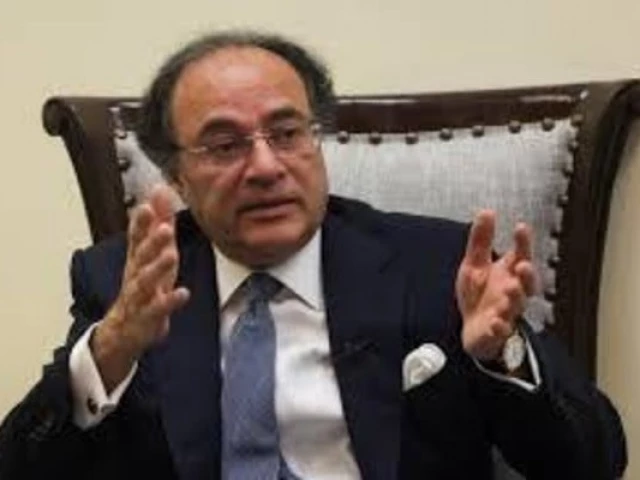
Aurangzeb outlines agri-finance reforms, climate resilience to drive private sector growth, exports
In Washington, during the sidelines of the IMF World Bank Annual Meetings, Finance Minister Muhammad Aurangzeb addressed a high-level World Bank panel titled “AgriConnect: Farms, Firms, and Finance for Jobs,” spotlighting Pakistan’s push to modernize its agricultural sector while confronting climate risks.
Aurangzeb began by underscoring agriculture’s central role in Pakistan’s economy, contributing nearly one quarter of GDP and supporting millions of smallholder farmers owning less than five hectares. He stressed that policy would shift from direct control to facilitation, allowing the private sector to drive growth in areas where it can be more effective.
He detailed pilot programs now underway, supplying seeds and fertilisers, offering agronomic services, and employing satellite-based crop monitoring to help farmers boost yields while reducing reliance on intermediaries.
To scale these efforts, the minister called on the financial sector to step in, offering first-loss guarantees, subsidized loans, and uncollateralized credit for small and tenant farmers.
Read: Govt close to sealing IMF staff deal, $1.2b payout expected to ease financial pressure
On climate resilience, Aurangzeb emphasised the urgency of adapting to extreme weather events, such as the recent floods that badly affected the rice crop. He noted that one-third of Pakistan’s ten-year Country Partnership Framework with the World Bank is devoted to climate action and decarbonization. Financial resources exist, he said, but deployment must accelerate to meet evolving challenges.
Investing in capacity building, the government has sent around 1,000 Pakistani students to China for advanced training in agricultural research, mechanization, and modern farming methods. In responses to queries, Aurangzeb reaffirmed commitment to deregulation and incentivizing private investment in infrastructure such as cold chains, warehousing, and value-added processing.
Read More: Aurangzeb lands in Washington
He also flagged the export potential of key crops, projecting rice exports of about $3.5 billion in the current year. In his closing remarks, the minister expanded the definition of agriculture’s impact, stating that when the full value chain is included, the sector contributes nearly 40 per cent of GDP.
Earlier in Washington, Aurangzeb also attended the G-24 Ministers’ meeting, where he highlighted Pakistan’s macroeconomic stability, crediting structural reforms in taxation, energy, and privatisation, while thanking the IMF and World Bank for backing tariff reforms and cross-border trade initiatives.


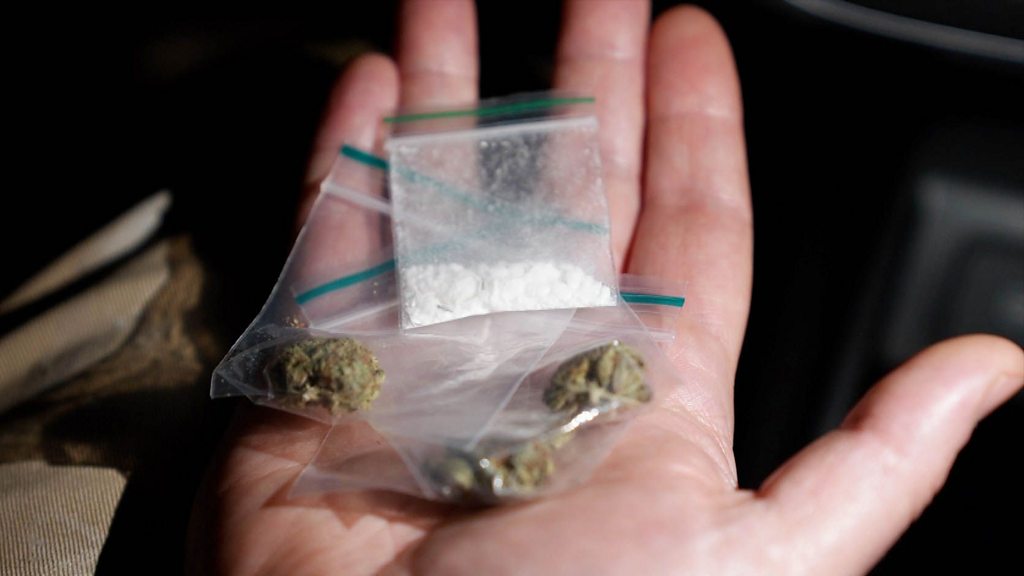
Across the UK, shopfronts are being exploited by criminal gangs pushing illegal drugs, experts say.
Source link

At around 8.25 am, the benchmark US oil contract, West Texas Intermediate (WTI) climbed 4.06% to US$96.73 per barrel.
International oil benchmark Brent North Sea crude rose 3.62% to US$105.63. Both eased back in the following minutes.
Oil prices have soared since Israel and the US attacked Iran on Feb 28, and they have kept inching up due to the uncertainty over whether war will resume.
As the clock ticked for a return to the war that has engulfed the region, US President Donald Trump had said Tuesday he would maintain the truce to allow more time for Pakistani-brokered peace talks.
Iran said it welcomed the efforts by Pakistan but made no other comment on Trump’s announcement.
Wall Street stocks gained ground following President Trump’s unilateral ceasefire extension in the Iran war.
All three major US stock indexes advanced, with tech shares helping to put the Nasdaq out front, while gold advanced and the dollar edged higher.
The S&P 500 and the Nasdaq reached record closing highs.
“Despite the energy shock and headlines that have inundated investors, the macroeconomy, corporate fundamentals, and consumer spending remain strong,” said Bill Merz, head of capital markets research at US Bank Wealth Management in Minneapolis.
“Investors are taking the stance that the Strait of Hormuz will open before too much damage is inflicted on the global economy.”
Iran’s Revolutionary Guards seized two vessels for maritime violations just hours after Trump agreed to extend the ceasefire until negotiations are concluded.
About a fifth of the world’s oil and liquefied natural gas (LNG) supplies normally pass through the strait.
US stocks, initially battered by the war, have since made a full recovery, with the S&P 500 and the Nasdaq having reached all-time closing highs in recent sessions.
But geopolitical uncertainty lingers, and a prolonged period of elevated oil prices remains a threat.
About two-thirds of the S&P 500 companies that have reported quarterly earnings since the beginning of April have voiced concerns about energy prices in their analyst conference calls, according to a Reuters review of transcripts.
“Anytime there’s a global event like the conflict in the Middle East, and it grabs so many headlines and captures attention, it will crop up in earnings commentary,” Merz added. “But we’re not seeing it significantly impact behaviour yet.”
First-quarter earnings season is well underway amid lofty expectations. Analysts currently estimate year-on-year S&P 500 earnings growth of 14.4% for the January-March period, according to the most recent LSEG data.
The Dow Jones Industrial Average rose 341.27 points, or 0.69%, to 49,490.52, the S&P 500 +gained 73.90 points, or 1.05%, to 7,137.91, and the Nasdaq Composite was up 397.60 points, or 1.64%, to 24,657.57.
European shares ended lower for the third straight session as the Middle East strife continued to weigh on markets and investors assessed a raft of corporate earnings.
Dozens of international firms have withdrawn guidance or signalled price hikes since the war began.
MSCI’s gauge of stocks across the globe rose 4.52 points, or 0.42%, to 1,070.98.
The pan-European STOXX 600 index fell 0.35%, while Europe’s broad FTSEurofirst 300 index fell 8.58 points, or 0.35%.
Emerging market stocks fell 9.41 points, or 0.58%, to 1,606.07. MSCI’s broadest index of Asia-Pacific shares outside Japan closed lower by 0.6%, to 822.27, while Japan’s Nikkei .N225 rose 236.69 points, or 0.40%, to 59,585.86.
The dollar rose amid lingering geopolitical worries.
The dollar index, which measures the greenback against a basket of currencies including the yen and the euro, rose 0.26% to 98.63, with the euro down 0.32% at $1.1704.
Against the Japanese yen, the dollar strengthened 0.12% to 159.56.
In cryptocurrencies, Bitcoin gained 4.13% to $78,866.74. Ethereum rose 3.48% to $2,398.37.
US Treasury yields increased, rangebound amid choppy trading.
The yield on benchmark US 10-year notes rose 1.2 basis points to 4.304%, from 4.292% late on Tuesday.
The 30-year bond yield rose 1.1 basis points to 4.9091% from 4.898% late on Tuesday.
The 2-year note yield, which typically moves in step with interest rate expectations for the Federal Reserve, rose 2.1 basis points to 3.8%, from 3.779% late on Tuesday.

Jenny Lennick’s colourful hair clips are sold across the US and around the world.
Source link


Canada forms new advisory committee to strengthen US trade relations
High street drug dealer sells cannabis to undercover reporter

Clearing Hormuz Strait mines could take six months: report

-

 Fashion1 week ago
France’s LVMH Q1 revenue falls 6%, shows resilience amid Iran war
-

 Entertainment1 week ago
Is Claude down? Here’s why users are seeing errors
-

 Tech1 week ago
The Deepfake Nudes Crisis in Schools Is Much Worse Than You Thought
-

 Sports1 week ago
PSL 11: Peshawar Zalmi win toss, opt to field first against Quetta Gladiators
-

 Tech1 week ago
Human-machine teaming dives underwater
-
 Business1 week ago
Standard Life buys rival in £2b deal to create savings giant
-
 Business1 week ago
BP sees ‘exceptional’ oil trading result as Iran war sends crude costs soaring
-

 Fashion1 week ago
What no one is saying about the 2026 apparel slowdown