

Business
First Vegas-style casino opens in New York City


New York City’s first full-scale casino with live table games opened to gamblers Tuesday, more than a decade after voters approved an expansion of gambling in the state.
Resorts World, owned by Malaysia-based company Genting, beat out gaming giants such as Wynn Resorts, Las Vegas Sands, Caesars Entertainment and MGM Resorts to land one of three new casino licenses.
It’s the first to launch because it was already operating a slots and electronic gambling facility, one of the most profitable in the world. Resorts World New York City is adjacent to the Aqueduct Racetrack and just a few miles away from John F. Kennedy International Airport.
“We got the license Dec. 15, and here we are, April 28 welcoming our guests to the new casino floor,” Robert DeSalvio, president of Genting Americas East, said in an interview.
Lim Kok Thay, executive chairman of Genting Bhd, center, takes a ceremonial first dice roll alongside rapper Nasir “Nas” bin Olu Dara Jones, center right, and Donovan Richards Jr., Queens borough president, third right, at Resorts World New York City (RWNYC) casino in the Queens borough of New York, US, on Tuesday, April 28, 2026.
Adam Gray | Bloomberg | Getty Images
To run roulette, craps, baccarat and blackjack, Resorts World recruited some dealers from casinos in other states. But it also is running a kind of dealer college, training locals to handle the table action.
The company says the current expansion has already created more than 1,200 new jobs, with another 500 new hires anticipated by this summer.
Though it’s not yet open, the company is also building a sportsbook, which will be the city’s first.
“We have hit the jackpot, Queens!” pronounced Borough President Donovan Richards at the ceremonial opening.
“I have always dreamt of Queens being an international entertainment hub, and this certainly is part of that puzzle,” Richards said.
Queens-raised hip-hop star Nas is a partner in the project and performed at the opening.
“This is just the beginning. So this is about to expand and do things that everyone’s going to be excited about. So Queens is where it’s at,” he told CNBC.
The project has faced criticism, as some locals are concerned about a potential rise in crime and traffic as a result of the development.
For now, the casino will have a city monopoly, for which it says it’s paying 63% state taxes on slots revenue and 30% on table game revenue. In its bid for a license, the company included a clause that stipulates its tax rate will lower to the levels its competitors pay once they’re up and running.
It will take years for the other casinos to open. Bally’s is building a casino on a Bronx golf course purchased from The Trump Organization. Meanwhile, Hard Rock has planned a massive development in partnership with hedge fund manager and Mets owner Steve Cohen near Citi Field, where the baseball team plays.
The three companies were selected by the state’s gambling commission in 2025 following a years-long process to award licenses to New York’s downstate region following an approved 2013 referendum.
The state says the three casinos could produce $7 billion in gaming tax revenue over a decade and CBRE projects annual gaming revenues at maturity of up to $5.6 billion under a bull case scenario.
“We are changing the landscape of New York forever with a building that will never close,” said Kevin Jones, chief strategy officer of Resorts World New York.


Business
Ganga Expressway inaugurated by PM Modi: UP’s longest expressway between Meerut & Prayagraj; check travel time, route, speed limit – top facts & images – The Times of India
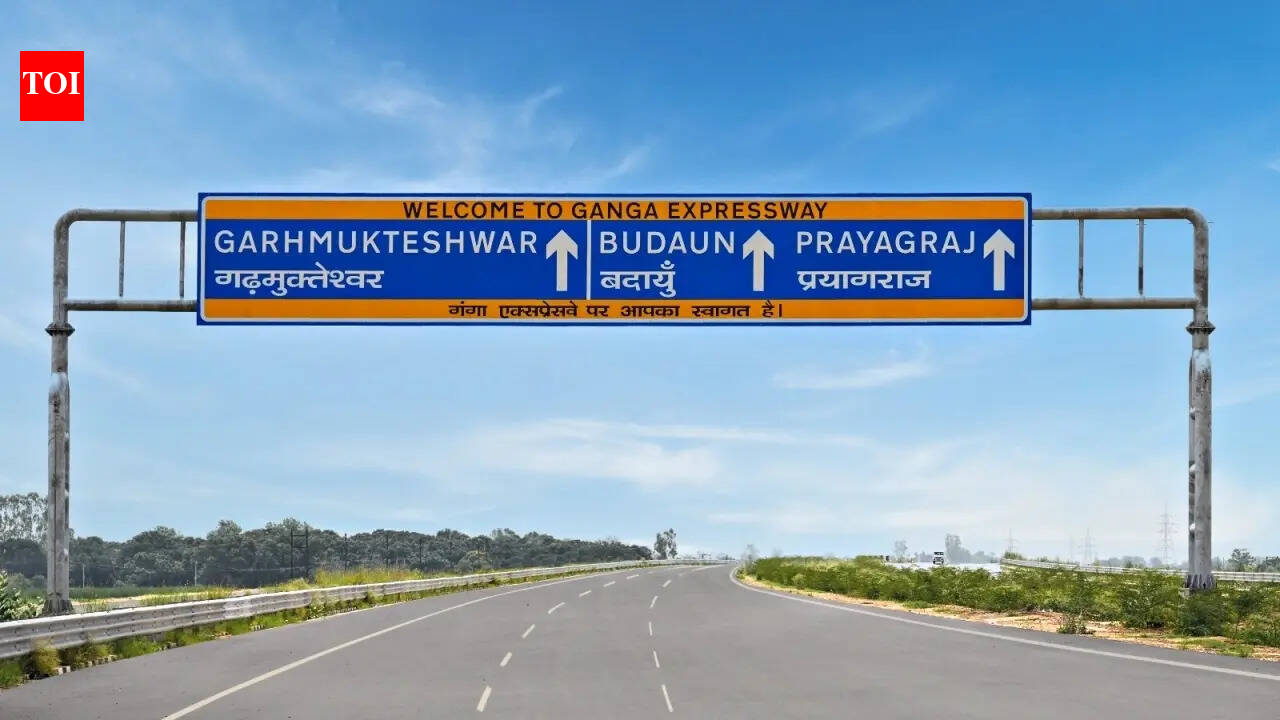
Ganga Expressway, the longest expressway so far in Uttar Pradesh, was inaugurated by Prime Minister Narendra Modi on Wednesday. The 594 kilometres long Ganga expressway is a six-lane expressway that aims to reduce the travel time between Meerut and Prayagraj to just 6 hours!Uttar Pradesh has over 60% of India’s total access-controlled expressway network. Recently, Chief Secretary Manoj Kumar pointed out that of the nearly 2,900 km of such highways across the country, close to 1,200 km are located in the state.Meerut District Magistrate and Collector Vijay Kumar Singh on Tuesday said the project has generated tremendous excitement among the public. He noted that the expressway will greatly enhance connectivity to Prayagraj as well as the state capital, Lucknow.Experts say the expressway’s length is particularly significant. According to the Department for Promotion of Industry and Internal Trade, road transport remains economically efficient for freight over distances of up to about 600 km, while rail becomes more viable beyond that point. At 594 km, the Ganga Expressway falls almost exactly within this crucial range for cargo movement.
How will the Ganga Expressway cut down travel time, what districts will it cover, what will be the toll policy, and what cost has it been constructed at? We take a look:
Ganga Expressway: Top Points About UP’s Longest Expressway
Travel time: One of its most noticeable benefits will be the sharp reduction in travel time. The trip between Meerut and Prayagraj, which currently takes around 10 to 12 hours, is likely to be cut to approximately 6 to 7 hours. Access from Delhi: For travellers from the Delhi-NCR region, access will be seamless through the Delhi-Meerut Expressway, followed by a short connecting link at Bijoli to join the Ganga Expressway.
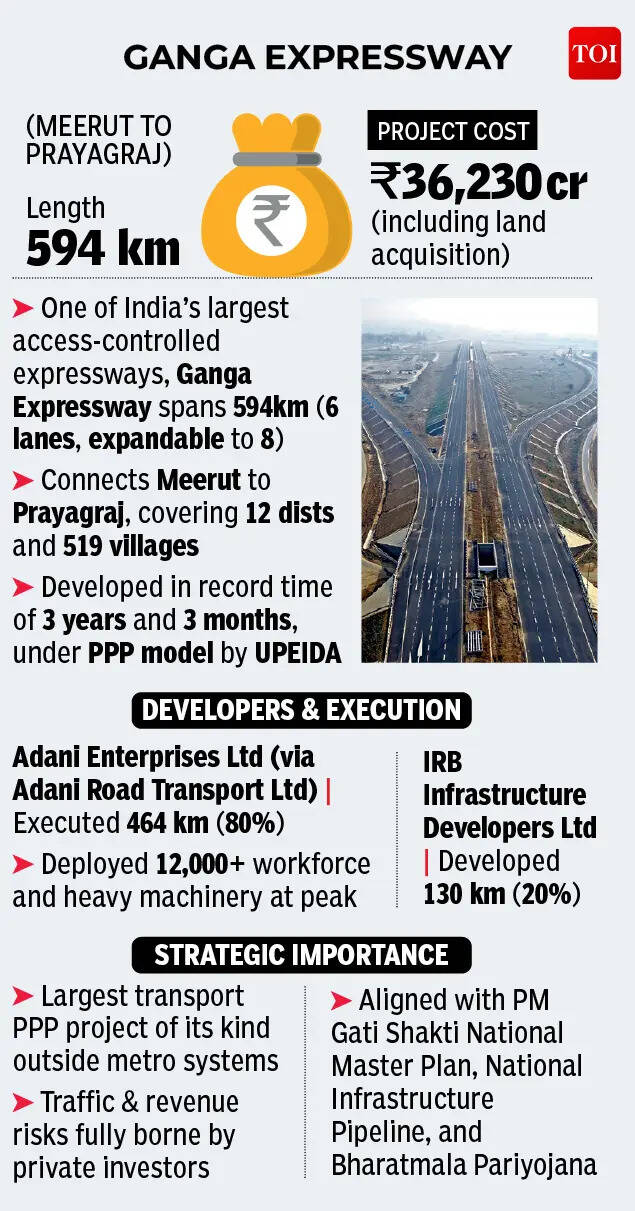
Construction cost: Developed at an estimated cost of Rs 36,230 crore, the Ganga Expressway ranks among Uttar Pradesh’s most ambitious infrastructure initiatives. The Ganga Expressway stretches from Bijoli village in Meerut to Judapur Dandu village in Prayagraj.Speed limit: The expressway has been built for speeds of up to 120 kmph. The six-lane access-controlled expressway, has been designed with the provision for expansion to eight lanes.
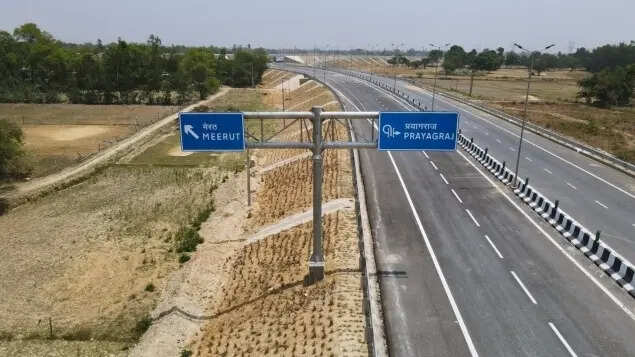
Route & Districts covered: The expressway will pass through 12 districts: Meerut, Hapur, Bulandshahr, Amroha, Sambhal, Badaun, Shahjahanpur, Hardoi, Unnao, Rae Bareli, Pratapgarh and Prayagraj. In doing so, it will directly influence more than 500 villages along its alignment.Interchanges & amenities: Its connectivity is further strengthened by 21 interchanges that link the corridor with existing national highways and state roads.
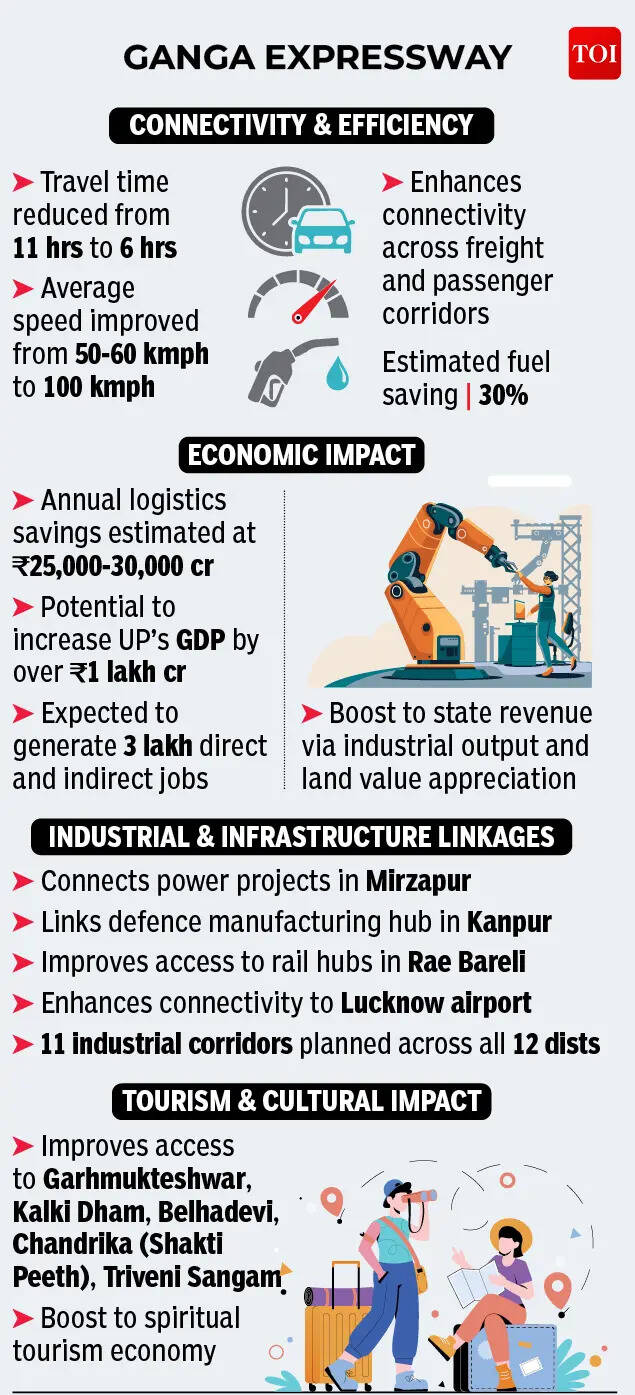
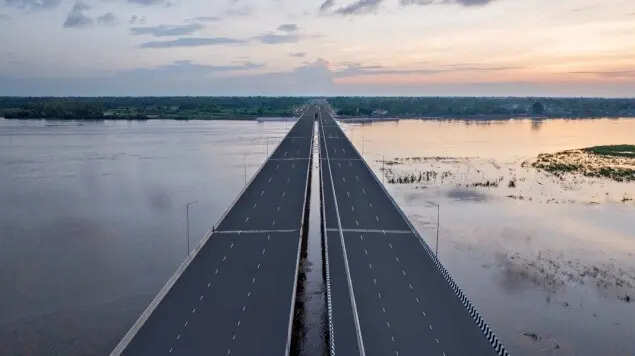
The project also includes major river crossings, notably a 960-metre bridge over the Ganga and a 720-metre bridge across its tributary, the Ramganga. Both structures have been engineered to suit local flood conditions.To support travellers, the expressway will also feature nine public utility complexes equipped with fuel stations, rest areas and food courts.
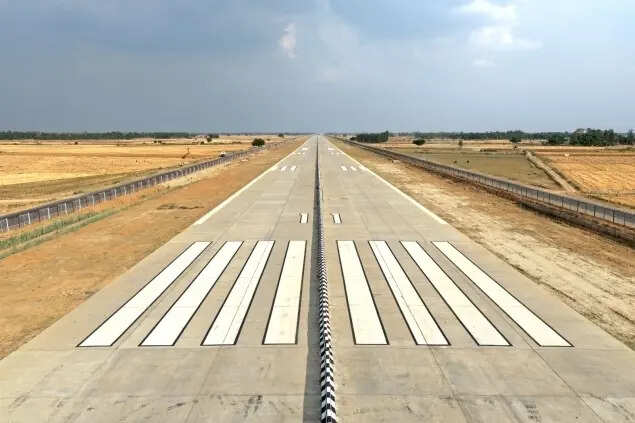
Emergency Landing Strip: One of the expressway’s standout features is a 3.5-km emergency landing strip in Shahjahanpur district. Already tested by the Indian Air Force, this airstrip adds a strategic defence dimension to the project, enhancing national preparedness in addition to its economic significance, according to an official statement.Integration with other expressways: Ganga Expressway will eventually be integrated with existing and even upcoming corridors. These include the Agra-Lucknow Expressway, the Farrukhabad Link Expressway, the Jewar Link Expressway, and a proposed extension that will connect Meerut to Haridwar.According to reports, plans are underway to extend the expressway by around 146 kms up to Haridwar. This extension will pass through Amroha and Bijnor and cover more than 200 villages.
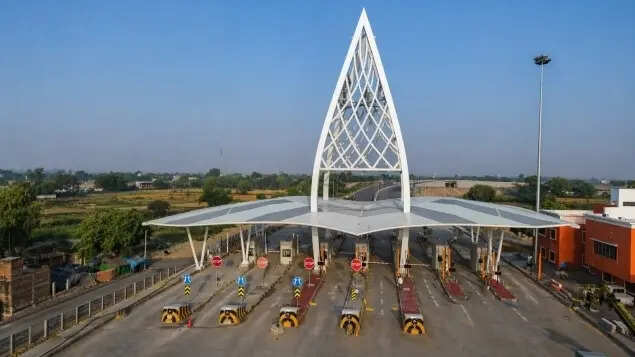
Toll: The project will be operated under a toll-based public-private partnership model. Adani Enterprises and IRB Infrastructure Developers have been awarded concession rights for a period of 30 years.For toll collection, two primary toll plazas will be set up at the main entry points in Meerut and Prayagraj. The final toll charges have not yet been announced, however officials have indicated that they are likely to be in line with other expressways in Uttar Pradesh. At present, four-wheelers pay around Rs 2 to Rs 3 per kilometre.
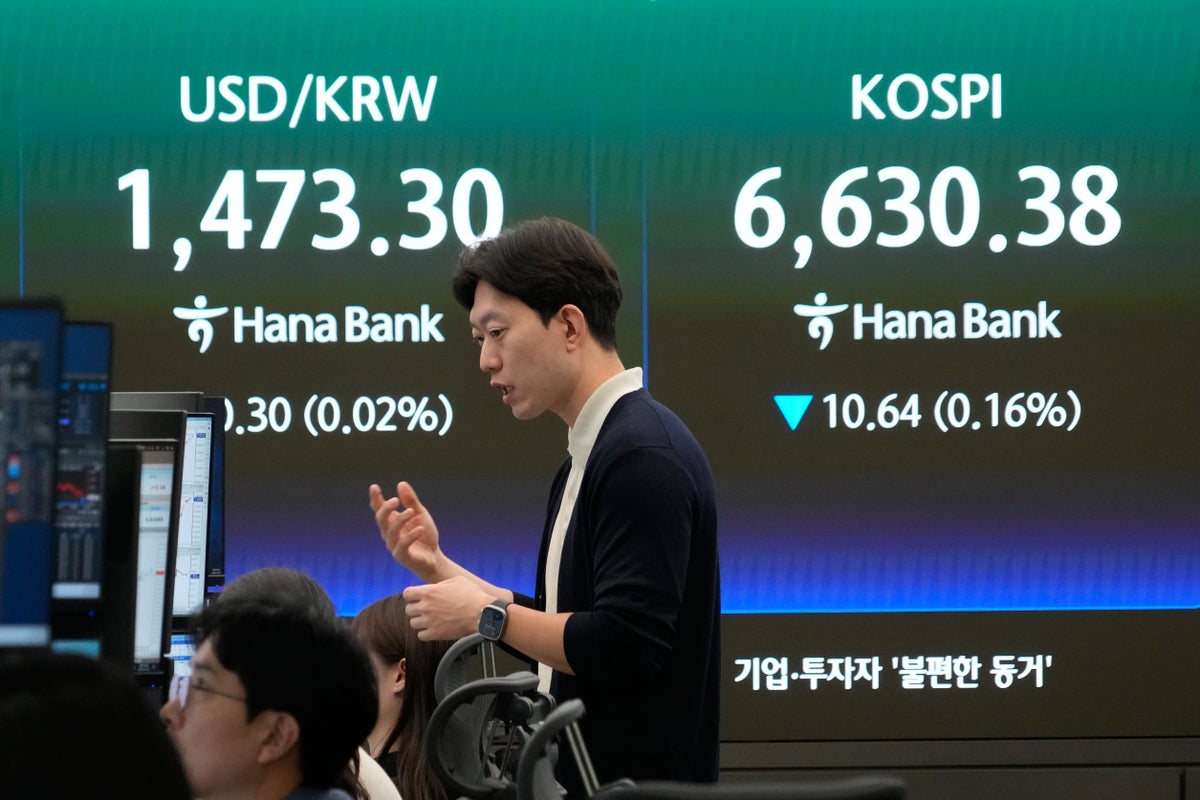
Stocks mostly advanced in Asia on Wednesday despite losses on Wall Street, while oil prices fell after the United Arab Emirates said it would leave Organisation of the Petroleum Exporting Countries (OPEC) in a blow to the powerful oil cartel.
US futures edged higher. Markets in Japan were closed for a holiday.
Elsewhere in Asia, South Korea’s Kospi rose 0.3 per cent to 6,657.40 and the Hang Seng in Hong Kong gained 1.4 per cent to 26,029.02. The Shanghai Composite index traded 0.3 per cent higher at 4,091.01.
Australia’s S&P/ASX 200 slipped 0.3 per cent, to 8,689.50.
Taiwan’s Taiex lost 0.6 per cent, and India‘s Sensex gained 0.4 per cent.
The price of a barrel of Brent crude oil to be delivered in June fell 0.5 per cent to $110.71 early Wednesday. Brent to be delivered in July dropped 0.6 per cent to $103.74. Brent oil was around $70 per barrel before the war began in late February.
Benchmark US crude fell 0.6 per cent to $99.32 a barrel.
The UAE’s departure from Opec, due to happen on Friday, has been closely watched by oil markets. Opec accounts for roughly 40 per cent of global oil output, and the UAE is one of Opec’s largest oil producers. It has pushed back against Opec production quotas in recent years, wanting to sell more oil to the rest of the world.
“The UAE’s exit will increase (oil) output,” ING Bank strategists Warren Patterson and Ewa Manthey wrote in a research note on Wednesday. “The UAE has been increasingly frustrated over recent years by its output being constrained by Opec production quotas, which have kept it well below its potential.”
But as US-Iran negotiations for a permanent end to the Iran war stalled and the Strait of Hormuz, where roughly one fifth of the world’s oil passed through before the war, was still largely closed, short term impacts on oil prices will still depend mainly on prospects for reopening the waterway, analysts said.
The UAE was the third largest oil producer within Opec before the Iran war. ING said its departure “will reduce Opec’s effectiveness in managing and influencing the global oil market through supply measures.”
Investors are also awaiting more updates on US-Iran peace talks, although limited progress has been made. Iran has offered to reopen the Strait of Hormuz if the United States lifts its blockade on its ports. So far, the US appears to be ruling out a deal that excludes the Islamic Republic’s nuclear programme.
The Federal Reserve is expected to announce a decision on interest rates later Wednesday.
On Tuesday, Wall Street retreated from its recent record highs. The benchmark S&P 500 fell 0.5 per cent from its latest all-time high to 7,138.80. The Dow Jones Industrial Average edged down 0.1 per cent to 49,141.93, and the technology-heavy Nasdaq composite dropped 0.9 per cent to 24,663.80.
Artificial intelligence-related stocks led the losses. Chip company Broadcom lost 4.4 per cent, Nvidia fell 1.6 per cent and Micron Technology lost 3.9 per cent. Alphabet, Amazon, Microsoft and Meta Platforms are reporting quarterly results on Wednesday.
In other dealings early Wednesday the US dollar rose slightly to 159.63 Japanese yen from 159.62 yen. The euro was trading at $1.1708, down from $1.1712.
The yield on the US 10-year Treasury remained at 4.35 per cent.
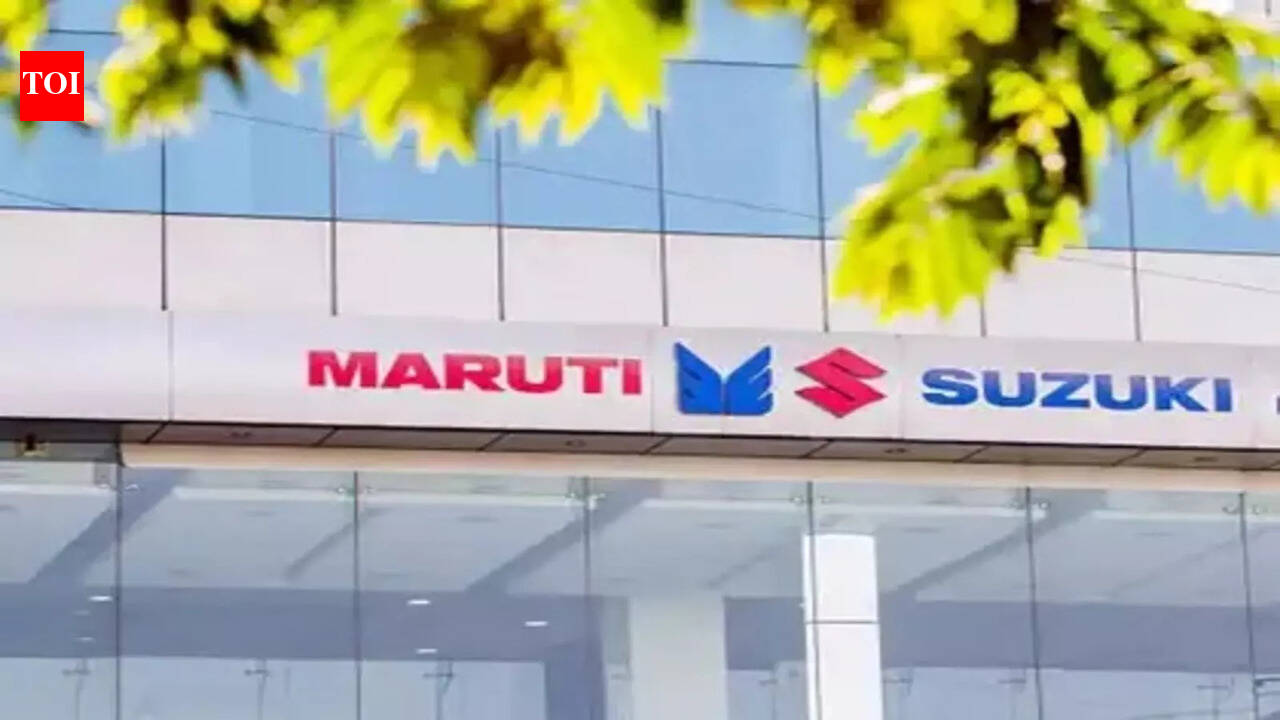
New Delhi: Maruti Suzuki had a record year in 2025-26 in terms of revenue and sales, but rising costs took a bite out of profits. The automaker posted consolidated revenue of over Rs 1.8 lakh crore, up 19.9% from the previous year, with total sales of 24.2 lakh vehicles. Net profit, however, barely moved – rising 1.2% to Rs 14,680 crore – as higher material, employee and depreciation costs ate into margins.The March quarter told a similar story: Revenue jumped 28.6% to Rs 52,462 crore, but net profit slipped 6.4% to Rs 3,659 crore.R C Bhargava, chairman, Maruti Suzuki India, said the auto industry is back in a growth phase, helped by stronger consumer demand and govt support, including lower taxes on small cars. He said Maruti expects to roll out about 2.5 lakh more vehicles this year as supply bottlenecks ease and new capacity comes online. The bigger constraint right now, he said, is not whether people want to buy cars but how many the company can actually make. Maruti is adding new production lines that will bring roughly 5 lakh additional units of annual capacity this year.


Uh-Oh: This Office Chair Is So Comfortable I Can Fall Asleep in It

New Zealand’s apparel imports dip slightly to $1.18 bn in FY2025–26

Prince Harry sets ‘non-negotiable’ condition for Meghan in UK plans

-

 Politics1 week ago
UK’s Starmer seeks to deflect blame over Mandelson appointment
-
 Business1 week ago
How Trump’s psychedelics executive order could unlock stalled cannabis reform
-

 Entertainment1 week ago
Lee Anderson, Zarah Sultana kicked out of UK Parliament for calling PM ‘liar’
-
 Business1 week ago
Us-India Trade Talks: US–India trade deal: Where do talks stand & what to expect – explained – The Times of India
-

 Tech1 week ago
A Humanoid Robot Set a Half-Marathon Record in China
-

 Fashion1 week ago
India, US to resume BTA talks today
-
 Business1 week ago
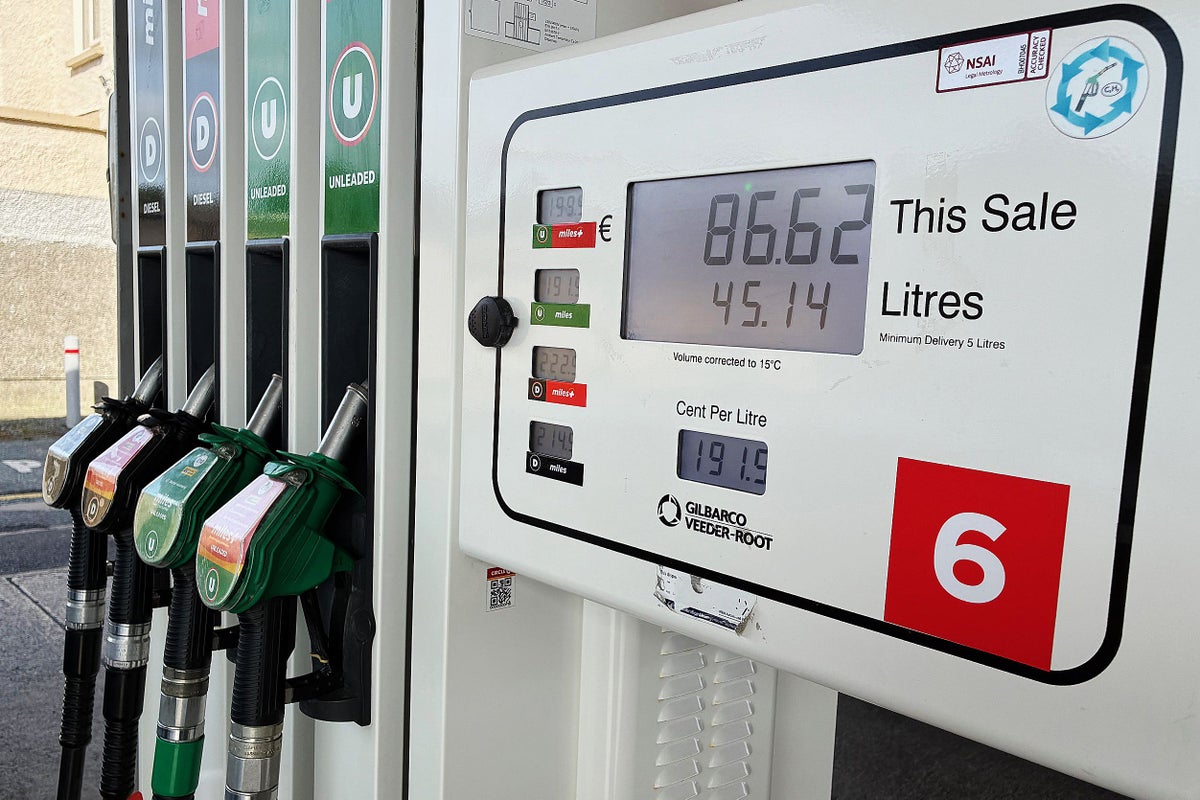
UK inflation accelerates after Iran war drives sharp rise in fuel prices
-
 Fashion1 week ago
Global energy growth slows to 1.3% in 2025: Report