

Business
Starbucks raises full-year outlook as turnaround takes hold — despite higher gas prices


Starbucks on Tuesday raised its full-year outlook for comparable earnings and same-store sales growth after reporting its second straight quarter of traffic growth.
“This quarter marked a milestone for Starbucks – and the turn in our turnaround,” CEO Brian Niccol said in a video posted alongside the company’s fiscal second-quarter results.
For fiscal 2026, Starbucks said global and U.S. same-store sales are now expected to increase by at least 5%, up from its prior projection of an increase of 3%. Starbucks also raised its forecast for adjusted earnings per share to a range of $2.25 to $2.45 from its previous range of $2.15 to $2.40 per share.
Alarmed by the current war between U.S. and Iran and its effects on fuel, few companies have chosen to hike their outlook for the full year when reporting their quarterly results in recent weeks, making Starbucks an outlier.
Niccol said that higher gas prices haven’t changed the behavior of Starbucks customers yet, although he acknowledged even the company’s higher forecast raise is cautious — relative to its outperformance this quarter.
Shares of Starbucks rose about 5% in extended trading.
Here’s what the company reported for the period ended March 29 compared with what Wall Street was expecting, based on a survey of analysts by LSEG:
- Earnings per share: 50 cents adjusted vs. 43 cents expected
- Revenue: $9.53 billion vs. $9.16 billion expected
Starbucks reported fiscal second-quarter net income attributable to the company of $510.9 million, or 45 cents per share, up from $384.2 million, or 34 cents per share, a year earlier.
Excluding restructuring and impairment costs as well as other items, the company earned 50 cents per share, beating Wall Street expectations.
The company said net sales rose roughly 9% to $9.53 billion.
Starbucks’ global same-store sales, which only includes cafes open at least a year, increased 6.2%, fueled by more visits to its locations. Wall Street was projecting same-store sales growth of 4%, according to StreetAccount estimates.
The company has continued to see similar same-store sales growth into April, Niccol said on the company’s earnings conference call.
North America, the company’s home market, drove most of the quarter’s same-store sales growth. U.S. same-store sales climbed 7.1%, driven by a 4.3% jump in transactions.
It marks the second straight quarter of traffic growth for Starbucks’ U.S. cafes, signaling that the company’s turnaround has taken hold.
Under Niccol, the chain has cut back on discounts and focused instead on luring customers back by improving cafe operations, adding buzzy new menu items and reintroducing seating to its locations.
“We haven’t seen this transaction strength in years,” Niccol said during the company’s earnings call.
Starbucks’ U.S. sales growth came from across its menu, from its new artisanal bakery items to the increasing popularity of protein cold foam, CFO Cathy Smith said.
Outside the U.S., growth was more tepid. International same-store sales rose 2.6%.
China, the company’s second-largest market, weighed on its results, with same-store sales growth of just 0.5%. Starbucks has been leaning on more discounts in China to drive more visits, resulting in 2.1% higher traffic but a 1.6% decline in average spend.
Boyu Capital closed its deal for a majority stake of Starbucks’ China business at the beginning of the fiscal third quarter, Smith said on the call. The alternative asset management firm now holds a 60% interest in a joint venture with Starbucks in the region.
Going forward, Starbucks does not plan to share China’s standalone revenue and same-store sales since it is now considered part of the company’s licensed portfolio, it said.


New Delhi: Maruti Suzuki had a record year in 2025-26 in terms of revenue and sales, but rising costs took a bite out of profits. The automaker posted consolidated revenue of over Rs 1.8 lakh crore, up 19.9% from the previous year, with total sales of 24.2 lakh vehicles. Net profit, however, barely moved – rising 1.2% to Rs 14,680 crore – as higher material, employee and depreciation costs ate into margins.The March quarter told a similar story: Revenue jumped 28.6% to Rs 52,462 crore, but net profit slipped 6.4% to Rs 3,659 crore.R C Bhargava, chairman, Maruti Suzuki India, said the auto industry is back in a growth phase, helped by stronger consumer demand and govt support, including lower taxes on small cars. He said Maruti expects to roll out about 2.5 lakh more vehicles this year as supply bottlenecks ease and new capacity comes online. The bigger constraint right now, he said, is not whether people want to buy cars but how many the company can actually make. Maruti is adding new production lines that will bring roughly 5 lakh additional units of annual capacity this year.
Several warning lights are flashing that have some wondering whether we are in the foothills of another financial crisis.
Source link
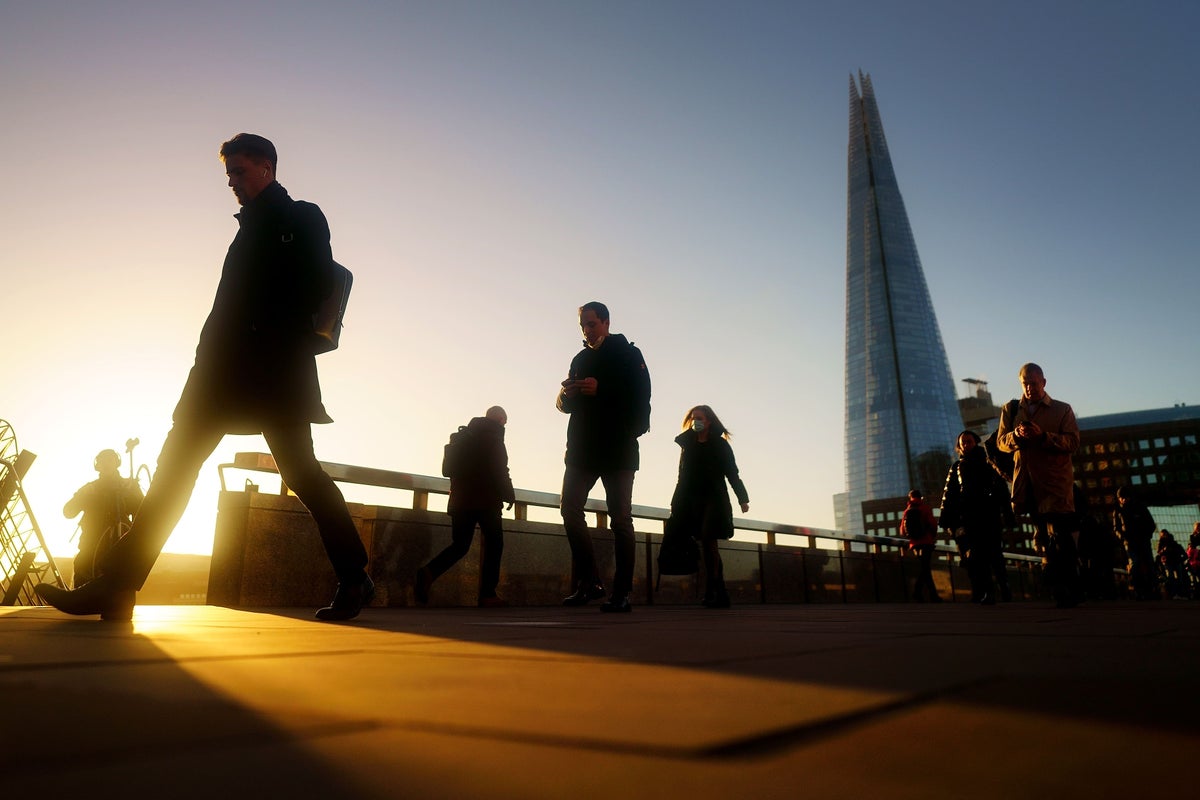
The Middle East energy shock could wipe around £35 billion from the UK economy over the next two years in a “best-case” scenario, an economic think tank has warned.
The National Institute of Economic and Social Research (Niesr) said that a more protracted crisis in the Middle East could see the UK enter a recession in the second half this year.
The group’s latest quarterly economic projections pointed to an increasingly gloomy outlook as the war between US-Israeli and Iranian forces weighs on economies globally, with the UK set for slower growth and rising inflation.
It indicated that the Bank of England’s committee rate-setters are likely to increase interest rates this summer as a result, with the potential for up to six more hikes in a more severe scenario.
On Thursday, the Bank’s Monetary Policy Committee will vote on whether to keep interest rates at their current level of 3.75%.
Niesr said it expects interest rates to be held at this meeting, but predicted they will be increased to 4% in July – staying at this level through the rest of the year.
However, it said a severe scenario, which would see further inflationary pressure from a continuing conflict, could result in rates rising as high as 5.25%.
In its best-case scenario which would include a resolution in the Middle East this year, the organisation still pointed towards a slowdown in economic growth to 0.9% for 2026, compared with 1.4% growth in 2025.
The group said growth is likely to improve marginally to 1% in 2027.
In its previous outlook, Niesr had predicted 1.4% growth this year and 1.3% growth in 2027.
Even with a swift resolution to the conflict, Niesr said the UK economy will be around £35 billion smaller in 2026 and 2027, casting uncertainty over the Chancellor’s ambitions to grow the UK economy.
However, Niesr’s deputy director for macroeconomics Stephen Millard said an adverse situation is likely to knock around 0.4 percentage points off growth over the next two years.
The forecasts also indicated that inflation, which lifted to 3.3% last month, will slow to 2.5%.
But it is then expected to shoot higher as higher energy prices drive further inflation, with it expected to peak at 4.1% in January next year.
Niesr said it expects inflation will not drop back to the Bank of England’s 2% target rate until 2028 as a result.
Inflation is set to surpass wage growth, which is predicted to slow to 3.3% next year, putting pressure of household finances.
Growth in real personal disposable income is forecast to slow to 1% in 2026 and 0.6% in 2027, with low-income households who spend a higher proportion of their income on energy being hit the hardest.
David Aikman, Niesr director, said: “This is a serious blow to the Government’s mission to get the UK economy growing again.
“The Middle East conflict has laid bare the fact that the UK remains highly exposed to global energy shocks.
“Even if hostilities ease rapidly, higher energy prices will leave households poorer, businesses facing higher costs, and the economy materially smaller than we expected only a few months ago.”


Textile crisis deepens in Q2 2026 as supply shock surges

Trump to put his picture in US passports

Egypt’s SCZONE signs $16.5-mn pact with Turkish firm for RMG project

-

 Politics1 week ago
UK’s Starmer seeks to deflect blame over Mandelson appointment
-
 Business1 week ago
How Trump’s psychedelics executive order could unlock stalled cannabis reform
-

 Fashion1 week ago
UK’s Sosandar returns to profitability amid robust FY26 performance
-
 Entertainment1 week ago
Lee Anderson, Zarah Sultana kicked out of UK Parliament for calling PM ‘liar’
-
 Business1 week ago
Us-India Trade Talks: US–India trade deal: Where do talks stand & what to expect – explained – The Times of India
-

 Tech1 week ago
A Humanoid Robot Set a Half-Marathon Record in China
-

 Fashion1 week ago
India, US to resume BTA talks today
-
 Business7 days ago
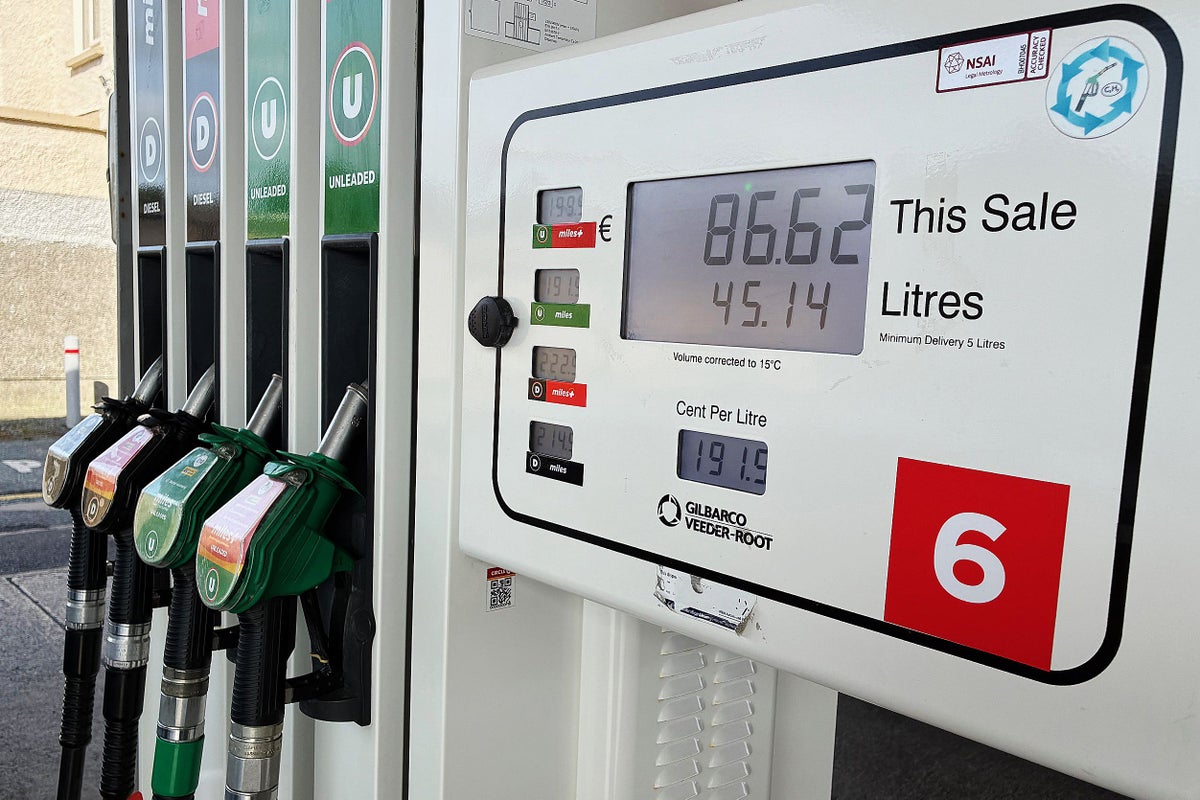
UK inflation accelerates after Iran war drives sharp rise in fuel prices