

Politics
Five vessels attacked in Gulf, Strait of Hormuz as war puts merchant ships on front lines

- Armed Iranian boats attacked two tankers in Iraqi waters.
- Thailand-flagged bulk carrier damaged off Oman.
- Most crew evacuated, three feared missing.
Iranian explosive-laden boats appear to have attacked two fuel tankers in Iraqi waters, setting them ablaze and killing one crew member on Wednesday, after projectiles struck three vessels in Gulf waters, said port, maritime security and risk firms.
The latest attacks mark an escalation in the conflict between Iran and US-Israeli forces, raising the number of ships struck in the region since fighting began to at least 16.
Shipping in the Gulf and along the narrow Strait of Hormuz, which carries around a fifth of the world’s oil, has come to a near-standstill since the U.S. and Israel began strikes on Iran on February 28, sending global oil prices surging to highs not seen since 2022.
The ships targeted in late-night armed boat attacks in the Gulf near Iraq were the Marshall Islands-flagged Safesea Vishnu and the Zefyros, which had loaded fuel cargoes in Iraq, two Iraqi port officials said.
“We recovered the body of a foreign crew member from the water,” one port security official said, as Iraqi rescue teams continued searching for other missing seafarers. It was not immediately clear which ship the person was linked to.
The Safesea Vishnu’s US-based commercial operator and beneficial operator are Safesea Transport Group and Safesea Group, respectively, according to data from Lloyd’s List Intelligence. They did not immediately respond to requests for comment.
One Iraqi port security source said Zefyros is flagged in Malta and provided Reuters with a list of crew names.
Zefyros Trading SA is the registered owner of the tanker matching that name and description, according to Lloyd’s List Intelligence data. Lloyd’s data shows UK-based Cygnus Tankers Limited as the commercial operator and the George & Vassilis Michael family group of companies, a key player in Greek shipping, as the beneficial owner.
Cygnus Tankers did not immediately respond to requests for comment. Reuters was not able to immediately reach the other two entities.
Iran’s Revolutionary Guards have warned that any ship passing through the Strait of Hormuz will be targeted. US President Donald Trump has threatened to ramp up US attacks on Iran if it continues to obstruct the Strait.
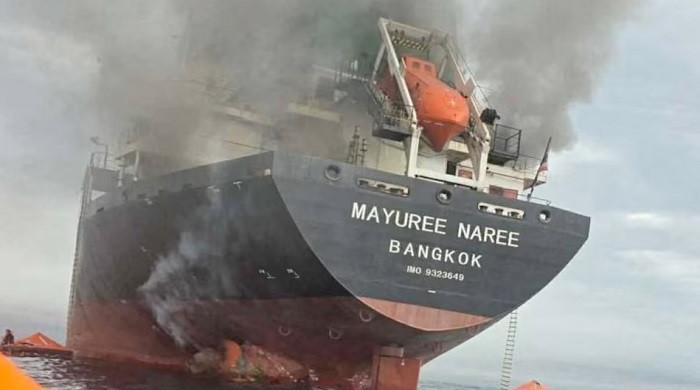
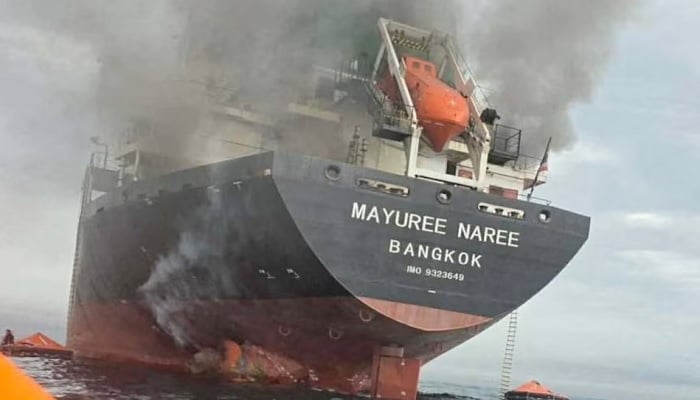
The Thai-flagged Mayuree Naree dry bulk vessel was struck by “two projectiles of unknown origin” while sailing through the strait earlier on Wednesday, causing a fire and damaging the engine room, the ship’s Thai-listed operator Precious Shipping said in a statement.
“Three crew members are reported missing and believed to be trapped in the engine room,” Precious Shipping said.
“The company is working with the relevant authorities to rescue these three missing crew members,” it said, adding that the remaining 20 crew members had been safely evacuated and were ashore in Oman.
Images provided by the Thai navy showed smoke pouring out of the back of the ship.
Iran’s Guards said in a statement carried by the Tasnim news agency that the ship was “fired upon by Iranian fighters”, suggesting the first direct engagement by the Guards, who have previously fired missiles or drones.
The U.S. Navy has refused near-daily requests from the shipping industry for military escorts through the Strait of Hormuz since the start of the war on Iran, saying the risk of attacks is too high for now, sources familiar with the matter told Reuters. Trump has said the US is prepared to provide naval escorts whenever needed.
Two other ships sustain minor damage
The Japan-flagged container ship ONE Majesty also sustained minor damage on Wednesday from an unknown projectile 25 nautical miles (46 km) northwest of Ras Al Khaimah in the United Arab Emirates, two maritime security firms said.
Its Japanese owner, Mitsui OSK Lines Ltd and a spokesperson for Ocean Network Express, its charterer, said the vessel was struck while at anchor in the Gulf, and an inspection of the hull revealed minor damage above the waterline.
All crew are safe, they said, adding that the vessel remains fully operational and seaworthy. The owner said the cause of the incident remained unclear and was under investigation.
A third vessel, a bulk carrier, was also hit by an unknown projectile approximately 50 miles (30 miles) northwest of Dubai, maritime security firms said.
The projectile had damaged the hull of the Marshall Islands-flagged Star Gwyneth, maritime risk management company Vanguard said, adding that the vessel’s crew were safe. Owner Star Bulk Carriers said the ship was hit in the hold area whilst anchored. There were no crew injuries and no listing.
The Guards’ statement included a reference to another ship, which it said was hit by projectiles – usually a reference to drones – on Wednesday morning. Reuters was not immediately able to confirm that report.
- US intelligence says Iran’s leadership remains stable.
- IRGC continues to dominate security and economic sectors.
- Israel admits regime collapse is not guaranteed.
NEW YORK/WASHINGTON: US intelligence indicates that Iran’s leadership is still largely intact and is not at risk of collapse any time soon after nearly two weeks of relentless US and Israeli bombardment, according to three sources familiar with the matter.
A “multitude” of intelligence reports provide “consistent analysis that the regime is not in danger” of collapse and “retains control of the Iranian public,” said one of the sources, all of whom were granted anonymity to discuss US intelligence findings.
The latest report was completed within the last few days, the source said.
With political pressure building over soaring oil costs, President Donald Trump has suggested he will end the biggest US military operation since 2003 “soon.” But finding an acceptable end to the war could be difficult if Iran’s hardline leaders remain firmly entrenched.
The intelligence reporting underscores the cohesion of Iran’s leadership despite the killing of Supreme Leader Ayatollah Ali Khamenei on February 28, the first day of the US and Israeli strikes.
Israeli officials in closed discussions also have acknowledged there is no certainty the war will lead to the government’s collapse, a senior Israeli official told Reuters.
The sources stressed that the situation on the ground is fluid and that the dynamics inside Iran could change.
The Office of the Director of National Intelligence and the Central Intelligence Agency declined to comment.
The White House did not immediately respond to a request for comment.
Shifting objectives
Since launching their war, the US and Israel have struck a range of Iranian targets, including air defences, nuclear sites, and members of the senior leadership.
The Trump administration has given varying reasons for the war. In announcing the beginning of the US operation, Trump urged Iranians to “take over your government,” but top aides have since denied that the objective was to oust Iran’s leadership.
In addition to Khamenei, the strikes have killed dozens of senior officials and some of the highest-ranking commanders in the Islamic Revolutionary Guard Corps (IRGC), an elite paramilitary force that controls large parts of the economy.
Still, the US intelligence reports indicate that the IRGC and the interim leaders who assumed power after Khamenei’s death retain control of the country.
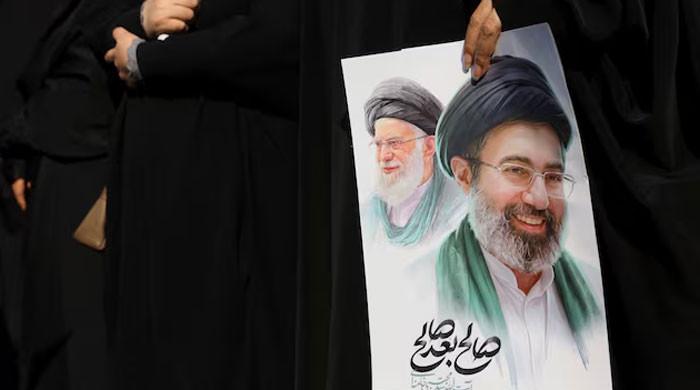
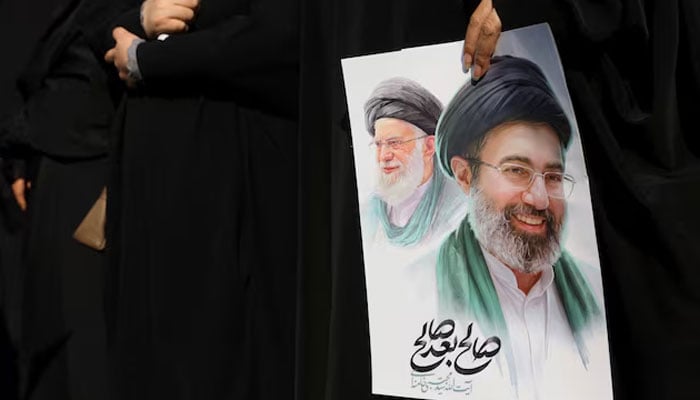
The Assembly of Experts, a group of senior leaders, earlier this week declared Khamenei’s son, Mojtaba, the new supreme leader.
Israel has no intention of allowing any remnants of the former government to stay intact, said a fourth source familiar with the matter.
It is unclear how the current US-Israeli military campaign would topple the government.
It would likely require a ground offensive that would allow people inside Iran to safely protest in the streets, said the source.
The Trump administration has not ruled out sending US troops into Iran.
Intelligence suggests Kurds lack firepower to fight Iran
Reuters reported last week that Iranian Kurdish militias based in neighbouring Iraq consulted with the US about how and whether to attack Iran’s security forces in the western part of the country.
Such an incursion could put pressure on Iranian security services there, allowing Iranians to rise up against the government.
Abdullah Mohtadi, the head of the Komala Party of Iranian Kurdistan, part of a six-party coalition of Iranian Kurdish parties, said in an interview on Wednesday that the parties are highly organised inside Iran and that “tens of thousands of young people are ready to take up arms” against the government if they receive US support.
Mohtadi said he has received reports from inside Iranian Kurdistan that IRGC units and other security forces have abandoned bases and barracks out of fear of US and Israeli strikes.
“We have been witnessing tangible signs of weakness in Kurdish areas,” he said.
But recent US intelligence reports have cast doubt on the ability of the Iranian Kurdish groups to sustain a fight against Iranian security services, according to two sources familiar with those assessments.
The intelligence indicates that the groups lack the firepower and numbers, they said.
The Kurdish Regional Government, which governs the autonomous region of Iraqi Kurdistan where the Iranian Kurdish groups are based, did not immediately respond to a request for comment.
The Iranian Kurdish groups have in recent days asked senior officials in Washington and US lawmakers for the US to provide them with weapons and armoured vehicles, another person familiar with the matter said.
But Trump said on Saturday that he had ruled out having the Iranian Kurdish groups go into Iran.
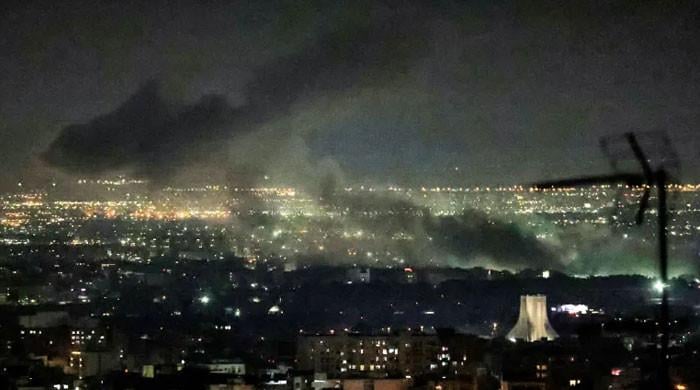
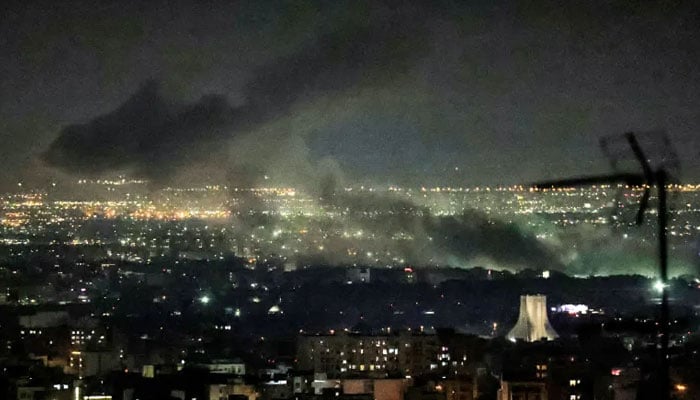
- White House may request $50bn additional funding for Iran war.
- Trump claims US has ‘won’ but will continue fighting.
- $5.6bn of munitions used on Iran in first two days.
WASHINGTON: Officials from President Donald Trump’s administration estimated during a congressional briefing this week that the first six days of the war on Iran had cost the US at least $11.3 billion, a source familiar with the matter said on Wednesday.
That figure, from a closed-door briefing for senators on Tuesday, did not include the entire cost of the war, but was provided to lawmakers as they have clamoured for more information about the conflict.
Several congressional aides have said they expect the White House to soon submit a request to Congress for additional funding for the war. Some officials have said the request could be for $50 billion, while others have said that estimate seems low.
The administration has not provided a public assessment of the cost of the conflict or a clear idea of its expected duration. Trump said during a trip to Kentucky on Wednesday that “we won” the war but that the US will stay in the fight to finish the job.
The $11.3 billion figure was first reported on Wednesday by the New York Times.
The campaign against Iran began on February 28 with US and Israeli airstrikes and has so far killed around 2,000 people, mostly Iranians and Lebanese, as the conflict has spread into Lebanon and thrown global energy markets and transport into chaos.
Administration officials also have told lawmakers that $5.6 billion of munitions were used during the first two days of strikes.
Members of Congress, who may soon have to approve additional funding for the war, have expressed concern that the conflict will deplete US military stocks at a time when the defence industry was already struggling to keep up with demand.
Trump met executives from seven defence contractors last week as the Pentagon worked to replenish supplies.
Democratic lawmakers have demanded public testimony under oath from administration officials about the Republican president’s plans for the war, including how long it might last and what his plans are for Iran once the fighting has stopped.
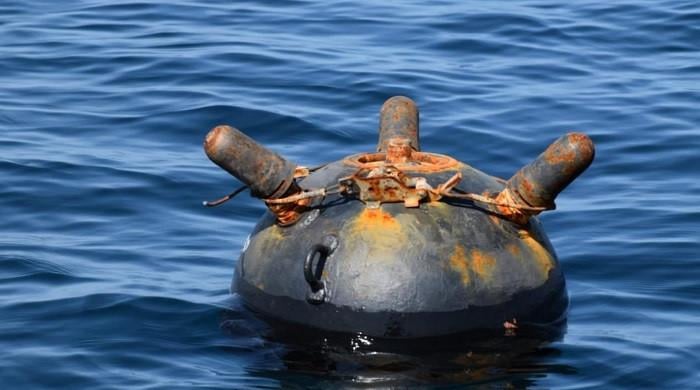

Following US and Israeli strikes on Iran, Tehran is believed to be seeking to choke the vital Strait of Hormuz — the world’s most important oil shipping route — with fears it may be deploying sea mines to disrupt tanker traffic.
US forces have struck 28 Iranian mine-laying vessels, President Donald Trump said Wednesday, more than a week into the Middle East war.
Any Iranian mining of the key shipping lane, as its forces did in the 1980s, would be a nightmare for Western demining teams.
Here’s an explainer:
What are sea mines?
“Mines are the weapon of the poor,” a former senior officer with the French navy and specialist on the subject told AFP on condition of anonymity.
Yet “they pose a fundamental threat to maritime trade and to the freedom of action of naval forces,” he said.
How many does Iran have?
Elie Tenenbaum, a researcher at the French Institute for International Relations (IFRI), said Iran was estimated to have some 5,000-6,000 naval mines, including “drifting mines that are extremely difficult to intercept”.
Contact mines can drift around on the surface with the current or can be moored to an anchor on the sea floor. They explode when they come into contact with a ship´s hull.
“It´s the most rudimentary mine, the cheapest one, and the main threat in the Strait of Hormuz,” said the former high-ranking member of the navy.
The Iranians also had influence mines adapted to the Gulf´s shallow waters, which are sown on the seabed and explode when a large ship is detected overhead, he said.
The Iranians could also use speedboats to attach limpet mines to the hulls of ships, which would be set to explode at a certain time, he added.
The Iranians can rapidly deploy all these mines “in the Persian Gulf and Strait of Hormuz using high-speed small boats equipped as minelayers”, the US Defence Intelligence Agency (DIA) said in a 2019 report.
“Iran has equipped many of its Ashoora small boats with mine rails capable of holding at least one mine,” it added.
But, said the ex-navy official, you could also convert another small boat to do the job more discreetly.
Have they been used before?
Tehran used deployed sea mines during its conflict with Iraq in the 1980s during the so-called “tanker war”, forcing the United States to escort commercial ships.
During the Gulf War in 1991, Iraqi forces deployed 1,300 mines, badly damaging two US Navy ships, including the USS Princeton, which it cost about $100 million to bring back online, according to US researcher Scott Truver, who has taught at the Naval War College.
“It took the multinational coalition forces more than two years of intensive mine-countermeasure operations to declare the northern gulf mine free,” he wrote in 2012.
What of demining?
Western nations have the means to demine the Strait of Hormuz should it be necessary, but such an operation would be long and complicated.
In January, the United States withdrew from service four Avenger-class mine hunters based in the Gulf state of Bahrain.
They are to be replaced by the same number of combat ships equipped with mine countermeasure capabilities, but not designed for that purpose.
“Strategically placed sea mines could become the Achilles heel of US naval operations,” the Centre for Maritime Strategy said last year, warning Iran, but also China and Russia, had acquired the cheap munition.
Yet “the navy is dismantling its already-limited mine countermeasures capability without fielding proven replacements,” it added.
Tenenbaum, of IFRI, said European capabilities were superior to those of the United States, but still “totally inadequate to confront this threat today”.
Britain in December withdrew the last of the four mine hunters it had stationed in the Gulf since 2003.
France only has eight such specialised ships, down from 13 previously. They have not been sent to the Gulf in a while.
Belgium and the Netherlands are considered to be experts in the field, but are still waiting for a delivery of state-of-the-art ships to deploy mine-seeking drones to identify and defuse sea mines at a safe distance.
As for Gulf countries, they do have demining scuba divers, the former navy officer said.
“But to neutralise mines, you have to find them first,” he said.


India optimistic about renewed SACU trade pact talks: Envoy

Italy win over Mexico sends Team USA to WBC quarterfinals

Achilles tear ends Mexico GK Malagón’s World Cup dreams

-
 Politics5 days ago
India let Iran warship dock the day US sank another off Sri Lanka, say officials
-

 Sports5 days ago
Pakistan set for FIH Pro League debut | The Express Tribune
-
 Business5 days ago
Restaurant group changes name after bid to buys pubs across the UK
-

 Entertainment5 days ago
Harry Styles kicks off new era with ‘One Night Only’ comeback show
-
 Business5 days ago
Home heating oil: ‘Most of my pension has gone on home heating oil’
-

 Sports5 days ago
Winners and losers of the 2026 NHL trade deadline
-

 Entertainment5 days ago
Kanye ‘Ye’ West trips during trial: ‘Is he asleep?’
-

 Tech1 week ago
Google’s Pixel 10a May Not Be Exciting, but It’s Still an Unbeatable Value