

Business
Foreign investors buying UK gilts risks volatility, says Bank rate-setter

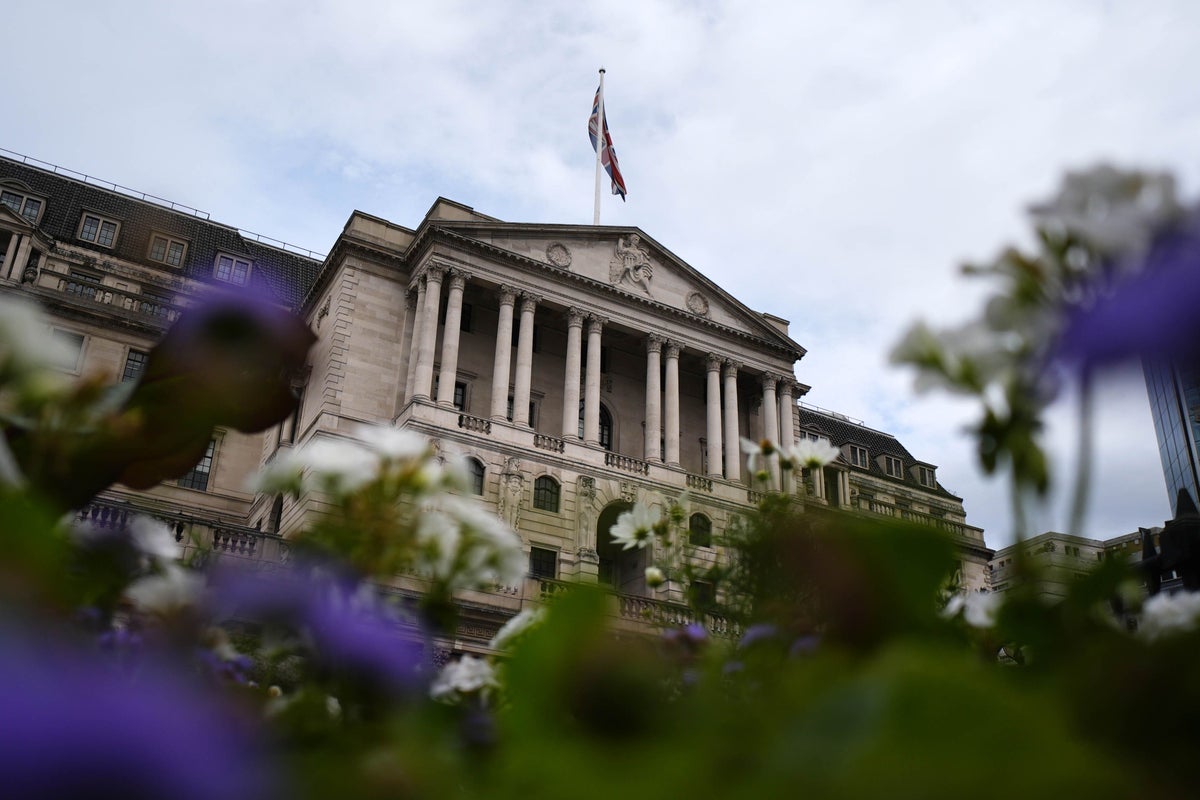
A policymaker at the Bank of England has warned that international investors snapping up UK Government debt could leave the market more vulnerable to volatility.
Catherine Mann, one of the Bank’s nine-strong Monetary Policy Committee (MPC), said overseas investors are playing a “particularly large role” in buying gilts – UK government bonds.
The comments come after recent increases in the yield of the gilts in the face of speculation about the future of Prime Minister Sir Keir Starmer.
The yield on the longer-term 30-year gilt is close to a 28-year-high, having jumped above 5.8% on Tuesday. The yield on the 10-year gilt has also increased in recent weeks.
The value of gilts decreases as the yield on the bonds increases.
High yields also result in increased borrowing costs for the government and therefore put pressure on state finances and potential spending plans.
In a speech, due to be delivered later on Wednesday, Ms Mann said the presence of “new actors” buying government debt means there is more potential for it to be sold off in the face of new economic shocks.
She said: “Although price-elastic investors can be an advantage in terms of the level of interest rates, they are also more responsive to changes in interest rates on account of domestic or global shocks, which could yield more volatility in cross-border capital flows and in financial conditions.
“Hypothetically, if a new shock were to occur and weigh on investor confidence, these more price-elastic international investors could respond by reducing their gilt holdings.”
Ms Mann also indicated that tighter monetary policy – increased interest rates – could lead to more volatility due to potential sell-offs.
“Given fragilities and economic uncertainties in the domestic and global financial markets, investor sentiment can shift abruptly,” she added.
“A tighter monetary policy stance could trigger volatility as the new actors unwind positions, potentially leading to tighter domestic financial conditions than intended.”

The likes of Apple, Microsoft and Google are all putting cartoon characters centre stage.
Source link
Business
Petrol and diesel prices may rise if Middle East crisis persists, says RBI Governor Sanjay Malhotra – The Times of India
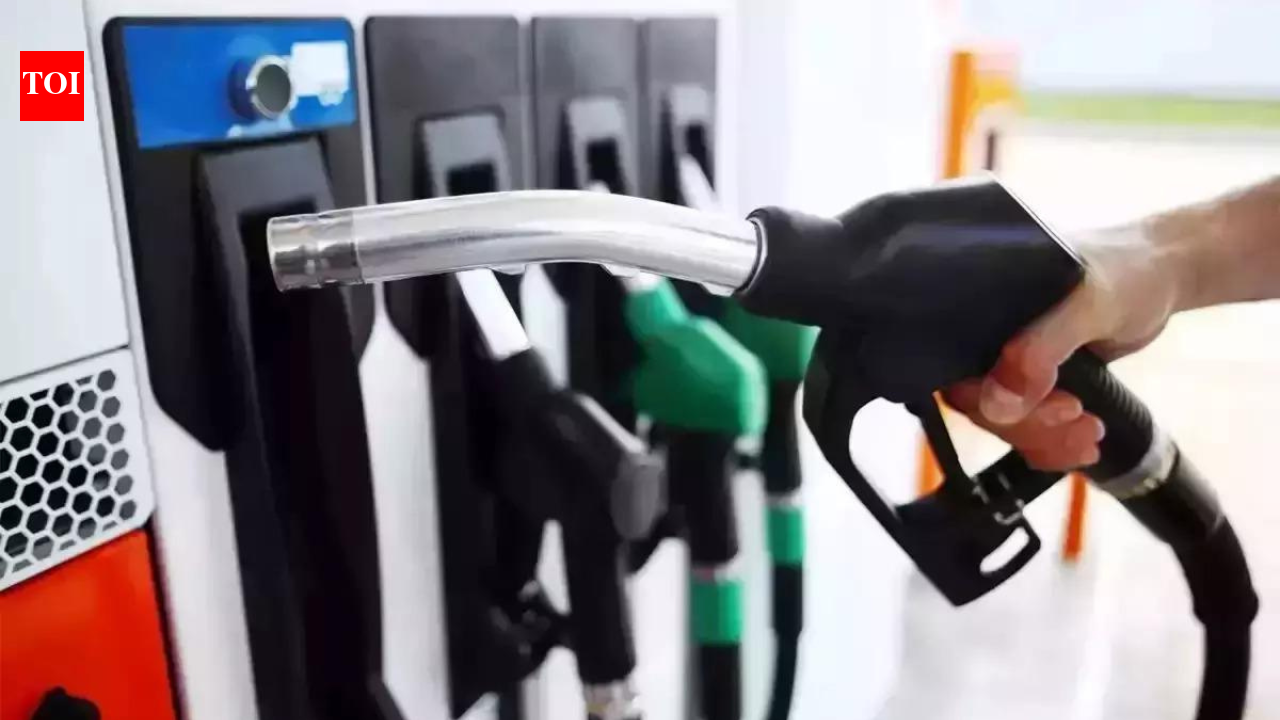
Reserve Bank Governor Sanjay Malhotra has said the government may eventually have to raise petrol and diesel prices if the ongoing Middle East crisis continues for a prolonged period, PTI reported on Wednesday.Speaking at a conference in Switzerland on Tuesday, Malhotra said the disruption in oil and gas supplies due to the conflict and blockade of the Strait of Hormuz has begun impacting India, which remains heavily dependent on energy and fertiliser imports.Referring to the crisis, the RBI governor said if it continues for a longer duration, it is a “matter of time that the government will actually pass on some of these price increases”.The government has so far not increased retail petrol and diesel prices despite the conflict in West Asia that began on February 28.Malhotra also said the government has remained fiscally prudent and continues on the path of fiscal consolidation.The comments come amid rising pressure on India’s external sector due to elevated crude oil prices and a weakening rupee, which has slipped below the 95 mark against the US dollar.Prime Minister Narendra Modi had earlier called for measures such as reducing fuel consumption and lowering edible oil usage to help conserve foreign exchange reserves.As global crude oil prices surge amid the prolonged Middle East conflict and disruptions around the Strait of Hormuz, India has so far avoided major increases in petrol and diesel prices, choosing instead to absorb the pressure through state-run oil marketing companies (OMCs), tax adjustments and supply management measures.The Centre has repeatedly asserted that there is no fuel shortage in the country and no plan to introduce rationing of petrol, diesel or LPG despite disruptions in global energy shipments linked to the Iran conflict and the Strait of Hormuz crisis.“There is no need to panic. There are sufficient supplies. There is no rationing in place. It’s not going to happen,” Oil Secretary Neeraj Mittal said recently at the CII Annual Business Summit.Officials said India currently maintains around 60 days of fuel stocks and nearly 45 days of LPG inventories despite continuing volatility in global energy markets.
OMC losses mount as crude prices surge
The government’s decision to hold retail fuel prices steady despite rising international crude rates has increased pressure on state-run oil companies.According to official discussions reviewed during recent government briefings, OMCs are estimated to be losing between Rs 1,000 crore and Rs 1,200 crore every day because of elevated crude prices and unchanged pump rates.Under-recoveries are estimated to have approached nearly Rs 2 lakh crore during the first quarter of 2026.The current crisis intensified after shipping movement through the Strait of Hormuz — a key global oil transit route handling nearly one-fifth of global crude flows — came under severe disruption during the Iran conflict.Brent crude prices surged above $110 per barrel during the latest phase of the crisis, sharply increasing import costs for major oil-consuming countries like India. India imports nearly 90 per cent of its crude oil requirements, making the economy highly vulnerable to global energy price shocks.
Govt focuses on supply stability, inflation control
The Centre has simultaneously attempted to prevent inflationary shocks and avoid panic in domestic fuel markets.Officials said India has increased procurement from alternate suppliers and secured additional energy cargoes to maintain uninterrupted supplies.“We have procured from other sources. We have procured from other countries. We have increased procurement from existing countries and that has kept us going in terms of supply management in the short run,” Mittal said.The government has also absorbed part of the global price shock through excise duty adjustments on petrol and diesel. Officials estimate the revenue impact of fuel-related tax reductions at nearly Rs 1.6 lakh crore.Prime Minister Narendra Modi on Sunday (May 10) urged citizens to conserve fuel, reduce unnecessary imports and avoid wasteful consumption as rising oil prices increase pressure on India’s import bill and foreign exchange reserves. The Prime Minister also encouraged greater use of public transport, carpooling, electric vehicles and work-from-home arrangements wherever possible. The government has described these as precautionary steps rather than emergency restrictions.
Pressure likely to continue
Fuel prices remain among the most politically sensitive economic issues in India because increases in petrol and diesel rates directly affect transport costs, food prices and household budgets.While the Centre has so far avoided large retail fuel price increases, analysts say prolonged suppression of prices could further strain OMC finances if crude prices remain elevated for a longer period.
Business
India targets $1 trillion exports in FY27 as Piyush Goyal bets on FTAs, global demand – The Times of India
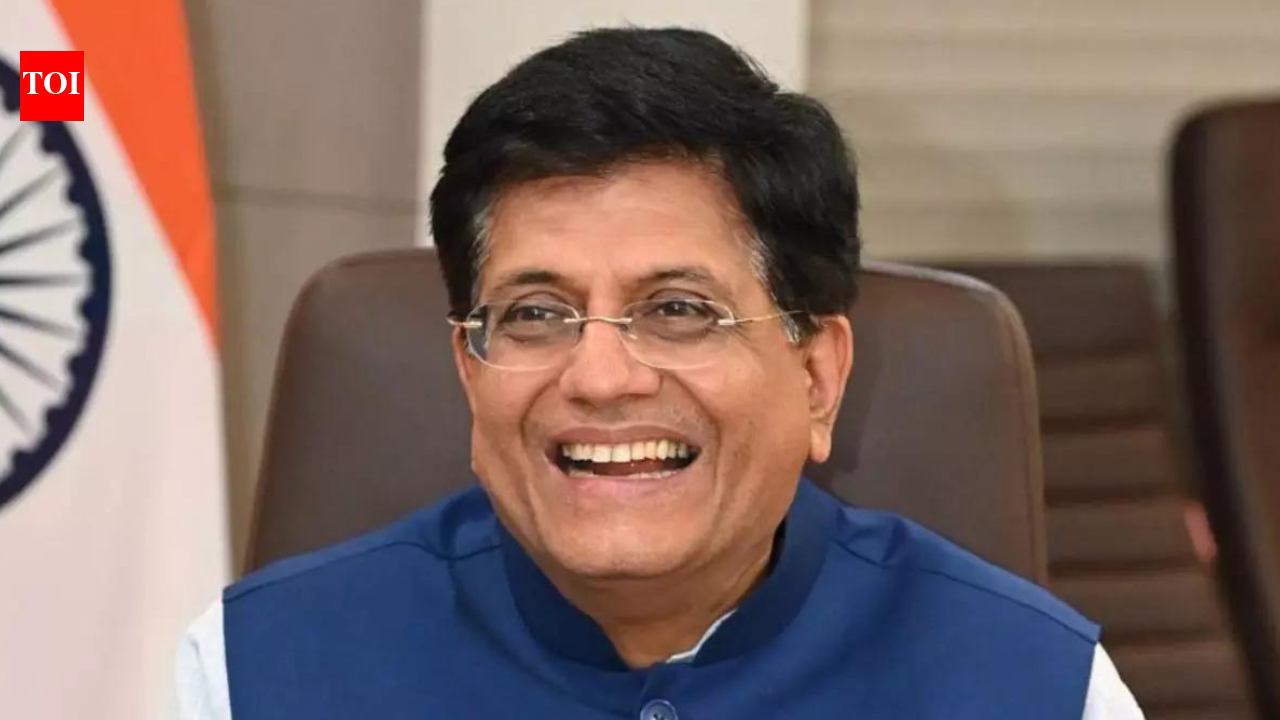
Commerce and Industry minister Piyush Goyal on Wednesday asked exporters to target $1 trillion in goods and services exports in the current financial year, after India recorded an all-time high outbound shipment value of $863.11 billion in 2025-26, PTI reported.“This year, let’s aspire for a $1 trillion exports target. It’s possible,” Goyal said at an event in the national capital.According to PTI, India’s overall exports rose 4.6 per cent in FY26 despite global uncertainties, including high US tariffs, the Russia-Ukraine conflict and the West Asia crisis.Merchandise exports increased 0.93 per cent to $441.78 billion in 2025-26 from $437.70 billion in the previous fiscal, while services exports surged to a record $421.32 billion from $387.55 billion registering an 8.71 per cent growth.The minister said achieving the $1 trillion milestone would require an additional $137 billion in exports, translating into a growth rate of around 16-17 per cent.Goyal said India is expanding market access for domestic goods and services through a series of free trade agreements (FTAs).India has concluded nine trade agreements since 2021, including those with Mauritius, the UAE, Australia, Oman, New Zealand, the European Union, the UK and the European Free Trade Association (EFTA) bloc. A framework for an interim trade agreement with the US has also been finalised.“Four of which (FTAs) are already operational and another 5 will be operational in the next 12 months,” Goyal said.Trade agreements with Mauritius, the UAE, Australia and the EFTA bloc are currently operational.The minister added that India is also negotiating FTAs with several other countries and regions, including Chile, Maldives, Canada, Israel, the Gulf Cooperation Council (GCC), the Eurasian Economic Union (EAEU), Mexico and the Southern African Customs Union (SACU).“We are trying to expand the Mercosur preferential trade agreement (PTA) to a much more robust trading arrangement,” he said.Goyal said the global business community is increasingly looking to engage with India because of its large domestic market and skilled workforce.The commerce ministry also held a virtual meeting with over 1,100 participants, including industry bodies, on Wednesday to improve awareness and utilisation of benefits under FTAs, especially among small and micro enterprises.

Cardi B, Stefon Diggs get into fight soon after Mother’s Day PDA
Why big tech is betting on cute mascots

WHO says eight passengers tested positive for hantavirus

-

 Tech6 days ago
A new frontier: Identity stack evolves for agentic systems | Computer Weekly
-

 Tech5 days ago
‘Orbs,’ ‘Saucers,’ and ‘Flashes’ on the Moon: Pentagon Drops New UFO Files
-

 Tech5 days ago
Nick Bostrom Has a Plan for Humanity’s ‘Big Retirement’
-

 Fashion6 days ago
New orders in German manufacturing up 5% MoM in Mar 2026: Destatis
-

 Tech6 days ago
What Microsoft Executives Really Thought About OpenAI in 2018
-
 Business1 week ago
India among most resilient large EMs, better placed for future global shocks; policy reforms & strong buffers help: Moody’s – The Times of India
-

 Sports6 days ago
Shaheen Afridi achieves landmark feat during opening Test against Bangladesh
-

 Tech6 days ago
The Canvas Hack Is a New Kind of Ransomware Debacle