Sports
Former NBA star Penny Hardaway suggests league lacks element of fun
NEWYou can now listen to Fox News articles!
Former NBA star Penny Hardaway now devotes most of his time to the film room, practice and the sideline while guiding the Memphis men’s basketball team.
Hardaway, in his eighth year coaching the Tigers, revealed his plans for the upcoming brief holiday break.
Despite a holiday layoff from Dec. 22 through New Year’s Eve, Hardaway plans to watch 50 college games, saying on his weekly radio show that he prefers the college game over today’s NBA style.
CLICK HERE FOR MORE SPORTS COVERAGE ON FOXNEWS.COM
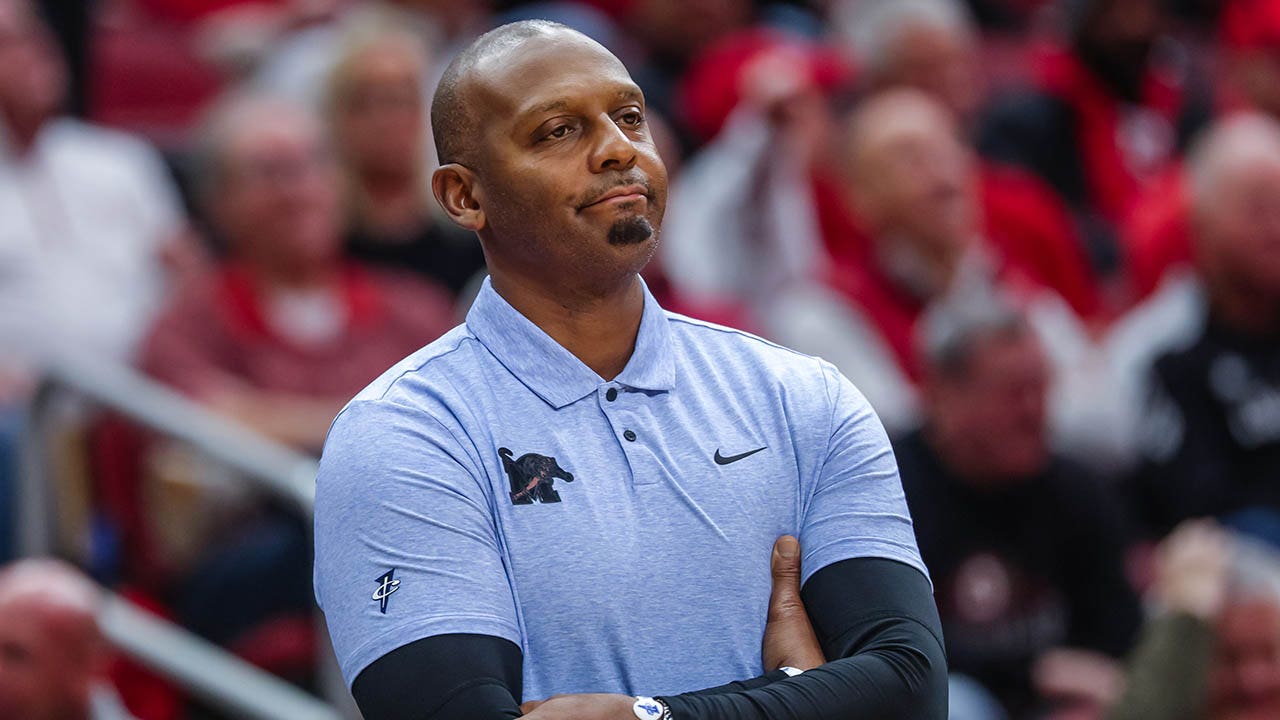
Memphis Tigers head coach Penny Hardaway looks on against the Tulane Green Wave during the semifinal game of the American Athletic Conference Tournament at the Dickies Arena in Forth Worth, Texas on March 11, 2023. (Adam Davis/Icon Sportswire via Getty Images)
Hardaway argued the professional ranks lack an element of fun. “It’s just not fun to watch anymore,” the four-time NBA All-Star said. “It’s just not fun to watch anymore,” the four-time NBA All-Star said.
“It’s like, over the years, to me, it’s just getting worse and worse. Not in a bad way. But for me to watch, because I’m in college, I see the fundamentals and playing team ball,” he said. “And just shooting all the 3s now is just a little irritating to me to just watch an NBA game. No one shoots layups anymore. It’s fun to watch for fans.
CHARLES BARKLEY RIPS NBA CUP, SUGGESTS IN-SEASON TOURNAMENT FUNCTIONS AS PLAYER CASH GRAB
“But for guys that were pure in the game, it’s a little difficult.”
Hardaway was the third overall pick in the 1993 NBA Draft and the runner-up at the end of that season’s Rookie of the Year voting. While Hardaway has placed the pros on the back burner, there are still a few teams he enjoys watching.
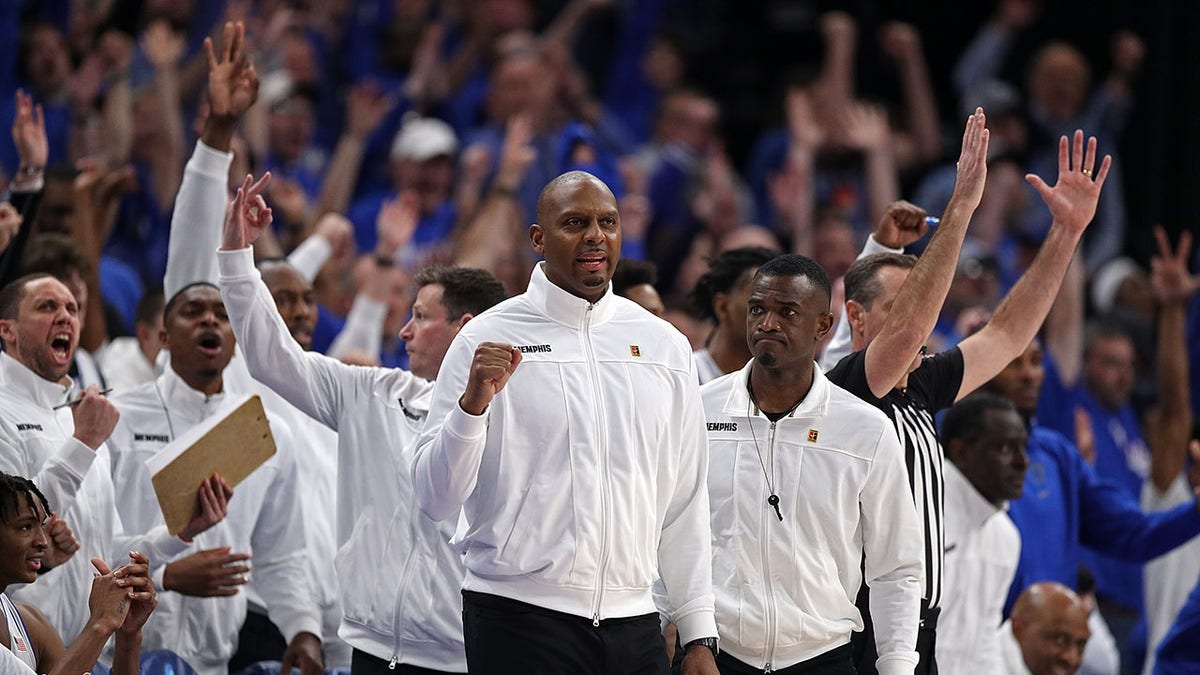
Head coach Penny Hardaway of the Memphis Tigers reacts during the second half against the Houston Cougars at FedExForum on March 5, 2023 in Memphis, Tennessee. (Justin Ford/Getty Images)
“I do love watching (the Oklahoma City Thunder), not because they’re the best team in the NBA, but they play the game the right way,” he said.
“(And the) Celtics, they play the game the right way. And I still enjoy watching the Grizzlies. I still like watching to see how they’re progressing. The Knicks, watching Jalen Brunson. I watch Minnesota with Anthony Edwards.”
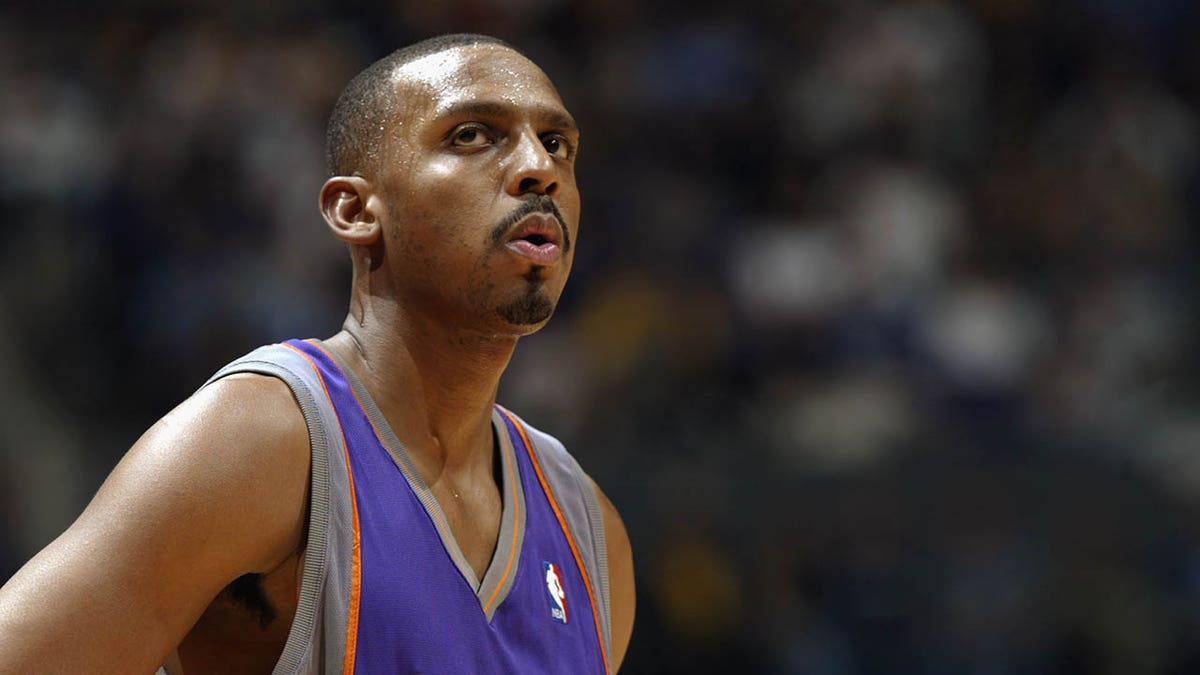
Anfernee “Penny” Hardaway (1) of the Phoenix Suns during the NBA game against the Los Angeles Lakers at Staples Center on Jan. 5, 2003 in Los Angeles, California. (Jeff Gross/Getty Images)
While the advent of name, image and likeness (NIL) has been widely debated, it has undoubtedly shifted the college sports landscape. Hardaway acknowledged the changes in recent years but still concluded that college hoops’ style is more appealing than what the NBA presents.
“But I’ll take that style over the NBA,” he said.
CLICK HERE TO GET THE FOX NEWS APP
Hardaway has guided Memphis to three consecutive NCAA Division I men’s basketball tournament appearances. The Tigers enter Saturday’s visit to Mississippi State with a 4-6 record.
Follow Fox News Digital’s sports coverage on X, and subscribe to the Fox News Sports Huddle newsletter.

Sports
Scandals, prediction markets: Is 2025 a turning point for sports betting?
In 2025, seven years into legalized sports betting, the industry faced some of its biggest challenges yet, rocked by multiple high-profile scandals, embroiled in taxation issues and confronted by a fast-growing disruptor to the traditional bookmaking model.
“It’s a once-in-a-lifetime event watching these worlds collide, and very rarely do you see it happen in any industry, let alone all at the same time,” said Max Bichsel, an executive with Gambling.com Group, which runs sportsbook affiliate websites.
If the legalization of sports betting reshaped the way Americans view sports, the emergence of prediction markets and government questions about sporting integrity might reshape the way Americans view sports betting. In October, a Pew Research poll found that 43% of U.S. adults say legalized sports betting is a bad thing for society — up from 34% in 2022 — and 40% say it’s a bad thing for sports, an increase from 33%.
Here are the stories that dominated sports betting’s year — and will continue to be battlegrounds in 2026.
Peak scandal?
Over five weeks this fall, gambling scandals dominated the headlines.
In a single week in November, the FBI met with the UFC about an allegedly rigged fight, two Major League Baseball pitchers were federally indicted and accused of rigging pitches to help bettors, and the NCAA accused six former men’s college basketball players from three schools of participating in gambling schemes.
Two weeks earlier, federal authorities arrested and charged 34 people — including Miami Heat guard Terry Rozier, Portland Trail Blazers head coach Chauncey Billups and former NBA player Damon Jones — in two gambling cases involving alleged insider betting and allegedly rigged poker games.
Billups, Rozier and Jones have pleaded not guilty, as have Cleveland Guardians pitchers Emmanuel Clase and Luis Ortiz.
There have been gambling cases in previous years — think Shohei Ohtani‘s former interpreter or former NBA two-way player Jontay Porter — but the high-profile nature of these cases, along with the volume, has attracted attention and concern. Congressional committees have asked the NBA and MLB for information about what the leagues are doing to prevent integrity threats in light of these cases.
“We’re in a bit of a watershed moment this year,” said Jason Van’t Hof, a former vice president of investigations at integrity monitor IC360, which works with most of the major leagues. He believes the indictments and congressional attention will prompt the leagues to take further action, whether in public or behind the scenes.
Many of the cases involve individuals allegedly manipulating their performances so that bettors could wager on their statistics, whether that be pitches or points scored. That has increased scrutiny on player prop bets, which can be easier to fix because they are dependent on a single person’s behavior.
“When they’re just based off of individual performance, I think it’s a lot easier for match fixing in that type of situation,” an NCAA official told ESPN. “You don’t have to get to the overall team, you could just have one individual that could manipulate those markets.”
Prop bets have become increasingly popular in recent years, especially because they are often the building blocks for parlays and same-game parlays: DraftKings saw a significant increase in parlay handle mix from 2024 to 2025, according to the company’s most recent earnings report.
After Clase and Ortiz were federally indicted, MLB and its partner sportsbooks established a $200 limit on bets involving individual pitches. The NCAA has long petitioned sportsbooks and state regulators to go further and eliminate player props on college players altogether.
The NCAA official said that players from smaller programs could be bigger targets for bet fixing because their teams are no longer in tournament contention or they have lesser pro aspirations. Most of the players the NCAA has investigated this season for gambling violations come from such smaller programs.
Industry advocates say the proliferation of scandals is proof that the regulatory system is working and that eliminating bets would only serve to drive the wagering underground.
“You’re always going to have bad actors. We’re never going to be able to completely eliminate it,” a representative from a major sportsbook said. “But the goal is to really expose it, and by limiting what’s offered, that’s not going to do anything other than to make it go back to where it was before, which was the illegal markets.”
Joe Maloney, president of the Sports Betting Alliance, an advocacy group for the major sportsbooks, said the gambling cases show the role sportsbooks play in catching wrongdoing.
“Hopefully, these announcements and these suspensions not only serve as a deterrent, but demonstrate how legal sportsbooks play an important role in exposing these bad actors,” he said. “Fans aren’t going to buy jerseys, fans aren’t going to watch the games, fans aren’t going to buy tickets if they think the competition is rigged, and bettors will not bet on the games if they think the competition is rigged.”
However, in a letter to MLB in the wake of the Ortiz and Clase indictments, a U.S. Senate committee expressed concern over a “new integrity crisis” facing American sports.
“An isolated incident of game rigging might be dismissed as an aberration, but the emergence of manipulation across multiple leagues suggests a deeper, systemic vulnerability,” the senators wrote. “These developments warrant thorough scrutiny by Congress before misconduct issues become more widespread.”
The rise of prediction markets
While sportsbooks deal with gambling scandals, a new way to stake money on the outcome of sporting events has risen to disrupt the industry. Prediction markets, where users can bet on the yes/no outcome of events, have quickly gained momentum this year despite legal challenges and regulatory uncertainty.
One of the big players in the prediction market space, Kalshi, announced this month that it now sees over $1 billion traded on its platform each week, a 1,000% increase from 2024. Polymarket, the largest prediction market operator in the world, launched on a limited basis in the U.S. this month.
Sports account for the majority of Kalshi’s trading volume, according to data collated by the user datadashboards on Dune Analytics, an open-source crypto data platform, and the company has gradually increased its sports offerings over the year. This fall, Kalshi began offering prop bets on the NBA and NFL, and on Monday, Tarek Mansour, Kalshi’s cofounder, announced the launch of “combos,” or multiple-leg trades similar to parlays.
Mansour has said that he didn’t know what his product “has to do with gambling.” “If we are gambling, then I think you’re basically calling the entire financial market gambling,” he added.
Prediction market companies say one difference is that users are not going up against the house but instead trading contracts with other users on the opposite side of the proposition. While bookmakers charge a vig on losing wagers, prediction markets make money from a transaction fee, similar to a broker, and have no stake in the result.
Traditional sportsbooks operate in 39 states and the District of Columbia. Prediction markets can operate in all 50 states because of the way they are regulated.
As a result, oversight of prediction markets is being contested in courts across the country. State gaming regulators, which oversee traditional sportsbooks, argue that Kalshi is violating state laws by offering event contracts that mimic sports bets. Kalshi argues it does not fall under state jurisdiction and is instead regulated by the Commodity Futures Trading Commission, a federal agency.
The CFTC has yet to weigh in. President Donald Trump’s nominee to lead the agency was confirmed Thursday. Donald Trump Jr. is an adviser to both Polymarket and Kalshi.
Kalshi previously told ESPN that it underwent a six-year process to be certified as an exchange regulated by the CFTC. This allows them to list any new offerings through a self-certification process without prior approval from the federal agency, which can later review products and flag them for violations.
The NFL questioned the oversight of prediction markets and its implications for sporting integrity in congressional testimony last week.
“Without the comprehensive regulatory framework that now exists in 39 states and the District of Columbia, these products could be susceptible to manipulation or price distortion. In each of these state-regulated markets, regulators and state legislators closely monitor betting activity and, with input from professional sports leagues, can determine which bets and wager levels are acceptable,” Jeff Miller, an executive vice president for the NFL, wrote. “Those guardrails do not exist in prediction markets.”
The newly formed Coalition for Prediction Markets, which represents many of the largest operators in the space, including Kalshi, disputed Miller’s testimony.
“This testimony is like saying the stock market has no rules,” a coalition spokesperson told ESPN in a statement. “The CFTC’s regulations on abusive or manipulative trading apply to prediction markets just like the SEC’s regulations apply to the stock market. This activity is strictly prohibited by both the CFTC and prediction markets, and we use a variety of tools before, during, and after people trade to prevent illegal trading and bring enforcement action when violations happen.”
Kalshi partners with IC360, which announced this month that it will work with Eventus, a market surveillance company, to monitor prediction markets.
Joe Schifano, the global head of regulatory affairs for Eventus, said that it isn’t surprising to see instances of bad behavior early in a market.
“You have lots of new entrants. People need to be educated,” he told ESPN. “There are absolutely going to be instances in a new market where people think that they can push the envelope. We’ve seen it, time and time and time again in history. So that’s why we monitor.”
Ian McGinley, a former director of enforcement for the CFTC, said that building expertise in a new market such as sports takes time.
“Every market is going to have the same kind of problems, whether you’re talking the stock market, the crypto market, the betting market, the prediction market,” McGinley told ESPN. “And so what you see in a lot of these markets are people who have inside information, either tipping it to someone else and then they trade, or they trade on it themselves.”
McGinley said prediction market companies are obligated to report their data to the CFTC, which employs “sophisticated market surveillance tools.” He added that the CFTC has never brought a case against prediction markets for insider trading or manipulation but that the agency can levy financial penalties and restraints on participation against violators.
In its congressional testimony, the NFL pointed to a prediction market recently accepting trades on whether phrases such as “concussion protocol,” “late hit,” or “roughing the passer” would be mentioned during game broadcasts.
“Congress and the CFTC should prohibit these and other types of objectionable bets among the many consumer and integrity protective measures needed before sports-related events contracts are legalized,” Miller wrote.
McGinley, the former CFTC official, noted the similarities between these types of mention markets and player props.
“That’s almost just like what we saw in the NBA cases, where if you’re a particular player, and it’s an up or down on whether you score above eight points, you can control that,” he said. “Well, you can also control when you’re on a call whether you say 10 words. And so exactly the same concern.”
Van’t Hof, the former IC360 executive, said that prediction markets pose a unique challenge for integrity monitors because of the vast range of topics offered on their platforms. People can trade on sports, politics, award shows, even the weather.
“If nothing else, you’re increasing the volume of potential things that you’re supposed to be monitoring,” he said. “You’re looking at so many different things. … Just crazy amounts of things that people could be using their money on.”
Still, as the legal battles rage on, prediction markets continue to gain momentum. DraftKings, which was named the official sportsbook and odds provider of ESPN earlier this month, launched a prediction market Friday. Fanatics and daily fantasy site PrizePicks are both already in the market, while FanDuel also has plans to launch. This fall, the NHL and UFC signed deals with prediction markets.
“It should be clear now — prediction markets are here to stay,” Mansour said in October.
A change in tax law
In early July, as Congress was rushing to pass President Trump’s signature legislation, the One Big Beautiful Bill Act, professional bettors began to sound the alarm. The 940-page bill contained a change to the tax code that will have significant ramifications for them.
Bettors who itemize their taxes will be allowed to deduct only 90% of their losses against their winnings, as opposed to the previous 100%. In effect, this means bettors could lose money and still have to pay a significant tax bill, according to Jim Willis, a professor of taxation practice at Wake Forest University. In general, it will raise taxes on winnings.
“You could have a significant tax bill in a year where you truly are out of pocket several hundred thousand dollars and yet you’re paying tax because you had winnings, and all of your expenses, including your losses, are subject to this 90% limit,” Willis said.
Currently, a professional bettor’s profit is calculated by adding up all their winnings — from wagers or tournament prizes, for example — and deducting the money lost on wagers or entry fees incurred. If, over the course of a year, a bettor spent $100,000 to win $100,000 to break even, they would currently not owe tax. But under the 90% rule, they would owe tax on the $10,000 difference between the amount won and the amount of losses allowed to be deducted.
The bill passed and will go into effect Jan. 1.
“It literally singles out gamblers. There’s no other profession or career that this type of law applies to,” professional sports bettor Bill Krackomberger told ESPN. “You may get rid of the pros, but I’ll tell you one thing, you’re going to get rid of a lot of the Joes too.”
Congresswoman Dina Titus, whose district encompasses much of Las Vegas, said she has seen millions of responses from concerned citizens about the tax change and that it could drive professional and recreational bettors alike back to the black market.
“While the change may appear minor, it will have significant and harmful consequences,” Titus wrote in a letter to the House Ways and Means Committee, which oversees tax legislation. “It unfairly burdens professional gamblers and casual players alike and will inevitably drive players toward offshore and unregulated markets where consumer protections are non-existent, thereby undermining responsible gaming efforts nationwide.”
Congress’ Joint Committee on Taxation estimates that, under ideal conditions, the tax change will raise $1.1 billion in revenue. Titus, however, believes it could be significantly less if bettors move to unregulated markets.
“They estimate it’s $1 billion, but I think it will actually be less than that because I think if this goes into effect, it’s going to send people to other markets like the black market or prediction markets or overseas offshore markets,” Titus told ESPN. “It’s going to discourage anybody from actually itemizing and declaring their winnings.”
Titus introduced a bill in July to change the deduction back to 100%, but it has not been brought to the House floor. Congressman Jason Smith, who chairs the House Ways and Means committee, told ESPN the bill has bipartisan support.
“The gaming industry supports hundreds of thousands of jobs across the country, and I believe there is a bipartisan path forward to restoring full deductibility of gambling losses,” Smith told ESPN in a statement.
It’s possible that an adjustment could come as part of a different piece of legislation — in the same way that the betting deductions change found its way into law through the One Big Beautiful Bill Act in the first place — but with Congress’ legislative calendar ending Friday, bettors appear poised to deal with a larger tax burden in 2026.
Sports
Anthony Joshua knocks out Jake Paul in boxing spectacle
NEWYou can now listen to Fox News articles!
Anthony Joshua knocked out Jake Paul in the sixth round of their fight on Friday night.
Joshua smelled blood in the water in the fifth round, knocking Paul down twice. Somehow, Paul survived the round. He didn’t last long in the sixth round as the British heavyweight delivered the final blows.
CLICK HERE FOR MORE SPORTS COVERAGE ON FOXNEWS.COM
Jake Paul fights Anthony Joshua in their heavyweight bout during Jake Paul v Anthony Joshua at Kaseya Center on December 19, 2025 in Miami, Florida. (Ed Mulholland/Getty Images for Netflix)
It wasn’t as easy for Joshua as he would have liked. He landed 62% of his power shots but the expectation was that he wasn’t going to take the bout further than the round.
“It wasn’t the best performance,” Joshua admitted, adding that Paul held his own in the fight.
Paul came out bouncing around the ring and trying to take his shots wherever he could get them. He delivered a few quick jabs to Joshua and likely won the first round. However, Paul’s strategy started to frustrate the referee and the crowd.
The Cleveland native would strike Joshua and try to wrap him up. He hit the mat a few times, sparking boos from the crowd at the Kaseya Center in Miami. The referee even had to weigh in.
ANDERSON SILVA CATCHES TYRON WOODLEY WITH BRUTAL PUNCHES IN TKO WIN

Jake Paul, left, attempts to avoid Anthony Joshua during their heavyweight boxing match, Friday, Dec. 19, 2025, in Miami, Florida. (AP Photo/Lynne Sladky)
“Fans did not pay to see this crap,” the referee said in the middle of the fourth round.
They sure didn’t.
But the two brought it after the referee’s warning, but Paul’s stamina began to wane. It allowed Joshua to step forward and hit the necessary shots to knock him down.
Paul came into the fight with only one blemish on his record – a loss to Tommy Fury. He was coming off wins against Julio Cesar Chavez Jr. and Mike Tyson – the latter bout being one of the biggest spectacles the sport had seen in years.
He told Netflix’s Ariel Helwani that he believed his jaw was broken. He said he would take some time off after the fight and come back stronger.
Joshua hadn’t fought since last September. He was knocked out by Daniel Dubois in a bout for the IBF heavyweight title. Before that, he was on a four-fight winning streak with victories over Francis Ngannou, Otto Wallin, Robert Helenius and Jermaine Franklin.

Anthony Joshua, left, in action against Jake Paul during their heavyweight boxing match, Friday, Dec. 19, 2025, in Miami, Florida. (AP Photo/Lynne Sladky)
CLICK HERE TO GET THE FOX NEWS APP
The British star called out Tyson Fury for a mega fight that boxing fans have been waiting for.
Follow Fox News Digital’s sports coverage on X and subscribe to the Fox News Sports Huddle newsletter.
Sports
Sources: Rockets expand talks to buy, move Sun
Houston Rockets ownership is in substantive talks with the Connecticut Sun over the potential purchase and relocation of the WNBA franchise, sources told ESPN this week.
The discussions have been described as “positive,” and Rockets ownership has improved its offer to a number the Sun might find acceptable, a source close to the situation said.
The source said that while a formal offer has been discussed, the parties have not signed an exclusivity agreement and there has not been a decision on the future of the franchise.
The WNBA previously indicated strong interest in a return to Houston. At the league’s three-team expansion announcement in June, commissioner Cathy Engelbert specifically highlighted Houston and Rockets owner Tilman Fertitta as “up next” and “the one we have our eye on.”
The Sun have been owned by the Mohegan tribe since 2003, when they bought and relocated the franchise from Orlando, Florida, to Uncasville, Connecticut. A sale to Rockets ownership would mark the latest example of the WNBA moving toward having more teams with NBA owners.
The Sun launched a process to explore investment options over a year ago, initially seeking to assess opportunities for a limited partnership sale that would help fund an infrastructure build.
Earlier this year, Houston was among the groups that expressed interest in buying the Sun outright, eventually raising its offer to $250 million, the amount that Cleveland, Detroit and Philadelphia paid in an expansion fee earlier this year.
In early July, Sun ownership reached a deal to sell the team for a record $325 million to a group led by former Celtics minority owner Steve Pagliuca that would have moved the franchise to Boston. The WNBA effectively blocked the deal from progressing any further, holding firm that “relocation decisions are made by the WNBA Board of Governors and not by individual teams” and that cities that have already gone through the expansion process have priority over Boston.
The WNBA then offered to buy the Sun for $250 million, which would have allowed it to facilitate a sale to a market of its choice. There was a belief at the time that the league was looking to move the Sun to Houston after Houston did not get an expansion team in June.
Sun ownership has more recently explored a potential opportunity where funds affiliated with the state of Connecticut could be used to buy a minority stake in the franchise. But those talks have slowed, sources told ESPN.
The hope is that a resolution on the franchise’s future can be determined before free agency, where all but two league veterans are not under contract. The exact timing of free agency, though, is uncertain as the league and players’ union continue to negotiate a new collective bargaining agreement, with a deadline for a deal currently set for Jan. 9.
The Houston Comets were an iconic original franchise that won the league’s first four championships (1997-2000) and was home to some of women’s basketball’s biggest stars in Sheryl Swoopes, Cynthia Cooper and Tina Thompson before the franchise disbanded after the 2008 season.
-
Business6 days agoHitting The ‘High Notes’ In Ties: Nepal Set To Lift Ban On Indian Bills Above ₹100
-
Business5 days agoKSE-100 index gains 876 points amid cut in policy rate | The Express Tribune
-
Sports5 days agoJets defensive lineman rips NFL officials after ejection vs Jaguars
-
Business5 days agoStudying Abroad Is Costly, But Not Impossible: Experts On Smarter Financial Planning
-
Business1 week agoIPO Explained: Meaning, Process, Benefits, Risks
-
Tech1 week agoCursor Launches an AI Coding Tool For Designers
-
Tech6 days agoFor the First Time, AI Analyzes Language as Well as a Human Expert
-
Tech1 week agoThe Disney-OpenAI Deal Redefines the AI Copyright War