

Politics
France, Germany bolster Poland air defence after drone raid blamed on Russia

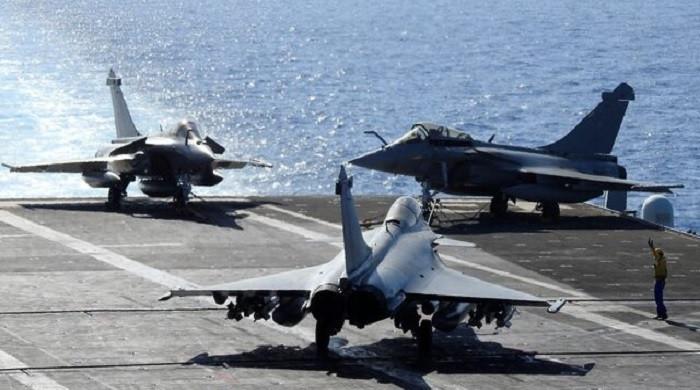
France and Germany moved to bolster the defence of Polish airspace on Thursday as the UN Security Council called an emergency meeting to discuss Warsaw’s accusation that Moscow launched a drone raid on its territory.
Poland branded the incident, which prompted Polish and NATO forces to shoot down several drones overnight Tuesday to Wednesday, a deliberate “unprecedented” attack on the country, NATO and the European Union.
Moscow denied targeting the country and said there was no evidence the drones were Russian.
But Polish President Karol Nawrocki warned Thursday during a visit to an airbase in western Poland that the incident was “an attempt to test the mechanism of action within NATO and our readiness to respond”.
Germany said it would “extend and expand” its participation in NATO’s Air Policing programme, to provide more cover to Polish airspace.
Its defence ministry said it would double the number of Eurofighter jets deployed to four and extend their mission by three months to the end of the year.
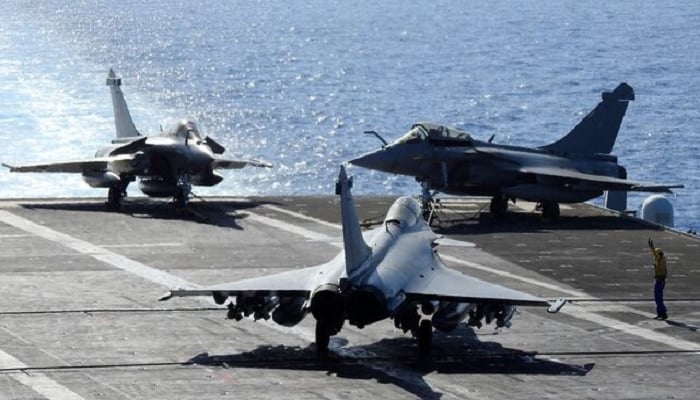
And French President Emmanuel Macron announced in a post on X that France would “deploy three Rafale fighter jets to contribute to the protection of Polish airspace and of NATO’s Eastern Flank together with our Allies.”
The Czech Republic, the Netherlands and Sweden each summoned their Russian ambassadors to protest the drone incident.
The UN Security Council’s South Korean presidency announced Thursday it would hold an emergency meeting to discuss Warsaw’s claim of a “violation of Polish airspace by Russia”.
It will take place on Friday at 3:00 pm (1900 GMT).
“Reckless”: NATO
Stray Russian drones and missiles have entered the airspace of NATO members, including Poland several times since Moscow launched its invasion of Ukraine in 2022.
Polish officials said on this occasion, drones had violated its airspace 19 times. There were no casualties, and the damage was limited — a house and a car were destroyed.
Poland’s National Security Council met on Thursday and the defence minister was expected to brief parliament on the latest findings.
Poland boosted its security Thursday, closing air traffic along its eastern borders with Belarus and Ukraine to civilian flights up to an altitude of three kilometres (1.9 miles) until December 9.
The PAZP air traffic control agency announced that drones would also be banned.
The country had already announced ramped-up measures on the Belarus border to cope with military drills the government is carrying out with its ally Russia between September 12 and 16.
The few open border crossings with Belarus were to be closed from Friday due to the Zapad (“West”) drills.
Reacting to the closure, Russian foreign ministry spokeswoman Maria Zakharova in a statement urged Poland “to consider the consequences of such destructive steps and to review its decision as soon as possible”.
Polish Prime Minister Donald Tusk warned on Wednesday that the drone raid marked an unprecedented escalation of tension with Russia.
Tusk called a NATO meeting on Wednesday, invoking Article 4 under which a member can convene urgent talks when it feels its “territorial integrity, political independence or security” is at risk — only the eighth time the measure has been used.
A cornerstone of NATO is the principle that an attack on any member is deemed an attack on all.
NATO chief Mark Rutte denounced Moscow’s “reckless behaviour” while hailing his organisation’s response. The alliance’s air defences had done their job, he told journalists.
Unity “reaffirmed”
Both the European Union and Ukraine condemned the incident on Wednesday.
On Thursday, Dutch Foreign Minister David van Weel said on X: “Russia’s reckless violation of Polish airspace threatens our European security.”
Czech Foreign Minister Jan Lipavsky denounced the incident as “a pure provocation by the Kremlin”.
Swedish Foreign Minister Maria Malmer Stenergard said in a statement: “The Russian violations are unacceptable and constitute a threat to Europe’s security.”
In Beijing, foreign ministry spokesman Lin Jian told a regular news briefing that China “hopes that all parties concerned will properly resolve their disputes through dialogue and consultation”.
China has never denounced Russia’s war in Ukraine.
Poland is a major supporter of Ukraine and hosts more than one million Ukrainian refugees. It is also a key transit point for Western humanitarian and military aid to the country.
- India sufferred historic military setback against Pakistan.
- New Delhi failed to strike trade deal with Washington.
- Indian rupee touched all-time low of 91.14 against US dollar.
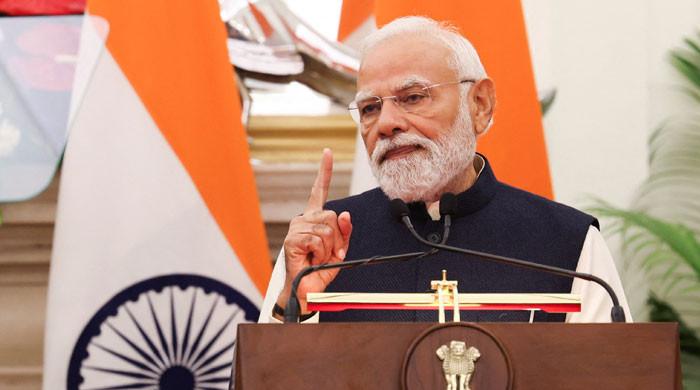
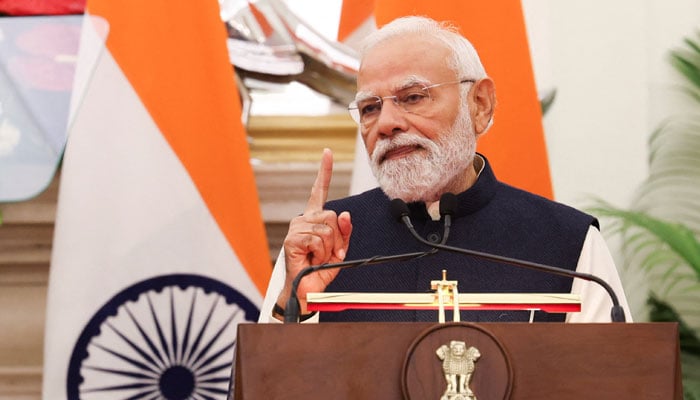
The past year proved to be a “year of crisis” for India, marked by a historic military setback against Pakistan, a weakening currency, and growing economic uncertainty, The Financial Times reported in its 2025 annual review.
Due to failed strategic autonomy, India was compelled to simultaneously maintain relations with the United States (US), China, and Russia, read the report.
The report adds that the US-India trade agreement was postponed several times, while the imposition of American tariffs placed additional economic pressure on New Delhi.
Similarly, the limited implementation of GST reforms also hindered economic growth. It further said that the Indian rupee continued to depreciate against the US dollar during 2025.
Operation Sindoor backfired as Trump taunts
Earlier this year, Pakistan and Indian engaged in a military showdown, the worst between the old foes in decades, which was sparked by an attack on tourists in IIOJK’s Pahalgam area, which New Delhi alleged was backed by Pakistan.
Islamabad denied involvement in the Pahalgam attack, which killed 26 men and offered to participate in a neutral probe into the deadly incident.
During the clashes, Pakistan downed seven Indian fighter jets, including three Rafale, and dozens of drones. After at least 87 hours, the war between the two nuclear-armed nations ended on May 10 with a ceasefire agreement brokered by the US.
Pakistan’s historic victory in the four-day skirmishes played a significant role in bringing Islamabad and Washington closer.
In the months since the ceasefire, US President Donald Trump has taunted India through his growing friendship with Pakistan’s Chief of Defence Forces (CDF) and Chief of the Army Staff Field Marshal Asim Munir.
US-India trade deal
Few things have attracted more ink than the US-India trade deal that never happened. In the beginning, after Trump’s election victory, there was much jubilation in New Delhi about getting a friendly administration in the White House.
In February, Modi was one of the first foreign leaders to visit Washington. It seemed then that India would be one of the first countries to sign a trade agreement with Trump, too.
A deal was expected in May, then June, then July . . . and then talks began to stall.
In August, Trump’s reciprocal tariffs kicked in, and by the end of the month, he had announced an additional 25% tariff to punish India for buying Russian oil.
Commerce Secretary Rajesh Agarwal said that there was a fair expectation that both countries would be able to agree on a lower reciprocal tariff and that India was “positively engaged” with the US on the deal.
Trump and Modi have spoken to each other in the past fortnight, and both sides have put out warm, fuzzy statements.
By August, when it began to look like a trade deal with the US was not going to be a shoo-in, the Modi government decided it was time to focus on domestic growth.
The Indian rupee, which has been on a downward slide, got a bruising this year. It lost 6% in 2025, touching an all-time low of 91.14 against the US dollar.
Ties with China and Bangladesh
Ties between New Delhi and Dhaka have deteriorated since the ousted prime minister, Sheikh Hasina, fled the pro-democracy uprising and sought refuge in India.
On the other hand, India has failed to improve its ties with China despite recalibrating its foreign policy.
Prime Minister Narendra Modi travelled to China for the first time in seven years and met President Xi Jinping. The two countries reaffirmed their commitment to “co-operation based on mutual respect, mutual interest and mutual sensitivity”.
Both parties, however, are still wary of each other.
India accuses China for providing support to Pakistan during the recent four-day war.
- 21-year-old officer killed by “rioters”: deputy governor.
- 13 police officers, Basij members injured by stone throwing.
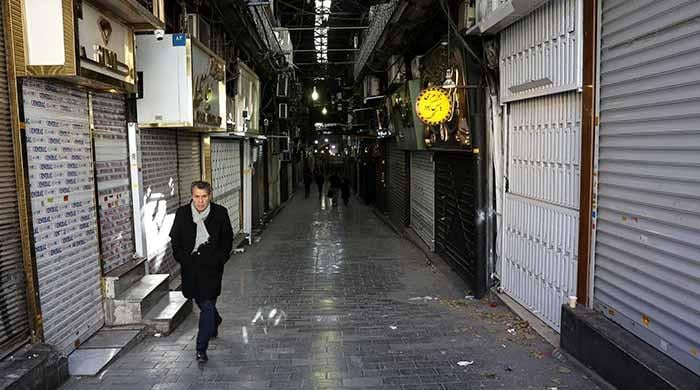
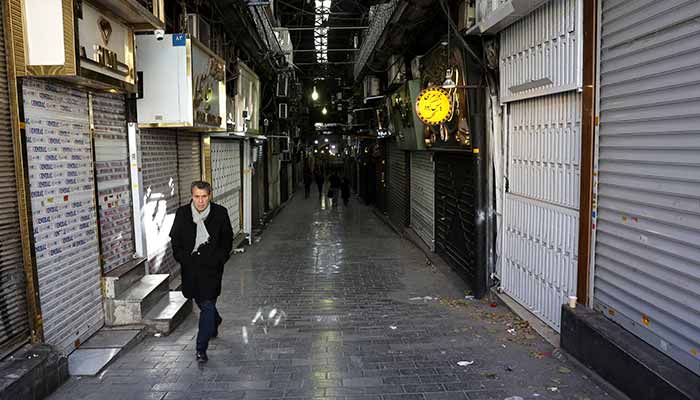
- Protests erupted in Tehran over the high cost of living.
A member of Iran’s security forces was killed during protests that erupted last week, state television reported on Thursday, citing a regional official.
“A 21-year-old member of the Basij from the city of Kouhdasht was killed last night [Wednesday] by rioters while defending public order,” the channel said, citing Said Pourali, the deputy governor of Lorestan Province.
This is the first officially confirmed death since the start of the protests on Sunday, which began peacefully in the capital Tehran.
The Basij are a volunteer paramilitary force linked to Iran’s Revolutionary Guards, the ideological arm of the Islamic Republic.
Pourali said that “during the demonstrations in Kouhdasht, 13 police officers and Basij members were injured by stone throwing”.
The protests began in Tehran, where shopkeepers went on strike over the high cost of living and economic stagnation. They then spread to other cities, after students at least 10 universities joined in on Tuesday.
Iranian President Masoud Pezeshkian called on the government on Thursday to take action to improve the economic situation.
“From an Islamic perspective… if we do not resolve the issue of people’s livelihoods, we will end up in hell,” Pezeshkian said at an event broadcast on state television.
Iran is in the middle of an extended weekend, with the authorities declaring Wednesday a bank holiday at the last minute, citing the need to save energy during the cold weather.
They made no official link to the protests.
The weekend in Iran begins on Thursday, while Saturday marks a long-standing national holiday.
Iran’s prosecutor general said on Wednesday that peaceful economic protests were legitimate, but any attempt to create insecurity would be met with a “decisive response”.
“Any attempt to turn economic protests into a tool of insecurity, destruction of public property, or implementation of externally designed scenarios will inevitably be met with a legal, proportionate and decisive response.”
On Wednesday evening, the Tasnim news agency reported the arrest of seven people it described as being affiliated with “groups hostile to the Islamic Republic based in the United States and Europe”.
It said they had been “tasked with turning the demonstrations into violence”. Tasnim did not say when they were arrested.
The national currency, the rial, has lost more than a third of its value against the US dollar over the past year, while double-digit hyperinflation has already been undermining Iranians´ purchasing power for years.
The inflation rate in December was 52% year-on-year, according to the Statistical Centre of Iran, an official body.
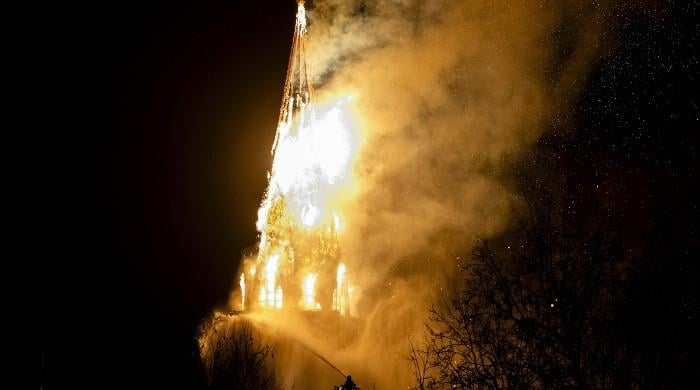
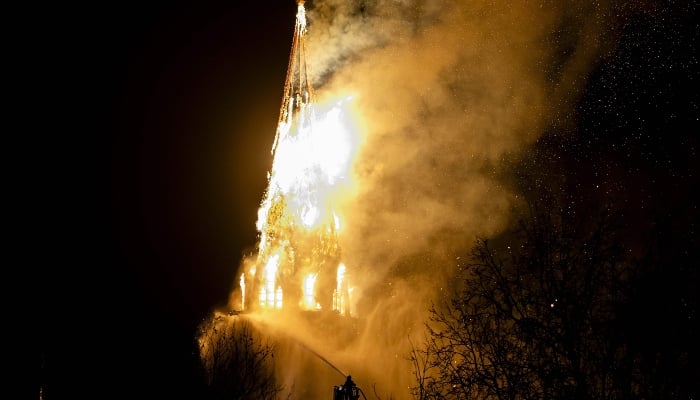
THE HAGUE: A huge inferno gutted a 19th-century Amsterdam church Thursday, as the Netherlands endured an unsettled New Year’s Eve with two dead from fireworks and “unprecedented” violence against police.
The blaze broke out in the early hours at the Vondelkerk, a tourist attraction that has overlooked one of the city’s top parks since 1872.
The 50-metre-high (164-foot) tower collapsed and the roof was badly damaged but the structure was expected to remain intact, Amsterdam authorities said.
The cause of the blaze was not immediately clear.
The head of the Dutch Police Union, Nine Kooiman, reported an “unprecedented amount of violence against police and emergency services” over New Year’s Eve.
She said she herself had been pelted three times by fireworks and other explosives as she worked a shift in Amsterdam.
Shortly after midnight, authorities released a rare country-wide alert on mobile phones warning people not to call overwhelmed emergency services unless lives were at risk.
Reports of attacks against police and firefighters were widespread across the country. In the southern city of Breda, people threw petrol bombs at police.
Two people, a 17-year-old boy and a 38-year-old man, were killed in fireworks accidents. Three others were seriously injured.
The eye hospital in Rotterdam said it had treated 14 patients, including 10 minors, for eye injuries. Two received surgery.
It was the last year before an expected ban on unofficial fireworks, so the Dutch bought them in massive quantities.
According to the Dutch Pyrotechnics Association, revellers splashed out a record 129 million euros ($151 million) on fireworks.
Some areas had been designated firework-free zones, but this appeared to have little effect.
An AFP journalist in such a zone in The Hague reported loud bangs until around 3am.


‘If System Was Unfair…’: Deepinder Goyal Defends Gig Economy After Workers’ Strike

2025 proved to be ‘year of failures and setbacks’ for India: report

Blackburn 0-2 Wrexham (Jan 1, 2026) Game Analysis – ESPN

-

 Sports6 days ago
Brooks Koepka should face penalty if he rejoins PGA Tour, golf pundit says
-
 Business6 days ago
Govt registers 144olive startups | The Express Tribune
-
 Politics6 days ago
Thailand, Cambodia agree to ‘immediate’ ceasefire: joint statement
-

 Politics6 days ago
Heavy rains, flash floods leave Southern California homes caked in mud
-

 Entertainment6 days ago
Second actor accuses Tyler Perry of sexual assault in new lawsuit
-

 Fashion5 days ago
Climate change may hit RMG export earnings of 4 nations by 2030: Study
-

 Entertainment6 days ago
Inside royal families most private Christmas moments
-

 Entertainment1 week ago
Virat Kohli surpasses Sachin Tendulkar, setting new List A cricket record