

Politics
France intensifies hunt for Louvre raiders as museum security scrutinised

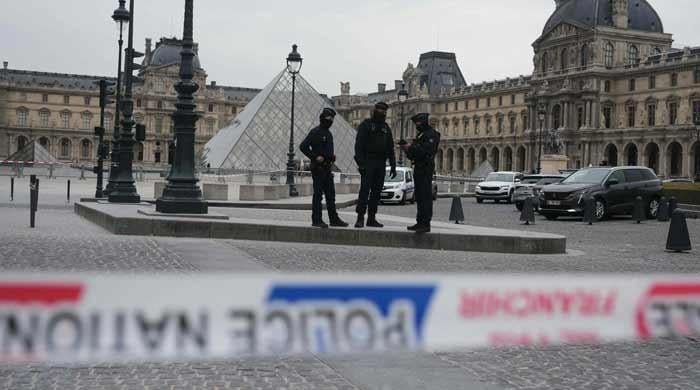
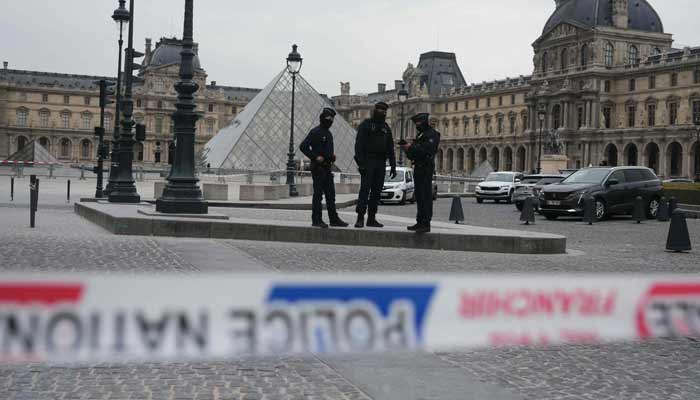
French police on Tuesday stepped up the hunt for thieves who stole priceless royal jewels from the Louvre museum, as scrutiny mounted over security at the country’s cultural institutions.
Sunday’s audacious daylight robbery— which lasted just seven minutes— was the latest in a string of thefts from French museums in recent months, and has left authorities scrambling to increase protection measures.
In a separate case, a prosecutor said on Tuesday that a Chinese woman had been charged over taking part in the theft of more than $1 million worth of gold nuggets from another Paris museum last month.
Scores of investigators were still looking for Sunday’s culprits, working on the theory that it was an organised crime group that clambered up a ladder on a truck to break into the museum, then dropped a diamond-studded crown as they fled.
Detectives were scouring video camera footage from around the Louvre as well as of main highways out of Paris for signs of the four robbers, who escaped on scooters.
‘Worrying level of obsolescence’
The heist has reignited a row over the lack of security in French museums, after two other institutions were hit last month.
A report by France’s Court of Auditors seen by AFP covering 2019 to 2024 points to a “persistent” delay in security upgrades at the Louvre. Only a fourth of one wing was covered by video surveillance.
In January, Louvre president Laurence des Cars warned Culture Minister Rachida Dati of a “worrying level of obsolescence”, citing the urgent need for major renovations.
Interior Minister Laurent Nunez on Monday said he would tighten security outside cultural institutions.
In Sunday’s heist, thieves parked a truck with an extendable ladder, like those used by movers, below the museum’s Apollo Gallery shortly after it opened, climbing up and using cutting equipment to get through a window and open the display cases to steal the jewellery.
They made off with eight priceless pieces, including an emerald-and-diamond necklace that Napoleon I gave his wife, Empress Marie-Louise and a diadem that once belonged to the Empress Eugenie, which is dotted with nearly 2,000 diamonds.
The museum on Tuesday hit back at criticism that the display cases protecting the jewellery were fragile, saying they were installed in 2019 and “represented a considerable improvement in terms of security”.
Chinese arrest
Just last month, criminals broke into Paris’s Natural History Museum, making off with gold nuggets worth more than $1.5 million.
French authorities announced on Tuesday a 24-year-old Chinese woman has been charged and put in detention in that case after she was arrested in Barcelona, while trying to dispose of nearly one kilogramme (2.2 pounds) of melted gold pieces.
Also last month, thieves stole two dishes and a vase from a museum in the central city of Limoges, the losses estimated at $7.6 million.
“Museums are increasingly targeted for the valuable works they hold,” according to the Central Office for the Fight against Trafficking in Cultural Property.
Labour unions have complained that security staff positions at the Louvre have been cut, even as attendance at the world-famous museum, whose extensive collections include the Mona Lisa, has soared.
“We cannot do without physical surveillance,” on union source said.
The Louvre was shut per its usual schedule on Tuesday, having been closed on Sunday and Monday after the heist, leaving crowds of disappointed tourists.

- UAE emphasises commitment to “highest standards” of safety.
- Precautionary steps implemented after Feb 28 fully withdrawn: UAE.
- Efforts will continue to ensure safe travel in UAE’s airspace: officials.
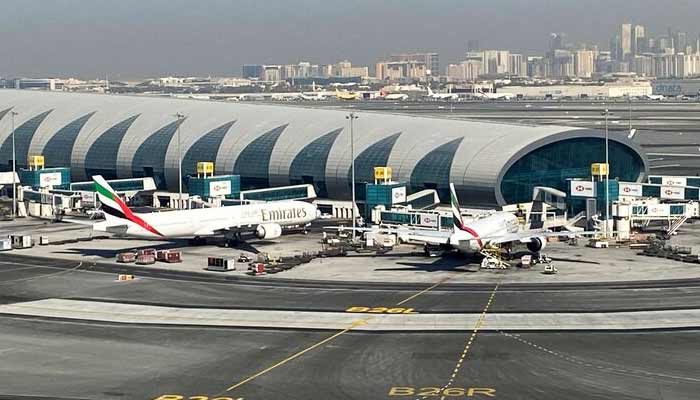
ABU DHABI: Aviation authorities in the United Arab Emirates said air traffic has returned to normal across the country’s airspace, with all precautionary measures introduced in recent weeks now lifted.
The decision follows a comprehensive assessment of operational and security conditions, officials said, adding that the move was taken in coordination with relevant authorities.
Authorities confirmed that precautionary steps implemented after February 28 have been fully withdrawn, allowing full restoration of flight operations.
They emphasised their continued commitment to maintaining the highest standards of aviation safety, with real-time monitoring systems remaining in place to oversee air traffic and security.
Officials added that efforts will continue to ensure safe, smooth and efficient travel for passengers across the UAE’s airspace.
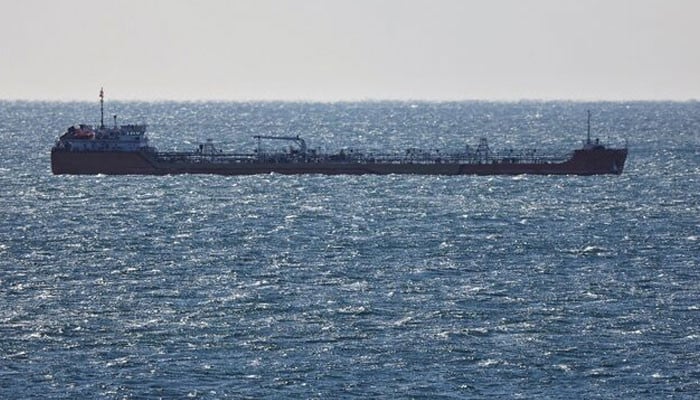
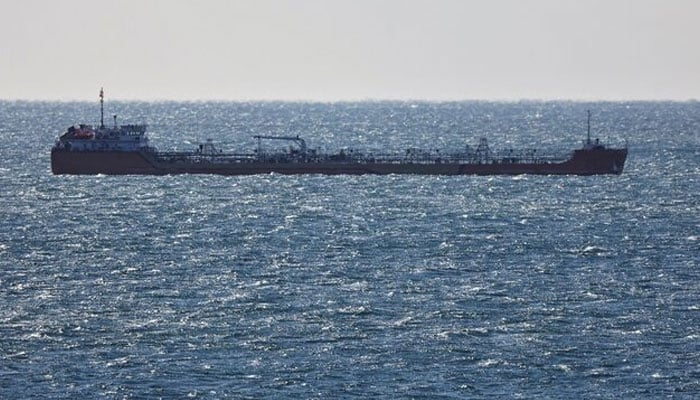
DUBAI: Unidentified attackers hijacked an oil tanker on Saturday off the coast of Yemen in the Gulf of Aden and directed it towards Somalia, the Yemeni coast guard said.
According to the agency, the tanker EUREKA was seized off Yemen’s Shabwa province by a group who “boarded, took control of it, then steered it… in the direction of the Somali coast”.
The coast guard, which is affiliated with Yemen’s internationally recognised government, vowed to investigate the attack.
“The location of the tanker has been determined, and work is under way to monitor it and take the necessary measures in an attempt to recover it and ensure the safety of its crew,” it said, without identifying the crew’s numbers or nationality.
According to the website Marine Traffic, the EUREKA is a Togolese-flagged oil products tanker that was reported to have been in the UAE port of Fujairah in late March.
Piracy was rampant off the coast of Somalia in the 2000s, peaking in 2011 with hundreds of attacks, but was significantly reduced by international naval deployments and new tactics by commercial shipping.
But in recent weeks attacks have increased again, according to a report by the European Union naval mission deployed off the shores of the troubled east African country.
Operation Atalanta, the EU’s naval force for Somalia, monitored three attacks in late April, according to its information service, the Maritime Security Centre Indian Ocean (MSCIO).
Since February 28, shipping in the region has also been disrupted by the US-Israeli war against Iran, but there was no immediate indication that Saturday’s hijacking was linked to the conflict.
Last month, a tanker was captured in the Gulf of Aden by a new group of pirates operating from the port town of Garacad in the Puntland state of northeastern Somalia, a local security official told AFP.
- Contract supports APG-66 and APG-68 radar systems.
- Work to be completed by March 2036.
- Includes multiple allies under foreign military sales plan.
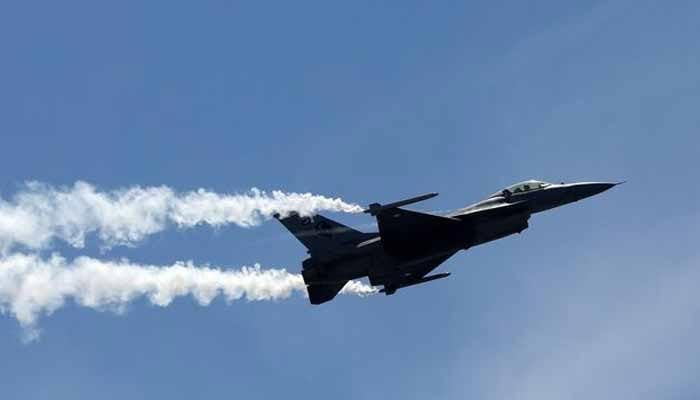
The United States Air Force has contracted Northrop Grumman Systems Corp. in a $488 million deal to provide engineering and technical support for F-16 radar systems under its Foreign Military Sales programme, with Pakistan among the beneficiary countries.
According to an official award notice issued by the US Department of War, the firm-fixed-price, indefinite-delivery/indefinite-quantity contract covers support for F-16 System Programme Office Foreign Military Sales (FMS) as well as Air Force and Navy requirements.
The contract includes engineering and technical support for APG-66 and APG-68 radar systems. The work will be carried out at Linthicum Heights, Maryland, and is expected to be completed by March 31, 2036.
The contract involves foreign military sales to multiple countries, including Bahrain, Belgium, Chile, Denmark, Egypt, Greece, Indonesia, Iraq, Israel, Jordan, Korea, Morocco, the Netherlands, Norway, Oman, Pakistan, Poland, Portugal, Romania, Thailand and Türkiye.
The US Air Force said the contract was awarded on a sole-source basis. Fiscal 2026 non-appropriated, Air Force and Navy funds amounting to $2,644,922 have been obligated at the time of the award.
The Air Force Lifecycle Management Centre at Hill Air Force Base, Utah, is the contracting authority for the agreement, which was awarded on April 27, 2026.
The development comes months after the United States, in December 2025, approved the sale of advanced technology and support services worth $686 million for Pakistan’s F-16 fighter aircraft fleet.
According to a letter from the US Defence Security Cooperation Agency (DSCA) to Congress dated December 8, the package covers Link-16 data link systems, cryptographic gear, avionics upgrades, training, and wide-ranging logistical support.
The DSCA says the decision aligns with Washington’s broader strategic aims, stating the sale “will support the foreign policy and national security objectives of the United States by allowing Pakistan to retain interoperability with US and partner forces in ongoing counterterrorism efforts and in preparation for future contingency operations.”
The letter notes that the upgrades are intended to modernise Pakistan’s Block-52 and Mid-Life Upgrade F-16s and address operational safety requirements. According to the letter, the sale will “maintain Pakistan’s capability to meet current and future threats by updating and refurbishing its Block-52 and Mid Life Upgrade F-16 fleet.”


Chris Brown mansion incident raises alarm as gunfire reported outside property

5/2: Saturday Morning – CBS News

Raptors star RJ Barrett nails season-saving 3-pointer to force Game 7 against Cavaliers

-

 Tech5 days ago
A Brain Implant for Depression Is About to Be Tested in Humans
-

 Tech1 week ago
They Wanted to Join Raya. They’ve Been on the Waiting List for Years
-

 Tech6 days ago
Almost 90% of women leave tech industry within 10 years | Computer Weekly
-

 Tech1 week ago
Why Do I Like Dyson’s PencilVac So Much?
-

 Fashion1 week ago
North India cotton yarn steady despite continued push by spinners
-

 Sports6 days ago
Toulouse fall to first home defeat for a year | The Express Tribune
-

 Entertainment1 week ago
Anne Hathaway makes shocking confession about Taylor Swift’s music
-

 Sports1 week ago
US says Iran can play in Fifa World Cup but IRGC-linked individuals won’t be allowed