

Politics
France to boost nuclear arsenal, involve European allies in deterrence

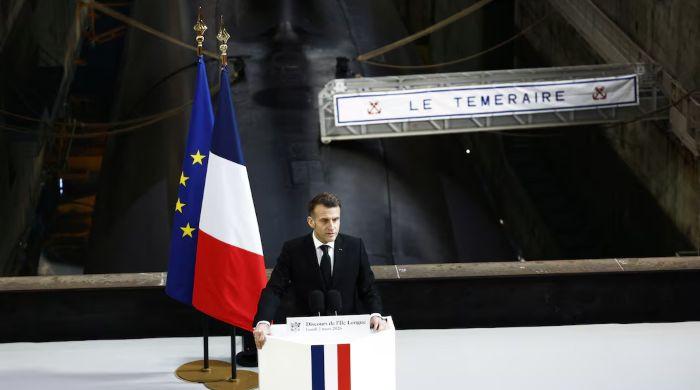
- France to expand nuclear arsenal amid geopolitical risks.
- European allies to join French nuclear wargames.
- France-Germany nuclear steering group to start cooperation.
PARIS: France will expand its nuclear arsenal and will potentially allow European partners to host its aircraft on nuclear deterrence missions, President Emmanuel Macron said on Monday, signalling a major doctrine change for France and the continent.
Though France and Britain are both nuclear powers, most European countries have relied primarily on the United States for deterring any potential adversaries — a decades-old pillar of transatlantic security.
But Trump’s rapprochement with Russia on the Ukraine war and his harsher posture towards traditional allies have rattled European governments, and some countries have expressed interest in how Paris could protect them by extending its nuclear umbrella.
“We are currently experiencing a period of geopolitical upheaval fraught with risk,” Macron said in a speech delivered from a submarine base in Brittany, adding that a hardening of the French deterrence model was needed.
Unveiling the update to France’s nuclear doctrine, a once-per-term ritual for presidents, Macron promised more cooperation with European allies that have expressed interest.
Germany, but also Greece, Poland, the Netherlands, Belgium, Denmark and Sweden would be able to take part in French nuclear wargames.
“I believe I can say our partners are ready,” Macron said.
Still, Macron gave no details on how the enhanced nuclear drive would be funded, while making clear decision-making on nuclear strikes will remain solely in the hands of the French president.
Arming up together
German Chancellor Friedrich Merz said in a joint statement with Macron that France and Germany had established a nuclear steering group to discuss deterrence issues and would start concrete cooperation this year.
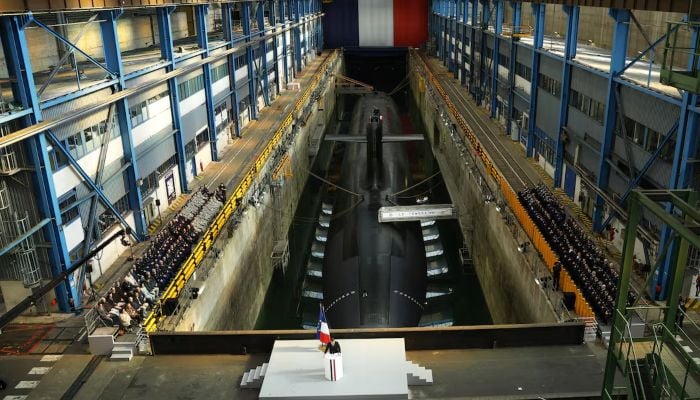
That would include participation by conventional German forces in French nuclear exercises and joint visits to strategic sites, as well as the development of non-nuclear capabilities with France and other European partners.
Polish Prime Minister Donald Tusk said on X Poland was in talks “with France and a group of closest European allies on the programme of advanced nuclear deterrence”.
“We are arming up together with our friends so that our enemies will never dare to attack us,” he added.
The French leader said it would be possible to establish, under unspecified circumstances, strategic assets in other European countries that would be part of what he called a new “forward deterrence” doctrine.
“Our strategic air forces could be spread deep into the European continent,” Macron said, without giving more details.
Although the size of France’s nuclear arsenal is based on a strategy of “strict sufficiency”, the number of French warheads will be increased, Macron said.
France spends roughly 5.6 billion euros ($6.04 billion) a year to maintain its stockpile of 290 submarine- and air-launched weapons — the world’s fourth-largest arsenal. Britain has 225 nuclear warheads. Russia and the United States have more than 5,000 each.
Macron said close ties on nuclear deterrence will continue with Britain. He also said the current rethink of French nuclear doctrine has been done in total transparency with Washington, and was complementary to Nato’s nuclear mission.
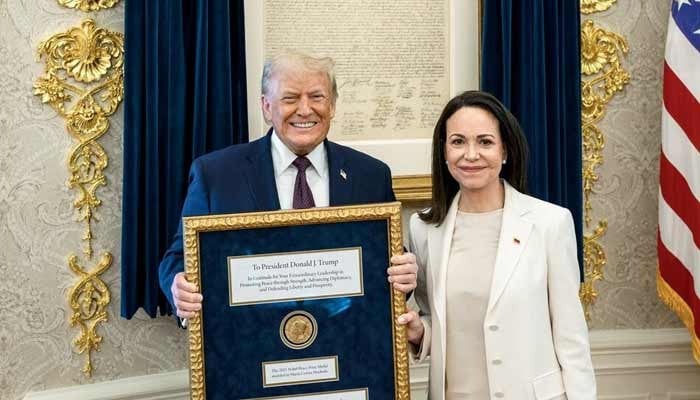
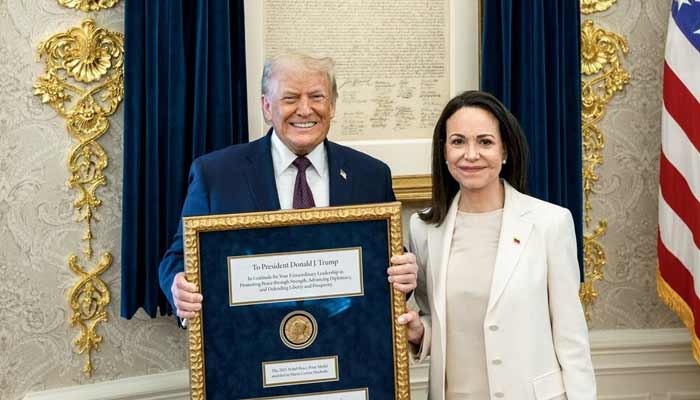
Venezuela’s opposition leader Maria Corina Machado said on Saturday she had “no regrets” about symbolically handing over her Nobel Peace Prize to US President Donald Trump in January.
“There is a leader in the world, a head of state in the world who risked the lives of his country’s citizens for Venezuela’s freedom,” she told a news conference in Madrid.
Machado presented her Nobel prize to Trump when she met him in the White House just two weeks after he ordered US forces to attack Caracas and snatch Venezuelan leader Nicolas Maduro.
Trump, who has long coveted the award, is currently embroiled in the Middle East war he started with his ally, Israeli Prime Minister Benjamin Netanyahu, with airstrikes on Iran at the end of February.
The Norwegian Nobel Committee, which awards the peace prize, made clear after Machado handed her 2025 Nobel medal to Trump that the actual honour it represents “cannot be revoked, shared, or transferred to others”.
Machado said Trump’s military operation to snatch Maduro, who is currently detained in New York facing US drug charges, was “something we Venezuelans will never forget”.
“Consequently,” she said, “no, I have no regrets” about gifting her Nobel medal to Trump.
Machado, who was in hiding before leaving Venezuela in December to collect her Nobel prize in Oslo, said she was organising her return to the country in coordination with Washington.
Later, she told thousands of supporters at a gathering in Madrid that they should be preparing to go back home.
“Everything we have done over these long 27 years has been to prepare ourselves for a moment of reunion and of building a nation that will be free forever,” she said, referring to the period under Maduro and his predecessor Hugo Chavez.
Venezuela’s opposition last week called for presidential elections.
Machado, who has not yet said if she would run in a future poll, was banned from running for president in the 2024 election that resulted in Maduro claiming a re-election victory that opposition groups say was rigged.
- Khamenei says Iran army defending its land, water.
- Says Iran exposed weakness, humiliation of hostile armies.
- US president warns Iran against “blackmailing.
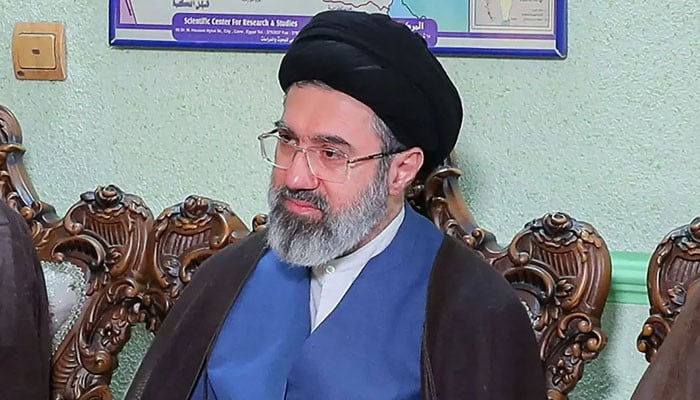
Iran’s Supreme Leader Mojtaba Khamenei warned Saturday that Tehran’s navy was ready to defeat the US and Israeli forces, as the foes sparred over the Strait of Hormuz.
In a series of posts on X, Khamenei said: “In the same way that the drones of Iran’s Army strike the US and the Zionist murderers like lightning, its valiant navy is also ready to inflict new bitter defeats on its enemies.”
His remarks came as Iran said it is tightening control over the strait, warning mariners that the key energy lifeline was again closed, while shipping sources said at least two vessels came under fire while attempting to transit the waterway.
The Iranian supreme leader said that their army is standing side by side with their comrades from the other armed forces, battling the two leading armies of “disbelief and Arrogance”.
“Islamic Army has exposed those armies’ weakness and humiliation to the world, he added.
“The Islamic Republic of Iran’s Army is now courageously defending the land, water, and flag that belong to it,” added Khamenei.
Uncertainty around war
Tehran’s renewed tough messaging caused fresh uncertainty around the Iran conflict, raising the risk that oil and gas shipments through the strait could remain disrupted just as Washington weighs whether to extend the fragile ceasefire.
Trump said the US was having “very good conversations” with Iran but that Tehran wanted to close the strait again. Iran could not blackmail the US, he said.
Maritime security and shipping sources said some merchant vessels had received radio messages from Iran’s navy saying no ships were allowed through the waterway, reversing Friday’s signs that traffic might resume.
Maritime trackers had earlier shown a convoy of eight tankers transiting the narrow passage in the first major movement of ships since the US-Israeli war on Iran began seven weeks ago.
Hours earlier, Trump had cited “some pretty good news” about Iran, declining to elaborate. But he also said fighting might resume without a peace deal by Wednesday, when the two-week ceasefire expires.
Iran had announced its temporary reopening of the Strait of Hormuz following a separate US-brokered 10-day ceasefire agreement on Thursday between Israel and Lebanon. Israel invaded parts of southern Lebanon after the Iran-allied Hezbollah militant group joined the fighting in early March.
But on Saturday, Iran’s armed forces command said transit through the strait had reverted to a state of strict Iranian military control, citing what it described as repeated US violations and acts of “piracy” under the guise of a blockade.
The spokesperson said Iran had earlier agreed, “in good faith,” to the managed passage of a limited number of oil tankers and commercial vessels following negotiations, but said continued US actions had forced Tehran to restore tighter controls on shipping through the strategic chokepoint.
US Central Command said in a statement that American forces were enforcing a maritime blockade of Iran, but did not comment on the latest Iranian actions.
No date for direct talks
The war with Iran began on February 28 with a US-Israeli attack on the Islamic Republic. It has killed thousands, spread to Israeli attacks in Lebanon and sent oil prices surging because of the de facto closure of the strait.
Despite the initial movement of ships, Iran’s deputy foreign minister, Saeed Khatibzadeh, said no date had been set for the next round of negotiations, adding that a framework of understanding must be agreed first.
Pressure for a way out of the war has mounted as Trump’s fellow Republicans defend narrow majorities in Congress in the November midterm elections with US gasoline prices high, inflation rising and his own approval ratings down.
“The main thing is that Iran will not have a nuclear weapon. You cannot let Iran have a nuclear weapon, and that supersedes everything else,” Trump said on Friday.
Trump also said he might end the ceasefire with Iran unless a long-term deal to end the war was agreed before it expires on Wednesday, adding that a US blockade of Iranian ports would continue.
There were no signs of preparations early on Saturday for talks in the Pakistani capital, where the highest-level US-Iran negotiations since the 1979 Islamic Revolution ended without agreement last weekend.
A Pakistani source aware of mediation efforts had said a meeting between Iran and the US could produce an initial memorandum of understanding, followed by a comprehensive peace agreement within 60 days.
Separately, a senior Iranian official said Tehran hoped a preliminary agreement could be reached in the coming days.
Oil prices fell about 10% and global stocks jumped on Friday on the prospect of marine traffic resuming through the strait. Despite that, hundreds of vessels and about 20,000 seafarers remain stranded in the Gulf awaiting passage through the waterway, shipping sources said.
At last weekend’s talks, the US proposed a 20-year suspension of all Iranian nuclear activity, while Iran suggested a halt of three to five years, according to people familiar with the proposals. Two Iranian sources have said there were signs of a compromise that could remove part of the stockpile.
The head of Russia’s state atomic energy company, Rosatom, Alexei Likhachev, said on Saturday that Rosatom was ready to help with the removal of enriched uranium from Iran, and that the company was closely following the progress of US-Iran talks.
— With additional input from Reuters
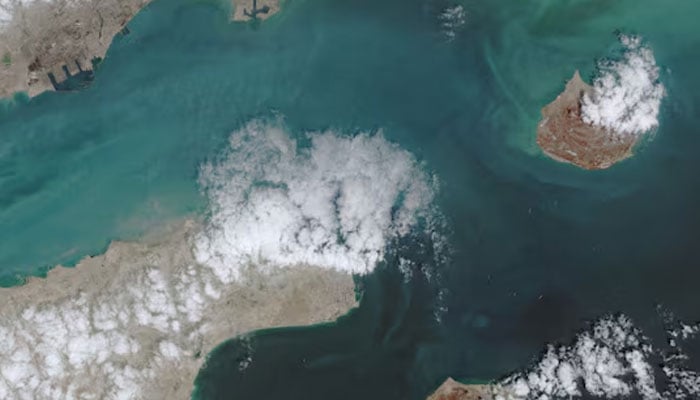
- More than dozen tankers passed through when strait reopened.
- UK Navy reported that Iranian gunboats fired at some ships.
- Hundreds of ships remain stranded and oil flows disrupted.
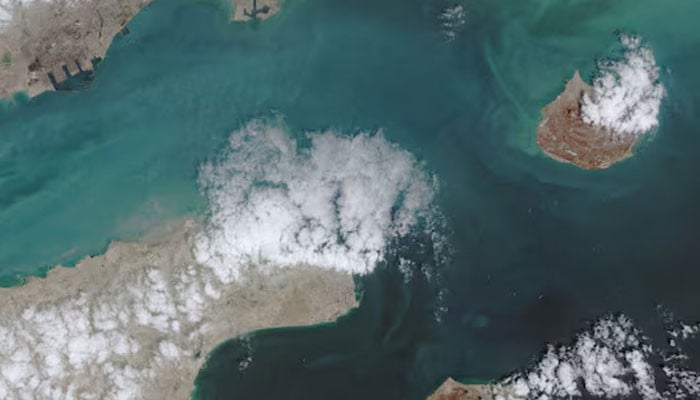
OSLO: More than a dozen tankers, including three sanctioned vessels, passed through the Strait of Hormuz after a 50-day blockade was lifted on Friday, shipping data showed, before Iran reimposed restrictions on Saturday and fired at some vessels.
Reopening the strait is key for Gulf producers to resume full oil and gas supplies to the world, and end what the International Energy Agency has called the worst-ever supply disruption.
US President Donald Trump said on Friday Iran had agreed to open the strait, while Iranian officials said they wanted the US to fully lift its blockade of Iranian tankers.
Western shipping companies cautiously welcomed the announcements but said more clarity was needed, including on the presence of sea mines, before their vessels could transit.
Iran resumes restrictions
The ships that passed through the strait on Friday and Saturday via Iranian waters south of Larak island were mainly older, non-Western-owned vessels and included four sanctioned ships, according to ship-tracking data.
Iran arranged passage for a limited number of oil tankers and commercial ships following prior agreements in negotiations, a spokesperson for Iran’s Revolutionary Guards said.
Other ships have been seen approaching the strait and turning back as Iran said it would maintain strict controls as long as the US continues its blockade of Iranian ports.
The UK Navy reported on Saturday that Iranian gunboats fired at some ships attempting to cross the strait.
Some merchant vessels received radio messages from Iran’s navy saying the strait was shut again and that no ships were allowed to pass, shipping sources said on Saturday.
Ship-tracking data showed five vessels loaded with liquefied natural gas from Ras Laffan in Qatar approaching the strait on Saturday morning.
No LNG cargoes have transited the waterway since the US-Israeli war with Iran began on February 28.
Hundreds of ships have been stuck in the Gulf since the conflict started and Tehran closed the strait, forcing Gulf oil and gas producers to sharply cut production.
Top producers such as Saudi Arabia, the UAE, Iraq and Kuwait say they need steady tanker flows and unrestricted passage through the strait to resume normal export operations.


I don’t regret gifting Nobel prize to Trump: Venezuela’s Machado
NaBFID signs pact with PDCOR to expand advisory support for state projects – The Times of India

Jacob Elordi spotted calling someone special amid Kendall Jenner rumours

-

 Politics1 week ago
Indian airlines hit hardest after Dubai limits foreign flights until May 31
-

 Entertainment6 days ago
Palace left in shock as Prince William cancels grand ceremony
-

 Sports5 days ago
The case for Man United’s Fernandes as Premier League’s best
-

 Politics1 week ago
Chinese, Taiwanese will unite, Xi tells Taiwan opposition leader
-
 Business1 week ago
The FAA wants gamers to apply for air traffic control jobs
-
 Business5 days ago
UK could adopt EU single market rules under new legislation
-

 Entertainment1 week ago
Dua Lipa hits major career high ahead of wedding with Callum Turner
-

 Sports1 week ago
Lamar Jackson hits back at critics with faithful message on social media