

Fashion
French ready-to-wear ends 2025 caught between collapse and hope


By
AFP
Published
December 29, 2025
Under pressure from fast fashion and the second-hand market, the French ready-to-wear sector is faltering, with bankruptcies, receiverships, and liquidations punctuating 2025. Even so, experts believe a rebound is possible, driven by a refocus on brand DNA, innovation, and an upmarket shift.
As the year draws to a close, the IKKS brand has just changed hands but will lose half its staff; JOTT (Just Over The Top) has been placed in receivership; and Anne Fontaine has had its safeguard plan approved. With Camaïeu, Kookaï, Jennyfer, André, San Marina, Minelli, Comptoir des Cotonniers, Princesse Tam Tam, and Kaporal, there are countless French companies in difficulty in this sector, or that have simply disappeared.
Brutal “impoverishment” and “downfall”
Nearly 1,500 clothing boutiques closed in France in 2024, according to a parliamentary report. The Union des Industries Textiles reports that the workforce has shrunk from 400,000 in the 1970s to 60,000 today. This figure does not, however, include in-store employees- 70,000 at the end of 2023, according to the Fédération nationale de l’habillement.
Having weathered the difficult shift to online sales, as well as Covid-19 and inflation, traditional players are now facing competition from second-hand and ultra-fast fashion- a “profound upheaval”, according to Gildas Minvielle, Director of the Economic Observatory at the French Fashion Institute (IFM). According to the IFM, these two channels now account for 13% of sales by value and nearly 30% of volumes purchased.
Historic players shaken up
Gildas Minvielle tells AFP: “The market share taken by these new entrants is very significant, and very damaging for the more established players. If the market had been buoyant, we could have hoped there would be room for everyone, but that’s not the case.” With an average price per item on Shein or Temu of €9- around one third of traditional mid-range prices- these Asian groups are causing a brutal “impoverishment,” “in a context where purchasing power is weak,” he says.

To get to the root of the “downfall,” we need to travel back to the 1990s with the “arrival of first-generation fast-fashion brands” such as Zara and H&M, offering “collections that change every week to force people to buy,” says Benoît Heilbrunn, a philosopher and marketing professor at ESCP Business School.
Clear positioning and an industrial model for survival
“French chains haven’t been able to keep up, because they didn’t have and still don’t have an industrial model,” points out the brand specialist, while 97% of textiles consumed in France are imported. The other problem is that “French textile brands have had nothing to say for years,” he laments. “No one talks about innovation, no one talks about product.”
Françoise Clément, a fashion and retail expert, agrees and points to brands that have remained in their “comfort zone,” seeking to “buy the consumer with promotions” but that ultimately “have not created value.” According to this consultant, a former textile director at Carrefour, brands must reconnect with their “core DNA” and offer “clear positioning” to survive.
A “death spiral” of prices at the low end
The ready-to-wear sector is like “an hourglass,” she says, using a metaphor: the top of the hourglass (luxury and “heritage” brands) remains solid thanks to prestige. At the lower end, it’s a race to the bottom on price, with a “death spiral” that nonetheless finds its audience. In between, the mid-range is the segment “most in difficulty.”
Mid-range brands must “diversify and premiumise” and above all avoid imitating fast fashion, says Françoise Clément. The future requires a balance between “quality, attractiveness, innovation, and desirability,” as seen at “Lacoste or Aigle,” or Le Slip Français, for made-in-France production, or at Decathlon, which combines “accessibility and innovation.” The clothing crisis is “not inevitable,” she insists. Far from the prevailing “gloom,” “opportunities” exist for “brands that get moving.”
The annual State of Fashion BoF-McKinsey report lists several strategic areas for development: the “necessary” use of artificial intelligence, diversification of production sites in the face of the “turbulence” of international tariffs, moving upmarket, and the integration of a second-hand offer. A vast programme.
This article is an automatic translation.
Click here to read the original article.
Copyright © 2025 AFP. All rights reserved. All information displayed in this section (dispatches, photographs, logos) are protected by intellectual property rights owned by Agence France-Presse. As a consequence you may not copy, reproduce, modify, transmit, publish, display or in any way commercially exploit any of the contents of this section without the prior written consent of Agence France-Presses.



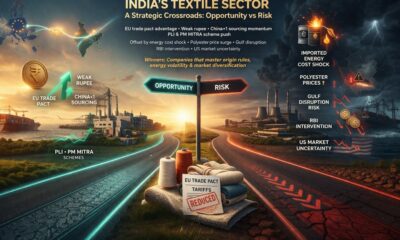




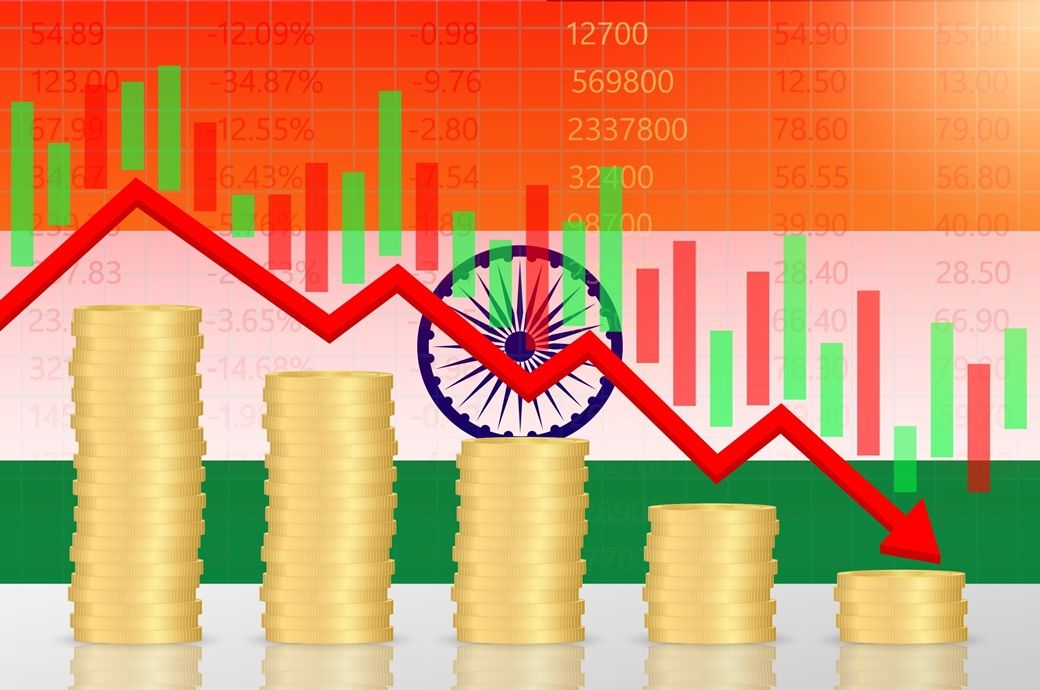
While trends in high frequency indicators for January-February 2026 appear favourable, the heightened uncertainty around the duration of the Middle East conflict casts a shadow on the near-term macroeconomic outlook for India amid high import dependency for items like crude oil, natural gas and fertilisers, it noted.
India’s FY27 GDP growth is likely to slow to 6.5 per cent from the projected 7.5 per cent in FY26 owing to the impact of higher energy prices and concerns around energy availability, ICRA Ratings said.
The heightened uncertainty around the duration of the Iran war casts a shadow on the near-term macroeconomic outlook for India.
If the conflict lasts longer, the adverse effects could widen across sectors.
If the conflict lasts for an extended period, the adverse implications of the same could widen across sectors, amid an uptick in input costs and the consequent impact on profitability of the India corporate sector.
Amid the projected uptrend in the consumer price index-based inflation in FY27 with risks tilted to the upside, ICRA Ratings expects an extended pause on the policy rates by the central bank’s monetary policy committee in the fiscal despite the anticipated softening in the GDP growth. However, it expects the Reserve Bank of India to continue to intervene on the liquidity front during FY27.
The available data for January–February FY2026 indicate a positive trend across most non-agricultural indicators, with the year-on-year performance of 12 out of 18 indicators improving compared to the third quarter of FY26, while the remaining six deteriorated.
Fibre2Fashion News Desk (DS)
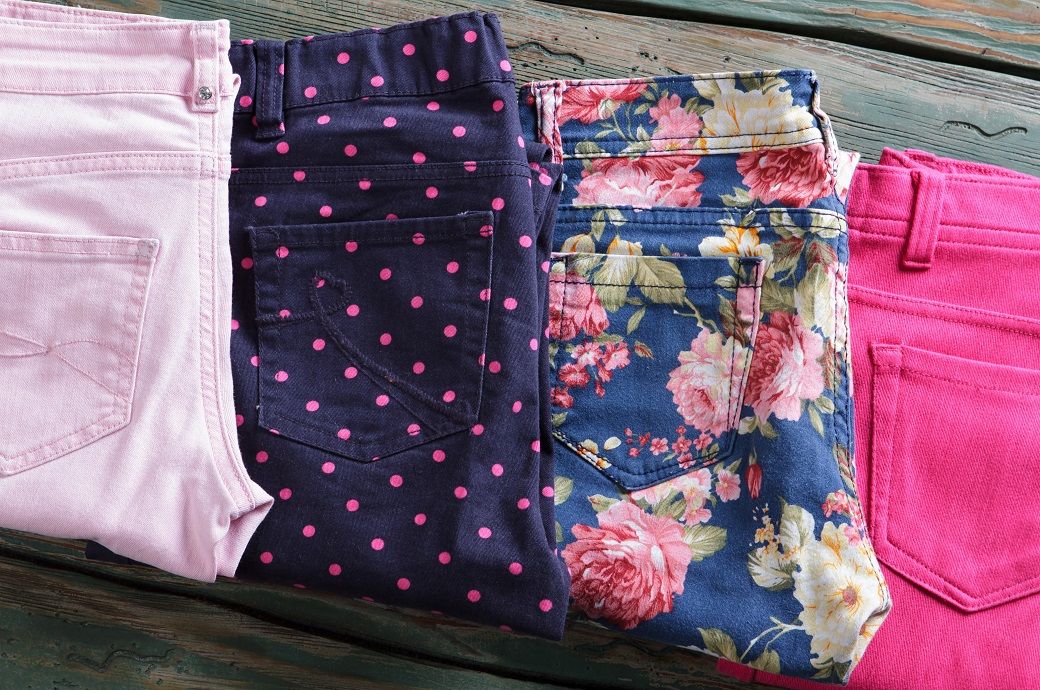
Indonesia’s apparel exports rose modestly to $8.705 billion in 2025 from $8.316 billion in 2024, reflecting gradual recovery.
The US remained dominant, accounting for over 56 per cent of shipments, highlighting growing market dependence.
While Japan, South Korea and Europe offered stability, exports stayed concentrated in key products and segments.
Source link
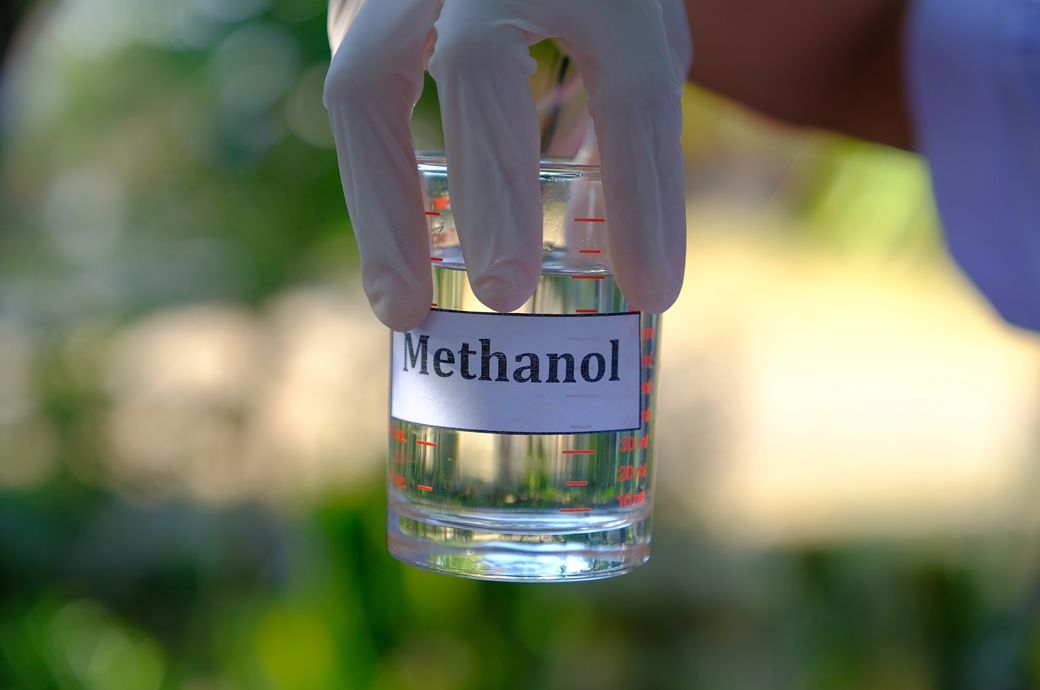
Methanol prices in India have surged nearly 150 per cent from pre-Iran–US tension levels, tracking a sharp rise in crude oil and tightening global energy markets.
Hormuz disruption risks, limited rerouting capacity, rising freight and insurance costs, and constrained imports are fuelling volatility, with prices seen approaching ₹90 per kg.
Source link


Nike shares fall 9% on weak outlook, expected 20% sales decline in China

Prince Harry surprises crowd by calling attendees his source of hope

Wrigley Field to host Big Ten/SEC volleyball doubleheader

-

 Politics1 week ago
Afghanistan announces release of detained US citizen
-

 Sports1 week ago
Broadcast industry CEO says consolidation is ‘essential’ to compete for NFL soaring media rights prices
-

 Entertainment1 week ago
UN warns migratory freshwater fish numbers are spiralling
-

 Tech1 week ago
Can a Home Appliance Fix the Problem of Soft-Plastic Waste?
-
 Business1 week ago
Property Play: Home flippers see smallest profits since the Great Recession, real estate data firm says
-
 Business1 week ago
Gold prices soar in Pakistan – SUCH TV
-

 Fashion1 week ago
ICE cotton slips on weaker crude, profit booking
-
 Business1 week ago
More women are entering wealth management, but few are in advisory roles, study finds