

Business
From Rs 25,000 to Rs 1,05,000: How Gold Has Outperformed Nifty & Sensex Over The Last Decade


Last Updated:
Bullion, which was earlier believed to be a slow mover when it comes to the return on investment, has surprised investors in the past decade by outperforming equity markets.

Gold Vs Sensex Returns.
Gold prices have surprised investors this year after they have delivered more than 35% returns in just nine months of 2025. Moreover, the yellow metal has outperformed the Nifty and the Sensex in the past 10 years, with the yellow metal surging from nearly Rs 25,000 a decade ago to above Rs 1,05,000 now.
Gold & Silver Historical Returns
Gold prices had stood at Rs 25,000 per 10 grams a decade ago in 2015. It has surged 320% since then to currently trade at Rs 1,05,000 per 10 grams in India.
| Year | Gold Price (per 10 gm) |
|---|---|
| 2005 | Rs 7,700 |
| 2010 | Rs 20,700 |
| 2015 | Rs 25,000 |
| 2020 | Rs 50,000 |
| 2025 (So Far) | Rs 1,05,000 |
Silver prices have also given an impressive return of 270% between 2015 and 2025, as its prices have increased from Rs 33,300 a decade ago to Rs 1,23,000 now.
Sensex, Nifty Historical Returns
The Sensex had stood at 25,700 in September 2015. It has risen by 210% till now, as the BSE benchmark currently trades near the 80,000 level.
Also Read: Gold, Silver Prices Hit All-Time Highs On MCX: Why Is Bullion Shining, Is It Right Time To Invest?
Similarly, the Nifty had stood at nearly 7,800 a decade ago, which has increased to 24,500 currently, registering a growth of about 215% during the period.
Gold & Silver Vs Sensex & Nifty: Returns Comparison
The bullion market, which was earlier believed to be a slow mover when it comes to the return on investment, has surprised investors in the past decade by outperforming the equity market. Gold’s 320% and silver’s 270% returns turn out to be way higher than the Sensex’s 210% and the Nifty’s 215% returns over the past decade.
Why Has Gold Outperformed Sensex Over The Decade?
The precious metal prices have surged amid geopolitical and global economic uncertainties, especially the COVID-19 pandemic, the Russia-Ukraine war, the Middle East tussles, and the global economic slowdown amid supply chain disruptions. However, these factors have dragged the equity market returns over the period amid weak economic outlooks.
Analysts also cite a weakening rupee as a key factor behind the continued rise in precious metal prices in India.
Are Gold Prices Expected To Rise Further?
Experts say gold is expected to rise further during the upcoming festive and wedding seasons.
“Gold prices remain near record highs amid ongoing uncertainty surrounding US President Trump’s reciprocal tariffs following a recent court ruling, as well as concerns about the central bank’s independence. With US markets closed for a holiday, global cues are limited, shifting the focus to the Indian rupee. Its continued depreciation has led to elevated domestic gold prices. Meanwhile, domestic buying is expected to pick up ahead of the Shraddh period, which begins on September 7,” said Darshan Desai, chief executive officer of Aspect Bullion & Refinery.
Renisha Chainani, head of research at Augmont, said that if macroeconomic risks remain elevated, gold prices could feasibly target $3700 (Rs 1.10 lakh) in the next few weeks in September and $4000 (Rs 1.20 lakh) in the next few months by the end of 2025.
Gold: A Technical View
“Gold has support at $3420-3395, while resistance at $3465-3480. Silver has support at $39.35-39.10, while resistance is at $40.05-40.35. In rupee terms, gold has support at Rs 1,03,340-1,02,940 while resistance at Rs 1,04,450-1,04,750. Silver has support at Rs 1,19,450-1,18,850, while resistance at Rs 1,20,950-1,21,650,” Rahul Kalantri, vice-president (commodities) of Mehta Equities.

Haris is Deputy News Editor (Business) at news18.com. He writes on various issues related to personal finance, markets, economy and companies. Having over a decade of experience in financial journalism, Haris h…Read More
Haris is Deputy News Editor (Business) at news18.com. He writes on various issues related to personal finance, markets, economy and companies. Having over a decade of experience in financial journalism, Haris h… Read More
Read More





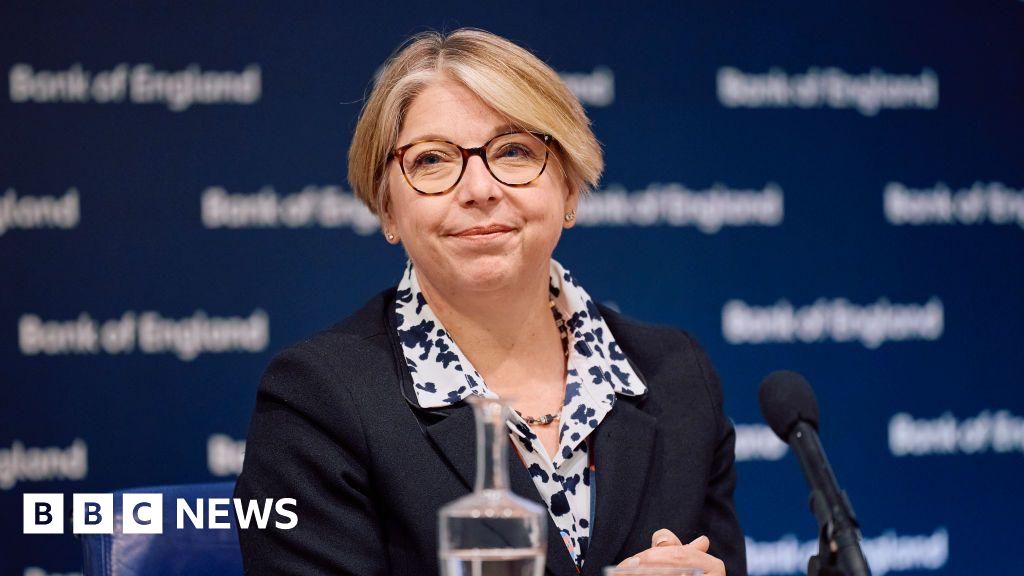
It is unusual for a senior figure at the Bank to be so forthright on market movements.
Source link

People walk past a Nike store in New York City, on April 2, 2025.
Kylie Cooper | Reuters
Nike announced a new round of layoffs Thursday affecting approximately 1,400 employees across the organization, mostly concentrated in its technology department.
In a note from COO Venkatesh Alagirisamy, the company said the layoffs were part of Nike’s broader “Win Now” turnaround strategy aiming to reshape its technology team, modernize its Air manufacturing, move some of its Converse Footwear operations and integrate its materials supply chain work into its footwear and apparel supply chain teams.
“Collectively, these changes will result in a reduction of approximately 1,400 roles in global operations, with the majority in technology,” Alagirisamy wrote. “These reductions are very hard for the teammates directly affected and for the teams around them, too.”
A Nike spokesperson said the layoffs are about better positioning the organization for the current pace of sports and accelerating its growth. The layoffs affect employees across North America, Asia and Europe and represent less than 2% of the company’s total global head count.
“This is not a new direction,” Alagirisamy wrote. “It is the next phase of the work already underway.”
Affected employees will be notified beginning Thursday, Nike added.
CEO Elliott Hill has been working to turn Nike around after years of slumping sales. While Hill has made some initial progress, it’s come with some bumps in the road.
Nike announced 775 job cuts in January, primarily at its U.S.-based distribution centers, due to the company’s work in accelerating its use of automation. At the time, the company said the cuts are part of Nike’s goal to return to “long-term, profitable growth.”
Those layoffs came on top of a round of cuts last summer that affected less than 1% of Nike’s corporate staff as part of the company’s efforts to realign the business.
In its third fiscal quarter earnings report last month, the retailer warned that sales will continue to fall for the rest of the year, primarily led by an anticipated 20% decline in China during the current quarter.
— CNBC’s Jessica Golden contributed to this report.

A key reason for the layoffs is Meta’s increased spending in other areas of the company, including AI, for which it will this year spend $135bn (£100bn). This is roughly equal to the amount it has spent on AI in the previous three years combined, according to a person who viewed the memo.


US Special Forces Soldier Arrested for Polymarket Bets on Maduro Raid
Global stock markets are too high and set to fall, says Bank of England deputy

Newly Deciphered Sabotage Malware May Have Targeted Iran’s Nuclear Program—and Predates Stuxnet

-

 Fashion1 week ago
France’s LVMH Q1 revenue falls 6%, shows resilience amid Iran war
-

 Entertainment1 week ago
Is Claude down? Here’s why users are seeing errors
-

 Tech1 week ago
The Deepfake Nudes Crisis in Schools Is Much Worse Than You Thought
-

 Sports1 week ago
PSL 11: Peshawar Zalmi win toss, opt to field first against Quetta Gladiators
-
 Business1 week ago
Standard Life buys rival in £2b deal to create savings giant
-

 Tech1 week ago
CYBERUK ’26: UK lagging on legal protections for cyber pros | Computer Weekly
-

 Fashion1 week ago
Raymond unveils luxury Chairman’s Collection Store in Mumbai
-
 Business1 week ago
PepsiCo earnings beat estimates as North American food business improves