

Business
From sweet treats to protein boosts, chains are banking on beverages to drive sales


If it feels like there are a lot of new drinks on restaurant menus, it’s because there are.
Driven by younger consumers who crave customized, cold beverages, chains from Dunkin’ to Dutch Bros, Starbucks and McDonald’s are answering the call.
The number of beverages offered by the top 500 chains has increased by more than 9% in the last year, according to Technomic’s 2025 Away-From-Home Beverage Navigator Report. Companies have leaned even more into cold drinks. Offerings like specialty coffees and energy drinks have seen the most growth on menus over the past two years, as hot coffee and tea beverages on menus decline, the market researcher reported in July.
What’s more, consumers are increasingly heading to a chain simply to get an iced coffee or soda. Last year, the primary driver for beverage sales was “getting a pick-me-up,” as 22% said that was their most common reason for going, up from 20% in 2023, the data found. Meanwhile, 20% said they bought a beverage to “wash down food.” The two occasions for a purchase switched places from the previous year.
“This shift suggests that consumers may be moving toward more beverage-specific occasions, where beverages are the main driver of the foodservice purchase rather than an add-on to go alongside food. This aligns with the influx of beverage-forward concepts in recent years,” the report said.
An employee delivers a drink to a customer outside a Dutch Bros. Coffee location in Beaverton, Oregon, U.S.
Maranie Staab | Bloomberg | Getty Images
Higher drink sales are key for major players as they seek to reverse slumps in a tough consumer environment. McDonald’s U.S. restaurants saw same-store sales growth of 2.5% in its second fiscal quarter, reversing two straight quarters of domestic declines as it leaned into buzzy partnerships and value offerings. But executives cautioned low-income consumers remain challenged. While Starbucks also saw better than expected U.S. sales, they still fell 2% from the prior-year period.
Trying to capitalize on the desire for buzzy new drinks will bring its own challenges. Technomic forecasts beverage volume will grow 1% through 2029, but the group said it will likely revise that outlook lower. Customers are also more price sensitive, with 61% of consumers who said they noticed price hikes saying they order beverages less often.
What Gen Z wants
The success of many new beverage lines will hinge on Gen Z consumers, who have flocked to customized and sugary drinks.
Dunkin’ saw its colorful and sweet Refreshers platform hit new record highs in the most recent quarter, with unit sales up more than 30% year-on-year. It will release its fall menu later this week and lean further into what Gen Z consumers are seeking.
The rollout will feature an expansion of pop star Sabrina Carpenter’s Daydream Refresher lineup into Mango and Mixed Berry, along with a Cereal N’ Milk Latte, featuring a blend of espresso and real cereal milk that delivers a “nostalgic marshmallow cereal flavor.”
The curation of drinks is key for customers — and Gen Z consumers in particular, Dunkin’ Chief Marketing Officer Jill Nelson told CNBC. It has to feel unique and special in this environment.
“On the product side, it’s overwhelmingly about cold beverages, customization and bold flavor,” Nelson said.
“And then on the promotion side … when we think about Gen Z, this is a generation that grew up on sneaker drops and stories that disappear in 24 hours. So it’s all about how do you create new news and interesting flavor combinations that you can’t really recreate easily at home and feel like you’re in the know when you go to the drive through and order them,” she said, adding that the company prioritizes speed and accuracy as customers ask for more customization.
The competition will heat up next month as McDonald’s enters the beverage category in a more meaningful way. On Sept. 2, McDonald’s will launch an expanded market test in 500 restaurants across Wisconsin and Colorado of new drinks that include a “Creamy Vanilla Cold Brew” and “Toasted Vanilla Frappe.”
A worker hands a drink to a customer at a McDonald’s restaurant in Martinez, California, US, on Tuesday, Feb. 4, 2025.
David Paul Morris | Bloomberg | Getty Images
In addition, the fast food giant will roll out “dirty sodas” and Strawberry Watermelon Refreshers, aimed at Gen Z consumers. McDonald’s created the lineup with learnings from its now-shuttered CosMc’s concept, which leaned heavily into customized drinks.
“We’re seeing real momentum in beverages, with more people – especially our Gen Z fans – turning to cold, flavorful drinks as a go-to treat,” said McDonald’s USA Chief Customer Experience and Marketing Officer Alyssa Buetikofer in a release.
On McDonald’s most recent earnings call, CEO Chris Kempczinski said beverages present a “big opportunity” for the brand.
“It’s growing and it’s more profitable than food. So, there’s a lot of things to like, which is why us as well as, I think, a few of our competitors are also excited about this,” Kempczinski told analysts. He added that while there are value offerings in the beverage space, you can get a lot of “full margin products” that franchisees would not have to discount.
The protein play
The new beverage options go beyond the sweet and bold. Chains also aim to win consumers by tapping into health trends.
An iced vanilla protein latte from Starbucks.
Courtesy: Starbucks
As Starbucks continues its “Back to Starbucks” turnaround plans under CEO Brian Niccol, it is making more changes to the menu, including a late fourth-quarter launch of protein cold foam. On the company’s recent earnings call with analysts, Niccol said the item “taps into what has become one of our most popular modifiers, cold foam, which grew 23% year over year.”
“Protein Cold Foam with no added sugar is an easy way to add 15 grams of protein to virtually any cold beverage. And customers can also add the flavor of their choice,” he said.
The coffee giant said it’s seeing increases in satisfaction among younger consumers. Niccol told analysts customer value perceptions were near two-year highs in its most recent quarter, driven by gains among Gen Z and millennials, who make up over half of its customer base.
It’s betting that innovation, coupled with better customer service under its new “Green Apron Service” strategy, will help to boost business.
Coffee chain Dutch Bros has leaned into some of those beverage trends to drive strong growth. The chain has been a standout stock performer — up over 22% year-to-date — and saw its same-store sales increase more than 6% in the most recent quarter.
CEO Christine Barone said protein milk that launched in 2024 has boosted business. But more broadly, unique and surprising toppings and offerings are a way to engage in a tough competitive landscape, she added.
“I think the key with innovation is to really understand when something might be ready to pop, or something might be of high interest, and then be able to move really fast to execute on it well,” Barone told CNBC.

— CNBC’s Drew Troast contributed to this report


Intellia Therapeutics, building exterior and company sign, Cambridge, Massachusetts, USA.
Spencer Grant | Universal Images Group | Getty Images
Intellia Therapeutics said its Crispr-based treatment for a rare swelling condition met its goals in a late-stage trial, marking a milestone for the field of gene editing and putting the company on track to seek approval from the U.S. Food and Drug Administration.
The company’s treatment uses Nobel Prize-winning technology Crispr to edit DNA and turn off the gene that controls production of a peptide that’s overactive in people with hereditary angioedema, causing them to experience potentially life-threatening swelling attacks. Intellia’s treatment is administered once through an hourslong infusion, making the edits directly in the liver.
Intellia said the one-time treatment reduced attacks by 87% compared with a placebo, meeting the study’s main goal. Six months after treatment, 62% of patients were free from attacks and weren’t using other therapies, Intellia said.
The company described the safety and tolerability of the treatment as “favorable,” reporting the most common side effects were infusion-related reactions, headaches and fatigue. Analysts were closely watching safety in the trial since a patient in a separate trial of a different treatment from Intellia died. That patient developed a liver injury and ultimately died from septic shock following an ulcer, according to the company.
“When you think about where we started with Crispr, just 12 years ago with some of the fundamental insights, I think there was a lot of talk about what might be possible, and we’ve had reports along the way in terms of milestones, but this is the first Phase 3 data in any indication with in vivo Crispr where you’re actually changing a gene that causes disease,” said Intellia CEO John Leonard.
The only FDA-approved Crispr-based medicine comes from Vertex Pharmaceuticals. Called Casgevy, the gene editing is done outside the body, or ex vivo. The process requires collecting a person’s blood cells, making the edits outside the body, then reinfusing them back into a patient. Intellia’s treatment, meanwhile, makes the edits inside the body, or in vivo.
Intellia said it has started a rolling application with the FDA and plans to complete the filing in the second half of this year. The company expects to launch the treatment in the U.S. in the first half of next year, if it’s approved.
If approved, Intellia’s treatment, lonvoguran ziclumeran, will compete with about a dozen other chronic drugs for HAE. Despite the allure of a one-time treatment, genetic medicines haven’t always been a commercial successes. BioMarin withdrew its gene therapy for Hemophilia A because of weak sales, for example.
Leonard said there are important differences between the two, like the fact that BioMarin’s therapy faced questions about how long the effects would last. In contrast, he said Intellia hasn’t seen a single case in almost six years where the effects diminished over time.
Despite the results, he’s reluctant to call Intellia’s treatment a functional cure.
“I think this is a tipping point for the disease and tipping point for Crispr-based in vivo therapy where you can make a change [and] it’s permanent,” Leonard said. “And, as far as we can tell, we don’t have a single patient in this program or other program where there’s been any waning of the effect of what we did to the gene or the effect of what we’ve seen with the clinical aspects of the disease itself. So it’s pretty exciting.”
Clarification: This story has been updated to clarify that a patient in a separate trial of a different treatment from Intellia developed acute liver injury and ultimately died from septic shock following an ulcer.

While many airlines say they are raising prices due to high fuel costs, József Váradi says European airlines are trying to boost demand
Source link
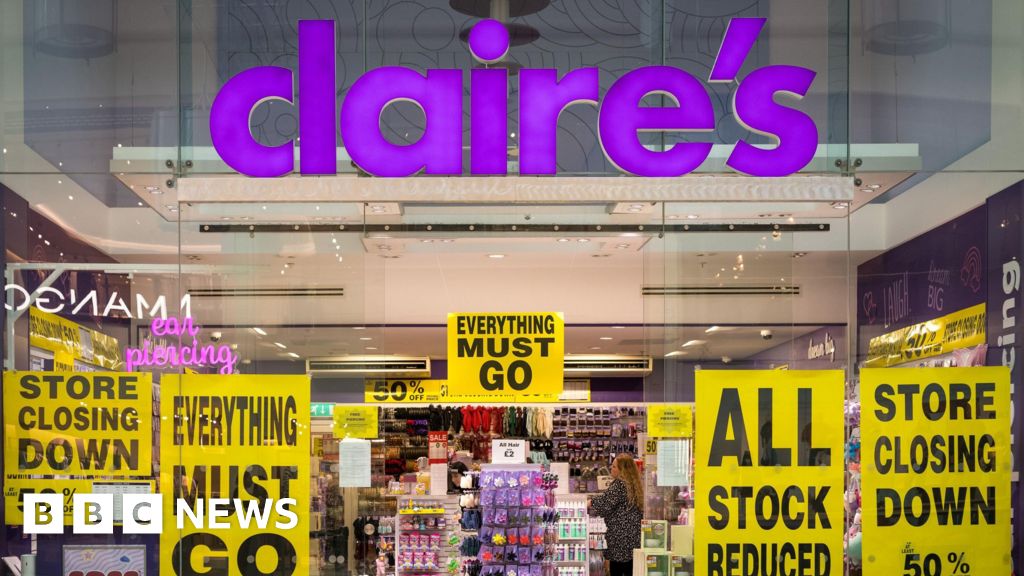
All of the chain’s standalone stores have stopped trading in the UK and Ireland.
Source link


King Charles and the Trumps unite at White House for a historic tea meeting

This M5 MacBook Air Discount Has Renewed My Faith in Cheap Laptops for 2026

Norway joins Type 26 Frigate Programme to boost NATO naval power

-

 Sports1 week ago
NCAA men’s gymnastics championship: All-time winners list
-

 Sports1 week ago
WWE WrestleMania 42 Night 2: Live match results and analysis
-

 Politics7 days ago
UK’s Starmer seeks to deflect blame over Mandelson appointment
-

 Fashion1 week ago
UK’s Sosandar returns to profitability amid robust FY26 performance
-

 Entertainment1 week ago
Lee Anderson, Zarah Sultana kicked out of UK Parliament for calling PM ‘liar’
-
 Business1 week ago
No fuel shortage: Govt assures 100% domestic LPG, PNG, CNG supply amid Hormuz energy crunch – The Times of India
-
 Business1 week ago
How Trump’s psychedelics executive order could unlock stalled cannabis reform
-

 Sports1 week ago
Quetta Gladiators opt to bowl after winning toss against Peshawar Zalmi in PSL 11 clash