

Business
Frontier to buy B K Birla group co Kesoram – The Times of India


Kolkata: 106-year-old Kesoram Industries, once the flagship of the B K Birla group, is being acquired by Frontier Warehousing, a city-based storage and logistics solutions company. The total value of the acquisition, as per stock exchange filings, would be close to Rs 100 crore.Frontier-owner Gautam Agarwal, told TOI he is drawing up plans for Kesoram, which now has transparent paper, rayon, and chemicals businesses.Frontier proposed to launch an open offer late on Thursday for the acquisition of 26% stake in Kesoram at Rs 5.5 per share, aggregating to a consideration of Rs 44.2 crore. On Friday, Kesoram’s share on BSE was up 19%. — Udit Prasanna Mukherjee
Business
Gas supply rejig: Govt prioritises LPG, CNG and piped cooking gas amid LNG disruption – The Times of India
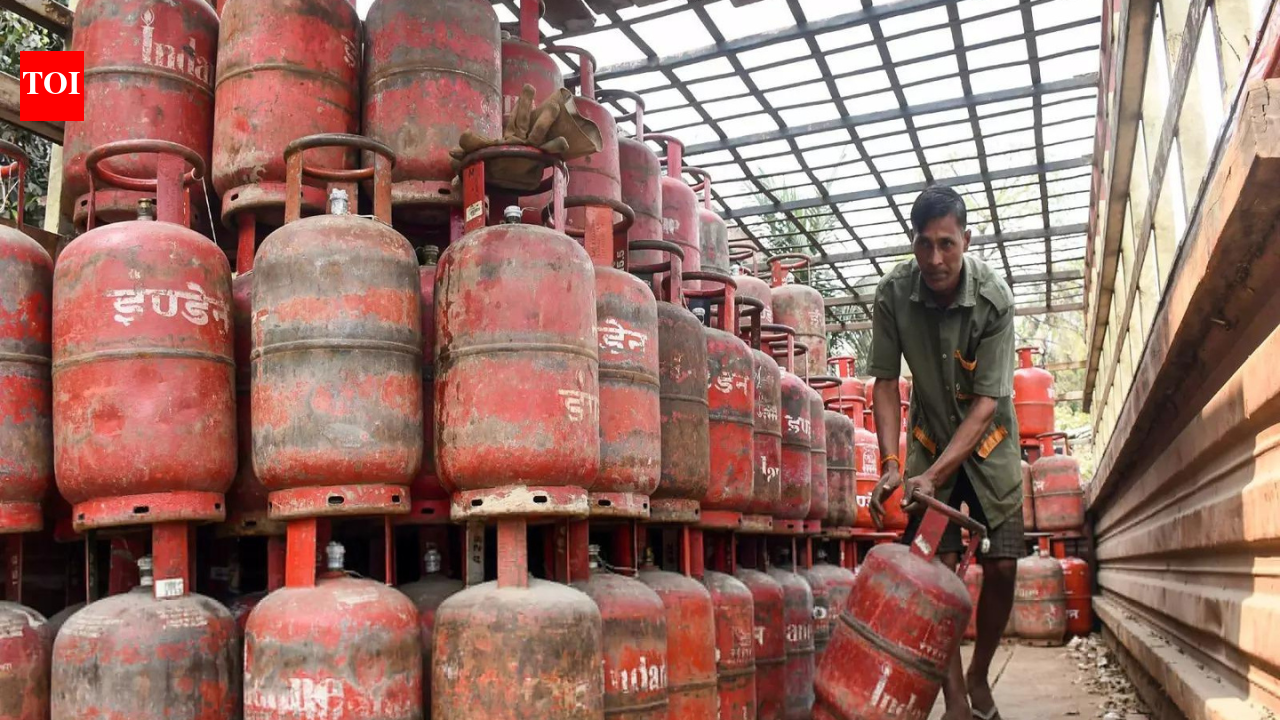
The government has revised the priority order for allocating domestically produced natural gas, placing LPG production, CNG for transport and piped cooking gas for households at the top of the list, as disruptions in imported gas supplies intensify amid the widening West Asia conflict, PTI reported.According to a gazette notification, the requirements of these sectors will be fully met first before gas is supplied to other sectors.Under the revised framework, the fertiliser sector has been placed second, with at least 70% of its past six-month average gas demand to be met, subject to availability.At the third priority level, gas supply to tea industries, manufacturing units and other industrial consumers will be maintained at 80% of their past six-month average consumption, depending on operational availability.City gas distribution (CGD) entities supplying gas to industrial and commercial consumers have been placed at fourth priority in the revised allocation order.The reshuffle means that domestically produced gas will be diverted towards priority sectors, while supplies to petrochemical plants, power plants and other high-priced gas consumers may be curtailed.The move follows supply disruptions triggered by the ongoing conflict in West Asia.Following US-Israeli strikes inside Iran and Tehran’s retaliation, maritime traffic through the Strait of Hormuz has sharply declined, while insurance premiums have surged and energy markets have turned volatile.The strait handles roughly one-fifth of global seaborne oil and nearly one-third of LNG shipments, and is a key route for India’s imports of LNG and LPG.With tanker movement slowing, the government has decided to rework the allocation of domestically available gas to ensure supplies to essential sectors such as household cooking fuel and vehicular transport.Natural gas produced in India currently meets about half of the country’s total consumption of around 191 million standard cubic metres per day.“The Central Government has assessed that the ongoing conflict in the Middle East has resulted in the disruption of liquefied natural gas (LNG) shipments through the Strait of Hormuz and suppliers have invoked force majeure clause,” the notification said.It added that the revised allocation was necessary to maintain supplies and ensure equitable distribution of natural gas to priority sectors.The notification stated that domestic piped natural gas, CNG for vehicles and LPG production — including LPG shrinkage requirements — will receive 100% of their past six-month average gas consumption.Gas required for pipeline compressor fuel and other operational needs of the pipeline network will also receive priority allocation.For fertiliser plants, gas supply will be maintained at 70% of their past six-month average consumption, and the fuel must be used strictly for fertiliser production.“The gas marketing entities shall ensure that gas supply to tea industries, manufacturing and other industrial consumers supplied through the national gas grid is maintained at 80 per cent of their past six month average gas consumption subject to operational availability,” the order said.Similarly, CGD companies will ensure industrial and commercial consumers supplied through their networks receive 80% of their past six-month average gas consumption, depending on availability.To meet these priorities, gas supplies will be curtailed first to petrochemical facilities such as ONGC Petro additions Ltd, GAIL Pata Petrochemical Complex, Reliance O2C and other high-pressure high-temperature gas consumers, followed by power plants if required, the order said.Oil refining companies have also been asked to absorb part of the LNG supply disruption by reducing gas consumption at refineries to around 65% of their past six-month average usage.State-owned GAIL has been tasked with managing the allocation and distribution of natural gas to implement the revised priority order.

The government has been urged to take quick action to help the 1.7 million homes that still use heating oil and have seen prices double due to the US attacks on Iran.
These are often people in rural areas, who have seen prices for their fuel jump in some cases from 62p a litre before the war to perhaps £1.73 now.
Suppliers have been accused of delivering supplies without a price being quoted, leaving consumers in for a nasty shock when the bill arrives.
Conservative net zero minister Clare Coutinho wants the Competition and Markets Authority (CMA) to probe the suppliers and order them to be fairer to consumers.
Speaking on the BBC Today programme this morning, Ms Coutinho said: “Heating oil is being delivered without a price being quoted. We have called on the CMA to investigate these practices. We want more transparency and fair practices for consumers.”
Chancellor Rachel Reeves says she has asked the CMA to be “vigilant”, but Ms Coutinho accused the government of being “slow off the mark”.
“I hope this is something we can work on together. It is people who are vulnerable and in rural communities who have no other choice,” she added.
All energy costs are rising as fears grow of a supply squeeze. But heating oil seems to be the energy supply that is being most badly hit. There are about 120 heating oil suppliers, much smaller firms than the large energy conglomerates that supply electricity and gas to most of the population.
Emma Simpson, chief executive of Rural Action Derbyshire, a charity that runs an oil-buying scheme, said: “People who rely on heating oil are facing a sudden and frightening surge in cost. We may be heading into spring, but anyone running low on oil right now doesn’t have the luxury of waiting for prices to fall.”
She added: “For some, the decision to order or not will come down to whether they can realistically afford it, and that is a really hard position to be in.”
There were wild swings in both the oil and equity markets on Monday. But on Tuesday, oil prices fell sharply and stock markets bounced back as US president Donald Trump said the US-Israel war with Iran could be over soon.
The price of Brent crude was more than 8 per cent lower at just under $91 dollars a barrel, retreating from near-four year highs above $100 a barrel in volatile trading on Monday.
Markets responded by recovering some of the recent ground lost in the sell-off, with the FTSE 100 Index up 1.6% soon after opening, up 165.3 at 10,414.8.
Lindsay James, investment strategist at Quilter, said: “Markets are attempting to stabilise after an extraordinary round trip in oil prices that saw prices collapse from an intraday high of nearly $120 a barrel back towards the low $90s, helped in part by President Trump signalling that the war with Iran could be ‘very complete, pretty much’.
“Equities in the US responded in turn with modest gains while Treasury yields reversed, ending the day fractionally lower.”
Matt Britzman, senior equity analyst at Hargreaves Lansdown, said: “Global equity markets are still taking their cues from oil this morning – but the tone has notably improved after yesterday’s wild swings.
“What initially looked like a one-way surge in energy costs and the inflation headaches that come with it has started to stabilise, offering some much-needed breathing room.”

SYDNEY: Global airlines have begun increasing ticket prices as jet fuel costs surge following the escalating conflict in the Middle East, with carriers warning that further fare hikes may follow if oil prices remain high.
Air New Zealand confirmed it has raised fares across its network, becoming one of the first airlines to introduce broad price increases since the war between the United States, Israel and Iran began.
Fuel Prices Driving Fare Hikes
Airlines say jet fuel prices, previously around $85–$90 per barrel, have surged to between $150 and $200 per barrel in recent days.
Due to rising costs, Air New Zealand announced the following increases:
NZ$10 increase on domestic flights
NZ$20 increase on short-haul international routes
NZ$90 increase on long-haul flights
The airline also said it has suspended its financial outlook for 2026 because of uncertainty surrounding the ongoing conflict.
Airlines Warn of Further Increases
The carrier warned that if the conflict continues and fuel prices remain elevated, additional pricing adjustments and schedule changes may become necessary.
Other airlines are also feeling the pressure. Vietnam Airlines has requested the government remove environmental taxes on jet fuel as operating costs have reportedly risen by 60% to 70%.
Airline Shares Stabilise
Airline stocks, which initially fell sharply due to the crisis, showed signs of stabilising after Donald Trump suggested the conflict could end soon.
Following the comments:
Air New Zealand shares rose 2%
Korean Air gained 8%
Qantas increased 1.5%
Cathay Pacific climbed more than 4%
Travel Industry Faces Pressure
Fuel typically represents 20% to 25% of airline operating costs, making it the second-largest expense after labour.
Higher oil prices and airspace closures in the Middle East are already forcing airlines to reroute flights, increasing travel times and ticket prices on some routes.
Tourism industries are also feeling the impact. Thailand’s tourism ministry warned that if the conflict lasts more than eight weeks, the country could lose nearly 600,000 tourists and $1.29 billion in tourism revenue.
Experts say prolonged instability in the region could significantly affect global travel demand and airline profitability.


College football teams, players poised to improve in 2026

Bahraini Intelligence Arrests Indian Telecom Engineer Over Alleged Espionage Links

UK’s Capri Holdings Limited appoints Tyler Reddien as CFO & COO

-
 Politics3 days ago
India let Iran warship dock the day US sank another off Sri Lanka, say officials
-

 Sports3 days ago
Pakistan set for FIH Pro League debut | The Express Tribune
-

 Entertainment3 days ago
Harry Styles kicks off new era with ‘One Night Only’ comeback show
-
 Business1 week ago
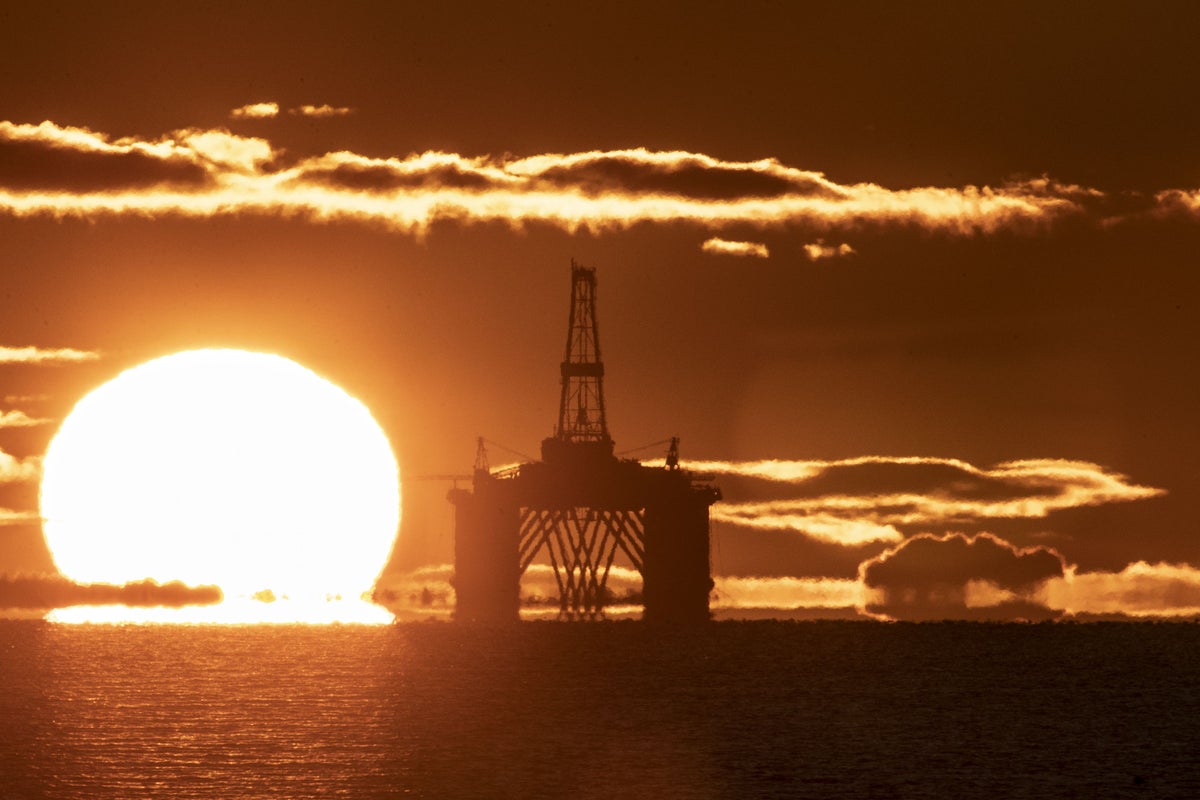
Labour parliamentarians urge UK Government to oppose Rosebank oil field
-
 Business3 days ago
Restaurant group changes name after bid to buys pubs across the UK
-
 Business3 days ago
Home heating oil: ‘Most of my pension has gone on home heating oil’
-

 Tech1 week ago
The 5 Big ‘Known Unknowns’ of Donald Trump’s New War With Iran
-

 Sports1 week ago
USA vs. Argentina (Mar 1, 2026) Live Score – ESPN