

Business
Gas supply rejig: Govt prioritises LPG, CNG and piped cooking gas amid LNG disruption – The Times of India

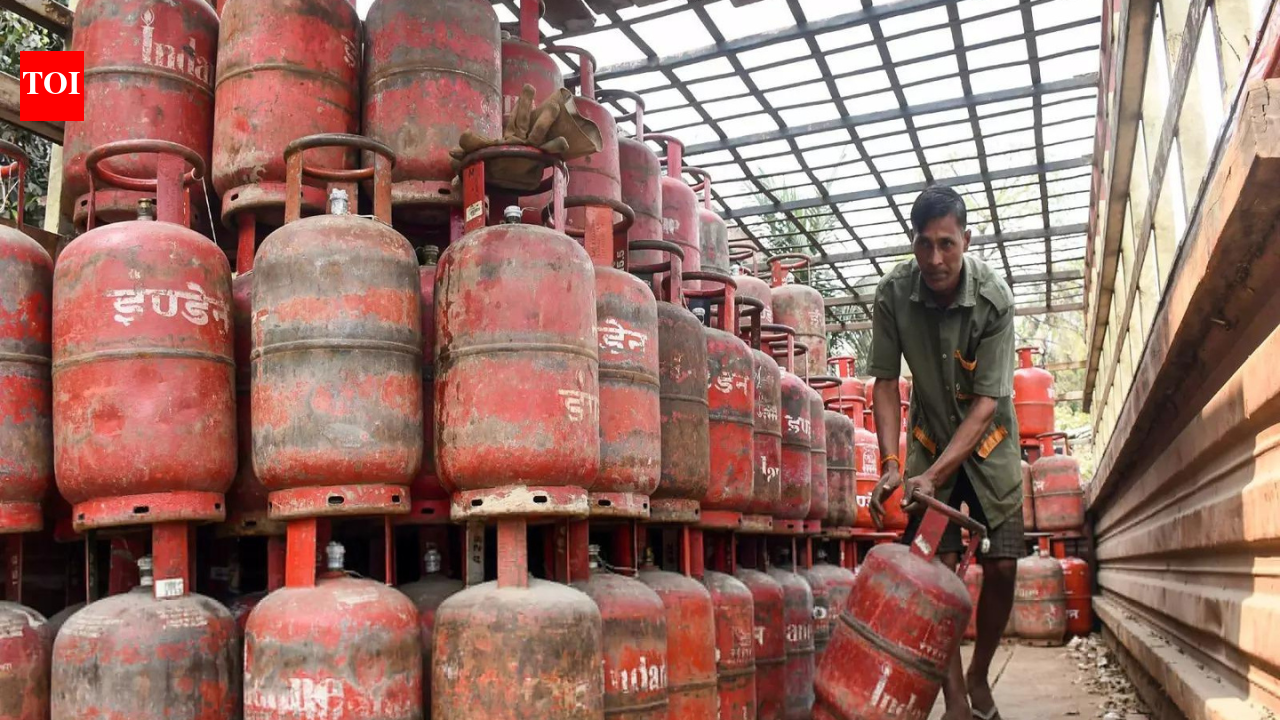
The government has revised the priority order for allocating domestically produced natural gas, placing LPG production, CNG for transport and piped cooking gas for households at the top of the list, as disruptions in imported gas supplies intensify amid the widening West Asia conflict, PTI reported.According to a gazette notification, the requirements of these sectors will be fully met first before gas is supplied to other sectors.Under the revised framework, the fertiliser sector has been placed second, with at least 70% of its past six-month average gas demand to be met, subject to availability.At the third priority level, gas supply to tea industries, manufacturing units and other industrial consumers will be maintained at 80% of their past six-month average consumption, depending on operational availability.City gas distribution (CGD) entities supplying gas to industrial and commercial consumers have been placed at fourth priority in the revised allocation order.The reshuffle means that domestically produced gas will be diverted towards priority sectors, while supplies to petrochemical plants, power plants and other high-priced gas consumers may be curtailed.The move follows supply disruptions triggered by the ongoing conflict in West Asia.Following US-Israeli strikes inside Iran and Tehran’s retaliation, maritime traffic through the Strait of Hormuz has sharply declined, while insurance premiums have surged and energy markets have turned volatile.The strait handles roughly one-fifth of global seaborne oil and nearly one-third of LNG shipments, and is a key route for India’s imports of LNG and LPG.With tanker movement slowing, the government has decided to rework the allocation of domestically available gas to ensure supplies to essential sectors such as household cooking fuel and vehicular transport.Natural gas produced in India currently meets about half of the country’s total consumption of around 191 million standard cubic metres per day.“The Central Government has assessed that the ongoing conflict in the Middle East has resulted in the disruption of liquefied natural gas (LNG) shipments through the Strait of Hormuz and suppliers have invoked force majeure clause,” the notification said.It added that the revised allocation was necessary to maintain supplies and ensure equitable distribution of natural gas to priority sectors.The notification stated that domestic piped natural gas, CNG for vehicles and LPG production — including LPG shrinkage requirements — will receive 100% of their past six-month average gas consumption.Gas required for pipeline compressor fuel and other operational needs of the pipeline network will also receive priority allocation.For fertiliser plants, gas supply will be maintained at 70% of their past six-month average consumption, and the fuel must be used strictly for fertiliser production.“The gas marketing entities shall ensure that gas supply to tea industries, manufacturing and other industrial consumers supplied through the national gas grid is maintained at 80 per cent of their past six month average gas consumption subject to operational availability,” the order said.Similarly, CGD companies will ensure industrial and commercial consumers supplied through their networks receive 80% of their past six-month average gas consumption, depending on availability.To meet these priorities, gas supplies will be curtailed first to petrochemical facilities such as ONGC Petro additions Ltd, GAIL Pata Petrochemical Complex, Reliance O2C and other high-pressure high-temperature gas consumers, followed by power plants if required, the order said.Oil refining companies have also been asked to absorb part of the LNG supply disruption by reducing gas consumption at refineries to around 65% of their past six-month average usage.State-owned GAIL has been tasked with managing the allocation and distribution of natural gas to implement the revised priority order.
Protesters have forced NatWest to halt its shareholder meeting, as the bank’s chairman defended its climate policy in response to investors claiming it has “backtracked” on commitments.
The annual general meeting (AGM) was being held on Tuesday morning but had to be stopped for about half an hour amid disruption during chairman Rick Haythornthwaite’s opening speech.
Protesters were singing and making statements about NatWest’s climate policies.
The boss heard a statement presented by ShareAction, backed by investors managing 1.4 trillion US dollars (£1 trillion) in assets, including the Church of England Pensions Board, Greater Manchester Pension Fund and Rathbones Investment Management.
The statement said investors are “concerned by the bank’s changed outlook on climate change” having “reduced the ambition of its fossil fuel policy and climate targets”.
“The bank dropped its commitment not to finance oil and gas majors lacking a credible transition plan or failing to report their overall emissions,” it said.
It called for Mr Haythornthwaite to meet the group of shareholders to discuss the bank’s climate strategy.
Campaigners including ShareAction are also calling for shareholders to vote against the re-election of the bank’s chair over concerns of climate backtracking, which the Church of England’s pensions body said it plans to do.
Mr Haythornthwaite responded to the statements saying that he “takes climate change very seriously, as does all of this board” and that he was happy to meet the group.
“We’ve had to wrestle with the questions of how do we balance supporting our customers in their transition efforts with managing the risks in what is an increasingly complex policy environment,” he said.
He stressed that the bank’s “overwhelming” balance of lending was on renewables and that oil and gas financing comprises 0.6% of total lending.
NatWest also retained targets to at least halve the climate impact of its financing activity by 2030, against a 2019 baseline.
“I don’t want to take what sounds like a backtracking as a major shift,” Mr Haythornthwaite said, adding that “these targets matter”.

The battle between the AI big hitters has largely played out on social media. Now it is coming to the courtroom.
Source link
Shell has agreed a 16.4 billion US dollar (£12.1 billion) deal to buy Canadian energy firm ARC Resources in a bid to boost its gas production and reserves.
The British energy giant said the acquisition will strengthen its resource base “for decades to come”.
It will also strengthen the business’s presence in North America, where it already operates gas plants.
The deal will combine ARC’s more than 1.5 million net acres of land with Shell’s approximately 440,000 in the Montney gas resource in Canada.
It will increase Shell’s production growth rate from 1% to 4% through to 2030, compared with 2025, according to the firm.
Shell’s chief executive Wael Sawan said acquiring the “high quality, low-cost” energy business “strengthens our resource base for decades to come”.
He added: “We are accessing uniquely positioned assets and welcoming colleagues that bring deep expertise which, combined with Shell’s strong basin level performance, provides a compelling proposition for shareholders.
“This establishes Canada as a heartland for Shell while furthering our strategy to deliver more value with less emissions.”
Shell has been carrying out a new growth strategy focused on extracting more oil and gas, moving from a focus on green energy and reducing spending on renewables.
It hopes the shift will support production targets and drive greater returns for investors.
The announcement comes a few weeks after Shell said it had cut its gas production outlook for the first quarter of 2026 after being affected by the conflict in the Middle East.
The energy giant trimmed its guidance for integrated gas production after volumes from Qatar were particularly affected during recent attacks.
The deal will see ARC’s shareholders receive 8.20 Canadian dollars (£4.50) and about 0.4 Shell shares for each ARC share.
Including about 2.8 billion US dollars (£2.1 billion) in debt that Shell will take on, the acquisition is valued at about 16.4 billion US dollars (£12.1 billion).
It is expected to complete in the second half of 2026, subject to shareholder, court and regulatory approvals.


UK’s Mulberry FY26 sales rise 5.7% on strong H2 rebound
Protesters halt NatWest shareholder meeting as boss defends climate policy

North India cotton yarn prices rise as mills gain pricing power

-

 Sports1 week ago
NCAA men’s gymnastics championship: All-time winners list
-

 Sports1 week ago
WWE WrestleMania 42 Night 2: Live match results and analysis
-

 Politics1 week ago
UK’s Starmer seeks to deflect blame over Mandelson appointment
-

 Fashion1 week ago
UK’s Sosandar returns to profitability amid robust FY26 performance
-
 Business1 week ago
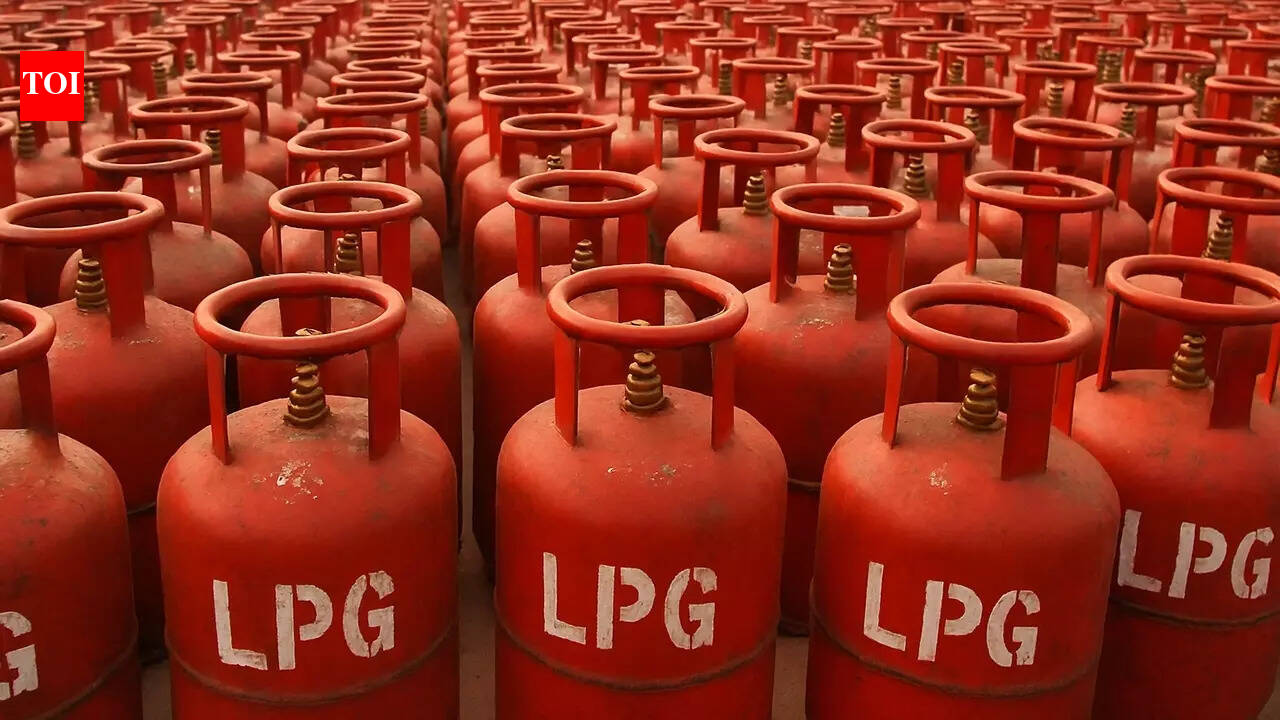
No fuel shortage: Govt assures 100% domestic LPG, PNG, CNG supply amid Hormuz energy crunch – The Times of India
-

 Entertainment1 week ago
Lee Anderson, Zarah Sultana kicked out of UK Parliament for calling PM ‘liar’
-
 Business7 days ago
Us-India Trade Talks: US–India trade deal: Where do talks stand & what to expect – explained – The Times of India
-

 Sports1 week ago
Quetta Gladiators opt to bowl after winning toss against Peshawar Zalmi in PSL 11 clash