

Business
FTSE 100 ends record breaking week at new high


Blue chips in London enjoyed another strong day on Friday, hitting a fresh peak, with a pick up in new listings adding to the more optimistic mood.
The FTSE 100 index closed up 63.52 points, 0.7%, at 9,491.25, a new closing high, and just shy of a fresh intra-day best level of 9,494.64 hit earlier in the trading day.
The FTSE 250 ended up 150.32 points, 0.7%, at 22,197.62, and the AIM All-Share advanced 7.57 points, 1.0%, at 796.52.
For the week, the FTSE 100 was up 2.2%, the FTSE 250 was 2.4% higher, while the AIM All-Share added 2.1%.
The upbeat mood came despite the ongoing US federal government shutdown and some downbeat domestic economic data.
AJ Bell investment director Russ Mould said: “There is growing expectation that the shutdown in Washington might continue until mid-October.
“How long investors remain relaxed about this state of affairs remains hard to predict, but one worry is that it makes it significantly harder for the Federal Reserve to make informed decisions around interest rates,” he added.
In the UK, speculation of tax hikes ahead of the Autumn budget was blamed for a slowdown in services sector activity in September.
The S&P Global UK services purchasing managers’ business activity index fell to 50.8 points in September from 54.2 in August, and missed the flash reading of 51.9 released late last month.
Tim Moore at S&P Global said: “Many survey respondents suggested that corporate clients had deferred spending decisions until after the Autumn budget, while households were also hesitant about major purchases.”
In better news for the “Square Mile”, consumer staples company Princes Group said it intends to float on the Main Market of the London Stock Exchange.
The Liverpool-based firm reported £2.1 billion in pro forma revenue in 2024, and pro forma adjusted earnings before interest, tax, depreciation and amortisation of £122.3 million.
Its portfolio includes Princes tuna, Branston, Flora, Napolina and own-brand products.
Chief executive Simon Harrison said: “Whilst we are renowned for our iconic Princes tuna, through a combination of organic growth and focused M&A, we have built an international £2 billion food and drink portfolio.”
In addition, Beauty Tech Group made its stock market debut in London.
The Cheshire-based seller of at-home beauty treatment technology, including laser devices and LED face masks through the brands Tria Laser, CurrentSkin and Ziip Beauty, closed at 288p per share, above the 271p initial public offer price in a successful first day’s trading.
Stocks in New York were higher at the time of the London close. The Dow Jones Industrial Average was up 0.8%, the S&P 500 index was 0.4% higher and the Nasdaq Composite 0.2% to the good.
In European equities on Friday, the CAC 40 in Paris closed up 0.2%, while the DAX 40 in Frankfurt fell 0.2%.
Amid the bullish market mood, Bank of America strategists said there is a risk that markets are “under-pricing the risk of weakening growth momentum”, and as well as “potentially over-pricing the support from productivity growth”.
As a result, BofA said it is positioned for macro data to “surprise to the downside relative to lofty expectations”, implying scope for widening risk premia and fading EPS expectations, consistent with “more than 10% downside for the Stoxx 600 and 10% underperformance for European cyclicals versus defensives”.
The pound was quoted higher at 1.3469 dollars at the time of the London equity market close on Friday, compared to 1.3415 dollars on Thursday. The euro stood at 1.1741 dollars, up against 1.1697 dollars. Against the yen, the dollar was trading at 147.43 yen, slightly higher compared to 147.37 yen.
The yield on the US 10-year Treasury was quoted unchanged at 4.11% from Thursday. The yield on the US 30-year Treasury stood at 4.70%, also flat from Thursday.
Broker recommendations drove a number of the leading risers on the FTSE 100.
Bunzl climbed 4.5%, as Goldman Sachs took the international distribution and services group off its “sell” list, moving to “neutral”.
While RBC Capital Markets double upgraded London-based supplier of specialised technical products and services Diploma to “outperform” from “underperform”, sending shares 2.3% higher.
RBC said Diploma’s track record in terms of organic growth, earnings before interest, tax and amortisation margins, cash conversion and, importantly, return on invested capital, “speaks for itself”.
The broker added: “The majority of financial metrics are at the top-end of the sector whilst the diversity of the business provides resilience through the cycle.”
Schroders closed up 3.7% as Citi upgraded to “buy” from “neutral” after recent underperformance that it called “somewhat surprising”.
The broker said the financial services provider has among the highest gearing to strongly-performing equities across its coverage, recent flow momentum appears strong, while it should also be “positively geared” to any improvement/recovery in private markets activity.
Meanwhile, Intertek advanced 2.6% as Bank of America restarted coverage with a “buy” rating.
Banks were a firm feature, with NatWest up 3.8%, Standard Chartered up 1.7%, Barclays up 1.4% and HSBC up 1.7%.
Elsewhere, JD Wetherspoon failed to cheer investors with shares down 5.6%, despite a strong rebound in profits and record sales, as analysts warned that rising wage and energy costs could crimp margins and stall momentum in the new financial year.
Audioboom stormed 18% higher after Sky News said it is working with advisers to explore terms of a potential takeover of the company.
New York City-based Fox Corp and San Antonio, Texas-based iHeartMedia could be potential bidders for the London-based podcast producer of Formula One motor racing’s official podcast, according to media analysts.
Brent oil traded at 64.61 dollars a barrel on Friday, up from 64.42 dollars late on Thursday.
Gold soared once more, trading at 3,885.67 dollars an ounce on Friday, up against 3,830.85 dollars on Thursday.
The biggest risers on the FTSE 100 were Bunzl, up 106p at 2,490p; NatWest, up 20.2p at 548p; Schroders, up 14.2p at 393.8p; Spirax, up 195p at 7,290p; and 3i Group, up 116p at 4,426p.
The biggest fallers on the FTSE 100 were Coca-Cola Europacific Partners, down 130p at 6,450p; Admiral, down 64p at 3,268p; Coca-Cola HBC, down 56p at 3,306p; Airtel Africa, down 3p at 239p; and GSK, down 18.5p at 1,628.5p.
Monday’s global economic calendar has eurozone retail sales figures and construction PMI readings in the eurozone and the UK.
Monday’s UK corporate calendar has a trading statement from Ferrexpo, the Swiss-headquartered iron ore company with assets in Ukraine.
Contributed by Alliance News.

Illuminated logo for Pepsi on a soda fountain in Walnut Creek, California, March 4, 2026.
Smith Collection | Gado | Archive Photos | Getty Images
PepsiCo on Thursday reported quarterly earnings and revenue that topped analysts’ expectations as its struggling North American food business reported a return to volume growth.
Here’s what the company reported compared with what Wall Street was expecting, based on a survey of analysts by LSEG:
- Earnings per share: $1.61 adjusted vs. $1.55 expected
- Revenue: $19.44 billion vs. $18.94 billion expected
Pepsi reported first-quarter net income attributable to the company of $2.32 billion, or $1.70 per share, up from $1.83 billion, or $1.33 per share, a year earlier.
Excluding items, the company earned $1.61 per share.
Net sales rose 8.5% to $19.44 billion.
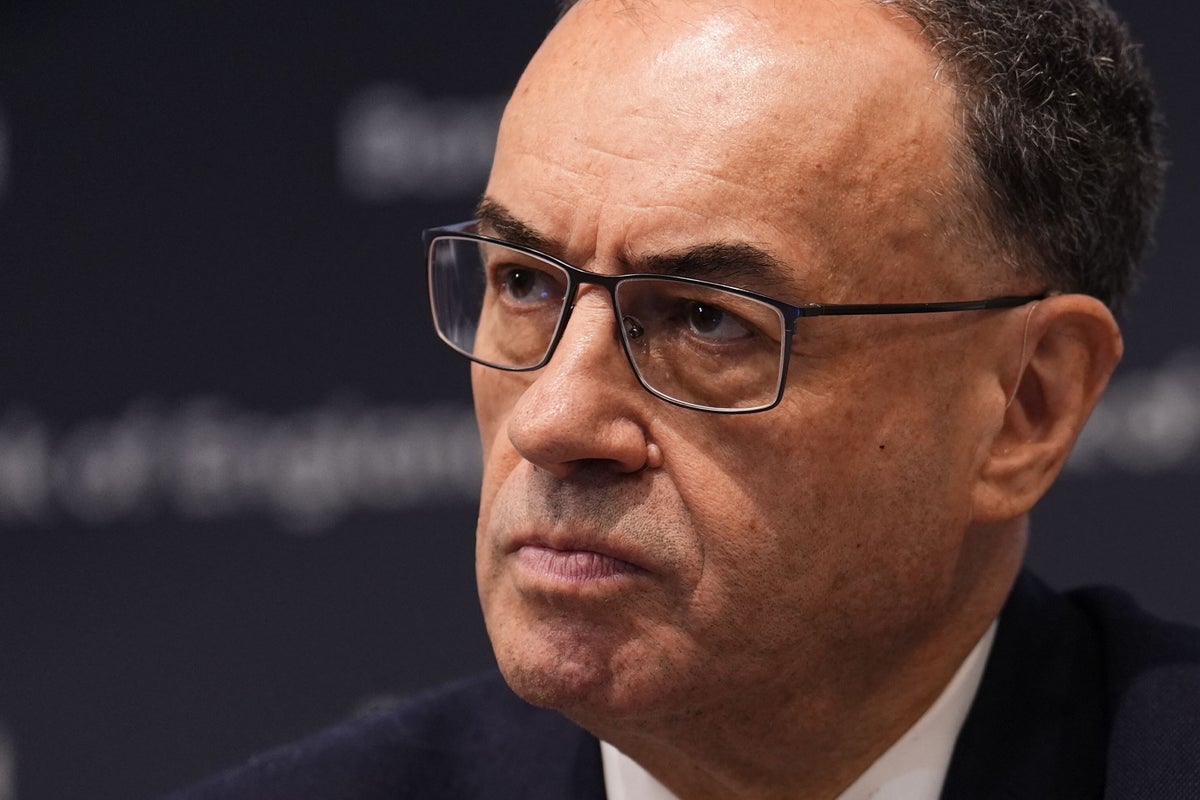
Bank of England governor Andrew Bailey has warned the global economy is set for a “very big energy shock” that will lead to surging inflation, but said policymakers would not rush to hike interest rates.
Speaking at the International Monetary Fund (IMF) spring meeting in Washington DC, Mr Bailey told the BBC the Bank is facing a “very, very difficult” decision on rates at its meeting on April 30.
The Middle East conflict has sent oil prices surging by around 60% since the start of the year, at one stage hitting nearly 120 US dollars a barrel, which is pushing up fuel and energy costs.
This is expected to feed through to wider prices, with forecasts for UK inflation to jump higher in the coming months and Britain’s growth outlook sharply downgraded.
But official figures on Thursday, which were released after Mr Bailey’s comments, showed the UK economy was far stronger than expected at the start of the year, with growth of 0.5% in February following upwardly revised expansion of 0.1% in January.
Experts said while welcome, UK activity is still set to slow sharply as higher energy prices weigh on spending and hamper growth.
Mr Bailey told the BBC: “There’s really difficult judgments to be made.
“We’re not going to rush to judgments on those things, because there are a lot of uncertainties around this, not just how it’s going to play out, but also how it’s going to pass through into the UK economy.”
The IMF’s economic outlook report earlier this week showed the UK facing the biggest downgrade to growth among the G7 group of countries, with 0.8% forecast for 2026, down sharply from the 1.3% predicted in January.
The influential financial body said the spike in energy prices caused by the war will help push UK inflation towards 4% – double the Bank of England’s target.
But the IMF cautioned central banks about making hasty decisions on interest rates.
The Bank of England had previously been expected to cut rates further this year, down from 3.75% currently, but the predicted inflation surge caused by the Iran war has led to forecasts that hikes could be on the way.
Mr Bailey said the Bank is taking the IMF’s “serious advice” into account.
On fears over supply shortages caused by the Iran war disruption and blockage of the crucial Strait of Hormuz shipping route, Mr Bailey said there is “a certain amount of resilience in the system” but that will only last so long.
He added: “The faster there is a resolution to this situation – I particularly mean in terms of the supply of energy coming out of the Gulf – the easier and better the outcome will be.
“That’s really critical at this moment.”
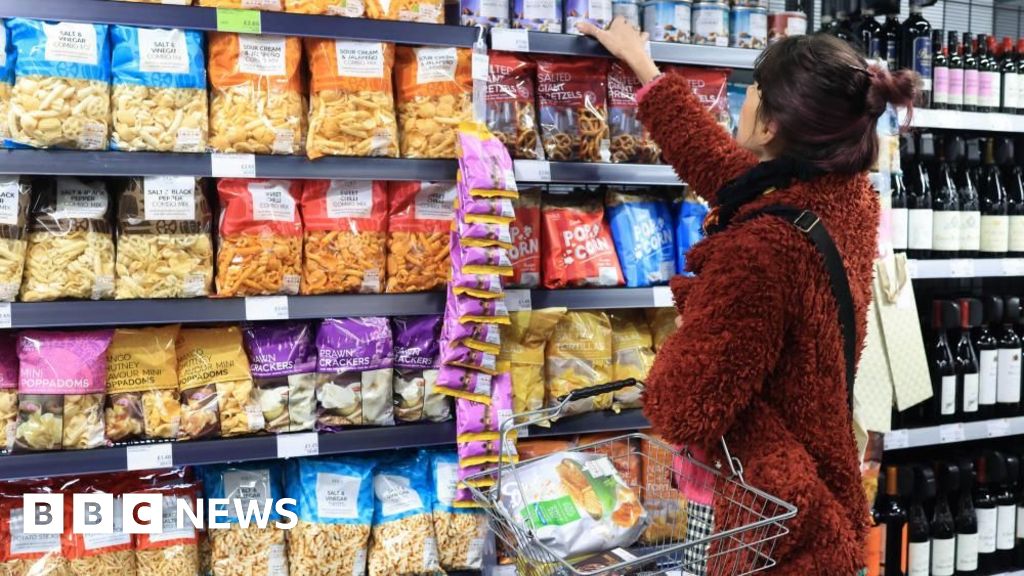
The economy saw its biggest monthly rise in more than two years just before the outbreak of the US-Israeli war with Iran.
Source link


Australian consumer confidence drops in April on rising living costs

LG’s High-End Soundbar System Makes My Living Room Feel Like a Home Theater

‘Miss Congeniality’ Benjamin Bratt opens up on working with Sandra Bullock

-

 Entertainment1 week ago
Queen Elizabeth II emotional message for Archie, Lilibet sparks speculation
-

 Tech1 week ago
Azure customers up in arms over ‘full’ UK South region | Computer Weekly
-

 Tech1 week ago
As the Strait of Hormuz Reopens, Global Shipping Will Take Months to Recover
-

 Fashion1 week ago
CII submits 20-pt agenda to Indian govt to back firms hit by Iran war
-

 Tech1 week ago
This AI Button Wearable From Ex-Apple Engineers Looks Like an iPod Shuffle
-

 Politics6 days ago
Indian airlines hit hardest after Dubai limits foreign flights until May 31
-

 Fashion1 week ago
ICE cotton hits 11-month high on drought concerns, demand boost
-

 Politics6 days ago
Chinese, Taiwanese will unite, Xi tells Taiwan opposition leader