

Business
FTSE 100 up as investors pin hopes on US rate cut

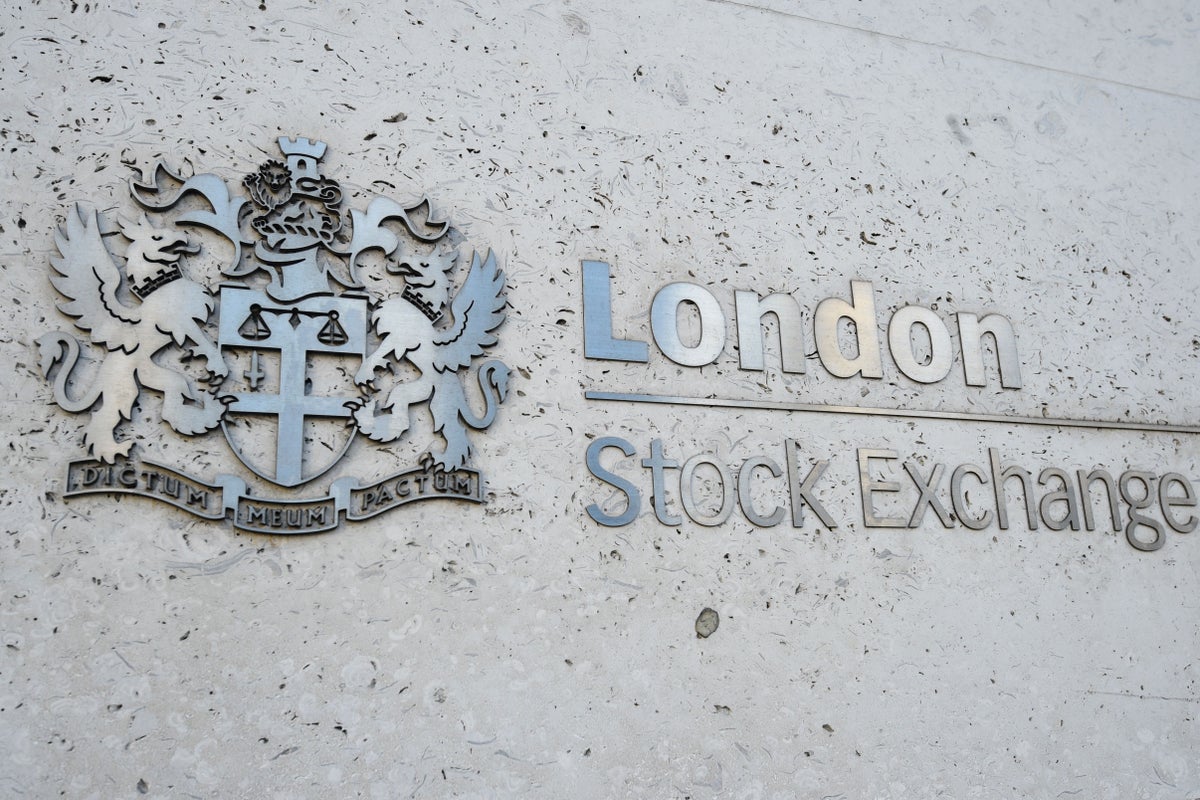
The FTSE 100 closed higher on Thursday, despite downbeat construction data, amid growing conviction of a US interest rate cut next week.
Matt Britzman of Hargreaves Lansdown said: “Investors are leaning into the idea that easier policy is coming, which is fuelling appetite for risk and lifting everything from blue chips to small caps.
“Still, with inflation data and Fed decisions ahead, the path is far from set in stone.”
He added: “Expectations have swung wildly over the past month, so assuming any cuts are a done deal could be a costly mistake, and volatility can just as quickly return if the rate-cutting narrative shifts.
“One thing’s clear, if markets want a Santa rally, they need the Fed to stay in line.”
The FTSE 100 index closed up 18.80 points, 0.2%, at 9,710.87. The FTSE 250 ended up 69.54 points, 0.3%, at 22,070.99, and the AIM All-Share closed up 0.26 of a point at 749.43.
In London, figures showed UK construction activity fell at the fastest pace in five and a half years in November, in the eleventh month of lower construction output.
The headline S&P Global UK construction purchasing managers’ index fell to 39.4 points in November from 44.1 in October. The reading was below the neutral 50-point mark separating growth from contraction for the eleventh month in a row.
The rate of decline in total industry activity was the steepest recorded since May 2020.
Rob Wood of Pantheon Macroeconomics said the report points to “catastrophic conditions in the construction sector, with the activity balance showing the sharpest output fall since the country was in lockdown in May 2020”.
“To say construction firms were unhappy with budget speculation would be an understatement,” Mr Wood added, although he thinks “the PMI remains too pessimistic”.
He said: “Looking ahead, we expect activity in the construction sector to remain muted in the coming months, albeit growth will likely continue to outperform the catastrophic PMI.
“That said, the risks must lie to the downside, with construction output falls now possible in the coming months.”
In European equities on Thursday, the CAC 40 in Paris closed up 0.4%, while the DAX 40 in Frankfurt ended 0.8% higher.
In Europe, car-makers fuelled gains on the back of the news that US President Donald Trump could seek to reduce fuel economy standards implemented by former president Joe Biden, aimed at making it easier for carmakers to sell fossil fuel cars.
Joshua Mahony at Scope Markets said: “While this is a move aimed at lowering costs for US consumers, it also provides a shot in the arm for European carmakers that have struggled to dominate the EV space given rampant Chinese competition.”
The sector was further boosted by positive comments from Bank of America, which sees benefits for the sector from an expected reduction in regulatory pressures in 2026.
Bank of America upgraded Renault, up 6.4%, and Porsche SE, up 4.8%, to “buy” from “neutral” and Mercedes-Benz, up 4.1%, to “neutral” from “underperform”.
Stocks in New York were down slightly at the time of the London equity close.
The Dow Jones Industrial Average, S&P 500 index and Nasdaq Composite were all 0.1% lower.
David Morrison of Trade Nation said the probabilities of a 25 basis point rate cut following next week’s Federal Reserve monetary policy meeting have shot higher, after several senior Federal Open Market Committee members said a weakening labour market was trumping inflation fears when it came to considering rates.
Despite this, Morrison said there will be plenty of interest when the latest core PCE update, the Fed’s preferred inflation measure, is released on Friday.
“Could it possibly come in so high that the Fed has to put off a rate cut? Unlikely, but stranger things have happened,” he added.
The pound was quoted higher at 1.3353 US dollars at the time of the London equities close on Thursday, compared to 1.3342 US dollars on Wednesday.
The euro stood at 1.1658 US dollars, down against 1.1664 US dollars. Against the yen, the dollar was trading lower at 154.75 yen compared to 155.02 yen.
The yield on the US 10-year Treasury was quoted at 4.10%, widened from 4.08%. The yield on the US 30-year Treasury was unchanged at 4.76%, stretched from 4.75%.
The FTSE 250 saw some big swings in prices, with a double-digit gain for SSP, while Trustpilot and Baltic Classifieds plummeted.
London-based SSP, which operates Upper Crust, leapt 11%, as it reported trading has “gained momentum” in recent weeks and announced a “wide-ranging review” of its Continental European rail business.
The operator of food and beverage outlets in travel locations in 38 countries said it is also mulling options to “realise value” in recently-listed Indian investee Travel Food Services.
The Continental European arm has struggled with a “slow return of passenger numbers” since the pandemic, SSP said.
Trustpilot dropped 32%, after a scathing report from short-seller Grizzly Research, which accused the Copenhagen-based consumer review platform of “mafia-style extortion campaigns against non-paying businesses”.
Grizzly said, citing its own investigation, that Trustpilot created “unsolicited review profiles for all kinds of businesses with the intention to attract hyper-negative reviews and force these businesses into paying subscription deals to ‘more actively manage’ the reviews.”
But Trustpilot called the claims “selective, misleading and framed to support a predetermined narrative”.
“It omits key context and publicly available facts, creating a false impression and exhibits a lack of understanding of how Trustpilot works. Trust is our guiding principle and is central to everything we do,” the firm added.
The short-seller recently also took aim at Hello Fresh, sending its shares into a tailspin.
Also firmly in the red was Baltic Classifieds, down 14%, after it warned that lower revenue growth and continued investment will depress margins in the short term.
Analysts were less than enamoured with the outlook commentary, with Panmure Liberum highlighting a “very poorly written statement” and “poor quality communications”, while Peel Hunt noted “lower clarity in its outlook than usual”,
Brent oil was quoted at 63.45 US dollars a barrel at the time of the London equities close on Thursday, up from 63.04 US dollars late on Wednesday.
Gold was quoted at 4,214.64 US dollars an ounce on Thursday, lower against 4,222.94 US dollars.
The biggest risers on the FTSE 100 were 3i, up 154.0p at 3,153.0p, Burberry, up 35.5p at 1,213.0p, Spirax Group, up 200.0p at 6,920.0p, JD Sports Fashion, up 2.0p at 80.5p and Rolls-Royce, up 28.0p at 1,091.0p.
The biggest fallers on the FTSE 100 were Entain, down 30.6p at 755.2p, Diageo, down 68.0p at 1,682.0p, Auto Trader, down 13.8p at 608.4p, London Stock Exchange, down 178.0p at 8,690.0p and Rightmove, down 9.6p at 522.8p.
Friday’s economic calendar has US personal consumption expenditures data, the Michigan consumer sentiment index, and unemployment and average hourly wages figures in Canada. In the UK, the Halifax house price index will be published.
There are no significant events scheduled in Friday’s UK corporate calendar.
Contributed by Alliance News.

 Reuters
Denmark’s Prime Minister Mette Frederiksen says “Europe won’t be blackmailed” by Donald Trump’s tariff threats over Greenland.
She and other European leaders issued a joint statement on Sunday saying the plan risks a “dangerous downward spiral” with the US.
Early on Monday morning, Trump said, “NATO has been telling Denmark, for 20 years, that “you have to get the Russian threat away from Greenland.” […] Now it is time, and it will be done!!!”
The US president has said he will impose new taxes on eight US allies in February if they oppose his proposed takeover of the autonomous Danish territory.
Trump insists Greenland is critical for US security and has not ruled out taking it by force – a move that has drawn widespread criticism.
In a post on Truth Social in the early hours of Monday morning, Trump said that Nato has been telling Denmark to “get the Russian threat away from Greenland” for 20 years. Denmark, he continued, “has been unable to do anything about it”.
The new tariffs would be imposed on Denmark, Finland, France, Germany, the Netherlands, Norway, Sweden and the UK.
In their joint statement, the eight countries said that “tariff threats undermine transatlantic relations”, reiterating that they “stand in full solidarity with the Kingdom of Denmark and the people of Greenland”.
The countries stressed they are “committed to strengthening Arctic security as a shared transatlantic interest” as members of the Nato military alliance.
“We stand ready to engage in a dialogue based on the principles of sovereignty and territorial integrity that we stand firmly behind,” the statement reads.
Separately, Frederiksen wrote on Facebook: “We want to cooperate and we are not the ones seeking conflict. And I am happy for the consistent messages from the rest of the continent: Europe will not be blackmailed.”
“It is all the more important that we stand firm on the fundamental values that created the European community.”
Meanwhile, UK Prime Minister Sir Keir Starmer said he had had phone calls on Sunday with Frederiksen, as well as European Commission President Ursula von der Leyen and Nato Secretary-General Mark Rutte, before speaking to Trump.
A spokeswoman for Starmer’s office said he had reiterated his position that Greenland’s security was a priority for all Nato members. “He also said that applying tariffs on allies for pursuing the collective security of Nato allies is wrong,” the spokeswoman added.
Trump has threatened to impose a 10% tariff on goods from Denmark, Norway, Sweden, France, Germany, the UK, the Netherlands and Finland, which would come into force on 1 February, but could later rise to 25% – and would last until a deal was reached.
“These Countries, who are playing this very dangerous game, have put a level of risk in play that is not tenable or sustainable,” he wrote, adding: “This is a very dangerous situation for the Safety, Security and Survival of our Planet”.
The US president insists Greenland is critical for US security and has said previously that Washington would get the territory “the easy way” or “the hard way”.
Greenland is a sparsely populated but resource-rich and its location between North America and the Arctic makes it well placed for early warning systems in the event of missile attacks and for monitoring vessels in the region.
US Treasury Secretary Scott Bessent on Sunday told NBC News’ Meet the Press that “Greenland can only be defended if it is part of the US, and it will not need to be defended if it is part of the US”.
“I believe that the Europeans will understand that this is best for Greenland, best for Europe and best for the United States,” he said.
Speaking to BBC Newshour, Norwegian Foreign Minister Espen Barth Eide said mutual respect for sovereignty is the “non-negotiable” core principle of international law and co-operation.
“If we are to live in peace and if we are to be able to co-operate on shared problems, we have to start by the mutual recognition of each others sovereignty and territorial integrity,” she added.
It is still unclear how the tariffs will affect those Trump has already imposed on the UK and EU. French President Emmanuel Macron, who is working to co-ordinate the European response to the tariff threats, said he would request that the EU activate its “anti-coercion instrument” if Trump does impose them.
The US president is due to speak at the World Economic Forum in Davos, Switzerland on Wednesday on the theme “how can we co-operate in a more contested world?” Macron, as well as the leaders of Germany and the EU, will also be attending the annual conference.
Canadian Prime Minister Mark Carney, who will also be there, said his country was “concerned by the recent escalation” and that it would be “significantly increasing Arctic security — strengthening our military and investing in critical infrastructure”.
“Canada strongly believes that the best way to secure the Arctic is by working together within Nato,” he also wrote on X.
Mark Rutte, meanwhile, said he had spoken to Trump “regarding the security situation in Greenland and the Arctic”.
“We will continue working on this, and I look forward to seeing him in Davos later this week,” he added.

 EPA/Shutterstock
Public anger in both Denmark and Greenland at Trump’s threats over Greenland appears undiminished. Demonstrations against Trump’s takeover plans were held in Greenland’s capital, Nuuk, on Saturday – before the tariff announcement – as well as in Danish cities.
These rallies coincide with a visit to Copenhagen by a delegation from the US Congress. Its leader, Democratic Senator Chris Coons, described Mr Trump’s rhetoric as “not constructive”.
The island’s representative to the US has said that the last time Greenlanders were asked if they wanted to be part of the US, in January 2025, only 6% were in favour of doing so, while 85% were against.
A recent poll suggests that most Americans also oppose US control of Greenland. A Reuters/Ipsos poll, which was released last Wednesday, indicated just 17% of Americans support the US taking Greenland, compared to 47% who said they opposed Trump’s push to acquire the island.

 BBC
BBCA woman who had a £10,000 credit card debt has told BBC Panorama how a credit-rating service, which she thought would help her bring her finances under control, encouraged her to take out yet more cards.
As well as keeping track of her credit score, the ratings firm – Experian – bombarded her with emails promoting high-interest credit card offers once she came close to paying off her debt.
Millions in the UK are struggling to keep up with card repayments, but consumer groups say offers of extra credit – including from credit-scoring companies – can make matters worse for already vulnerable people.
Experian told Panorama it has been developing a process to identify potentially vulnerable customers and to stop sending them marketing emails. The options it sent the woman who spoke to the BBC, it added, could have allowed her to pay off her debt sooner or at a lower cost.
Credit cards have never been more popular – about 35 million people in the UK have one, according to industry figures. The annual percentage interest rate, or APR – including fees and charges – can range from 0% to more than 60%. But for people with an average credit history it is typically about 25%.
Panorama has also spoken to people who say their lenders nudged them towards taking on new debts, despite the fact they were struggling financially.
One man told us how his bank had increased his credit limit, even though he had racked up almost £7,000 of debt during a manic episode linked to bipolar disorder. Another man described how he is now selling his home, after becoming overwhelmed by credit card debt when work dried up and his marriage broke down.
The woman with a £10,000 debt, mother of five Amanda – who receives universal credit and has requested anonymity – went to a debt charity for help. It took years, but Amanda says she got on top of her debt.
She had signed up with credit-score provider Experian and, like many people, thought checking her credit score was a responsible thing to do.
“It was really useful. I’d get the monthly alert of the status of my financial affairs,” she says.

Credit agencies such as Experian gather data on customers based on information including their debt levels, number of credit applications, and whether they pay their bills on time.
A better credit report means someone could be offered the most competitive interest rates and may find it easier to borrow – however the decision about whether to offer credit is made by each individual lender.
As Amanda came closer to paying off the last of her credit card debt, she says Experian started sending her more than just monthly credit report updates: “It would be offers in the lines of, ‘your credit card approval rate has increased’, inviting you to look at lenders.”
Amanda says she was sent emails with “constant” offers for high-interest, so-called credit builder cards, which allow customers to improve their credit scores if debts are paid on time.
But, typically, these cards have higher interest rates, meaning that those making only minimum repayments are likely to be paying off their debt for a long time.
“I thought I’ll just have the one [credit card], keep it as an emergency,” Amanda told us. “But the minute you take out one, you get more emails, again, to apply for another one, and another one and another one.”
What Amanda didn’t know was that agencies such as Experian – the UK’s biggest credit-rating agency – are also paid commission to promote credit card lenders’ products.
More than half of nearly 3,500 low- and medium-income adults who responded to a new survey by the Centre for Responsible Credit – a research, policy and campaigning group – said they had received credit card marketing from their credit-score providers.
Half of those asked felt they had been offered more credit than they could afford, while a quarter had felt pressured into taking out more credit.
Experian told Panorama it gives its customers “as much information as possible to help them access credit they can afford”.
It said that it helps people “understand their options for switching existing debt to lower or 0% interest options, helping people repay sooner and for less”.
Experian added that it works closely with debt charities and that “getting the right support is the most important step and should be the priority over your credit score”.

Concerns have also been raised about vulnerable borrowers having their credit limits increased without asking.
Tom Richardson, an academic who researches debt and mental health, says his own experience left him shocked. He has bipolar disorder, and about a year ago, during what he describes as a severe manic episode, he walked into his local guitar shop.
“I just came in for a bit of a look. There wasn’t anything in particular I wanted,” he says.
However, by the time he left the shop, he had bought a guitar, a ukulele and another piece of equipment. He then went online and bought more, putting everything on his credit card.
“Electric guitar, speakers, guitar pedals, a guitar amp, a trumpet, some sort of bongos, some pads for my computer music equipment,” he recalls buying.
“When you’re manic, when you’re impulsive, it just doesn’t feel like real money.”
By the time the episode ended, he says he was close to his card’s £7,000 credit limit. With help from family, he started to pay the balance down and told his bank, Santander, about his medical diagnosis.
Six months later, Santander increased his credit limit to £9,000.
“I was trying to do the sensible thing and reduce the debt,” says Tom, “and the default response was to offer me more credit. It was mind-boggling.”
His experience is not unusual, research suggests. Four in 10 credit card holders across all lenders were offered a limit increase in the past year, with little distinction made between those struggling and those not, a survey by debt charity StepChange found.
Santander told us that when Tom first signed up to his credit card, he opted in to automatic credit card limit increases. The bank said it monitors “customer spending closely against past transactions in order to spot any unusual and unaffordable behaviour”.
Another risk for those trying to get out of debt lies in how credit card repayments are structured.
One 2018 study by the regulator – the Financial Conduct Authority (FCA) – found 1.6 million people only paid the minimum amount each month, typically between 2-5% of their outstanding balances.
However, if this minimum payment percentage is less than the monthly interest rate, the debt will grow – even if the card holder stops using their card for spending.
This can dramatically extend how long a debt lasts and how much interest is paid.
The credit card industry profits from something called “anchoring”, says Grace Brownfield, from National Debtline, an independent debt advice charity.

By displaying a minimum payment amount on bills, it encourages many consumers to subconsciously identify that as the ideal payment amount, in effect anchoring what they pay to the suggested figure.
“There’s some evidence that that encourages people to only make the minimum repayment, even if they could afford to pay more than that,” says Brownfield. Because of this, she says, people are paying more in interest typically. “That’s where the credit card companies are… making their money.”
Screenwriter Michael Crompton says credit cards became a financial lifeline during years of freelance work.
“They were offered to me left, right and centre,” he says. “I used them as a back-up.”
He ended up with £21,000 of debt across three cards.
When his work started drying up he began only paying “a minimum” amount – he wasn’t paying off any capital. Over time, lenders repeatedly raised his credit limits.
Then, when his marriage ended, the debt became overwhelming.
“I was paying hundreds of pounds a month and not touching the balance,” he says. “It just escalates and escalates. You feel like a failure, and you don’t know who to tell.”
The FCA estimates about 2.8 million people across the UK are in persistent credit card debt, which is defined as – over 18 months – paying more in interest and charges than the amount they have borrowed.
That number of people has fallen slightly since 2018, FCA data shows, when rules came in requiring lenders to check potential customers’ affordability and credit history.
But critics argue the changes have not gone far enough. James Daley of consumer group Fairer Finance says lenders should intervene earlier when spending patterns suggest a customer is in distress, rather than extending their credit limits.
The FCA says its reforms on persistent debt and affordability, introduced in 2018, now save borrowers £1.3bn a year. “Lenders should only provide credit to people who can afford to repay,” it says, adding that it is currently reviewing the rules, and will “not hesitate to act” if it identifies issues.
UK Finance, which represents lenders, says credit-card providers are committed to lending responsibly and “comply with strict regulatory rules to assess affordability when agreeing borrowing limits”.
It also said “support is provided by lenders to those at risk of, or in, financial difficulty”.
Tom says he still owes about £5,000, while Amanda is trying to keep on top of her finances.
Michael – who is 66 – is selling his home and hopes to pay off his debts so he can retire debt-free.
“I know it’s my responsibility,” he says. “But when you’re struggling, the last thing you need is more credit. What you need is someone to say: ‘Stop and get help.'”
What can I do if I can’t pay my debts?
- Talk to someone. You are not alone and there is help available. A trained debt adviser can talk you through the options. Here are some organisations to get in touch with.
- Take control. Citizens Advice suggest you work out how much you owe, who to, which debts are the most urgent and how much you need to pay each month.
- Ask for a payment plan. Energy suppliers, for example, must give you a chance to clear your debt before taking any action to recover the money
Tackling It Together: More tips to help you manage debt
Business
Top stocks to buy: Stock recommendations for the week starting January 19, 2026 – check list – The Times of India

Stock market recommendations: According to Motilal Oswal Financial Services Ltd, the top stock picks for the week (starting January 19, 2026) are 360 One, and Canara HSBC Life. Let’s take a look:
360 One360 One WAM is a structural growth story given tailwinds from India’s expanding wealth pool, new team onboarding, and synergies from recent acquisitions which underpin long-term growth visibility. It delivered a strong 3QFY26, driven by robust inflows and operating leverage. Operating revenue grew 33% YoY, led by a sharp 45% YoY rise in ARR income, while disciplined cost control reduced the cost-to-income ratio by 320bp YoY to 49.6%, supporting healthy profit growth. PAT grew 20% YoY despite a sharp decline in other income. Growth was fueled by strong net ARR inflows of ₹147b, with record AMC inflows and sustained momentum in wealth management driven by wallet share gains and carry income-led retention improvement. Management remains confident of further CI ratio improvement toward 45–46% as ET Money and HNI businesses move toward breakeven. Management guides for 22–24% AUM growth, translating into 21%/22% revenue/PAT CAGR over FY25-28.Canara HSBC LifeCanara HSBC Life Insurance represents a compelling banca-led compounding story, underpinned by strong distribution moats and significant headroom for efficiency-driven growth. The insurer has consistently outperformed the industry over the past decade by leveraging its deep bancassurance partnerships, led by Canara Bank and complemented by HSBC, which together provide access to a large, sticky, and increasingly segmented customer base.With penetration among Canara Bank customers still very low and branch productivity materially below private-bank peers, incremental gains from better analytics, digital enablement, and branch activation offer a long runway for growth at low acquisition cost. HSBC adds a high-quality layer through affluent, NRI, salary, and corporate customers, supporting superior persistency and value accretion. Alongside this, gradual diversification into agency and other channels improves reach and reduces concentration risk without materially diluting long-term economics. A favorable shift in product mix toward non-par and protection, improving operating efficiency, and rising scale are driving steady expansion in value creation metrics, positioning Canara HSBC Life as a structurally improving, capital-efficient life insurer with sustained growth visibility and strong return potential over the medium term.(Disclaimer: Recommendations and views on the stock market, other asset classes or personal finance management tips given by experts are their own. These opinions do not represent the views of The Times of India)


Helen Flanagan closes the door on ex fiance’s drama

UK’s Burberry marks 170 years with Gabardine Capsule launch

Will Trump’s Iran tariff move spell trouble for India?

-

 Tech6 days ago
New Proposed Legislation Would Let Self-Driving Cars Operate in New York State
-

 Sports1 week ago
Clock is ticking for Frank at Spurs, with dwindling evidence he deserves extra time
-

 Entertainment6 days ago
X (formerly Twitter) recovers after brief global outage affects thousands
-

 Fashion1 week ago
South India cotton yarn gains but market unease over US tariff fears
-

 Fashion1 week ago
China’s central bank conducts $157-bn outright reverse repo operation
-

 Sports1 week ago
US figure skating power couple makes history with record breaking seventh national championship
-

 Sports4 days ago
Pak-Australia T20 series tickets sale to begin tomorrow – SUCH TV
-
 Business1 week ago
Modern seafood processing zone planned at Korangi harbour | The Express Tribune