

Business
FTSE 100 up as investors pin hopes on US rate cut

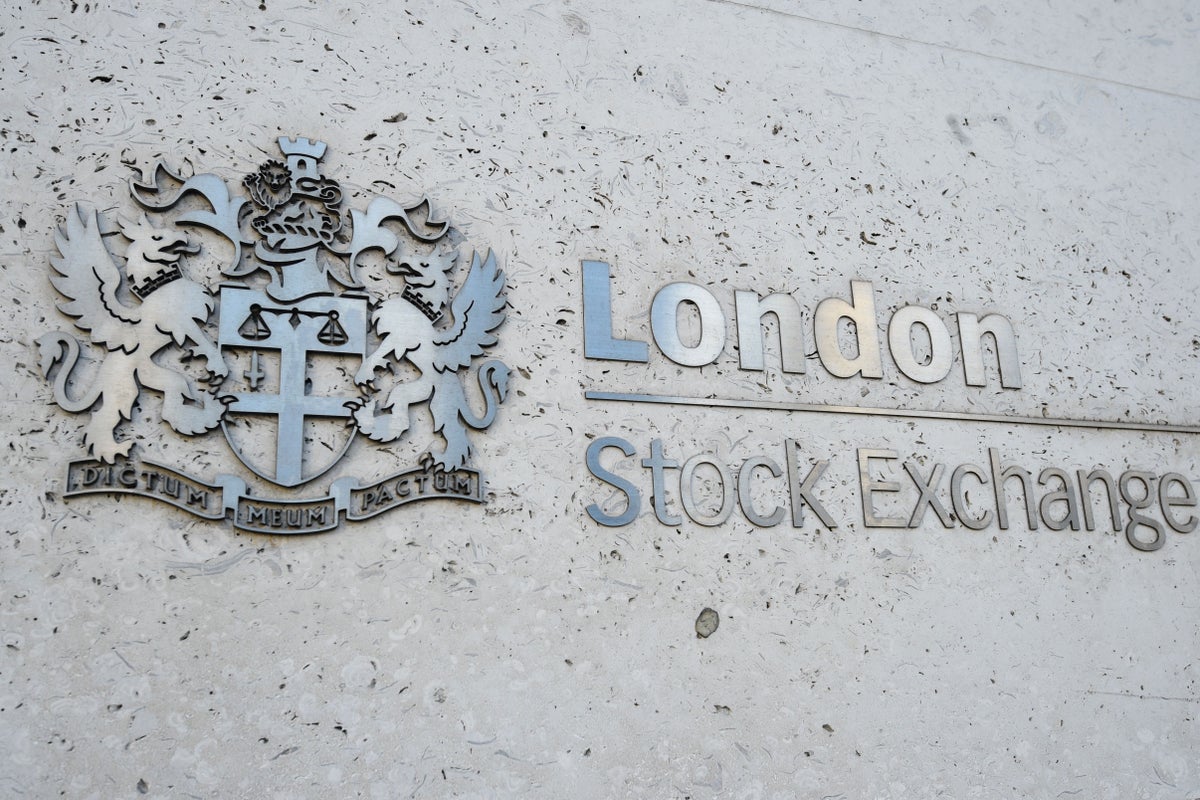
The FTSE 100 closed higher on Thursday, despite downbeat construction data, amid growing conviction of a US interest rate cut next week.
Matt Britzman of Hargreaves Lansdown said: “Investors are leaning into the idea that easier policy is coming, which is fuelling appetite for risk and lifting everything from blue chips to small caps.
“Still, with inflation data and Fed decisions ahead, the path is far from set in stone.”
He added: “Expectations have swung wildly over the past month, so assuming any cuts are a done deal could be a costly mistake, and volatility can just as quickly return if the rate-cutting narrative shifts.
“One thing’s clear, if markets want a Santa rally, they need the Fed to stay in line.”
The FTSE 100 index closed up 18.80 points, 0.2%, at 9,710.87. The FTSE 250 ended up 69.54 points, 0.3%, at 22,070.99, and the AIM All-Share closed up 0.26 of a point at 749.43.
In London, figures showed UK construction activity fell at the fastest pace in five and a half years in November, in the eleventh month of lower construction output.
The headline S&P Global UK construction purchasing managers’ index fell to 39.4 points in November from 44.1 in October. The reading was below the neutral 50-point mark separating growth from contraction for the eleventh month in a row.
The rate of decline in total industry activity was the steepest recorded since May 2020.
Rob Wood of Pantheon Macroeconomics said the report points to “catastrophic conditions in the construction sector, with the activity balance showing the sharpest output fall since the country was in lockdown in May 2020”.
“To say construction firms were unhappy with budget speculation would be an understatement,” Mr Wood added, although he thinks “the PMI remains too pessimistic”.
He said: “Looking ahead, we expect activity in the construction sector to remain muted in the coming months, albeit growth will likely continue to outperform the catastrophic PMI.
“That said, the risks must lie to the downside, with construction output falls now possible in the coming months.”
In European equities on Thursday, the CAC 40 in Paris closed up 0.4%, while the DAX 40 in Frankfurt ended 0.8% higher.
In Europe, car-makers fuelled gains on the back of the news that US President Donald Trump could seek to reduce fuel economy standards implemented by former president Joe Biden, aimed at making it easier for carmakers to sell fossil fuel cars.
Joshua Mahony at Scope Markets said: “While this is a move aimed at lowering costs for US consumers, it also provides a shot in the arm for European carmakers that have struggled to dominate the EV space given rampant Chinese competition.”
The sector was further boosted by positive comments from Bank of America, which sees benefits for the sector from an expected reduction in regulatory pressures in 2026.
Bank of America upgraded Renault, up 6.4%, and Porsche SE, up 4.8%, to “buy” from “neutral” and Mercedes-Benz, up 4.1%, to “neutral” from “underperform”.
Stocks in New York were down slightly at the time of the London equity close.
The Dow Jones Industrial Average, S&P 500 index and Nasdaq Composite were all 0.1% lower.
David Morrison of Trade Nation said the probabilities of a 25 basis point rate cut following next week’s Federal Reserve monetary policy meeting have shot higher, after several senior Federal Open Market Committee members said a weakening labour market was trumping inflation fears when it came to considering rates.
Despite this, Morrison said there will be plenty of interest when the latest core PCE update, the Fed’s preferred inflation measure, is released on Friday.
“Could it possibly come in so high that the Fed has to put off a rate cut? Unlikely, but stranger things have happened,” he added.
The pound was quoted higher at 1.3353 US dollars at the time of the London equities close on Thursday, compared to 1.3342 US dollars on Wednesday.
The euro stood at 1.1658 US dollars, down against 1.1664 US dollars. Against the yen, the dollar was trading lower at 154.75 yen compared to 155.02 yen.
The yield on the US 10-year Treasury was quoted at 4.10%, widened from 4.08%. The yield on the US 30-year Treasury was unchanged at 4.76%, stretched from 4.75%.
The FTSE 250 saw some big swings in prices, with a double-digit gain for SSP, while Trustpilot and Baltic Classifieds plummeted.
London-based SSP, which operates Upper Crust, leapt 11%, as it reported trading has “gained momentum” in recent weeks and announced a “wide-ranging review” of its Continental European rail business.
The operator of food and beverage outlets in travel locations in 38 countries said it is also mulling options to “realise value” in recently-listed Indian investee Travel Food Services.
The Continental European arm has struggled with a “slow return of passenger numbers” since the pandemic, SSP said.
Trustpilot dropped 32%, after a scathing report from short-seller Grizzly Research, which accused the Copenhagen-based consumer review platform of “mafia-style extortion campaigns against non-paying businesses”.
Grizzly said, citing its own investigation, that Trustpilot created “unsolicited review profiles for all kinds of businesses with the intention to attract hyper-negative reviews and force these businesses into paying subscription deals to ‘more actively manage’ the reviews.”
But Trustpilot called the claims “selective, misleading and framed to support a predetermined narrative”.
“It omits key context and publicly available facts, creating a false impression and exhibits a lack of understanding of how Trustpilot works. Trust is our guiding principle and is central to everything we do,” the firm added.
The short-seller recently also took aim at Hello Fresh, sending its shares into a tailspin.
Also firmly in the red was Baltic Classifieds, down 14%, after it warned that lower revenue growth and continued investment will depress margins in the short term.
Analysts were less than enamoured with the outlook commentary, with Panmure Liberum highlighting a “very poorly written statement” and “poor quality communications”, while Peel Hunt noted “lower clarity in its outlook than usual”,
Brent oil was quoted at 63.45 US dollars a barrel at the time of the London equities close on Thursday, up from 63.04 US dollars late on Wednesday.
Gold was quoted at 4,214.64 US dollars an ounce on Thursday, lower against 4,222.94 US dollars.
The biggest risers on the FTSE 100 were 3i, up 154.0p at 3,153.0p, Burberry, up 35.5p at 1,213.0p, Spirax Group, up 200.0p at 6,920.0p, JD Sports Fashion, up 2.0p at 80.5p and Rolls-Royce, up 28.0p at 1,091.0p.
The biggest fallers on the FTSE 100 were Entain, down 30.6p at 755.2p, Diageo, down 68.0p at 1,682.0p, Auto Trader, down 13.8p at 608.4p, London Stock Exchange, down 178.0p at 8,690.0p and Rightmove, down 9.6p at 522.8p.
Friday’s economic calendar has US personal consumption expenditures data, the Michigan consumer sentiment index, and unemployment and average hourly wages figures in Canada. In the UK, the Halifax house price index will be published.
There are no significant events scheduled in Friday’s UK corporate calendar.
Contributed by Alliance News.

Gold prices in Pakistan have risen again at the start of the business week after several days of decline, according to the All Pakistan Bullion Market.
The price of gold per tola increased by Rs 800, reaching Rs 493,962.
Similarly, the price of 10 grams of gold rose by Rs 686 to Rs 423,492.
In the global market, gold also recorded an increase of $8 per ounce, reaching $4,716.
Experts say global economic uncertainty, currency fluctuations, and investor preference for safe-haven assets are driving the upward trend in gold prices.
They add that changes in international markets directly impact Pakistan’s local bullion rates, leading to continued fluctuations in domestic prices.

Now one of the biggest sportswear firms, Anta’s rise follows a playbook adopted by many Chinese giants.
Source link
Business
Gold price prediction today: Will gold prices continue to be volatile? Key levels to watch out for April 27, 2026 week – The Times of India

Gold price prediction today: Gold prices will closely track movements on the rate decisions by several central banks, including the US Federal Reserve, this week, says Manav Modi, Senior Analyst, Commodity Research at Motilal Oswal Financial Services Ltd.Gold is currently consolidating after sharp swings in a broad range, indicating a pause rather than a reversal. Price action shows a higher-high structure intact, but the recent sideways movement suggests indecision near the upper supply zone around 158,000–160,000. The formation resembles a short-term flag/triangle continuation pattern, where a breakout on either side will define the next directional move. Volume has tapered slightly, reinforcing the consolidation narrative.Gold prices recently moved from the upper band toward the mid-band (20 DMA), and are now attempting to stabilize. The bands have started to contract, signaling a potential volatility expansion ahead. Sustaining above the mid-band (~150,500–151,000 zone) keeps bullish bias intact, while a breakdown below this could trigger a deeper mean reversion toward the lower band.For the week, immediate support for gold prices is placed at around Rs 150,500, which is followed by stronger support near Rs 148,500. On the upside, the resistance stands at around Rs 155,500, and after that the key supply zone is at Rs 158,000. A decisive close for gold above Rs 158,000 levels can then resume the broader uptrend. However, a break in gold prices below levels of Rs 148,500 may shift the momentum to bearish in the near term.The economic docket is filled with data points and events this week as the focus will be on FED, BOJ, ECB and ECB policy meetings. US consumer confidence, GDP, inflation and durable goods orders data will also be in radar.(Disclaimer: Recommendations and views on the stock market, other asset classes or personal finance management tips given by experts are their own. These opinions do not represent the views of The Times of India)


SBP raises policy rate by 100bps to 11.5% as inflation risks mount

Finalise Bangladesh’s textile-RMG circular economy strategy: Experts
Gold prices rise rebound in Pakistan after recent decline – SUCH TV

-

 Sports1 week ago
WWE WrestleMania 42 Night 2: Live match results and analysis
-

 Sports1 week ago
NCAA men’s gymnastics championship: All-time winners list
-

 Fashion1 week ago
UK’s Sosandar returns to profitability amid robust FY26 performance
-

 Politics6 days ago
UK’s Starmer seeks to deflect blame over Mandelson appointment
-

 Entertainment7 days ago
Lee Anderson, Zarah Sultana kicked out of UK Parliament for calling PM ‘liar’
-
 Business1 week ago
No fuel shortage: Govt assures 100% domestic LPG, PNG, CNG supply amid Hormuz energy crunch – The Times of India
-
 Business7 days ago
How Trump’s psychedelics executive order could unlock stalled cannabis reform
-
 Business1 week ago
Exercise to test response to offshore energy threat involving vessels and drones