

Business
FTSE 100 up in quiet trading as defence stocks rise

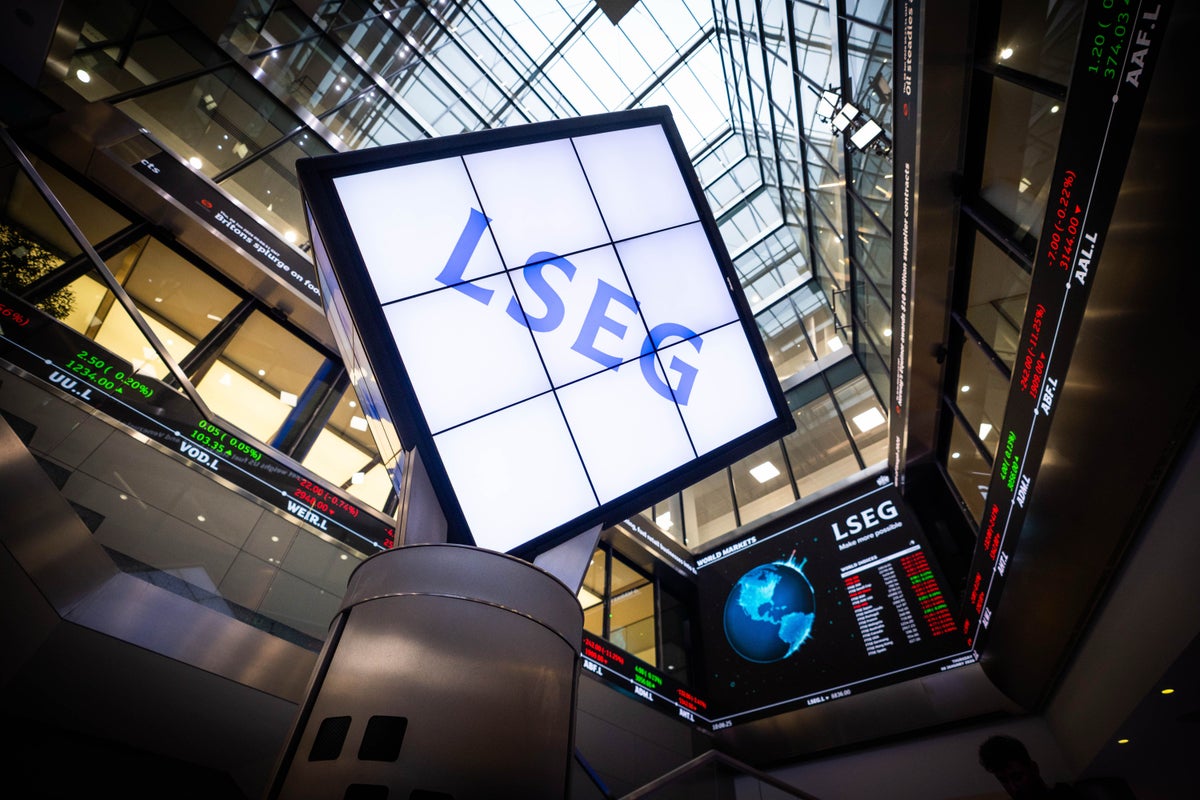
Stock prices in London closed mixed on Monday after a day of thin trading due to a holiday in the US, while banking and defence stocks buoyed the blue-chip index.
The FTSE 100 index closed up 27.34 points, 0.3%, at 10,473.69. The FTSE 250 ended down 51.80 points, 0.2%, at 23,375.47, and the AIM all-share closed down 0.44 points, 0.1%, at 811.41.
In European equities on Monday, the CAC 40 in Paris closed up 0.2%, while the DAX 40 in Frankfurt ended down 0.5%.
The pound was marginally higher at 1.3629 dollars on Monday afternoon from 1.3628 dollars at the equities close on Friday. The euro stood lower at 1.1854 dollars from 1.1869 dollars. Against the yen, the dollar was trading higher at 153.44 yen compared with 152.56 yen.
US financial markets are closed on Monday for Washington’s Birthday, and Canadian markets are closed for Family Day.
Stocks in London climbed on Monday in a quiet start to the week.
NatWest led the way on the FTSE 100 and climbed 4.8%, as it started its previously announced £750 million share buyback programme, which the bank will complete by January 15 next year.
The firm was also rebounding from a 4.1% fall on Friday after it released its annual results.
Defence stocks were also higher on Monday after Prime Minister Sir Keir Starmer said Britain must “go faster” on defence spending.
The Prime Minister has already committed to increasing defence spending to 2.5% of GDP next year and 3% after the next election.
But the BBC has reported he is now mulling bringing forward the 3% target to 2029, after the head of the UK’s armed forces set out the “moral” case for rearmament.
Asked about the reports at an event in London on Monday, Sir Keir would not confirm that he was considering bringing forward the target, but said Europe needed to “step up when it comes to defence and security”.
He said: “We have a threat of Russian aggression. In a few days’ time it’s the four-year anniversary of the start of the conflict in Ukraine.
“We want a just and lasting peace, but that will not extinguish the Russian threat, and we need to be alert to that, because that’s going to affect every single person in this room, every single person in this country, so we need to step up.
“That means on defence spending, we need to go faster.”
In response, Melrose Industries shares climbed 3.9%, Babcock International was up 3.5% and BAE Systems advanced 3.0%.
On the FTSE 250 index, Pinewood Technologies sank 33% after former suitor Apax Partners said it no longer intends to make a takeover offer.
Late last month, Pinewood responded to press speculation by saying it was in discussions with Apax regarding a possible cash offer of 500 pence per share, following multiple earlier approaches.
London-based private equity firm Apax on Friday confirmed it would not be making a formal offer, “in light of the prevailing challenging market conditions”.
Pinewood stressed that it “remains very confident in the positive long-term prospects for the group”, given its “long-standing” partnerships with original equipment manufacturers.
“Pinewood is a technology provider to car retailers and manufacturers and has gone big in AI-related services. Two years ago, that strategic development would have attracted hordes of investors wanting exposure to all things AI. In 2026, the reverse is true as investors panic about companies being disrupted by the big AI platform providers including Anthropic and OpenAI,” noted AJ Bell analyst Dan Coatsworth.
“It’s notable that Pinewood’s share price hasn’t simply given up the share price spike from when Apax first revealed takeover interest. The shares have fallen even further as investors are now worrying why a big-name bidder has suddenly walked away, and whether Pinewood is going to be lumped with the multitude of other stocks that have struggled this year due to AI disruption-related fears.”
Among small caps, shares in Pebble Beach Systems jumped 25% after it said it won a five-year contract worth an initial £1.3 million in support of a “tier-1 US-based streaming company”.
The broadcasting automation solutions firm said the contract is being implemented to support the end-customer’s expansion into live sports broadcasting. As such, Pebble will provide support and maintenance services over the five-year contract term.
While the company is withholding the name of its customer, Pebble said its relationship with its “global partner” is well-established, “with the two having worked together for many years”.
Brent oil was higher at 68.42 dollars a barrel on Monday afternoon from 68.08 dollars late Friday. Gold was up at 4,985.30 dollars an ounce from 4,932.33 dollars.
The biggest risers on the FTSE 100 were NatWest Group, up 27.60p at 607.80p, Melrose Industries, up 25.00p at 667.00p, Babcock International, up 47.00p, at 1,346.00p, BAE Systems, up 61.00p at 2,029.00p, and Metlen Energy & Metals, up 1.05p at 36.30p.
The biggest fallers on the FTSE 100 were Mondi, down 40.80p, at 913.80p, Barratt Redrow, down 15.00p at 373.90p, St James’s Place, down 48.00p at 1,197.50p, Relx, down 83.00p at 2,174.00p, and Berkeley Group, down 132.00p at 4,302.00p.
On Tuesday’s economic calendar is UK unemployment data, German and Canadian consumer price index figures and a reading from the New York empire state manufacturing index.
A slate of full-year results are expected in the UK on Tuesday morning, including miner Antofagasta, hotel firm InterContinental Hotels Group and soft drinks bottler Coca-Cola Europacific Partners.
Contributed by Alliance News
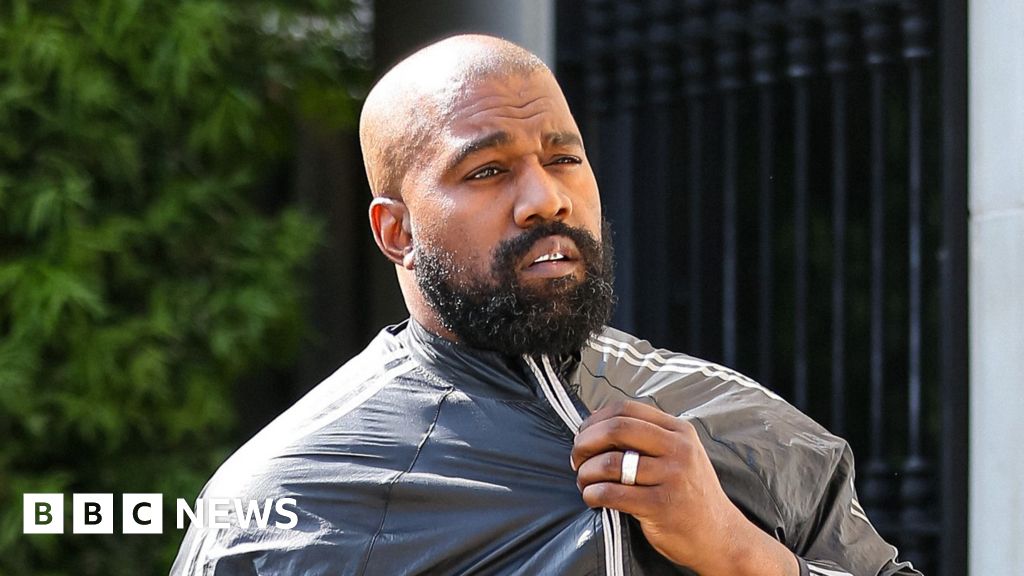
Sir Keir Starmer says it is “deeply concerning” the rapper is set to headline a festival after recent antisemitic comments.
Source link
Business
Stock markets outlook: Dalal Street braces for swings as RBI MPC decision, war risks weigh on sentiment–Check key triggers – The Times of India

Domestic equities are expected to remain volatile this week as investors track the Reserve Bank’s monetary policy decision, global macroeconomic cues and evolving developments in the West Asia conflict, analysts said, according to PTI.Market participants will also keep a close watch on crude oil price movements and foreign fund flows, which continue to influence sentiment.Vinod Nair, Head of Research at Geojit Investments Ltd, said the RBI’s Monetary Policy Committee (MPC) meeting will be the key domestic trigger, with investors focusing on the central bank’s stance on inflation and growth.“A rate pause is near-certain consensus, the central bank walks a tightrope between crude-driven inflation risks and a four-year low Manufacturing PMI signalling a softening growth impulse. The governor’s commentary on the rate cycle trajectory and FY27 projections will be closely monitored.“Globally, the US March CPI reading will carry significant importance, as it buries residual Fed rate-cut hopes, strengthens the dollar and tightens financial conditions for emerging markets, including India,” Nair said.He added that geopolitical developments in West Asia will remain the dominant factor shaping market direction.“Indian markets return after a three-day gap and remain acutely vulnerable to weekend war developments, with crude trajectory and any credible ceasefire signal being the decisive variable that could either trigger a sharp relief rally or extend the current sell-on-rise mode,” he said.In the previous holiday-shortened week, the BSE Sensex declined 263.67 points, or 0.35%, while the NSE Nifty fell 106.5 points, or 0.46%.Siddhartha Khemka, Head of Research (Wealth Management) at Motilal Oswal Financial Services Ltd, said investor sentiment will remain closely linked to developments in the West Asia conflict.Brent crude prices have stayed elevated near $107 per barrel, fuelling concerns around imported inflation. Currency pressures have also intensified, with the rupee weakening sharply before recovering towards Rs 93 against the US dollar following RBI intervention, he noted.Foreign institutional investor (FII) outflows remain a key overhang, with March witnessing heavy selling of Rs 1.2 lakh crore, among the highest monthly outflows in recent years.“Investors will monitor the US Federal Open Market Committee (FOMC) meeting minutes, GDP data, and initial jobless claims for further cues on growth and the policy trajectory.“Overall, markets are expected to remain volatile as geopolitical developments, crude price movements, FII flows and global macro data continue to drive sentiment,” Khemka said.Analysts said any signs of de-escalation in the West Asia conflict could ease crude prices and stabilise the currency, offering relief to markets, while further escalation may prolong risk aversion and keep pressure on foreign flows.

One elderly couple had to find £1,000 for an oil delivery and suppliers are not giving quotes, a councillor says.
Source link


Actress Tori Spelling hospitalized after Southern California crash; authorities investigating cause

With Messi goal, Inter Miami open new stadium with dream moment

Justin Bieber ignites documentary release speculations ahead of Coachella

-

 Sports1 week ago
USMNT handed reality check by Doku, Belgium ahead of World Cup
-

 Sports1 week ago
2026 NCAA men’s hockey tournament: Schedule, results
-

 Fashion1 week ago
EU apparel imports slump 15.48% YoY in Jan; Bangladesh hardest hit
-
Uncategorized3 days ago
[CinePlex360] Please moderate: “Trump signals p
-
Uncategorized6 days ago
[CinePlex360] Please moderate: “Further tariff
-

 Tech2 days ago
Our Favorite iPad Is $50 Off
-
Uncategorized1 week ago
[CinePlex360] Please moderate: “Apple scrapping
-

 Entertainment1 week ago
The Avett Brothers’ bassist explains why he wrote a book about John Quincy Adams