

Business
FTSE 100 up in quiet trading as defence stocks rise

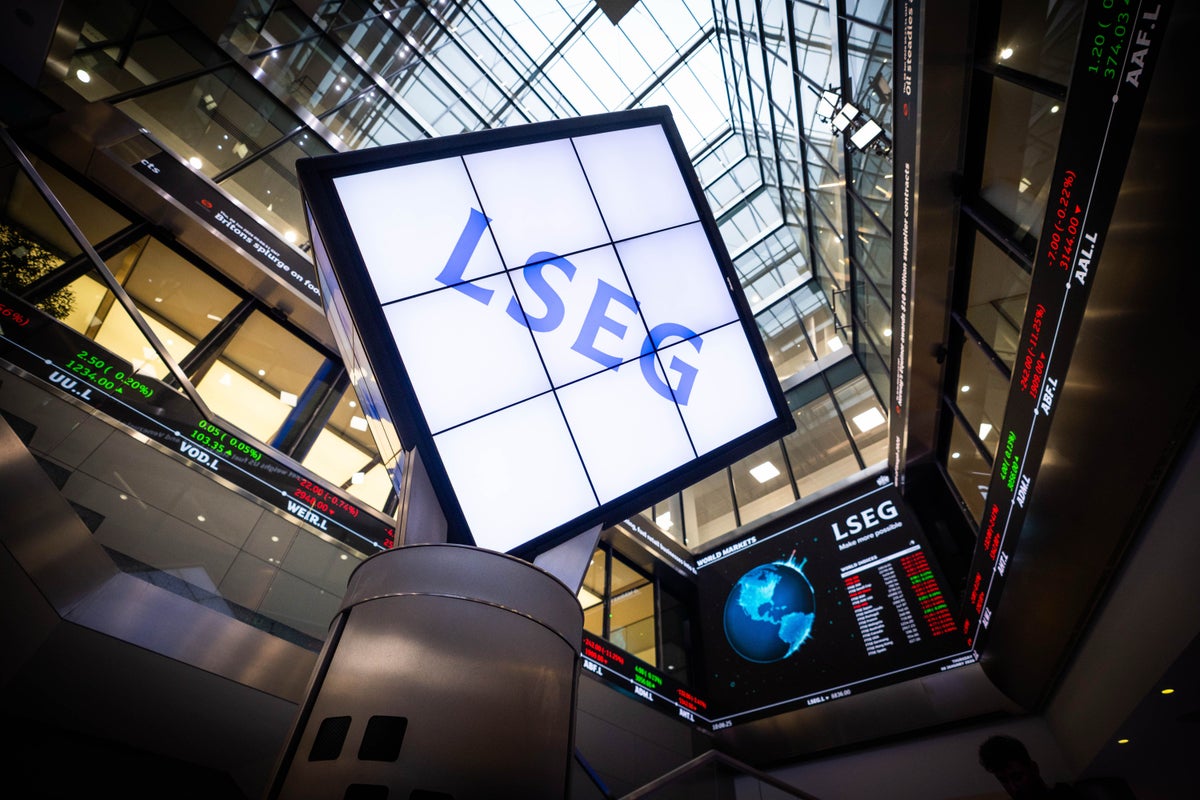
Stock prices in London closed mixed on Monday after a day of thin trading due to a holiday in the US, while banking and defence stocks buoyed the blue-chip index.
The FTSE 100 index closed up 27.34 points, 0.3%, at 10,473.69. The FTSE 250 ended down 51.80 points, 0.2%, at 23,375.47, and the AIM all-share closed down 0.44 points, 0.1%, at 811.41.
In European equities on Monday, the CAC 40 in Paris closed up 0.2%, while the DAX 40 in Frankfurt ended down 0.5%.
The pound was marginally higher at 1.3629 dollars on Monday afternoon from 1.3628 dollars at the equities close on Friday. The euro stood lower at 1.1854 dollars from 1.1869 dollars. Against the yen, the dollar was trading higher at 153.44 yen compared with 152.56 yen.
US financial markets are closed on Monday for Washington’s Birthday, and Canadian markets are closed for Family Day.
Stocks in London climbed on Monday in a quiet start to the week.
NatWest led the way on the FTSE 100 and climbed 4.8%, as it started its previously announced £750 million share buyback programme, which the bank will complete by January 15 next year.
The firm was also rebounding from a 4.1% fall on Friday after it released its annual results.
Defence stocks were also higher on Monday after Prime Minister Sir Keir Starmer said Britain must “go faster” on defence spending.
The Prime Minister has already committed to increasing defence spending to 2.5% of GDP next year and 3% after the next election.
But the BBC has reported he is now mulling bringing forward the 3% target to 2029, after the head of the UK’s armed forces set out the “moral” case for rearmament.
Asked about the reports at an event in London on Monday, Sir Keir would not confirm that he was considering bringing forward the target, but said Europe needed to “step up when it comes to defence and security”.
He said: “We have a threat of Russian aggression. In a few days’ time it’s the four-year anniversary of the start of the conflict in Ukraine.
“We want a just and lasting peace, but that will not extinguish the Russian threat, and we need to be alert to that, because that’s going to affect every single person in this room, every single person in this country, so we need to step up.
“That means on defence spending, we need to go faster.”
In response, Melrose Industries shares climbed 3.9%, Babcock International was up 3.5% and BAE Systems advanced 3.0%.
On the FTSE 250 index, Pinewood Technologies sank 33% after former suitor Apax Partners said it no longer intends to make a takeover offer.
Late last month, Pinewood responded to press speculation by saying it was in discussions with Apax regarding a possible cash offer of 500 pence per share, following multiple earlier approaches.
London-based private equity firm Apax on Friday confirmed it would not be making a formal offer, “in light of the prevailing challenging market conditions”.
Pinewood stressed that it “remains very confident in the positive long-term prospects for the group”, given its “long-standing” partnerships with original equipment manufacturers.
“Pinewood is a technology provider to car retailers and manufacturers and has gone big in AI-related services. Two years ago, that strategic development would have attracted hordes of investors wanting exposure to all things AI. In 2026, the reverse is true as investors panic about companies being disrupted by the big AI platform providers including Anthropic and OpenAI,” noted AJ Bell analyst Dan Coatsworth.
“It’s notable that Pinewood’s share price hasn’t simply given up the share price spike from when Apax first revealed takeover interest. The shares have fallen even further as investors are now worrying why a big-name bidder has suddenly walked away, and whether Pinewood is going to be lumped with the multitude of other stocks that have struggled this year due to AI disruption-related fears.”
Among small caps, shares in Pebble Beach Systems jumped 25% after it said it won a five-year contract worth an initial £1.3 million in support of a “tier-1 US-based streaming company”.
The broadcasting automation solutions firm said the contract is being implemented to support the end-customer’s expansion into live sports broadcasting. As such, Pebble will provide support and maintenance services over the five-year contract term.
While the company is withholding the name of its customer, Pebble said its relationship with its “global partner” is well-established, “with the two having worked together for many years”.
Brent oil was higher at 68.42 dollars a barrel on Monday afternoon from 68.08 dollars late Friday. Gold was up at 4,985.30 dollars an ounce from 4,932.33 dollars.
The biggest risers on the FTSE 100 were NatWest Group, up 27.60p at 607.80p, Melrose Industries, up 25.00p at 667.00p, Babcock International, up 47.00p, at 1,346.00p, BAE Systems, up 61.00p at 2,029.00p, and Metlen Energy & Metals, up 1.05p at 36.30p.
The biggest fallers on the FTSE 100 were Mondi, down 40.80p, at 913.80p, Barratt Redrow, down 15.00p at 373.90p, St James’s Place, down 48.00p at 1,197.50p, Relx, down 83.00p at 2,174.00p, and Berkeley Group, down 132.00p at 4,302.00p.
On Tuesday’s economic calendar is UK unemployment data, German and Canadian consumer price index figures and a reading from the New York empire state manufacturing index.
A slate of full-year results are expected in the UK on Tuesday morning, including miner Antofagasta, hotel firm InterContinental Hotels Group and soft drinks bottler Coca-Cola Europacific Partners.
Contributed by Alliance News

Indians sharply cut back on overseas travel spending in March, with remittances for foreign trips dropping by more than $212 million from the previous month, according to Reserve Bank of India data. The fall in outbound travel expenditure came amid rising oil prices linked to the Middle East conflict and persistent pressure on rupee, even as travel remained the single largest component of outward remittances under the Liberalised Remittance Scheme (LRS).In March, travel-related remittances fell to $1.09 billion from $1.3 billion in February and $1.65 billion in January. The decline came at a time when the West Asia conflict pushed oil prices higher and weakened rupee to record lows. Amid the situation, Prime Minister Narendra Modi urged citizens to cut down on foreign travel and adopt measures such as carpooling. Lower overseas travel spending could reduce foreign exchange outflows and help ease pressure on rupee.According to the RBI’s data on outward remittances by resident individuals, travel continued to account for the largest share of money sent abroad under the LRS in March. Total remittances during the month stood at $2.59 billion.The RBI tracks overseas spending across categories including travel, studies abroad, maintenance of close relatives, overseas investments, and property purchases. Under the LRS framework, resident individuals, including minors, can remit up to $250,000 in a financial year for permitted current or capital account transactions.Within the travel segment, the biggest component remained the ‘other travel’ category, which covers holiday spending and international credit card settlements. Indians spent $623.05 million under this category in March, accounting for nearly 57 per cent of total travel-related remittances during the month.Expenditure linked to education travel, including hostel and fee payments, stood at $450.16 million. Business travel, pilgrimage, and overseas medical treatment together accounted for $21.39 million.The data also showed a rise in remittances meant for the maintenance of close relatives abroad. Such transfers increased to $389.78 million in March from $266.18 million in February.At the same time, spending under the ‘studies abroad’ category declined. This category includes payments made for educational services accessed remotely without travelling overseas, such as correspondence courses. Remittances under this head stood at $151.71 million in March, compared to $175.68 million in February and $267.42 million in January.For the financial year 2024-25, Indians remitted a total of $29.56 billion under the LRS. Travel made up the largest portion of this amount at $16.96 billion.The RBI figures further showed that investments by Indians in overseas equity and debt instruments rose significantly to $440.22 million in March from $265.99 million in February.Meanwhile, outward remittances for the purchase of immovable property overseas declined to $38.68 million in March, down from $51.36 million a month earlier.
Business
Stock market this week: Middle East tensions, oil prices, FII flows & more — what will guide Dalal Street

Dalal Street is heading into the new trading week with global uncertainty firmly in focus, as investors keep a close watch on the evolving situation in the Middle East, fluctuations in crude oil prices and the behaviour of foreign investors. Analysts said that sentiment is likely to remain fragile and heavily influenced by developments in negotiations between the United States and Iran, while movements in the rupee, global equities and the US dollar are also expected to shape market direction in the days ahead.Trading activity during the week is also expected to be shaped by the rupee’s movement against the US dollar, while investors continue to assess the impact of global uncertainty on risk appetite. Markets will remain closed on Thursday for Bakri Id.A key trigger for sentiment emerged over the weekend after US Secretary of State Marco Rubio said negotiations between Washington and Tehran had shown some progress, raising expectations that the ongoing conflict in West Asia could move closer to resolution.Ajit Mishra, SVP, Research at Religare Broking Ltd, said investors would closely track developments tied to crude oil, global currencies and bond markets. “This week is expected to remain highly sensitive to global macroeconomic developments and currency movements. Investors will also monitor crude oil prices, developments in US-Iran negotiations, and the trajectory of the US dollar and bond yields, all of which are expected to influence foreign flows and overall risk appetite,” he said.Apart from geopolitical developments, the Reserve Bank’s decision to transfer a record Rs 2.87 lakh crore dividend to the government for the year ended March 2026 is also expected to remain in focus. The announcement comes at a time when rising import costs and supply chain pressures linked to the West Asia conflict continue to weigh on the economy.According to Mishra, market participants are expected to evaluate how the RBI payout could affect liquidity conditions, fiscal flexibility and government spending in the months ahead.Ponmudi R, CEO of Enrich Money, said market behaviour in the coming sessions is expected to remain sensitive to fresh headlines surrounding diplomatic negotiations and oil prices. “Markets are expected to remain volatile and heavily headline-driven in the coming week, with investor attention firmly focused on developments surrounding the US–Iran situation, broader diplomatic negotiations and movements in crude oil prices,” he said.“While hopes of a diplomatic breakthrough and easing geopolitical tensions have improved sentiment modestly, investors continue to remain cautious as uncertainty surrounding the final outcome of the negotiations remains elevated,” Ponmudi added.He further said investors are expected to watch institutional flows, global equity trends, macroeconomic indicators and the rupee for further market cues. “With global uncertainty still elevated, market participants are likely to remain selective and cautious despite the recent improvement in sentiment,” he said.Vinod Nair, Head of Research at Geojit Investments Limited, said markets would require stronger support factors to build a more constructive setup. According to him, a meaningful decline in crude oil prices, steady foreign institutional investor flows and stable Q1FY27 earnings expectations without major downgrades would be important for sustained momentum.In the previous week, the BSE benchmark index rose 177.36 points, or 0.23%, while the NSE Nifty advanced 75.8 points, or 0.32%.
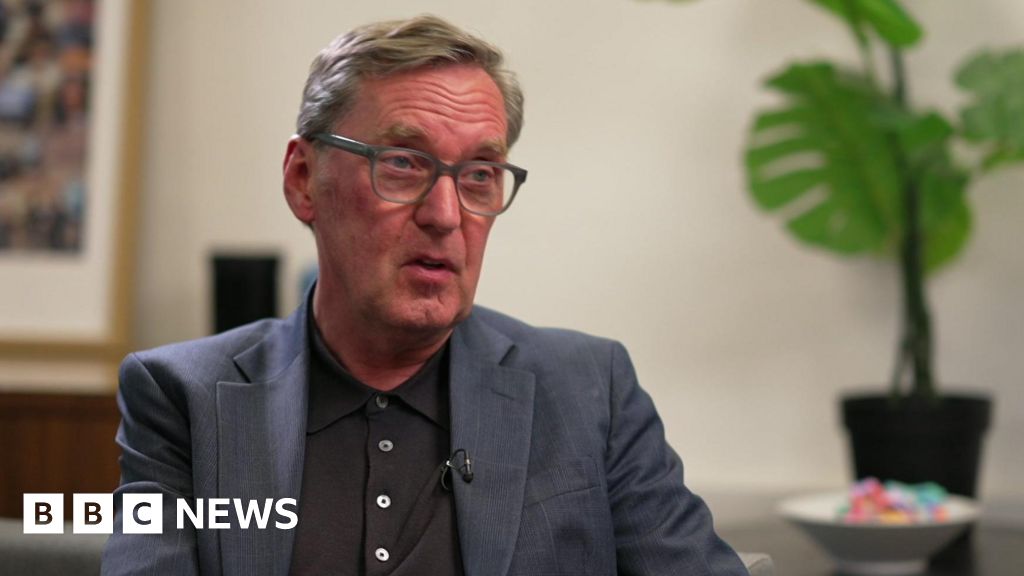
Reforms are needed of the welfare system to tackle the high numbers of young people not in work or education, says Alan Milburn.
Source link


Christopher Nolan’s ‘The Odyssey’ trailer sparks major backlash online

2026 NASCAR Odds: Denny Hamlin Favored At Coca-Cola 600, Tyler Reddick Second

5/24: Sunday Morning

-

 Entertainment1 week ago
Where Pete Davidson, Elsie Hewitt stand after breakup: Details revealed
-

 Politics1 week ago
Rising diesel costs from Iran war strain US school budgets
-

 Tech1 week ago
Why Is Your Grill So Dumb? The Best Grills Set Temp Like an Oven
-

 Tech1 week ago
This Solar-Powered Smart Sprinkler Keeps My Lawn Watered Without Any Power Cables
-

 Fashion1 week ago
RMG trade bodies seek policy support from Bangladesh PM
-

 Tech1 week ago
Tesla Reveals New Details About Robotaxi Crashes—and the Humans Involved
-

 Fashion6 days ago
Nigeria Kwara Garment Factory, KWS Garment Production Village ink pact
-

 Sports1 week ago
Pakistan steady after Das ton | The Express Tribune