

Politics
Gas shortages push India’s poor back to wood and coal

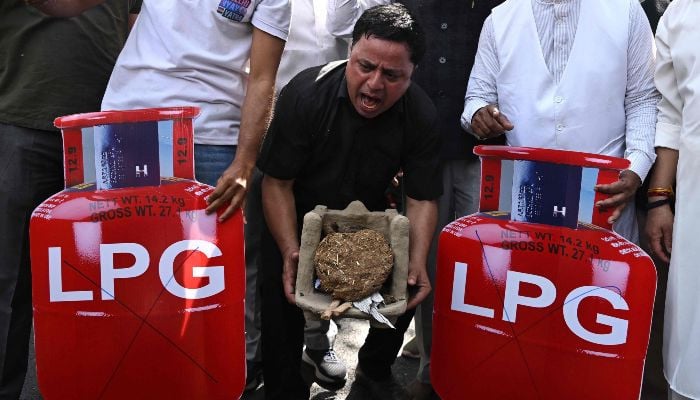
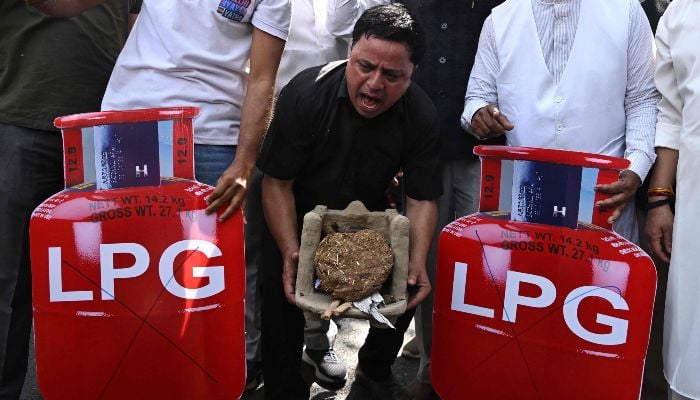
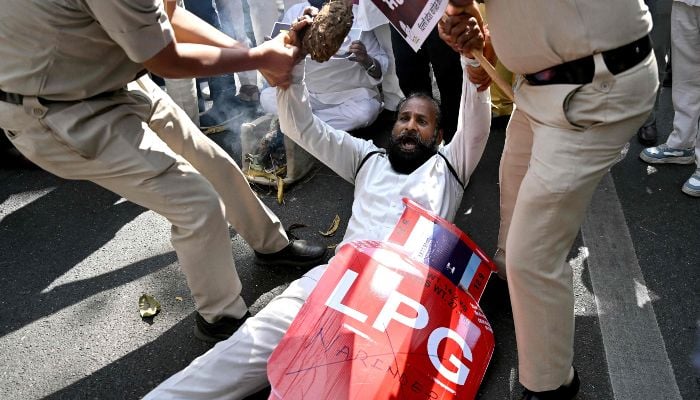
NEW DELHI: Soaring black-market prices of cooking gas in India’s capital are pushing poorer families back to wood and coal, raising health risks and worsening air quality in the highly polluted megacity.
India is the world’s second-largest buyer of liquefied petroleum gas (LPG), which is used for cooking and predominantly sourced from the Middle East — and supplies have been strangled by the ongoing war.
India’s Prime Minister Narendra Modi has urged states to curb black marketing and avoid panic, stressing that India’s energy supplies remain stable.
In the low-income Madanpur Khadar neighbourhood, 36-year-old domestic helper Sheela Kumari says she has been forced to abandon LPG cooking gas cylinders for cooking after prices more than doubled.
“We used to buy cylinders for INR 1,800-2,000 ($19-$21), but now on the black market it has gone up to 5,000 ($53),” she told AFP, nearly as much as she entire monthly salary of INR 6,000.
“It is unimaginable for us,” she said. “The next best option for us was going back to wood and coal.”
Kumari said a 14 kilogramme cylinder lasts only 15-20 days for her family of six, even when they stretch its use out.
But she says a 10 kilogramme bundle of firewood, lasting several days, costs 30 rupees ($0.30).
“There are health repercussions, and my children cough,” she said. “But tell me a way out?”
‘Too expensive’
Her neighbour, 45-year-old Munni Bai, who has asthma, had switched to using an electric cooker as well as biogas from cow dung, to help her breathing.
But now she said she was being forced to resume use of alternative fuels.
“Gas is too expensive,” she said. “We cannot depend on it — we moved from coal and wood, due to my health issue, but now it is difficult to sustain.”
But activists say the problem is more about access.
Many migrant workers lack documentation needed for subsidised LPG and rely on informal markets, where hoarding has pushed up prices.
“There is no major shortage yet, but hoarding has increased,” said Deepak, who uses only one name, from the Centre for Advocacy and Research (CFAR).
“Many migrants depend on black-market cylinders, and prices have gone up two to three times”.
New Delhi, and its wider sprawling metropolitan region of 30 million residents, is regularly ranked among the world’s most polluted capitals, due to a deadly mix of emissions from power plants, heavy traffic, as well as the burning of rubbish and crops.
For the past decades, India’s government has pushed its “Ujjwala” or “light” clean-energy scheme, to provide over 100 million LPG connections to poor households.
Burning wood, coal and biomass indoors exposes families to high levels of smoke and toxic particles, increasing the risk of respiratory illnesses.
Women and children, who spend more time near cooking areas, are especially vulnerable.
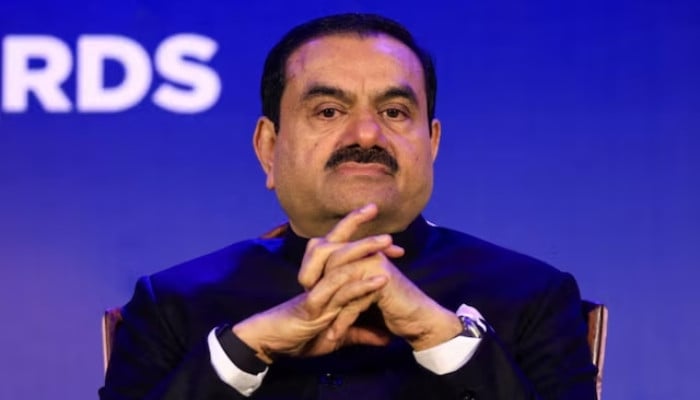
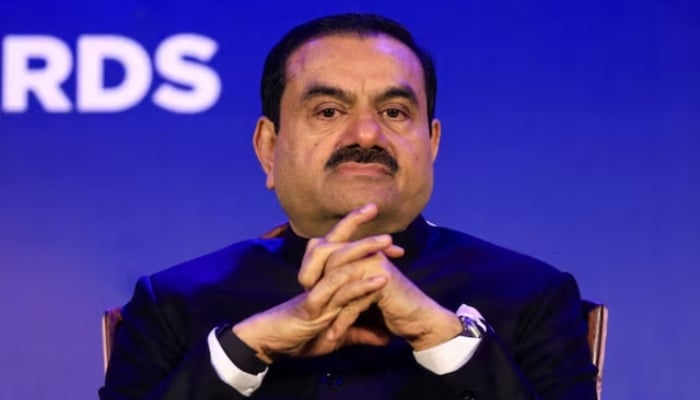
Indian billionaire industrialist Gautam Adani has agreed to pay a multi-million-dollar settlement in a US civil court case linked to corruption without admitting guilt, his company said Friday.
The November 2024 indictment in New York accused the industrialist and multiple subordinates of deliberately misleading international investors as part of a vast bribery scheme.
Adani was accused of having participated in an estimated $250 million scheme to bribe Indian officials for lucrative solar energy supply contracts.
Adani, along with his nephew Sagar Adani, agreed to the “payment of a civil penalty” totalling $18 million, while noting that it came “without admitting or denying the allegations made in the civil complaint”, a letter from Adani Green Energy to the Mumbai stock exchange read.
The penalty payment comes as US prosecutors are reported to be set to drop charges against Adani, The New York Times reported on Thursday.
The Adani letter, which noted that the final judgement of the US court is still awaited, stressed that the “company is not a party to this proceeding, and no charges have been brought against it”.
The New York Times said the move to abandon the charges, brought under President Joe Biden’s administration, came after Adani hired a new legal team led by Robert Giuffra, one of President Donald Trump’s personal lawyers.
With a business empire spanning coal, airports, cement, and media, the chairman of Adani Group has been rocked in recent years by corporate fraud allegations and a stock crash.
Adani, a close ally of Indian Prime Minister Narendra Modi, was born in Ahmedabad in Gujarat state to a middle-class family but dropped out of school at 16.
He moved to India’s financial capital, Mumbai, to find work in the city’s lucrative gem trade.
After a short stint in his brother’s plastics business, he launched the flagship family conglomerate that bears his name in 1988 by branching out into the export trade.
His big break came seven years later with a contract to build and operate a commercial shipping port in Gujarat.
- Xi calls visit a milestone.
- Trump touts Boeing deal.
- China urges lasting Iran ceasefire.
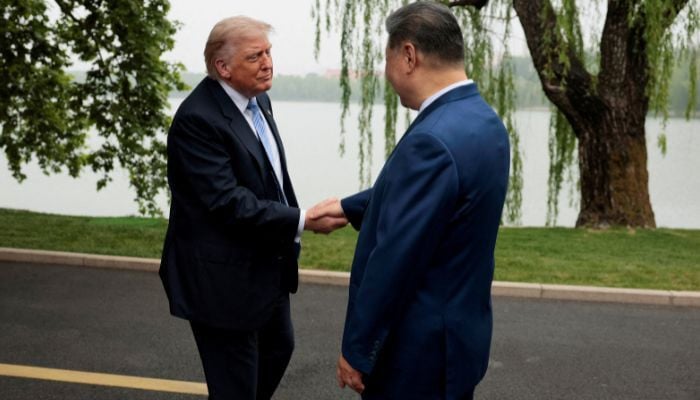
BEIJING: President Donald Trump said he had made “fantastic trade deals” with China’s Xi Jinping, as the pair met on Friday at final talks of a superpower summit that, according to the US leader, has also reaped a Chinese offer to help open the Strait of Hormuz.
Trump had arrived in Beijing seeking to seal deals in sectors including agriculture, aviation and artificial intelligence, as well as to contain differences between the two sides in a number of tense geostrategic areas — not least the Middle East war.
Trump’s overtures to Xi, whom he described as a “great leader” and “friend”, have so far been met with more muted tones by the Chinese leader.
But the US leader said “a lot of good” has come out of the visit.
“We’ve made some fantastic trade deals, great for both countries,” he said after a walk with Xi among the rosebushes in the gardens of Zhongnanhai, a central leadership compound next to Beijing’s Forbidden City.
“We’ve settled a lot of different problems that other people wouldn’t have been able to solve,” he added, without providing details.
Xi said it was a “milestone visit”, and that the two sides had to date established “a new bilateral relationship, which is a relationship of constructive strategic stability”.
He promised to send Trump seeds for the White House Rose Garden.
‘Help on Hormuz’
In an interview with Fox News after the first day of the summit had wrapped, Trump said Xi had agreed to several US wishlist points.
On the topic of the war in Iran, the US president said Xi had effectively assured his counterpart that China was not preparing to militarily aid Tehran, which has essentially closed the Strait of Hormuz.
“He said he’s not going to give military equipment… he said that strongly,” Trump told Fox.
“He’d like to see the Hormuz Strait open, and said ‘if I can be of any help whatsoever, I would like to help,'” Trump added.
Asked whether the two leaders had discussed Iran, the Chinese foreign ministry on Friday released a statement calling for “a comprehensive and lasting ceasefire”.
“Shipping lanes should be reopened as soon as possible in response to the calls of the international community,” it added.
Taiwan policy ‘unchanged’
The warm handshakes and pomp on Thursday were somewhat overshadowed by a blunt warning from Xi on a much longer-standing geopolitical flashpoint, Taiwan.
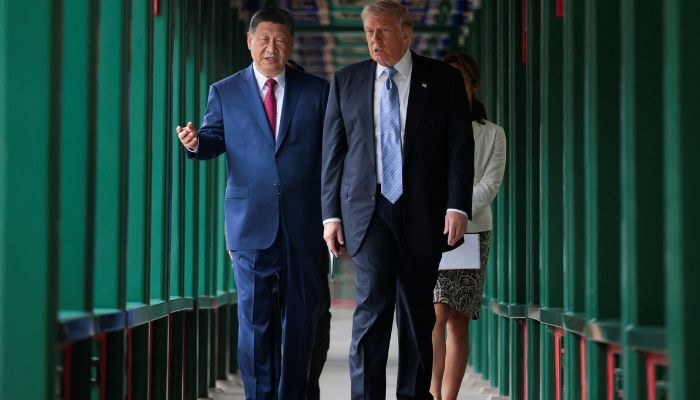
Shortly after talks started, Chinese state media reported Xi had told Trump that missteps on the sensitive issue of Taiwan could push their two countries into “conflict”.
The Fox News interview did not touch upon Taiwan, and Trump did not comment to reporters when asked about the matter on Thursday.
US Treasury Secretary Scott Bessent told CNBC the president would say more “in the coming days”.
Secretary of State Marco Rubio told NBC on Thursday though that “US policy on the issue of Taiwan is unchanged… as of the meeting”.
Beijing had raised the topic, he said, but “we always make clear our position, and we move on to the other topics”.
Taipei responded Friday, thanking Washington “for repeatedly expressing its support”.
Boeing, oil, soybeans
Trump did not spell out on Friday the trade agreements that he said had been sealed with China.
However, in the Fox interview, Trump said one big business deal struck involved Xi agreeing to purchase “200 big” Boeing jets.
Shares of the US aviation giant fell after Trump’s comments, in a sign the market had expected a more robust purchase from China.
The US president also said Beijing had voiced interest in buying US oil and soybeans.
China, which is the key foreign customer of Iranian oil, bought small amounts of US oil before Trump imposed tariffs last year.
It has sharply slowed down purchases of US soybeans, turning instead to Brazil.
And Treasury Secretary Scott Bessent told CNBC that Trump and Xi were talking about setting up “guardrails” for the use of artificial intelligence.
Bessent said the world’s “two AI superpowers are going to start talking”, though US export controls on the advanced technology to China remain a sore point in relations.
- Formal contest to replace Starmer yet to be triggered.
- Cabinet ministers express support for the PM.
- Prime Minister Starmer signals he will fight on.
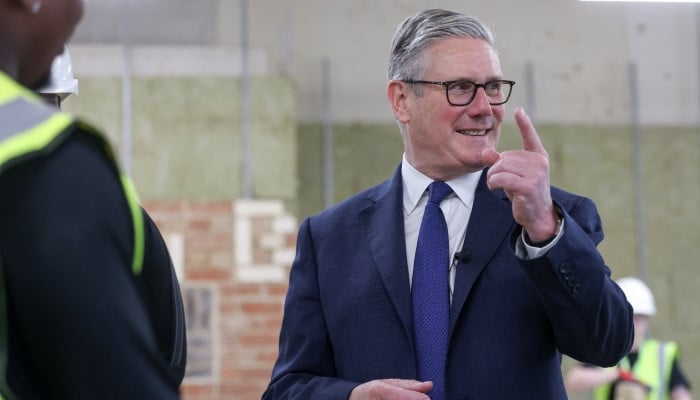
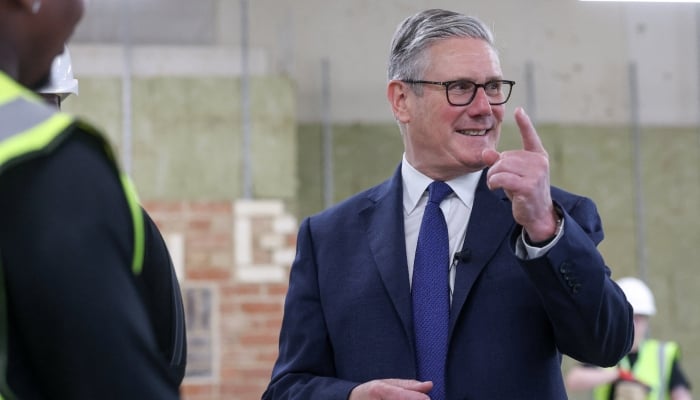
LONDON: British Prime Minister Keir Starmer was struggling to hold on to power after his main rival in the government resigned on Thursday, accusing him of political drift, and others positioned themselves for potential challenges to his leadership.
Disastrous results for the governing Labour Party in local elections last week have plunged Britain into a new crisis, just under two years after Starmer won a large majority on a vow to bring stability and end a decade of political chaos.
After days of calls by Labour lawmakers for Starmer to quit or set out a timetable for his departure, Wes Streeting resigned as health minister, the first senior minister to break cover. He said he was standing down because “it is now clear you will not lead the Labour Party into the next general election”.
While Streeting did not trigger a formal contest, potential rivals to the prime minister, such as Greater Manchester mayor Andy Burnham, started positioning themselves for a possible leadership challenge that Starmer has said he will fight.
Streeting criticised his former boss in a resignation letter which said he was standing down to allow a wide debate about what comes next, one which the Labour movement wanted to focus on ideas rather than personalities or factions.
“It needs to be broad, and it needs the best possible field of candidates,” Streeting wrote.
Streeting says Britain needs vision
“Where we need vision, we have a vacuum. Where we need direction, we have drift,” Streeting said in pointed remarks about Starmer. “Leaders take responsibility, but too often that has meant other people falling on their swords.”
A source close to Streeting said the former health minister had enough support to mount a formal leadership challenge but had not triggered an immediate contest because he felt it would be preferable for Starmer to set out an orderly timetable.
Starmer responded with a letter expressing regret Streeting had stepped down, saying “it is incumbent on all of us to rise to what I see as a battle for the soul of our nation” and “turn the page on the chaos”.
He swiftly appointed one of his supporters, James Murray, as Streeting’s replacement.
The British leader has said he will battle to keep his job, and sources close to him say he is determined to fight any leadership contest.
The pound edged lower after Streeting’s resignation and news that Burnham would seek to return to parliament.
Potential candidates face off against Starmer loyalists
Another possible candidate in any leadership contest, Starmer’s former deputy, Angela Rayner, said earlier on Thursday that she had been cleared of deliberate wrongdoing over her tax affairs, an impediment to challenging the prime minister. But she would not say whether she wanted to launch a formal bid.
Burnham was also offered a path for a possible leadership challenge. After a Labour lawmaker in Greater Manchester said he would resign from his parliamentary seat, Burnham said he would seek permission to stand as Labour’s candidate.
He would have to win an election for that seat to be able to challenge Starmer – an aim he stopped short of voicing.
“Much bigger change is needed at a national level if everyday life is to be made more affordable again. This is why I now seek people’s support to return to parliament,” he said on X.
Another potential candidate is armed forces minister Al Carns, a former Royal Marine seen by some in Labour as a new face who could freshen up the party.
But Starmer still enjoys some support. Education Minister Bridget Phillipson repeated her backing for Starmer and suggested the rest of his cabinet team of top ministers were also supportive.
“This is now a chance for us to pause, take a breath as a party and try and draw a line under all of this,” she said.
Starmer, 63, has adopted a “business-as-usual” approach, and finance minister Rachel Reeves warned lawmakers against plunging Britain into chaos when its anaemic economy was turning a corner. The economy grew unexpectedly in March.
Business leaders fear another leadership race to choose what would be Britain’s seventh prime minister in about a decade would deter investment — something the Labour government has said must improve to turn around Britain’s fortunes.
The political instability has pushed borrowing costs higher, with some investors nervous about the possible election of a more left-wing, tax-and-spend Labour prime minister.
“There have been too many changes of government strategy, leadership, just in my six years of being CEO,” Amanda Blanc, boss of insurance company Aviva, told Reuters. “And I think that is harmful to a major economy such as the UK and how we are perceived abroad.”


Bangladesh RMG sector to adopt blockchain-based transparency & DPP

Indian magnate Adani agrees multi-million-dollar penalty in US court case

Australian wool prices slip as fine merino demand weakens

-

 Tech7 days ago
A new frontier: Identity stack evolves for agentic systems | Computer Weekly
-

 Tech7 days ago
‘Orbs,’ ‘Saucers,’ and ‘Flashes’ on the Moon: Pentagon Drops New UFO Files
-

 Fashion7 days ago
New orders in German manufacturing up 5% MoM in Mar 2026: Destatis
-

 Tech7 days ago
Nick Bostrom Has a Plan for Humanity’s ‘Big Retirement’
-

 Tech1 week ago
What Microsoft Executives Really Thought About OpenAI in 2018
-

 Sports7 days ago
Shaheen Afridi achieves landmark feat during opening Test against Bangladesh
-

 Fashion7 days ago
US’ Carter’s taps retail veteran Sharon Price John as new CEO
-

 Entertainment7 days ago
Rihanna embraces new tattoo given by children