

Fashion
Germany’s Hugo Boss sets 2028 strategy, sees growth returning in 2027


Hugo Boss expects a return to growth in 2027 as it rolls out Claim 5 Touchdown, its sharpened strategic plan designed to realign, simplify, and strengthen the business through 2028. The outlook comes as 2026 is designated a deliberate reset year, with currency-adjusted sales projected to decline mid- to high-single digits amid brand and channel realignment.
Hugo Boss expects growth to return in 2027 as it launches Claim 5 Touchdown, a strategy focused on realignment in 2026 and stronger brand, distribution, and operational execution through 2028.
The plan targets €300 million (~$349.69 million) annual free cash flow, an EBIT margin of around 12 per cent, and improved efficiency to strengthen long-term profitable growth.
The realignment phase will affect near-term performance. Despite expected gross margin improvements from sourcing efficiencies and selective price adjustments, EBIT is projected between €300 million (~$349.69 million) and €350 million in 2026.
“2026 will be a year of consolidation and realignment and an important step toward positioning Hugo Boss for long-term profitable growth. While we expect a temporary decline in sales, we will continue to drive our efficiency agenda along the value chain to safeguard margins and strongly accelerate cash flow generation. With this stronger financial foundation, we are well positioned to return to top- and bottom-line growth from 2027 onward and progress toward our long-term EBIT margin ambition of around 12 per cent, reinforcing our commitment to delivering value to all shareholders,” Yves Muller, chief financial officer and chief operating officer of Hugo Boss, added.
The plan builds on the momentum of Claim 5, which has driven robust brand performance since 2021. Both Boss and Hugo achieved a combined CAGR of 22 per cent between 2020 and 2024, supported by global market share gains and substantial structural investments.
The company expects free cash flow to reach around €300 million (~$349.69 million) annually through 2028, nearly tripling recent levels.
Execution will centre on three priorities: brand, distribution, and operational excellence.
Under Brand Excellence, Hugo Boss aims to elevate brand relevance and customer loyalty. Boss Menswear will continue to build on its 24/7 lifestyle positioning. Boss Womenswear will shift toward a tighter essentials-led assortment to strengthen appeal among female consumers, while Hugo will sharpen its identity with a more accessible, contemporary tailoring focus.
A new organisational structure with dedicated menswear and womenswear powerhouses is expected to unlock efficiencies across both brands. Marketing spend is set at around 7 per cent of Group sales, prioritising high-return initiatives and partnerships such as Beckham x Boss.
The company’s Distribution Excellence pillar targets a more curated, higher-quality footprint. Hugo Boss will optimise its own retail store network to improve experience and productivity, strengthen wholesale through strategic partnerships and selective assortments, and expand its franchise model.
Digital commerce will remain a critical driver, with deeper integration aimed at seamless customer journeys. Regionally, the company plans to build further in the US and China, tailor brand activity to local needs, leverage its strong European base for market share gains, and tap opportunities in emerging markets.
Through Operational Excellence, Hugo Boss seeks to enhance profitability by capitalising on past investments. Key initiatives include vendor consolidation, a sea-freight-first logistics strategy, shorter lead times, and the expanded use of AI and advanced planning tools. Automation and an upgraded logistics network are expected to strengthen back-end efficiency and support long-term growth.
Financially, Claim 5 Touchdown prioritises profitability and cash generation. The company aims to outpace market growth and deliver an EBIT margin of around 12 per cent over the medium to long term. Capital expenditure will be reduced to 3 to 4 per cent of Group sales, while inventory is expected to steadily decline towards 20 per cent of sales by 2028.
“Following the successes of recent years, we are now deliberately taking a step back to prepare for tomorrow’s growth. Our focus in the coming years will be on the ongoing optimisation in the areas of brand, distribution, and operations with the clear ambition to transform them from great to excellent. Our vision is clear: to be the premium, tech-driven, customer-centric global fashion platform,” Daniel Grieder, chief executive officer of Hugo Boss, said in a release.
As part of its capital allocation framework, the company reaffirmed its commitment to maintaining shareholder returns through dividends and share buybacks while reducing financial leverage and preserving headroom for future M&A. It will also work to maintain strong investment-grade ratings from S&P (BBB) and Moody’s (Baa2).
Hugo Boss said Claim 5 Touchdown will sharpen execution, reinforce operational discipline, and position the company to convert strategic focus into measurable financial results.
Fibre2Fashion News Desk (HU)











Named in honor of Gap Inc. co-founder Doris Fisher, the program reflects her legacy of creativity, curiosity, and belief in people. It also builds on Gap Inc.’s commitment to helping bridge the opportunity gap by creating stronger connections between education and careers in the fashion industry.
Gap Inc., led by Richard Dickson, has launched The Doris Fisher Creators Program with the Fashion Institute of Technology to mentor students in fashion careers.
Starting Fall 2026, the programme will offer structured mentorship, industry exposure, and networking for select students, honouring Doris Fisher and strengthening pathways from education to careers.
“Gap Inc. is a house of iconic American brands guided by our purpose — to bridge gaps to create a better world. That includes bridging the opportunity gap. FIT embodies that same spirit, bringing education and industry together to unlock talent and expand what’s possible. We’re committed to opening doors, investing in emerging creatives, and building meaningful pathways into this industry for the next generation,” said Dickson.
The Doris Fisher Creators Program will connect FIT students with Gap Inc. leaders and creatives through a structured mentorship experience designed to provide exposure to the business of fashion, industry insights, and meaningful professional connection.
The program will launch in Fall 2026 and run through the academic year, and the inaugural cohort will include students from select disciplines, including Fashion Design, Graphic Design (Apparel), and Fabric Styling.
“Supporting emerging talent is a core expression of Gap Inc.’s purpose in action. Through initiatives such as The Doris Fisher Creators Program — alongside This Way ONward, the Rotational Management Program, and our broader internship and mentorship efforts — the company continues to bridge the opportunity gap for young people looking to start meaningful careers in fashion and retail,” added Amy Thompson, Chief People Officer at Gap Inc.
“We are incredibly proud to be the first public college to partner with Gap Inc. on this groundbreaking mentorship program. This remarkable opportunity with one of the world’s most iconic brands will support 30 talented FIT students over the next year, placing them at the intersection of innovation and impact,” said Jason S. Schupbach, president of FIT.
A benefit for the FIT Foundation, this year’s FIT Annual Gala honored Gap Inc. President & CEO Richard Dickson and was attended by distinguished guests and alumni including Ciara, Aloe Blacc, Zac Posen, Bob Fisher and others.
The FIT Foundation provided scholarships totaling more than $3 million in 2025.
Note: The headline, insights, and image of this press release may have been refined by the Fibre2Fashion staff; the rest of the content remains unchanged.
Fibre2Fashion News Desk (RM)
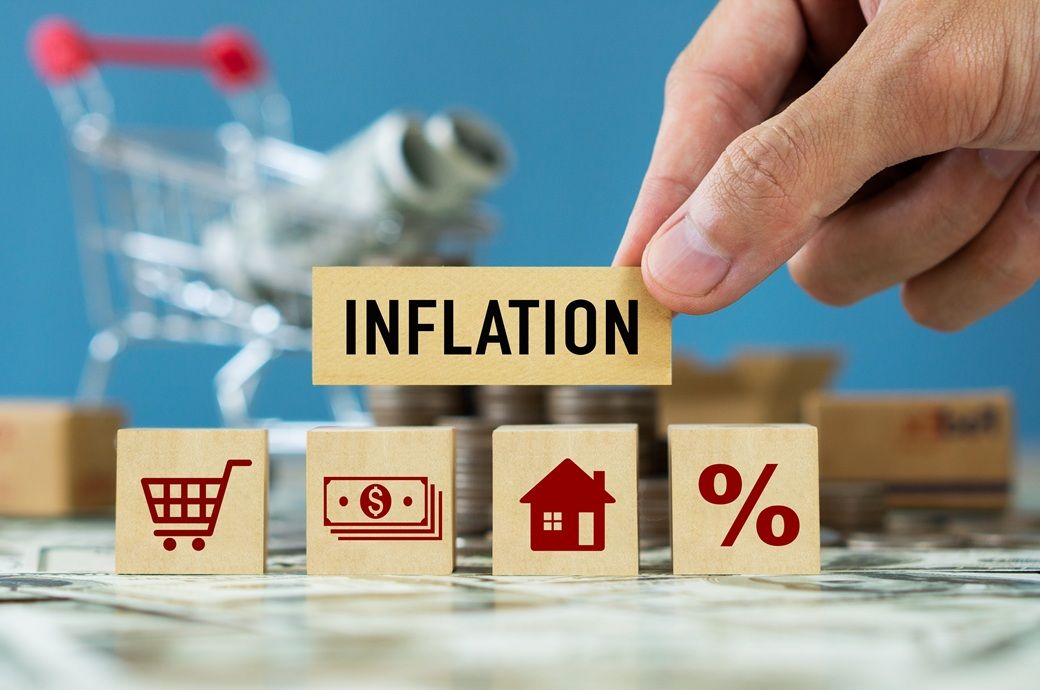
The increase was driven largely by energy prices, as declines in regulated and non-regulated energy products eased significantly. In contrast, inflation in services slowed, Istat said in a press release.
Italy’s inflation rose to 1.7 per cent year on year in March 2026, driven by higher energy, according to Istat. Monthly inflation stood at 0.5 per cent.
Core inflation eased to 1.9 per cent, while services inflation slowed.
The HICP increased 1.6 per cent annually, with lower-income households experiencing relatively smaller price rises than higher-spending groups.
Core inflation, which excludes energy and unprocessed food, moderated to 1.9 per cent from 2.4 per cent, while inflation excluding energy eased to 2.1 per cent.
On a yearly basis, goods prices rose 0.8 per cent compared with a slight decline in the previous month, while services inflation slowed to 2.8 per cent from 3.6 per cent. This narrowed the inflation gap between services and goods.
On a monthly basis, the rise in the index was mainly led by increases in regulated energy prices, up 8.5 per cent, and non-regulated energy prices, up 5 per cent, along with gains transport services.
The harmonised index of consumer prices (HICP) rose 1.7 per cent MoM and 1.6 per cent YoY, slightly above the earlier estimate. In the first quarter, inflation remained lower for households with weaker spending capacity compared with higher-spending households.
Fibre2Fashion News Desk (SG)

The decision was taken during a meeting of the council of ministers that was chaired by the Transitional President Captain Ibrahim Traore.
Burkina Faso has announced the full nationalisation of Burkinabe Company of Textile Fibres (Sofitex), citing rising debt, declining production and inefficiencies.
Sofitex was a mixed-ownership firm, in which the state held a majority stake.
Full state ownership is expected to lead to tighter financial discipline, improved governance and a restructuring of operations to boost efficiency.
Sofitex was a mixed-ownership cotton company, in which the state held a controlling majority stake and private investors owned a minority share valued at about 75 billion CFA francs.
A 2025 valuation cited by the government places Sofitex’s total worth at 338.14 billion CFA francs (~$607 million), with the private stake valued at just over 75 billion CFA francs for 976,400 shares.
The company’s cotton production fell by 24-26 per cent to under 300,000 metric tonnes in the 2024-2025 season.
Full state ownership is expected to lead to tighter financial discipline, improved governance and a restructuring of operations to boost efficiency, according to a domestic media outlet.
Fibre2Fashion News Desk (DS)


US’ Gap & FIT launch programme to mentor fashion students

Nasa unveils new space telescope to probe mysteries of ‘dark energy’

Dubai to build $9.25bn ‘Golden Line’ metro, completion set for 2032

-

 Fashion6 days ago
France’s LVMH Q1 revenue falls 6%, shows resilience amid Iran war
-

 Entertainment7 days ago
Is Claude down? Here’s why users are seeing errors
-

 Fashion1 week ago
Asia claims largest share of markets on Kearney FDI Confidence Index
-

 Tech1 week ago
The Deepfake Nudes Crisis in Schools Is Much Worse Than You Thought
-

 Sports1 week ago
PSL 11: Peshawar Zalmi win toss, opt to field first against Quetta Gladiators
-

 Tech1 week ago
Bremont Is Sending a Watch to the Moon’s Surface
-

 Tech1 week ago
Human-machine teaming dives underwater
-
 Business1 week ago
BP sees ‘exceptional’ oil trading result as Iran war sends crude costs soaring