

Business
Gold prices in Pakistan Today – February 27, 2026 | The Express Tribune

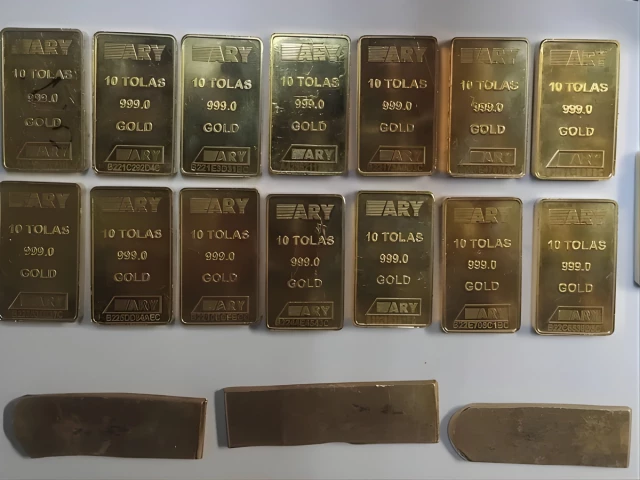
KARACHI:
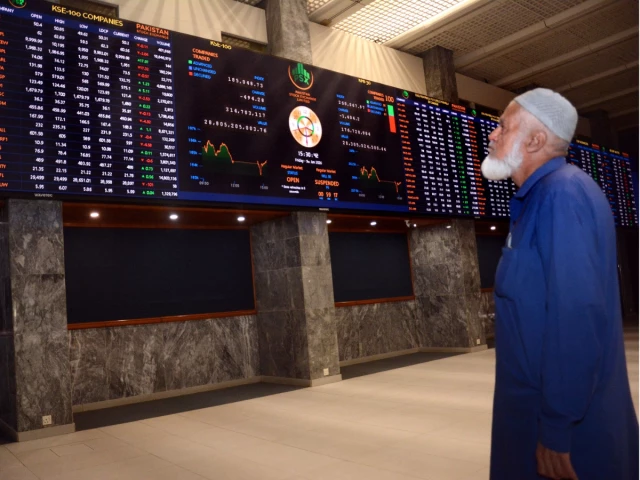
Gold prices remained stable in both international and local markets on Friday, while silver saw a moderate increase.
In the international bullion market, the price of gold per ounce held steady at $5,178.
In Pakistan, the price of gold per tola remained unchanged at Rs 540,562, while per 10 grams it stayed at Rs 463,444.
Silver prices, however, recorded an increase. The price per tola rose by Rs 270 to reach Rs 9,474, while per 10 grams it increased by Rs 232 to Rs 8,122.
Spot gold edged down 0.1% to $5,181.18 per ounce by 0837 GMT. The metal has climbed 6.5% so far in February, bringing gains for the seven months to a whopping 58%.
US gold futures for April delivery were up 0.1% at $5,198.10.
Spot silver rose 1.7% to $89.87 per ounce, and was headed for a 6.2% gain on the month.
Spot platinum climbed 4.1% to $2,365.33 per ounce, a four-week high, while palladium gained 2.1% to $1,821.28.
Read: SBP reserves rise $16m to $16.21b
Furthermore, on Thursday, the Pakistani rupee posted a marginal appreciation against the US dollar in the inter-bank market on Thursday. By the close of trading, the local currency settled at 279.50 per dollar, strengthening by Rs0.01 compared with the previous session.
On Wednesday, the rupee had finished trading at 279.51 against the greenback, according to the State Bank of Pakistan (SBP).
Meanwhile, gold prices in Pakistan eased on Thursday, tracking subdued trends in the international bullion market as investors stayed cautious ahead of a fresh round of indirect US-Iran nuclear negotiations in Geneva.
According to the All Pakistan Gems and Jewellers Sarafa Association, the price of 24-karat gold fell by Rs700 per tola to Rs540,562. Similarly, the 10-gram gold declined by Rs600 to Rs463,444 in the local market.
The decline follows Wednesday’s modest increase, when gold per tola rose by Rs1,300 to Rs541,262 amid safe-haven demand linked to geopolitical tensions.
Silver prices also moved lower on Thursday, dropping Rs350 to settle at Rs9,204 per tola, the market association data showed.
In the international market, spot gold held largely steady, hovering near $5,165 per ounce in early US trading, while April gold futures slipped about 0.8% to around $5,182, according to Reuters.
Traders remained on the sidelines ahead of the third round of indirect talks between Washington and Tehran, mediated by Oman, with expectations that any progress could influence geopolitical risk premiums embedded in bullion prices.




Experts say Mythos potentially has an unprecedented ability to identify and exploit cybersecurity weaknesses.
Source link
Business
Anthropic’s new AI model exposes fresh risks, flaws for cybersecurity, IT services – The Times of India
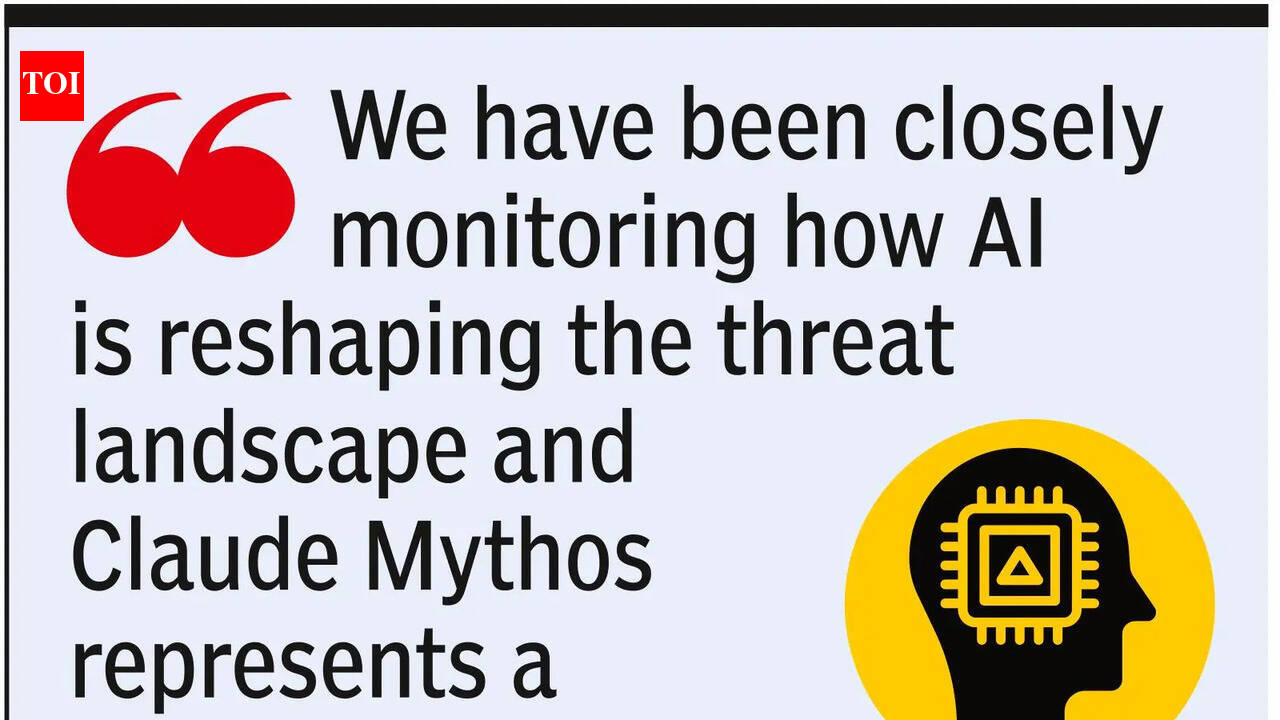
New Delhi: A powerful new AI model is forcing govts, banks, and technology firms to rethink the rules of cybersecurity – and in India, the stakes may be even higher.Claude Mythos, developed by Anthropic, has demonstrated the ability to autonomously detect and exploit software vulnerabilities, including flaws that have persisted for decades. Early tests revealed that the model could identify long-standing weaknesses and simulate complex, multi-step cyberattacks, prompting the company to restrict its wider release. Anthropic CEO Dario Amodei highlighted the shift, noting that AI systems are now capable of finding vulnerabilities “that humans have missed”, a signal of how quickly the cybersecurity landscape is changing.US Treasury Secretary Scott Bessent reportedly convened a meeting with top bank executives – including leaders from JPMorgan Chase, Goldman Sachs, Citigroup, BoA, and Morgan Stanley – to assess the risks posed by such advanced AI systems.That concern is not theoretical. According to Jaydeep Singh, GM for India at Kaspersky, the emergence of such systems represents a turning point not just for security professionals, but for everyday users. “We have been closely monitoring how AI is reshaping the threat landscape, and Claude Mythos represents a moment that every user, not just the cybersecurity industry, needs to understand,” Singh said.The dual-use nature of AI is at the heart of the concern. The same capability that strengthens defences can just as easily be weaponised. “The same capability that finds a 27-year-old vulnerability in hardened infrastructure is the capability that, in the wrong hands, turns every unpatched system into an open door,” Singh added.Cybersecurity firm Check Point Software Technologies echoed the warning. Sundar Balasubramanian, MD, India and South Asia, for Check Point, says, AI is “dramatically lowering the barrier to entry for cyber attackers,” enabling even less-skilled actors to identify and exploit vulnerabilities. He added that defensive tools can be repurposed offensively, compressing the traditional gap between attackers and defenders. Jayant Saran, partner, Deloitte India, described this as a “changed reality,” where organisations must prepare for risks that were previously invisible. He called AI a “double-edged sword…that cannot be reversed,” highlighting an accelerating race between those securing systems and those attempting to break them.In India, the risks are amplified by scale. From UPI to banking and govt platforms, millions depend on digital infrastructure – much of it built on legacy systems. These systems are often slower to patch, harder to monitor, and lack continuous threat intelligence, creating what Saran called an “asymmetric risk exposure.” Singh pointed out that this gap is especially critical in India, where legacy infrastructure serves hundreds of millions.Beyond cybersecurity, ripple effects could reach financial markets. Analysts say models like Mythos could automate parts of software development, testing, and security – core functions of IT services industry. While disruption may be gradual, labour-intensive outsourcing models could face pressure, while firms embracing AI may benefit.

Firms say digital twins make staff more productive, but are they a potential legal minefield?
Source link

Finance ministers and top bankers raise serious concerns about Mythos AI model
Anthropic’s new AI model exposes fresh risks, flaws for cybersecurity, IT services – The Times of India

Mike Trout crushes fifth Yankee Stadium HR in four games

-

 Entertainment1 week ago
Queen Elizabeth II emotional message for Archie, Lilibet sparks speculation
-

 Tech1 week ago
Azure customers up in arms over ‘full’ UK South region | Computer Weekly
-

 Tech1 week ago
As the Strait of Hormuz Reopens, Global Shipping Will Take Months to Recover
-

 Fashion1 week ago
CII submits 20-pt agenda to Indian govt to back firms hit by Iran war
-

 Tech1 week ago
This AI Button Wearable From Ex-Apple Engineers Looks Like an iPod Shuffle
-

 Politics7 days ago
Indian airlines hit hardest after Dubai limits foreign flights until May 31
-

 Entertainment4 days ago
Palace left in shock as Prince William cancels grand ceremony
-
Uncategorized1 week ago
[CinePlex360] Please moderate: “Trump considers