

Business
Gold prices in Pakistan Today – February 4, 2026 | The Express Tribune


Iran has 15 gold mines, with the largest being the Zarshouran mine located in the country’s northwest. PHOTO: PIXABAY
KARACHI:
Gold and silver prices recorded further gains in both international and local markets on Wednesday, extending the upward trend.
In the international bullion market, gold rose sharply by $148 per ounce to settle at $5,064. The increase was reflected in domestic markets, where the price of gold per tola climbed by Rs14,800 to Rs529,162.
Similarly, the price of gold per 10 grams increased by Rs12,689 to Rs453,671.
Silver prices also registered an uptick. In the local market, silver per tola rose by Rs109 to Rs9,255, while the price per 10 grams increased by Rs93 to Rs7,934.
Spot gold shot up 2.8% to $5,076.01 per ounce as of 0655 GMT, after surging 5.9% on Tuesday, its biggest daily gain since November 2008. Bullion scaled a record high of $5,594.82 last Thursday.
Read: Gold rebounds Rs24,000/tola
US gold futures for April delivery climbed 3.3% to $5,097.20 per ounce.
Spot silver rose 5% to $89.38 an ounce. It touched a record high of $121.64 on Thursday but fell to a month-low at $71.33 on Monday, having registered a record single-session price wipe-out of 27% on Friday.
Spot platinum added 4.2% to $2,302.56 per ounce, while palladium gained 3.5% to $1,794.15.
Earlier on Tuesday, gold prices rebounded sharply, tracking a strong recovery in the international bullion market after several sessions of steep losses that had rattled investors and traders.
In the local market, the price of gold per tola surged by Rs24,000 to settle at Rs514,362, according to rates released by the All-Pakistan Gems and Jewellers Sarafa Association. Similarly, the price of 10-gram gold rose by Rs20,576 to Rs440,982.
Read more: Gold, silver prices rebound after brief market pause
The sharp rebound came a day after gold had suffered a significant decline.
On Monday, gold per tola had fallen by Rs21,500 to close at Rs490,362. Overall, the yellow metal had lost a cumulative Rs85,500 per tola over the previous three sessions, reflecting heightened volatility in global markets.






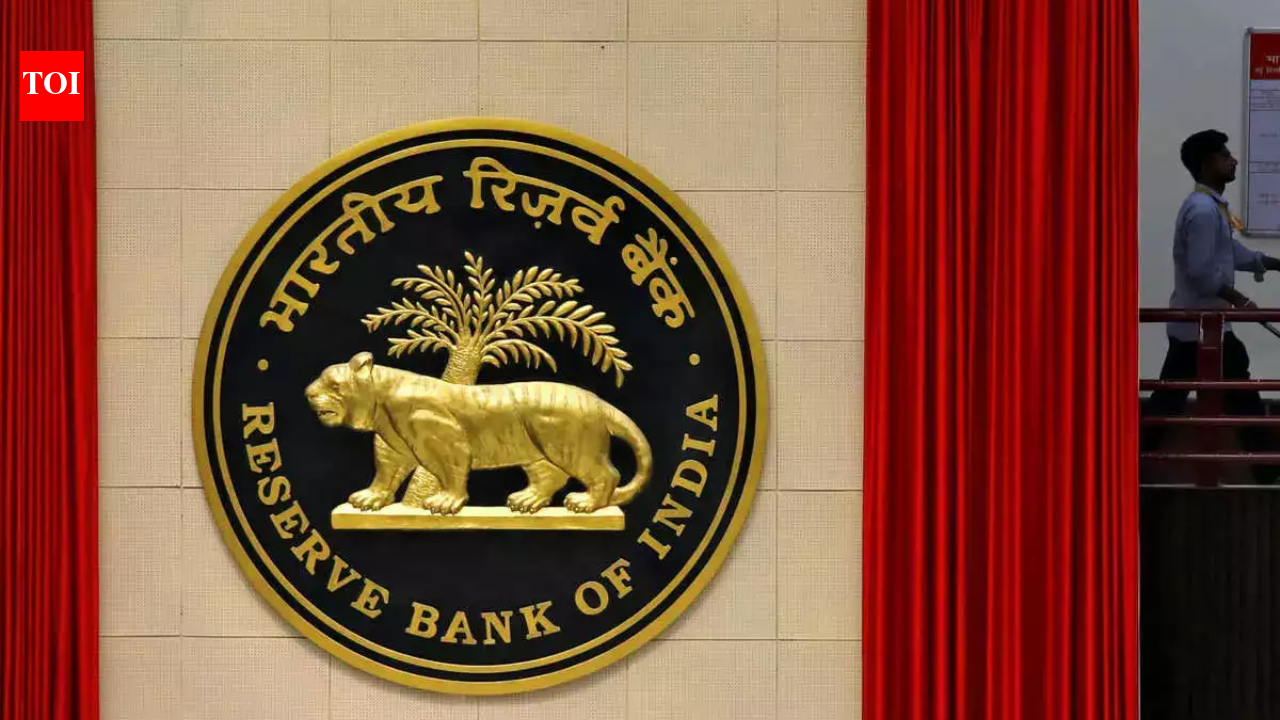
The Reserve Bank of India (RBI) on Monday decided against activating the countercyclical capital buffer (CCyB), indicating that current financial and credit conditions do not warrant an additional capital requirement for banks, PTI reported.The central bank said the decision followed a review and empirical assessment of indicators used under the CCyB framework.“Based on review and empirical analysis of CCyB indicators, it has been decided that it is not necessary to activate CCyB at this point in time,” RBI said in a statement.Under the RBI (Commercial Banks – Prudential Norms on Capital Adequacy) Directions, 2025, the CCyB framework is activated when financial conditions indicate rising systemic risks linked to excessive credit growth.The framework primarily relies on the credit-to-GDP gap as a key indicator, along with supplementary metrics.According to the RBI, the CCyB mechanism is intended to serve two broad objectives.Firstly, it requires a bank to build up a buffer of capital in good times, which may be used to maintain the flow of credit to the real sector in difficult times.Secondly, it achieves the broader macro-prudential goal of restricting the banking sector from indiscriminate lending in the periods of excess credit growth that have often been associated with the building up of system-wide risk.The framework was introduced globally after the 2008 financial crisis as part of measures proposed by the Group of Central Bank Governors and Heads of Supervision (GHOS) under the Basel framework to strengthen financial system resilience.

The company has announced plans to build seven new models in Europe including a small electric hatchback.
Source link

“Today’s policymaking is constrained by a more volatile external environment with more frequent and overlapping shocks, a rising public interest bill, in part reflecting market concerns with countries’ elevated debt, and the long-standing challenge of weak productivity growth,” he said.


UK’s clothing imports fall 3% in Q1, sharply lower than Q4 2025
RBI sees no signs of excess credit risk, keeps countercyclical capital buffer inactive

The Catastrophic Swatch x Audemars Piguet Launch Was Entirely Predictable and Utterly Avoidable

-

 Entertainment6 days ago
Conan O’Brien hat tricks as Oscar host
-

 Tech1 week ago
Could Contact-Tracing Apps Help With the Hantavirus? Not Really
-

 Fashion5 days ago
Italy’s Zegna Group’s Q1 growth boosted by strong organic performance
-

 Sports1 week ago
Bobby Cox, legendary Atlanta Braves manager who led 1995 World Series champions, dead at 84
-

 Entertainment1 week ago
Martin Short: Facing tragedy with joy
-

 Entertainment1 week ago
Tom Brady gets back at Kevin Hart during Netflix roast
-

 Entertainment1 week ago
Martha Stewart: How to make an omelet
-

 Sports1 week ago
Jacob Fatu unleashes vicious assault on Roman Reigns after World Heavyweight Championship loss at WWE Backlash