

Business
Gold prices in Pakistan Today – March 14, 2026 | The Express Tribune


Gold and silver prices declined in both international and local markets on Saturday.
In the international bullion market, the price of gold per ounce fell by $87, reaching $5,018.
In the local market, gold prices also recorded a notable decline. The price of gold per tola dropped by Rs8,700 to Rs524,562.
Similarly, the price of 10 grams of gold decreased by Rs7,459, settling at Rs449,727.
Silver prices also moved lower in the local market. The price of silver per tola fell by Rs310 to Rs8,541.
Meanwhile, the price of 10 grams of silver declined by Rs266, reaching Rs7,322.
Read: Roshan Digital Account hits $12.17b
Furthermore, the Roshan Digital Account (RDA) initiative continues to show robust momentum, with total inflows reaching $12.17 billion by the end of February 2026.
According to the latest data released by the State Bank of Pakistan (SBP), the month of February alone attracted $241.8 million in new inflows, marking a steady increase in diaspora engagement.
Since its launch in September 2020, the foreign investment programme has successfully registered over 909,000 accounts. The consistent growth underscores the continued confidence of non-resident Pakistanis (NRPs) in the country’s digital banking ecosystem and sovereign investment instruments.
Earlier on Friday, the Pakistani rupee kept intact the streak of posting a slight appreciation against the US dollar in the inter-bank market. At the close of trading, the local currency settled at 279.31 per dollar, gaining Rs0.01 compared with the previous session.
On Thursday, the rupee had ended the day at 279.32 against the greenback.






Business
Force majeure explained: Why Gulf countries are invoking it amid Iran vs US-Israel war – The Times of India
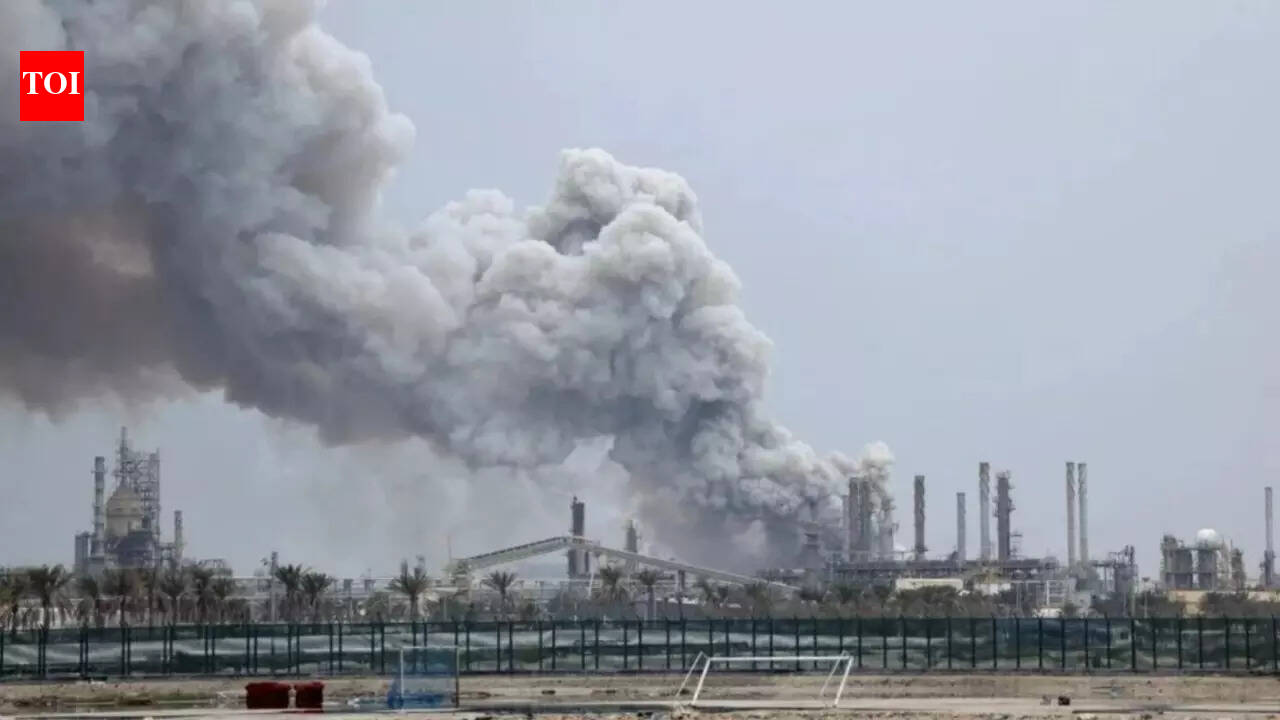
As the Middle East conflict between Iran, the United States and Israel intensifies, a legal term rarely discussed outside corporate boardrooms has suddenly become headline news and that is force majeure. Several Gulf energy producers, including Qatar, Bahrain and Kuwait, have invoked force majeure on oil and gas exports after attacks, shipping disruptions and infrastructure risks caused by the ongoing war.What exactly does force majeure mean? Why are countries using it now and why does it matter for global energy markets? Read on as we give you a simple breakdown of the concept and its global implications.
What “force majeure” actually means during the Iran vs US-Israel war
Force majeure is a legal clause used in contracts that allows a company or government to suspend or cancel obligations when extraordinary events make it impossible to fulfil them. The phrase comes from French and literally means “superior force.” It refers to events beyond anyone’s control, such as wars, natural disasters, government actions or major infrastructure damage. When force majeure is invoked, a company can temporarily stop deliveries or operations without being penalised for breaking a contract. In the energy sector, this usually means halting shipments of oil, gas or other commodities when conflict, attacks or logistical breakdowns make exports unsafe or impossible.
Why Gulf countries are invoking force majeure during the Iran vs US-Israel war
The latest declarations are directly tied to the regional war that erupted after US–Israeli strikes on Iran on February 28, 2026. Since then, the conflict has spilled across the Gulf, with missile strikes, drone attacks and naval tensions affecting energy infrastructure and shipping routes.Several Gulf producers have invoked force majeure because:
- Shipping routes through the
Strait of Hormuz are disrupted - Energy facilities have been targeted
- Security risks make exports unpredictable
Countries including Qatar, Bahrain and Kuwait have declared force majeure on energy shipments after these disruptions. The Strait of Hormuz is especially critical because roughly 20% of global oil and LNG shipments pass through it, making any disruption there a global economic concern.
Qatar’s gas shutdown amid Iran vs US-Israel war triggered global alarm
One of the biggest shocks came when Qatar halted natural gas production and declared force majeure on contracts with buyers after attacks on energy infrastructure early in the conflict. Qatar is the world’s second-largest exporter of liquefied natural gas (LNG), meaning disruptions to its supply immediately ripple through global energy markets. Following the shutdown, several international companies that buy Qatari gas also declared force majeure on their own deliveries to customers. This cascading effect shows how quickly supply disruptions can spread across global energy networks.
Bahrain’s refinery attack amid Iran vs US-Israel war escalated the crisis
Another major trigger came when Bahrain’s state oil company declared force majeure after an Iranian strike hit its main refinery complex. The attack disrupted oil operations and made it impossible for the company to meet export commitments. Energy analysts say incidents like these highlight how vulnerable Gulf energy infrastructure can be during regional conflict. Since the Gulf region supplies a significant share of the world’s oil, even temporary disruptions can send shockwaves through markets.
The domino effect of Force majeure on global energy markets amid Iran vs US-Israel war
Force majeure declarations often create a domino effect across supply chains. When producers stop shipments, buyers scramble to find alternative suppliers, shipping schedules collapse and prices spike due to uncertainty.During the current crisis, oil prices surged past $100 per barrel amid fears of supply shortages and instability in the Gulf. Energy companies worldwide are now reassessing contracts, stockpiles and shipping routes. Some countries have even begun preparing emergency reserves in case disruptions continue.
Why the Strait of Hormuz matters in the Iran vs US-Israel war
A major reason behind the crisis is the Strait of Hormuz, one of the world’s most important maritime chokepoints. The narrow waterway connects the Persian Gulf with the Arabian Sea and is used by tankers carrying oil and gas from countries including:
- Saudi Arabia
- Qatar
- Kuwait
- the UAE
- Iraq
Since such a large share of global energy flows through this route, any threat to it can have immediate global consequences. In the current conflict, attacks and security threats around the strait have forced companies to rethink shipping routes and export schedules.
Could more countries declare force majeure amid Iran vs US-Israel war?
Energy experts warn that if the war escalates further, more producers could suspend exports. Officials in Qatar have already warned that prolonged disruptions could push other Gulf energy producers to declare force majeure as well.If that happens, the world could face a significant supply shock in oil and natural gas. Such a scenario would likely push fuel prices higher, increase inflation in importing countries, and intensify economic uncertainty worldwide.
Why this legal term, force majeure, suddenly matters globally amid Iran vs US-Israel war
Although force majeure is a legal concept usually buried deep inside contracts, the current conflict has turned it into a key factor shaping global energy markets. When countries invoke it, they are essentially acknowledging that war or extraordinary events have made normal trade impossible.For consumers, the impact may eventually show up as higher fuel prices, rising electricity costs and/or supply shortages in energy-dependent industries. The sudden surge in force majeure declarations across the Gulf highlights how quickly geopolitical crises can disrupt the global economy.What began as a regional conflict has now begun affecting energy supply chains, commodity markets and international trade. Whether the situation stabilises or spreads further will determine how long the world continues to hear this once-obscure legal term dominating global headlines.
Business
LPG relief: Two Indian vessels cross Strait of Hormuz safely with 92,700 tonne cargo, set to dock March 16 & 17 – The Times of India
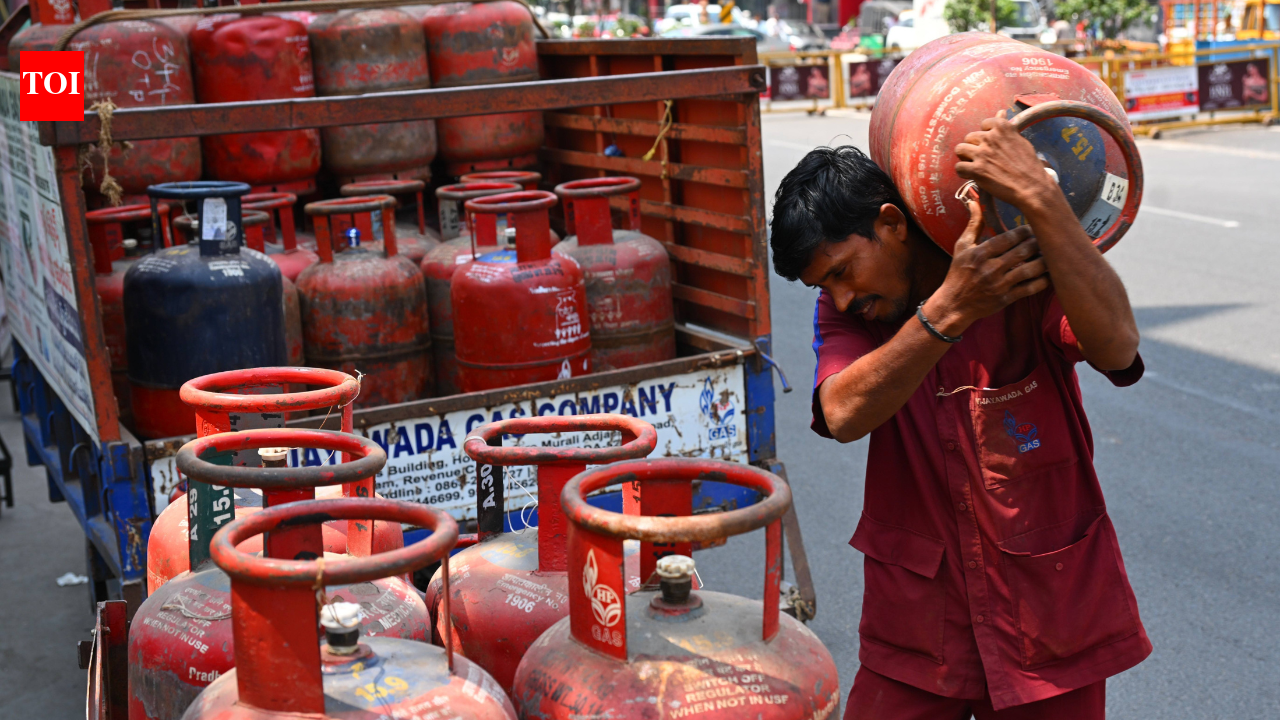
In a boost to domestic energy supplies amid disruptions in West Asia, two Indian-flagged LPG carriers safely crossed the conflict-hit Strait of Hormuz early Saturday and are now on course for ports in Gujarat. LPG carriers Shivalik and Nanda Devi are heading to Mundra and Kandla, respectively, Rajesh Kumar Sinha, Special Secretary in the Ministry of Shipping, said at a media briefing. The ships are carrying a combined 92,700 tonne of LPG and are expected to dock at Indian ports on March 16 or 17, he said. The two vessels were among 24 ships that had been stranded on the western side of the strategic waterway since the war broke out in the region.
Petrol, diesel stocks adequate
India has sufficient availability of petrol and diesel and refineries are operating at full capacity despite disruptions linked to the West Asia conflict, a senior petroleum ministry official said, urging consumers to avoid panic booking of LPG cylinders.Addressing an inter-ministerial briefing, Joint Secretary (Marketing & Oil Refinery) Sujata Sharma said the country currently has enough crude supplies and domestic production is meeting fuel requirements.“As far as crude oil and refineries are concerned, we have a sufficient supply of crude and our refineries are operating at full capacity. There have been no reports of any dry-out at retail outlets. Adequate petrol and diesel are available,” she said.She added that India does not need to import petrol and diesel at present. “We produce enough petrol and diesel in the country according to our requirements, and therefore there is no need for us to import them,” Sharma said.
LPG supply under watch, PNG push for commercial users
While domestic fuel supplies remain stable, the official flagged concerns about cooking gas availability amid the prevailing geopolitical situation.“Regarding LPG supply, I would like to say that it is still a matter of concern for us in view of the prevailing geopolitical situation. However, no dry-out has been reported,” she said.The government is encouraging commercial consumers facing supply disruptions to switch to piped natural gas (PNG). In this context, the Gas Authority of India Limited (GAIL) has held meetings with city gas distribution operators to facilitate immediate PNG connections wherever feasible.“There was considerable discussion regarding commercial cylinders, and after that it was decided that some LPG should also be supplied to commercial consumers,” Sharma said, adding that distribution has begun in about 29 states and Union territories.
Panic booking spikes, govt appeals for restraint
Sharma also pointed to a sharp increase in LPG bookings, describing the trend as panic-driven.“Panic booking is still happening on a very large scale. Yesterday, we informed you that the number of bookings was around 7.5-7.6 million, and now that number has increased to almost 8.8 million. So this is nothing but panic booking,” she said.Appealing for restraint, she urged consumers to place orders only when required. “I would like to appeal to the citizens of the country to avoid panic booking and to make bookings only when there is an actual need. This will be good for everyone,” Sharma added.Highlighting the progress in digital adoption, the official said most LPG bookings are already being made online. “Online booking is currently about 84 per cent, but it needs to improve to almost 100 per cent,” she said.(With inputs from agencies)
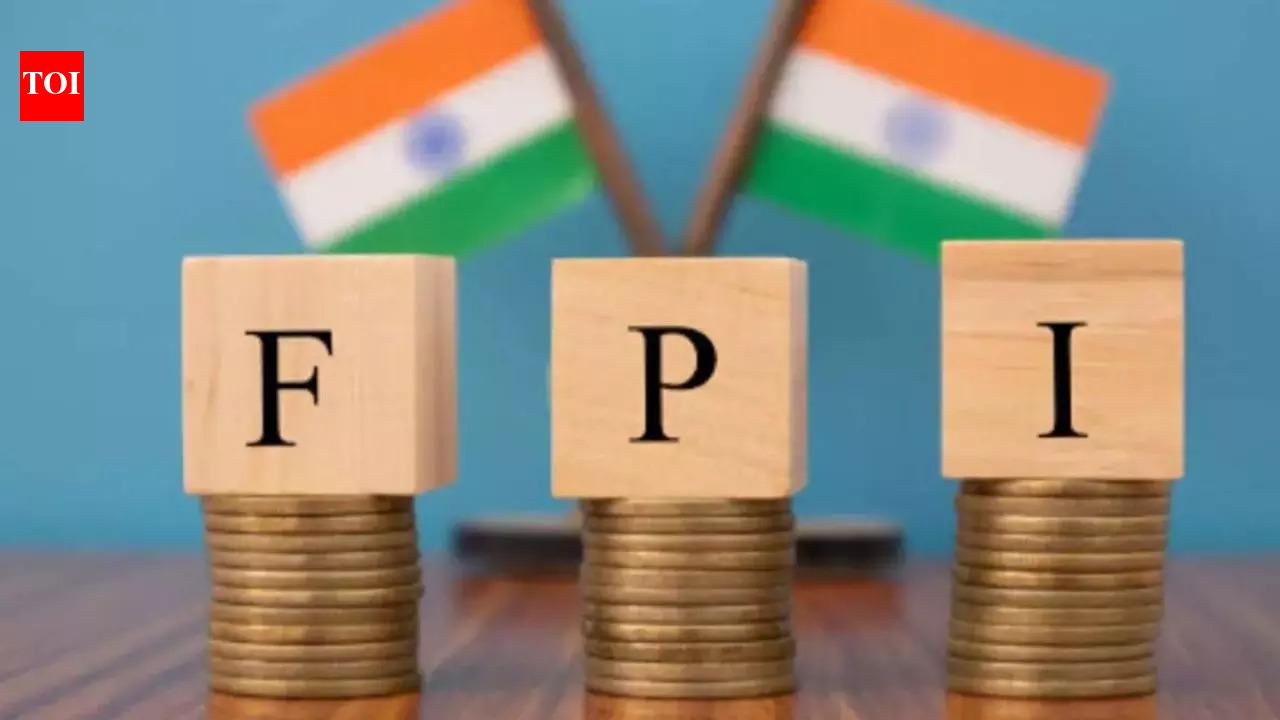
Mumbai: Net FPI selling on Indian exchanges reached around Rs 54,455 crore ($5.9 bn) by 13 Mar 2026 as global risk sentiment turned negative after a brief recovery in foreign flows earlier in the year.The earlier improvement in flows followed the India–US tariff deal, which reduced tariffs on Indian exports to the US and improved investor sentiment toward India’s growth and export outlook. February saw strong foreign buying in equities as market corrections and resilient corporate earnings supported investor confidence.“The weakness in global equity markets following the war in West Asia, the steady depreciation of the rupee and concerns surrounding the impact of high crude price on India’s growth and corporate earnings contributed to the concern of FPIs. The poor returns from India vis a vis other markets – both developed and emerging- during the last eighteen months is the principal reason for FPI’s indifference towards India. If their sustained selling strategy is to change, there should be clear indications of earnings recovery in India. In the present uncertain context, this will take time,” said VK Vijayakumar, Chief Investment Strategist at Geojit Financial Services.Geopolitical tensions escalated after US–Israel strikes on Iran at the end of Feb, triggering a global risk-off move. Foreign investors began unwinding positions in Indian equities soon after the conflict intensified. The escalation also triggered outflows from India’s fully accessible Govt bond route as investors reassessed risks in emerging markets.“Now FPIs regard South Korea, Taiwan and China as better markets to invest since they are relatively cheaper than India even after the recent correction. Also, the corporate earnings prospects in these markets appear better than that of India. Therefore, further selling by FPIs in India is likely in the short term. On the positive side, huge selling by FPIs in financials has made their valuations attractive and investable for domestic investors,” added Vijayakumar.Investors cited the risk of higher crude oil prices, pressure on the rupee, and rising bond yields as key concerns. The selling reversed improving flows seen earlier in the year.Domestic institutional investors absorbed much of the selling, which helped limit broader declines in equity markets.The outflows reflect portfolio de-risking and a reassessment of external risks rather than a structural change in India’s growth outlook.

Force majeure explained: Why Gulf countries are invoking it amid Iran vs US-Israel war – The Times of India

College Basketball Invitational abruptly cancels 2026 tournament

Ramadan RAKA Volleyball Festival draws over 40 teams in Karachi

-
 Politics1 week ago
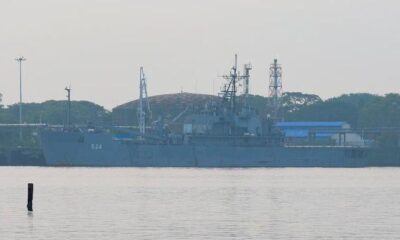
India let Iran warship dock the day US sank another off Sri Lanka, say officials
-

 Sports1 week ago
Pakistan set for FIH Pro League debut | The Express Tribune
-
 Business1 week ago
Restaurant group changes name after bid to buys pubs across the UK
-

 Entertainment1 week ago
Harry Styles kicks off new era with ‘One Night Only’ comeback show
-
 Business1 week ago
Home heating oil: ‘Most of my pension has gone on home heating oil’
-

 Sports1 week ago
Winners and losers of the 2026 NHL trade deadline
-
 Business3 days ago
Stock market crash today (March 12, 2026): Nifty50 opens below 23,600; BSE Sensex down over 900 points on continuing US-Iran war – The Times of India
-

 Entertainment1 week ago
Kanye ‘Ye’ West trips during trial: ‘Is he asleep?’