

Business
Oil Prices Likely To Fall Later This Year As Global Supply Expands: Signum’s Charles Myers

Last Updated:
‘Because the US now controls Venezuela essentially, and which means the US has unfettered 100% access to the biggest oil reserves in the world,’ chairman of Signum Global Advisors.




Easing geopolitical tensions later this year could unlock additional oil supply from multiple regions, says Charles Myers, Chairman of Signum Global Advisors.
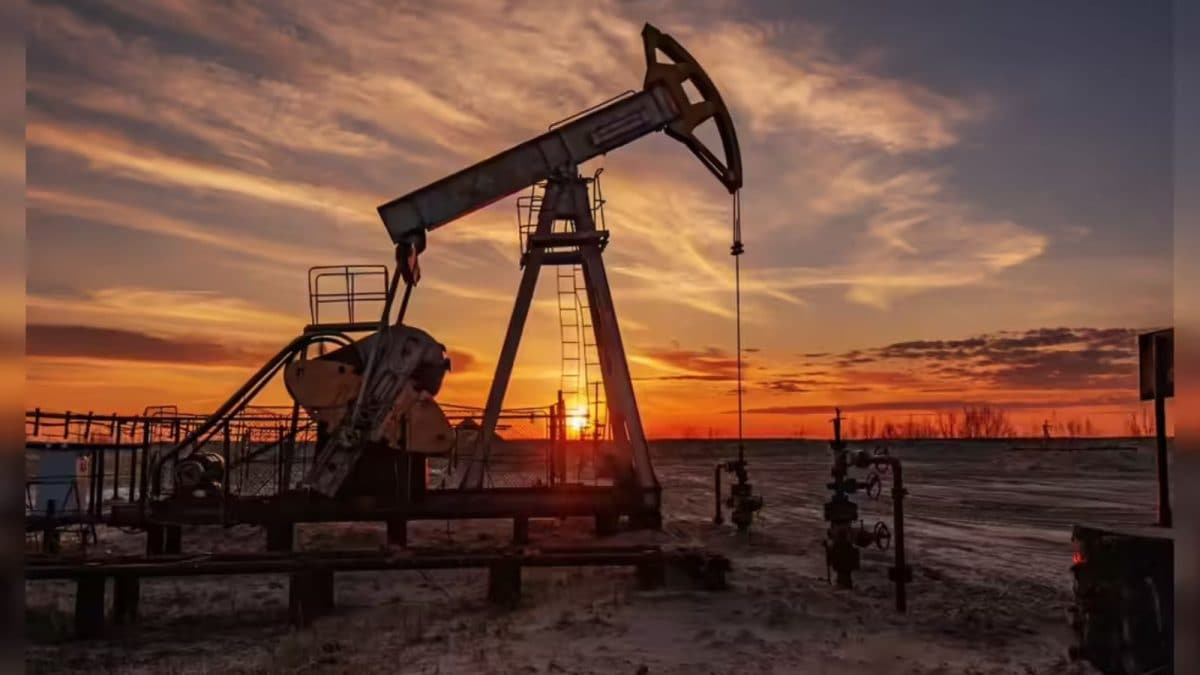
Global oil prices could decline significantly later this year as additional supply enters the market from countries such as Venezuela, Iran and Russia, according to Charles Myers, Chairman of Signum Global Advisors.
Speaking at the second edition of Moneycontrol’s Global Wealth Summit 2026, Myers said geopolitical developments could eventually lead to a surge in global oil supply.
“I say that because the United States now controls Venezuela essentially, and which means the United States has unfettered 100% access to the biggest oil reserves in the world. The oil output from Venezuela will increase much faster than most assessments,” he said.
More supply from Venezuela, Iran and Russia
Myers said easing geopolitical tensions later this year could unlock additional oil supply from multiple regions.
He noted that Venezuela, which holds the world’s largest proven oil reserves, could play a key role in boosting global supply if production ramps up quickly.
According to him, improved relations with Iran and the possibility of a renewed nuclear deal could allow Tehran to export more oil legally. A potential ceasefire in the Ukraine war could also bring more Russian oil back to global markets.
He added that strong investor interest in Venezuela’s energy sector has prompted a visit to Caracas with 55 clients in the coming days.
Myers argued that global oil supplies are already ample and that resolving geopolitical conflicts would help ensure a more stable and secure flow of energy worldwide.
Israel-Iran war
Commenting on the ongoing Middle East conflict, Myers said he believes the outcome of the war involving the United States, Israel and Iran is inevitable.
“The US today is at war, it is a very big deal. There is only one outcome of this war that Iran will lose. I say that factually, at the end of the day, Iran is up against the two most powerful, battle tested, sophisticated militaries in the world,” he said.
He added that the United States military would eventually control the Strait of Hormuz, ensuring the continued flow of oil through the critical global shipping route.
The United States military will occupy the Strait of Hormuz and the oil will flow again. “Though the war might not end,” he said.
The remarks come as tensions in the Middle East continue to escalate. Iran recently warned it could reduce US-linked oil facilities to “a pile of ashes” after US President Donald Trump said Washington could “wipe out” Iran’s largest oil export terminal on Kharg Island. Since the United States and Israel launched hostilities on February 28, waves of missile, drone and air strikes have reportedly displaced millions and killed more than 1,200 people in Iran.
March 14, 2026, 12:22 IST
Read More


Business
US stock markets today (May 1, 2026): Wall Street heads for fresh records; Apple rallies as oil prices cool – The Times of India

Wall Street moved higher on Friday and edged closer to fresh record highs as strong quarterly earnings from Apple, Estee Lauder and other companies lifted sentiment while a mild retreat in oil prices offered additional support.The S&P 500 rose 0.6 per cent, extending gains after closing at an all-time high on Thursday. The Dow Jones Industrial Average added 226 points, or 0.5 per cent, while the Nasdaq Composite climbed 0.7 per cent toward another record as of 9:35 a.m. Eastern time, AP reported.Apple led the advance, rising 3.3 per cent after the iPhone maker reported stronger-than-expected profit and revenue for the latest quarter.Estee Lauder gained 4.2 per cent after posting better earnings than expected, helped partly by strength in China, and raised some of its financial forecasts.Colgate-Palmolive added 3.1 per cent after also beating estimates, though Chief Executive Noel Wallace said the company expects “volatile macroeconomic conditions and slower category growth to continue in 2026.”The key uncertainty for global markets remained oil prices linked to the Iran war.Brent crude, the international benchmark, slipped 0.5 per cent to $109.88 a barrel on Friday, though it was still up roughly 11 per cent for the week after sharp gains earlier.Brent prices had climbed on concerns that the Strait of Hormuz could remain closed for a prolonged period, preventing tankers in the Persian Gulf from shipping crude to customers worldwide.In the bond market, Treasury yields remained largely steady as crude prices eased.The yield on the 10-year Treasury edged lower to 4.39 per cent from 4.40 per cent late Thursday.Several global stock markets were closed for the May Day holiday.Among the markets that were open, Tokyo’s Nikkei 225 rose 0.4 per cent, while London’s FTSE 100 slipped 0.6 per cent.

A rendering of Smoothie King’s new store design
Source: Smoothie King
From the rise of GLP-1 drugs to backlash against artificial ingredients, current wellness trends are fueling growth for Smoothie King.
“There are significant industry tailwinds behind what we’re doing,” said Gavin Felder, the chain’s president and CFO. “What we’ve learned is people are a lot more conscious about what choices they’re making. A lot of people are focusing on protein now and on fiber and all those good things.”
Founded more than 50 years ago, the privately held chain takes credit for inventing the word “smoothie” and popularizing the health drinks. CEO Wan Kim, previously a franchisee for the brand in South Korea, has owned Smoothie King since 2012. Last year, the company sold a minority stake to private equity firm Main Post Partners and said the deal would help Smoothie King accelerate growth and innovation.
“If you start the clock [in 2012], we’ve been growing system sales at a compound rate of double digits since then,” said Felder, who joined the company two years ago after spending 16 years with KFC owner Yum Brands.
Over the past five years, Smoothie King has grown its number of locations by about 23%, the company told CNBC. The chain’s system-wide sales have increased roughly 64% over that period.
In 2025, the company recorded revenue of $66.16 million, up 4% from the prior year, according to franchise disclosure documents. Its net income, however, fell about 6% to $14.84 million. At the end of the year, Smoothie King had more than 1,200 locations. Franchisees operate more than 96% of the chain’s stores.
Now, as consumer tastes shift more toward maximizing nutrients, protein and fiber, the chain sees an opportunity to both improve its existing locations and build new ones.
In April, Smoothie King announced a new store design with what the company called more “warmth” and “approachability” — a shift away from its current “stark, functional aesthetic” — and plans to gradually introduce it across its footprint.
And more stores are on the way: the chain said that franchisees have committed to opening more than 200 new locations in the coming years. It’s also planning to expand further into food with flatbreads, building off its existing options of smoothie bowls, yogurt bowls and loaded toasts.
Smoothie King and its franchisees will open about 90 new locations this year, according to Felder.
The wellness boost
While Smoothie King was growing before the current frenzy for protein and fiber, the trends have boosted its sales at a time when many restaurant chains are struggling to attract frugal consumers.
The growing adoption of GLP-1 medications, like Ozempic and Wegovy, are partially responsible for consumers’ interest in upping their protein and fiber intakes. Then there is the growing push from both consumers and regulators away from so-called ultraprocessed foods and artificial flavors and dyes, fueled in part by the Make America Healthy Again movement led by Health and Human Services Secretary Robert F. Kennedy Jr.
Smoothie King was somewhat ahead of the curve; in 2019, the chain finished its “Clean Blends Initiative,” which removed preservatives, artificial flavors and colors and genetically modified fruits, while adding organic vegetables.
“We have a ‘no-no’ list that is longer than Panera’s, that’s longer than Chipotle’s,” Felder said.
Moving forward, in tandem with its store redesigns, Smoothie King plans to share more of its story, from its founding to its banned ingredients.
“A lot of our guests, they are all about health and wellness,” Felder said. “They want to make sure they are tracking everything they can. They are very interested in transparency and the level of information that they can get on our brand and our products … It’s a great tailwind for the category.”
As average national gas prices hit $4 a gallon, consumers are showing signs that they are growing more budget conscious. A number of restaurant companies, from Domino’s Pizza to Chipotle, have reported that sales softened in March, after the U.S.-Israeli war with Iran began.
There is also more competition than ever in the restaurant space for health-conscious diners and protein-rich snacks and meals.
Still, Felder is optimistic that consumers would still buy a FiberMaxxing Smoothie or Power Meal Spinach Pineapple Smoothie, rather than skipping the drink or making it at home.
“We believe — and I’ve seen this — that when customers are stretched, they are more likely to spend on things that make them feel good, rather than things that make them feel guilty.”
Business
Middle East conflict drags on: Is Iran’s economy approaching breaking point? What analysts are saying – The Times of India

Weeks of conflict have worsened Iran’s economic pressures, deepening strain on its financial system even as the Islamic Republic continues to function under a standoff in the Gulf following a truce and ongoing maritime restrictions.The situation has left Iran in a stalemate with the United States and Israel, with ceasefire talks stalled while key Gulf routes remain disrupted. Despite damage to infrastructure, industries and oil exports, analysts, quoted by Reuters, say Iran is still managing internal supplies and limited external trade.“I think that they have calculated a longer runway than I think economists or Western policymakers are anticipating,” said Sanam Vakil, head of the Middle East programme at Chatham House. Vakil added that Iran is relying on its internal control mechanisms and what it describes as a “resistance economy”.“They are quite known to use repressive capacity. They’re relying on people using their savings,” she said, highlighting Tehran’s approach of prioritising domestic resources and cross-border trade through land routes.The economic impact remains difficult to fully assess due to limited official data and communication restrictions, though reports suggest significant pressure on businesses, inflation and employment conditions.However, key indicators point to partial resilience. Authorities have not imposed broad restrictions on withdrawals, fuel rationing or delayed salary payments, while food availability in urban markets remains stable.Shipping data indicated that reduced crude movement from Gulf terminals, with analysts estimating that export constraints could become more severe over time depending on how long restrictions persist.A senior official at Iran’s central bank told Reuters that the country holds significant gold reserves that could be deployed if required, while also claiming Iran has long experience in sustaining imports under sanctions conditions.In the agricultural sector, analysts say Iran remains relatively resilient due to diversified supply routes and improving domestic output, which could reduce near-term import dependency. “Iran is the largest food importer in the region. But it is also important to note that Iran is the least food insecure country in the region,” said Ishan Bahnu, head agricultural commodities analyst at Kpler.Trade through neighbouring countries including Turkey, Iraq and Pakistan has continued, while Russia has also increased shipments across the Caspian Sea, bypassing Gulf shipping routes.On the domestic front, however, economic stress is visible. Businesses reported rising costs, supply disruptions and weakening demand. “Rising prices of basic goods, especially products like ours that are directly linked to people’s tables definitely put pressure on people,” said Abbas Smaeelzade, a rice and grain seller, adding that his sales have fallen sharply since the conflict escalated.Meanwhile, mechanic Hossein Amiri said customer activity has dropped significantly. “Our business has basically come to a standstill,” he said, warning of further deterioration if conditions persist.Concerns also remain over potential social unrest, with analysts noting that prolonged economic pressure could heighten instability risks. As Vakil said, a resolution would require easing sanctions to improve Iran’s access to overseas funds and international trade. She added that Tehran needs greater ability to use foreign currency holdings abroad, expand oil exports and restore normal trade channels.


Turkiye’s apparel exports slip 7.2% in Q1 on soft demand

What petrol, diesel drivers must know now

AAFA marks 50th American Image Awards with future focus

-
 Business1 week ago
Gold prices in Pakistan Today – April 23, 2026 | The Express Tribune
-

 Entertainment1 week ago
Mike Vrabel to miss Patriots’ final NFL draft day —here’s why
-

 Fashion1 week ago
Canada forms new advisory committee to strengthen US trade relations
-
 Business1 week ago
Oil surges past 4% as Iran keeps Hormuz locked – SUCH TV
-

 Tech1 week ago
5 AI Models Tried to Scam Me. Some of Them Were Scary Good
-
 Business1 week ago
France Ends Airport Transit Visa Requirement for Indian Travellers | Business – The Times of India
-

 Tech4 days ago
A Brain Implant for Depression Is About to Be Tested in Humans
-

 Fashion1 week ago
India’s T&A exports fall 14% in March, FY26 down 2.21%