

Business
Government notifies FDI changes on China funds – The Times of India

NEW DELHI: The Centre has notified two crucial changes to foreign direct investment rules — the first relating to flows from neighbouring countries such as China and the second allowing up to 100% investment in insurance business — as it seeks to step up inflows amid a weak rupee.Starting May 1, companies with up to 10% Chinese holding can invest through the automatic route. This amends a six-year policy that mandated govt approval for all FDI from countries that share land borders with India. The amendments came amid concerns expressed by global investors, particularly private equity firms.
Relaxed FDI rules won’t apply to entities registered in China, neighbouring nations
Concerns by global investors prompted Union Cabinet to allow companies without “significant beneficial ownership” to be permitted under the automatic route. In line with PMLA, the cap on significant beneficial ownership has been kept at 10%. However, the relaxed FDI rules will not apply to entities registered in China, Hong Kong or other countries sharing land borders with India.The notification also said that a multilateral bank or fund, of which India is a member, such as ADB, NDB and AIIB, will not be treated as the entity of a particular country, nor shall any country be treated as the beneficial owner of investments of such bank or fund in India.Further, transfer of “participating interest or right” in oil fields by Indian companies to a person resident outside India will be treated as foreign investment, govt said.Through another notification, govt allowed 100% FDI in insurance companies and intermediaries, such as brokers, third-party administrators or corporate agents, while limiting investment through the automatic route at 20% in the case of Life Insurance Corporation of India.It specified that either the chairman or MD and CEO need to be resident Indian citizens.
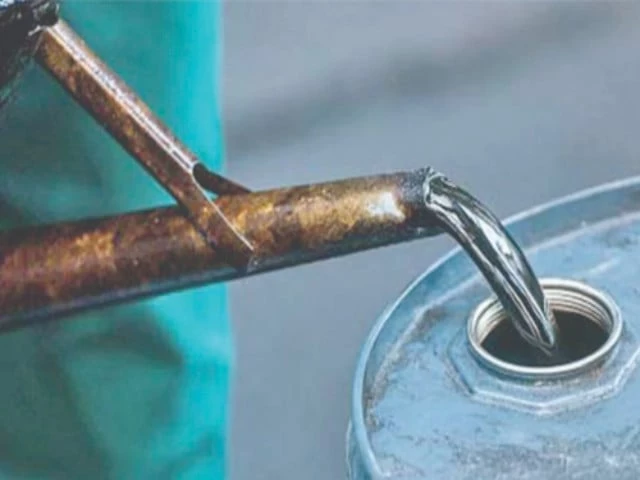
Pakistan’s struggling economy is likely to remain under sustained pressure, with double-digit inflation expected to persist if global oil prices continue to surge amid the ongoing Middle East crisis, according to a report by Dawn.Topline Securities Ltd, in its latest “Pakistan Strategy” report released Saturday, provided a grim assessment of the impact of rising energy costs and regional instability on the country’s economy and stock market. The brokerage described the situation as “prolonged and evolving,” warning that any improvement depends on an immediate and peaceful resolution to the conflict.The report, asx cited by ANI, said that under current conditions, inflation could average between 9 and 10 per cent over the next year, with fourth-quarter FY26 figures expected to exceed 11 per cent. These projections are based on oil prices at $100 per barrel, with every $10 increase adding around 50 basis points to inflation. If oil rises to $120 per barrel, annual inflation could reach 11 per cent, potentially forcing the State Bank of Pakistan into further aggressive interest rate hikes.The rising inflationary pressure is expected to slow economic growth. Topline Securities has cut its GDP forecast for FY27 to between 2.5 and 3.0 per cent from an earlier estimate of 4.0 per cent. Growth for FY26 is projected at 3.5 to 4.0 per cent, but the industrial sector remains vulnerable, with growth possibly dropping to just 1 per cent from nearly 4 per cent.According to Dawn, the current account deficit for FY27 could exceed $8 billion if the government fails to maintain strict import controls, worsening pressure on foreign exchange reserves. The fiscal deficit for FY26 is expected to range between 4.0 and 4.5 per cent of GDP, exceeding targets set by the International Monetary Fund.The Pakistan Stock Exchange has been among the worst-performing markets globally, reflecting the country’s heavy reliance on imported energy. Petroleum imports are projected to reach $15 billion in FY26, while Pakistan imports around 85 per cent of its energy needs. This dependence contributed to a 15 per cent decline in the market during the first quarter of the year.The economic outlook is further affected by a projected 3.5 per cent decline in remittances, with inflows from the Gulf Cooperation Council region expected to fall by 10 per cent. Exports are also forecast to decline by 4 per cent.On the currency front, the Pakistani rupee is expected to weaken to 298 against the US dollar by FY27. Persistent conflict could push depreciation beyond historical averages, increasing pressure on supply and demand.Dawn noted that while domestic exploration firms may eventually increase production to reduce reliance on liquefied natural gas imports, the near-term outlook remains marked by high interest rates, rising urea prices, and a growing dependence on emergency administrative measures to prevent a deeper economic crisis.
MUMBAI: Kotak Mahindra Bank Saturday confirmed that it is looking at Deutsche Bank’s retail business, which is on the block, while stating that it has dropped out of IDBI Bank acquisition race because of the valuation and it would be ‘difficult to swallow’.Responding to queries at an earnings press conference Ashok Vaswani, MD & CEO said the bank would pursue deals only if they met three filters — strategic fit, financial viability and manageable execution without straining management bandwidth — and would apply the same criteria to evaluate Deutsche Bank’s assets.On IDBI, Vaswani said that Kotak had looked at the bank from every single position from a valuation perspective. “Obviously it was very highly valued. Of course, it has some kind of scale but it wasn’t really a must for us to do. Obviously, it would have been a difficult thing to swallow,” he said.Govt is reviewing how it should go about with a fresh bid to sell its stake in IDBI Bank, along with LIC’s.Kotak Mahindra Bank reported standalone net profit of Rs 4,026.6 crore for the quarter ending March 31, 2026, up 13.4% year-on-year from Rs 3,551.7 crore, supported by strong loan growth, lower provisions.
MUMBAI: The appointments committee of the cabinet has approved the appointment of Reserve Bank of India (RBI) executive director (ED) Rohit Jain as deputy governor (DG) of the banking regulator.The appointment is for a period of three years from the date of joining the post on or after May 3, 2026, the Department of Personnel (DoP) said in a notification on Saturday.Jain has spent about 30 years at the central bank with RBI handling several functions including banking supervision, which he was in-charge of as ED before this appointment.Jain will replace T Rabi Sankar, whose tenure ended on Saturday after two extensions granted in 2024 and 2025. Sankar was also a career central banker and took over as deputy governor in 2021.Vivek Deep, Rohit Jain, Radha Shyam Ratho and Ajay Kumar were the senior most executive directors in the fray for the DG post. Jain has been an ED with the RBI since December 2020.As senior most DG, Rabi Sankar had oversight of 12 departments including financial markets regulation, foreign exchange, risk monitoring, fintech and payment and settlement.The departments managed by all DGs will most likely be reshuffled after Jain takes over. Jain became one of the two deputy governors promoted from within the institution, along with SC Murmu, who was elevated in October 2025. The other deputy governors include economist Poonam Gupta and banker Swaminathan J, both appointed from outside the RBI’s internal ranks.


Buckingham Palace makes statement amid Princess Eugenie pregnancy talks
Pakistan faces economic strain; oil surge drives inflation toward 11% – The Times of India

US midterm race enters last six months with Congress at stake

-

 Tech6 days ago
A Brain Implant for Depression Is About to Be Tested in Humans
-
 Business5 days ago
‘I had £20,000 stolen and had to fight a 13-month fraud reporting rule to get it back’
-

 Tech1 week ago
They Wanted to Join Raya. They’ve Been on the Waiting List for Years
-

 Tech1 week ago
Why Do I Like Dyson’s PencilVac So Much?
-

 Tech6 days ago
Almost 90% of women leave tech industry within 10 years | Computer Weekly
-

 Fashion1 week ago
North India cotton yarn steady despite continued push by spinners
-

 Entertainment1 week ago
Anne Hathaway makes shocking confession about Taylor Swift’s music
-
 Business7 days ago
Pakistan’s oil market is fuelling the crisis | The Express Tribune