

Business
Government sets out plans for north of England rail investment

Emer MoreauBusiness reporter
 Getty Images
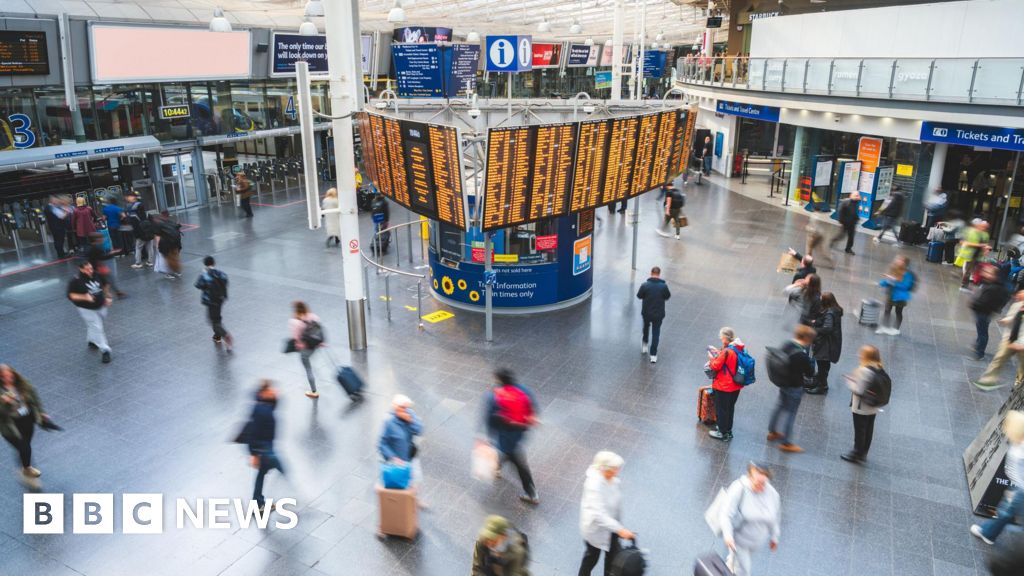
The government has set out its vision for major rail improvements across the north of England, which it says will transform the region and boost the UK economy, more than a decade after such a project was first proposed.
The multibillion pound scheme, known as Northern Powerhouse Rail (NPR), aims to deliver faster journeys and more frequent trains across the North through a combination of upgraded and new lines, and improvements to stations.
An initial £1.1bn has been earmarked for design and preparation. Construction is not expected to start until after 2030.
It will be delivered in phases, starting with upgrades to lines between Leeds, York, Bradford and Sheffield, the government said.
The second phase will be the building of a new route between Liverpool and Manchester, and the third will improve connections between Manchester and cities in Yorkshire, according to the outline of the plan.
The government said the “transformation” of travel in the North would shorten commutes and encourage investment across the region, adding up to £40bn to the British economy.
Prime Minister Sir Keir Starmer said the cycle of “paying lip service to the potential of the North” had to end.
“This government is rolling up its sleeves to deliver real, lasting change,” he said.
Successive governments have promised to unlock the North’s economic potential with investment in infrastructure.
The Northern Powerhouse project was first proposed by former Conservative Chancellor George Osborne in 2014, while Boris Johnson was later elected on a “levelling up” agenda.
However, promised rail investments were scaled back.
The government plans to make NPR the focus of a wider Northern Growth Strategy, which will be published in spring.
The first phase of NPR will also see improvements to railway stations in Leeds, Sheffield and York, the government said.
The plans include pushing ahead with a much-anticipated new station at Bradford, which proponents say would allow young jobseekers from the city to access opportunities across a much wider area.
A new station is also expected at Rotherham Gateway.
Additionally, the Department for Transport (DfT) said that the business case to re-open the Leamside line in the North East would be pursued.
The government has not announced a firm budget or committed specific funds beyond 2029, apart from the £1.1bn to develop the plans.
Instead, a cap of £45bn has been set on central funding. The government said this could be topped up by contributions from local government.
“For too long, the North has been held back by underinvestment and years of dither and delay,” Transport Secretary Heidi Alexander said.
“This new era of investment will not just speed up journeys, it will mean new jobs and homes for people, making a real difference to millions of lives.”
The DfT said lessons had been learned from attempts over the last decade to build the HS2 network, which is severely over budget, behind schedule and has been scaled back dramatically from its original concept.
It was originally supposed to be a Y-shaped line from London and splitting at Birmingham towards Manchester and Leeds.
It will now terminate at Birmingham, and is expected to cost at least £80bn.
The government also said that following NPR’s completion it intended to build a new rail link between Birmingham and Manchester, but it is unclear whether it would be a high-speed line.
The government is aiming to avoid a repeat of the HS2 cost over-runs by producing a detailed plan over a three-year period. That also allows it to delay allocating further funding while the public finances are under pressure.
The Conservatives accused the government of “watering down” Northern Powerhouse Rail, saying ministers had “put back any plans to actually deliver it and rewritten timetables on the fly”.
Shadow rail minister Jerome Mayhew said: “Labour lurch from review to review, deadline to deadline, with no grip on costs, no clarity on scope and no courage to make decisions.
“Northern Powerhouse Rail could have been transformational, empowering regional growth and regeneration. Under Labour it risks becoming a permanent mirage that is endlessly redesigned, downgraded and never delivered.”
The chief executive of the large engineering and construction firm, Arup, Jerome Frost, said the new investment would “help unlock the region’s vast economic potential”.
Henri Murison, chief executive of the Northern Powerhouse Partnership, an organisation set up to support the coordinated economic development of the north of England, said the plan provided a “clear route to higher productivity growth”.
He continued: “Northern Powerhouse Rail will enable a single labour market more like that of London and the South East so a young person in Bradford could aspire to work in Sheffield or Manchester, or a business there attract talent from further afield than they can today.”

Monzo says it has resolved an issue affecting its mobile banking app on Tuesday afternoon after thousands of customers reported difficulties accessing it.
Platform outage monitor Downdetector saw more than 4,000 reports from users complaining of problems shortly after 15:00 GMT.
The company earlier acknowledged an issue affecting its app – telling customers who tried to use it that it would “not be fully functional” while it investigated.
A Monzo spokesperson said “customers can now use the app as normal.”
“For a short period today, we activated Monzo Stand-in – our fully independent backup bank – while we investigated an issue,” they told the BBC.
“Customers were always able to make payments with their card, withdraw cash, freeze their card and send and receive bank transfers.”
Many attempting to open the app after 15:00 GMT on Tuesday were met with a notice telling them “we’re experiencing issues”.
This said the app would not function as normal but other services, such as viewing account details and moving money between accounts, would be available.
However, some users attempting to access the app took to social media to complain to Monzo that they could not view funds, recent payments or make bank transfers.
In posts seen by the BBC, some X users also told Monzo they had been unable to use their card or withdraw money.
The BBC has asked Monzo for comment about these complaints.
The company has more than 14 million personal and business customers across the UK.
It has previously highlighted its back-up banking infrastructure as a way it avoids large-scale outages and issues for customers – many of which were seen across other UK banks during a spate of online outages last year.
About 1.2m people in the UK were affected by banking outages occurring on what was pay day for many in early 2025.
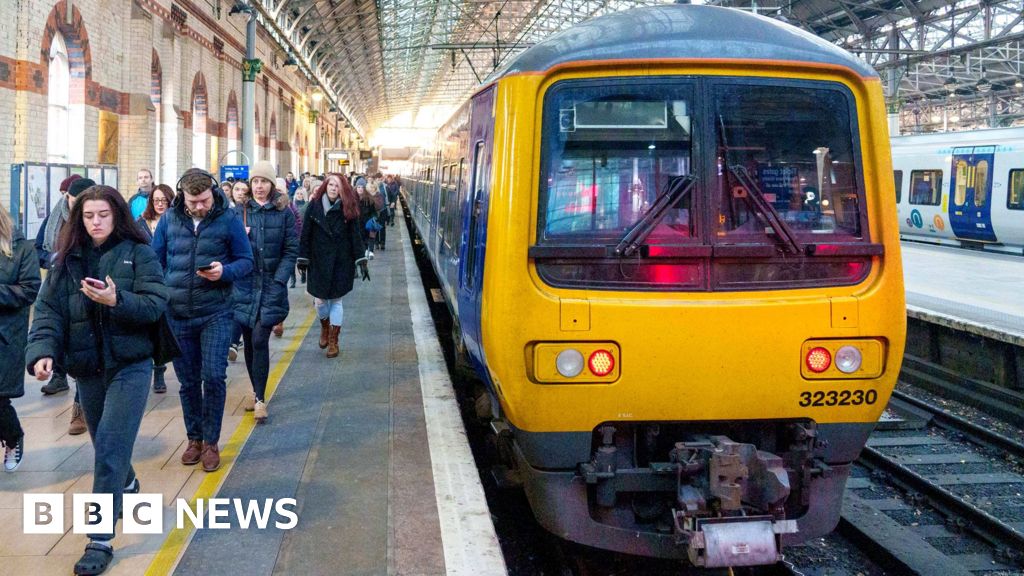
The government is set to announce its intention to build a new rail link between Birmingham and Manchester, the BBC understands.
Previous plans for the HS2 high-speed rail line had included a line between the two cities, but that part of the project was scrapped by Rishi Sunak’s government.
On Wednesday, the government is also expected to confirm proposals for new and improved rail links across the North of England in a scheme known as Northern Powerhouse Rail (NPR).
Little detail about a new Birmingham to Manchester route is anticipated, other than the intention to build it after NPR is completed, meaning it may not happen for decades.
Plans to bring high-speed rail to the north of England were first put forward by former Conservative chancellor George Osborne in 2014.
The existing West Coast main line is very crowded and ministers acknowledge the need to increase capacity at some point.
Mayor of Greater Manchester Andy Burnham has supported the idea of an alternative new line between Birmingham and Manchester.
A new rail line between Liverpool and Manchester is seen a central piece of the overall Northern Powerhouse rail project, which is aimed at cutting travel times between northern cities and towns as well as boosting the UK economy outside of London.
But expected announcements from the current government were put on ice several times last year due to cost concerns.
Insiders said an extended review process of the project was under way in a bid to avoid mistakes made with HS2, which has been dogged by problems and costly delays.
HS2 is currently tens of billions of pounds over budget and around a decade behind schedule.
Reports state that the now-shortened line between Birmingham and London could cost £81bn.
Accounting for inflation, that would mean at least £100bn will be spent but only 135 miles of railway built.
HS2 Ltd, the company created by the Department for Transport, has accepted it failed to keep overall costs under control and said delivery has not matched what it described as the unrealistic early expectations.
The Conservatives said Labour had “no ability to follow through on its promises”.
Shadow Rail Minister Jerome Mayhew said: “Labour have spent months talking up Northern Powerhouse Rail, yet today they’ve put back any plans to actually deliver it and rewritten timetables on the fly.
“Northern Powerhouse Rail could have been transformational, empowering regional growth and regeneration.
“Under Labour it risks becoming a permanent mirage that is endlessly redesigned, downgraded and never delivered.”
Business
JPMorgan Chase says banks could fight Trump credit card rate cap: ‘Everything’s on the table’

JPMorgan Chase CFO Jeremy Barnum hinted Tuesday the industry could fight President Donald Trump’s demand for credit card price controls, saying “everything’s on the table.”
“If you wind up with weakly supported directives to radically change our business that aren’t justified, you have to assume that everything’s on the table,” Barnum said on a call with reporters following JPMorgan’s fourth-quarter earnings report. “We owe that to shareholders.”
Barnum was responding to a question about whether banks would choose to litigate to block Trump’s demand, made late Friday, that card companies cap interest rates at 10% for a year. Last year, the industry successfully fought efforts by the Consumer Financial Protection Bureau to cap card late fees.
Banks and industry insiders say that an interest rate limit would result in fewer credit card accounts for Americans and a dip in spending for the U.S. economy, as companies would simply pull accounts rather than offer them at an unprofitable level.
The average credit card rate nationally is 19.7% as of this month, according to a weekly survey from Bankrate.com, while rates for subprime borrowers and store-specific cards are typically higher.
“Our belief is that actions like this will have the exact opposite consequence to what the administration wants for consumers,” Barnum said. “Instead of lowering the price of credit, we’ll simply reduce the supply of credit, and that will be bad for everyone: consumers, the wider economy, and yes, at the margin, for us.”
The CFO declined to directly answer a question on whether JPMorgan would comply with Trump’s demand, which has a proposed Jan. 20 start date. Banks that don’t follow the directive are “in violation of the law,” Trump told reporters Sunday.
Still, it’s unclear how Trump’s mandate would be enforced. There is no U.S. law capping card rates, though a bill was introduced last year from Sen. Josh Hawley of Missouri and Sen. Bernie Sanders of Vermont that would limit card APRs at 10% for five years. That bill is stalled in Congress.
Other voices in the corporate and political realms began addressing the possible impact of Trump’s rate cap on Tuesday.
Beyond banks, airlines and retailers rely on revenue from card partnerships to bolster profit. For instance, Delta Air Lines said Tuesday that its American Express partnership produced $8.2 billion in revenue last year.
Delta CEO Ed Bastian said on an earnings call that the cap would “upend the whole credit card industry … I don’t see any way we could even begin to contemplate how that would be implemented.”
House Speaker Mike Johnson struck a note of caution when asked about the issue at a news conference.
“We have a lot of work to go [on] consensus around it, but you got to be very careful as we go forward in that in our zeal to bring down costs — you don’t want to have negative secondary effects,” Johnson said.
— CNBC’s Emily Wilkins and Leslie Josephs contributed to this report.


Brilliant in blue, Man City’s Semenyo proving the right man in the right place

Saks’ CEO Baker to exit luxury retailer ahead of bankruptcy

UK ‘drops’ plans for mandatory digital ID for workers in latest U-turn

Minnesota Governor Tim Walz to drop out of 2026 race, official confirmation expected soon

VAR review: Why was Wirtz onside in Premier League, offside in Europe?

8th Pay Commission: From Policy Review, Cabinet Approval To Implementation –Key Stages Explained

-
 Entertainment1 week ago
Minnesota Governor Tim Walz to drop out of 2026 race, official confirmation expected soon
-
 Sports1 week ago
VAR review: Why was Wirtz onside in Premier League, offside in Europe?
-
Business1 week ago
8th Pay Commission: From Policy Review, Cabinet Approval To Implementation –Key Stages Explained
-

 Entertainment6 days ago
Does new US food pyramid put too much steak on your plate?
-

 Politics6 days ago
UK says provided assistance in US-led tanker seizure
-

 Entertainment6 days ago
Why did Nick Reiner’s lawyer Alan Jackson withdraw from case?
-
 Business6 days ago
Trump moves to ban home purchases by institutional investors
-

 Sports1 week ago
FACI invites applications for 2026 chess development project | The Express Tribune