Connect with us

Business

Govt seeks private role in shipping | The Express Tribune

Published

on

Govt seeks private role in shipping | The Express Tribune

Maritime minister offers 140 acres of port land for industrial park for shipbuilding, shipping ventures


KARACHI:

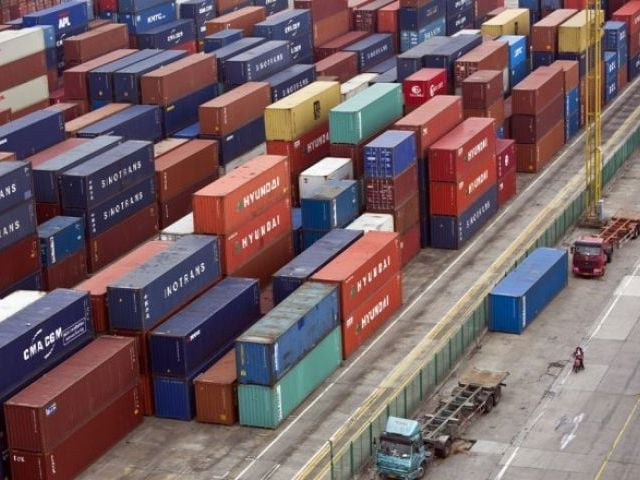
Federal Minister for Maritime Affairs Muhammad Junaid Anwar Chaudhry has invited the private sector, particularly Karachi’s business community, to invest in Pakistan’s shipping and maritime industry, traditionally dominated by foreign firms and the state-run Pakistan National Shipping Corporation (PNSC).

Speaking at the Karachi Chamber of Commerce and Industry (KCCI) on Tuesday, the minister said the government aims to open up the sector for local investors, offering port land and joint-venture opportunities to develop new shipping lines and terminals. “We have 140 acres of land available where an industrial park can be developed in partnership with the private sector,” he said, adding that the Karachi Port Trust (KPT) is ready to act as a strategic partner whilst the private sector handles operations.

He emphasised that the ministry will no longer allow real estate ventures on port lands, which will be reserved strictly for trade, logistics and industrial purposes. “We will provide land, but it must be used for business — not housing societies,” he stressed.

Pakistan’s business community, particularly in Karachi, has long voiced grievances against foreign shipping companies operating in the country. With the exception of the PNSC, nearly all shipping lines serving Pakistan are foreign-owned, with their headquarters based abroad. These firms handle the majority of the country’s import and export cargo through local agents who, traders allege, often treat them harshly and impose excessive charges.

Business leaders complain that shipping agents levy multiple fees under various heads, including container damage, port delays and demurrage, and pass on all such costs to local importers and exporters. In addition, several foreign shipping companies reportedly charge customers using an exchange rate of Rs297 per US dollar, significantly above the official interbank rate of around Rs280. These rates, displayed publicly on their websites, are said to exceed even the hawala or hundi market rates, further increasing the cost of doing business.

The business community has repeatedly appealed to authorities to address these practices, calling for regulatory oversight to ensure transparency and fairness in shipping operations.

Acknowledging these long-standing issues, the maritime minister has urged local entrepreneurs to invest in the country’s shipping sector. He encouraged businessmen to establish indigenous shipping lines and purchase vessels, assuring that the government would offer port land to investors at fair prices.

The minister urged Pakistani businessmen to form a consortium and launch local shipping companies, noting that “PNSC alone cannot bear the burden of reducing freight costs.” He announced that the government is expanding PNSC’s fleet by 50%, with five new vessels to be added soon, and directed that the target of 30 ships be achieved within one year instead of three.

Chaudhry also outlined plans to develop a Pakistan Maritime Industrial Zone on 700 acres, featuring a shipbuilding yard, steel melting unit and ship-breaking facility. He said the ministry was ready to offer land for both ship-breaking and shipbuilding, on the condition that it would not be converted into real estate.



Source link

Continue Reading
Click to comment

Leave a Reply

Your email address will not be published. Required fields are marked *

Business

Supply ‘too reliant’ on one asset, says South East Water boss

Published

on

Supply ‘too reliant’ on one asset, says South East Water boss


Fiona Irving,South East environment correspondentand

Craig Buchan,South East

BBC A man in a high-vis orange jacket that says South East Water on it. A body of water and some trees can be seen in the blurry background. He has a stern expression.BBC

South East Water chief executive David Hinton has faced calls to resign over supply issues

The boss of South East Water has said the company is too dependant on individual facilities after a six-day supply failure affected thousands of people in Kent.

About 24,000 properties in and around Tunbridge Wells had no or low pressure tap water from 29 November until supplies returned to most on 4 December. For the next nine days, residents were told to boil the restored tap water before consumption.

A disinfection problem at Pembury Water Treatment Works had caused the failure but there was no evidence supply became infected, said South East Water.

The water company’s chief executive, David Hinton, said the firm was “just too reliant in some areas on one asset”.

Mr Hinton was speaking to the BBC earlier in the week and said the company wants to “do more” at a separate works at Bewl Water reservoir, near Wadhurst in East Sussex, and spend £30m on expanding output capacity.

The proposal would give the company the ability to “rapidly fill the area of Tunbridge Wells, for example, as soon as we see any issue”, said Mr Hinton.

He said this would allow “extra resilience should any other challenges hit any other treatment works” without further draining the reservoir.

“It’s not only for Tunbridge Wells, it’s for the wider parts of Kent as well,” added the chief executive, who has faced calls to resign over the supply issues.

‘It’s not perfect, it’s never perfect’

South East Water was one of five companies to contest regulator Ofwat’s latest price controls, which already allowed it to increase an average annual bill from £232 to £274 by 2030.

The firms argued the 36% average price increase for customers in England over the next five years was not enough to deliver better infrastructure.

The Competition and Markets Authority has provisionally agreed that South East Water can increase bills by an extra 4%, pending a final decision in 2026.

Mr Hinton said the Bewl Water proposal was a reason why the company was asking the competition regulator to allow it to raise more money from customers.

South East Water suspects “something to do with the level” of water at its Pembury reservoir contributed to the supply failure but the firm wants to “do a full investigation”, he said.

The company introduced hosepipe restrictions in July for Kent and Sussex customers after dry weather earlier in 2025.

The Drinking Water Inspectorate said it was investigating the Tunbridge Wells loss of supply incident.


Source link

Continue Reading

Business

Japan’s rate hike signals new tightening phase | The Express Tribune

Published

on

Japan’s rate hike signals new tightening phase | The Express Tribune


BOJ raises short-term rate to 30-year high, driven by persistent inflation, economic worries

The Bank of Japan (BOJ) has raised its benchmark interest rate to 0.75%, marking its highest level in three decades. The move, which took place after a two-day policy meeting, comes as the country grapples with persistent inflation and concerns about its economic future, the Associated Press (AP) has reported.

The rate hike of 25 basis points follows several previous increases in 2024, culminating in this policy change, which was widely expected by analysts. The BOJ’s decision signals a new phase of monetary tightening after years of ultra-low rates designed to stimulate Japan’s economy. The 0.25-percentage-point hike took the BOJ’s benchmark short-term rate to 0.75%, its highest level since September 1995. It will raise costs for mortgages and other loans. The BOJ also indicated that it might raise rates further in the future, depending on economic conditions.

According to Xinhua news agency, it is the first rate increase since January and also the first under the administration of Prime Minister Sanae Takaichi, who advocated an aggressive fiscal policy and monetary easing.

Reasons for rate cut

The BOJ’s decision to raise rates stems from a combination of economic factors that have pressured the central bank to pivot away from its historically low interest rates.

For years, Japan struggled with deflation, which is when prices fall, leading to reduced consumer spending and investment. In response, the BOJ kept interest rates near zero or negative, hoping to stimulate the economy by encouraging borrowing and spending. However, this strategy has faced challenges, especially with inflation rising faster than expected.

As of November 2024, Japan’s inflation rate was recorded at 3%, above the BOJ’s target of 2%. This sustained inflationary pressure has forced the central bank to act.

BOJ Governor Kazuo Ueda explained that the rate increase aims to ensure inflation remains consistent with the central bank’s 2% target. He added that inflationary pressures had risen moderately, and with the labour market showing signs of improvement, the BOJ could no longer justify maintaining its ultra-loose monetary policy.

However, Ueda stressed that the rate hike is still a cautious step, with real interest rates remaining in negative territory. Since Takaichi took office, the yen has sharply depreciated amid concerns that her expansionary policy would further deteriorate Japan’s fiscal health, prompting the selling of the currency and government bonds.

Implications for economy

The immediate impact of the rate hike was felt in both Japan’s currency and bond markets. The yen briefly weakened against the dollar, falling to the lower 156 range, while the yield on Japan’s 10-year government bonds rose to 2.02%, its highest level since 1999.

Rising bond yields, particularly on long-term government debt, could make borrowing more expensive for both consumers and businesses, potentially slowing economic growth. For Japanese consumers, the rate hike could lead to higher borrowing costs, especially for mortgages and personal loans. The cost of living has already risen in recent months due to higher prices for imported goods like food and energy, exacerbated by the depreciation of the yen.

While the rate hike may support the yen in the long run, providing some relief from inflationary pressures stemming from imports, it could also increase the burden on consumers already struggling with rising costs. On the other hand, the rate increase could offer higher returns on savings deposits, benefiting individuals who have invested in fixed-income assets. However, the potential rise in borrowing costs may slow down consumer spending, a critical engine of Japan’s economic growth.

The BOJ’s decision to raise rates comes at a time when most other major central banks, such as the US Federal Reserve and the European Central Bank, have either paused or begun to cut interest rates to support slowing economies.

While the US and Europe grapple with slower economic growth and the aftermath of the pandemic, Japan’s inflationary pressures and concerns about fiscal health have prompted the BOJ to shift its approach. The weakening yen, which has depreciated against the dollar in recent years, has also contributed to higher inflation in Japan.

Risks and challenges

The decision to raise rates is not without risks. Japan’s economy is still fragile, and the recent GDP contraction of 0.6% in the third quarter of 2025 highlighted the ongoing challenges faced by the country. Rising interest rates could further dampen consumer spending and investment, possibly pushing the economy into a deeper slowdown.

Moreover, Japan’s high levels of public debt, estimated at nearly 230% of GDP, present a big challenge. As borrowing costs rise, the government may face higher costs to service its debt, which could strain fiscal policy.


Source link

Continue Reading

Business

GST notice: UltraTech Cement gets Rs 782 crore notice; company says it will contest – The Times of India

Published

on

GST notice: UltraTech Cement gets Rs 782 crore notice; company says it will contest – The Times of India


UltraTech Cement on Saturday said it has received a demand notice of Rs 782.2 crore from GST authorities and plans to challenge the order before the appropriate forum, according to PTI.In a regulatory filing, the Aditya Birla Group company said it is reviewing the order and considering all legal options. “The Company is reviewing the Order, considering all legal options, and accordingly would be contesting the demand,” UltraTech Cement said, PTI quoted.The demand pertains to the period 2018-19 to 2022-23 and has been raised on account of alleged short payment of Goods and Services Tax (GST), improper utilisation of Input Tax Credit (ITC) and related matters, the company said.UltraTech added that the order was passed “without due consideration of the Company’s submissions”.According to the filing, the order upholds a tax liability of Rs 3,90,95,58,194, along with applicable interest on the tax demand, additional interest of Rs 27,68,289, and a penalty of Rs 3,90,95,58,194.The company said the order was issued by the Joint Commissioner, Central Goods and Services Tax and Central Excise, Patna, on Friday.UltraTech Cement is India’s largest cement manufacturer, with a production capacity nearing 200 million tonnes per annum.


Source link

Continue Reading

Trending