

Business
Govt targets full integration into Asian green supply chains | The Express Tribune


Climate minister says green productivity provides pathway to strengthen energy security
LAHORE:
Federal Minister for Planning Ahsan Iqbal has emphasised that green productivity is not just an environmental choice; it is an economic necessity for countries like Pakistan.
Speaking at the Asian Productivity Organisation’s (APO) international conference on Green Productivity 2.0, Iqbal stated that by 2035, Pakistan aims to achieve over 6% productivity-driven GDP growth, $100 billion in exports, a 30% reduction in emissions intensity, universal climate-resilient infrastructure, 60% clean energy, two million green and high-tech jobs and full integration into Asian green supply chains. The conference was jointly organised by the LUMS Energy Institute, the National Productivity Organisation Pakistan (NPO) and the Ministry of Industries & Production at the Lahore University of Management Sciences (LUMS).
The two-day event brought together senior government officials, industry leaders, international experts, academics and development practitioners from 21 APO member economies, with more than 80 foreign delegates participating, marking one of Pakistan’s most prominent international forums on sustainable industrial transformation.
Different sessions addressed a wide range of themes, including sustainable architecture and industrial growth, energy efficiency, circular-economy innovation, energy transition, digital productivity tools, green hydrogen applications, green initiatives in power and oil and gas sectors, efficient thin-film photovoltaics, circular plastics solutions and collaborations across the government, academia and industry.
Presentations from experts representing Italy, Japan, Thailand, China, Malaysia, Sri Lanka, Turkiye, Vietnam, Pakistan and other APO economies showcased cutting-edge research and applied solutions, shaping the future of green productivity across the region.
Minister for Climate Change and Environmental Coordination Dr Musadiq Malik highlighted the alignment between climate policy and productivity-led growth. He noted, “Pakistan’s energy future depends on cleaner, smarter and more efficient systems. Green productivity provides the pathway to strengthen energy security and national resilience.”
He said that Pakistan’s 17% voluntary Nationally Determined Contributions (NDC) commitment reflects the responsibility to safeguard the future of children. “The global shift from multilateralism towards bilateral arrangements has led to a steady decline in multilateral climate financing. This contraction poses significant challenges to countries like Pakistan striving to build a fast-growing green economy,” he added.
Representing parliamentary leadership, MNA and Convener of the Parliamentary Taskforce on SDGs Shaista Pervaiz Malik underscored the sustainable development goals (SDG)-aligned development priorities and stated, “Green productivity ensures that economic growth advances alongside environmental responsibility and social well-being. This balance is essential for a sustainable Pakistan.” The APO Secretariat’s perspective was presented by Zainuri Juri, who commended Pakistan’s leadership on the green productivity agenda, noting, “Pakistan, being a steadfast partner of the APO, has demonstrated a strong commitment to advancing green productivity, which is exemplary across member economies.”
Reflecting on conference outcomes, LUMS Energy Institute Senior Adviser Dr Fiaz Chaudhry and NPO CEO Alamgir Chaudhry highlighted the importance of collaboration in accelerating sustainable transformation.







Business
Top stocks to buy today: Stock recommendations for April 24, 2026 – check list – The Times of India

Stock market recommendations: Bharat Electronics, and Colgate-Palmolive (India) have been recommended as the top stocks to buy today (April 24, 2026) by Bajaj Broking Research. Take a look at the target prices and expected returns:Bharat ElectronicsBuy in the range of ₹ 440.00-450.00
The stock is in structural up trend forming higher high and higher low in all time frame signaling strength and continuation of the uptrend. The entire up move of the last 8 months is in a rising channel as can be seen in the chart highlighting sustained demand at an elevated level.On the smaller time frame, the stock is at the cusp of generating a breakout above the bullish Flag like formation as post a sharp up move in the first 3 weeks of April the stock went into a consolidation phase in the last four sessions. It is seen resuming up move and is at the cusp of generating a breakout above the bullish Flag formation highlighting continuation of the up move and offers fresh entry opportunity.We expect the stock to extend the up move and head towards 495 levels in the coming months being the confluence of the 123.6% external retracement of the previous decline 473 – 400 and the upper band of the rising channel of the last 8 months.Colgate-Palmolive (India)Buy in the range of 2120-2160
The share price of Colgate-Palmolive has generated a breakout above bullish Flag pattern signaling continuation of the up move and offers fresh entry opportunity.We expect the stock to head higher towards 2330 levels in the coming months being the measuring implication of the bullish flag breakout.The daily 14 periods RSI is in buy mode thus supports the positive bias in the stock.(Disclaimer: Recommendations and views on the stock market, other asset classes or personal finance management tips given by experts are their own. These opinions do not represent the views of The Times of India)
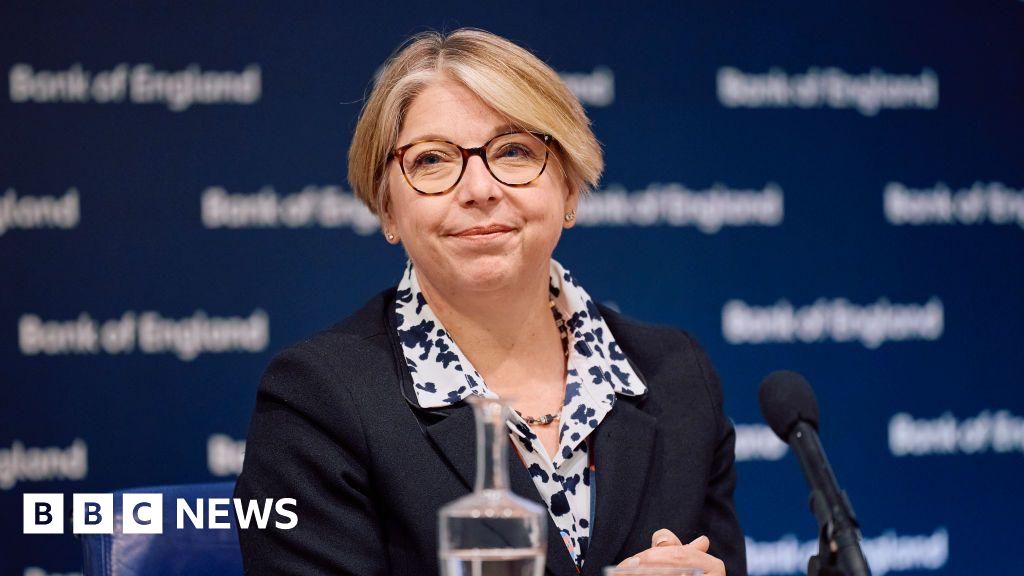
It is unusual for a senior figure at the Bank to be so forthright on market movements.
Source link

Consumer confidence has fallen for the third consecutive month amid household “jitters” over rapid price rises, figures show.
GfK’s long-running consumer confidence index fell four points to minus 25 in April, following falls of two points and three points in March and February respectively.
The deepening concern was driven by perceptions of the UK economy, with a six-point slide in confidence for the next 12 months to minus 43, its lowest level since February 2023.
Confidence in personal finances over the coming year fell five points to minus four – one point lower than this time last year.
The major purchase index – an indicator of confidence in buying big ticket items – held steady, albeit at minus 18 but one point better than last April.
The only measure to improve was the savings index – often an indication that households are concerned about their finances and looking to build contingency funds – which is up five points to 32.
Neil Bellamy, consumer insights director at GfK, said: “Consumers really do have the jitters now.
“It is a year since we last saw a monthly drop of this size, and we have to go back to October 2023 to find the last time consumer confidence was lower.
“Everyone is grappling with rapid price rises, especially at the fuel pumps, which are taking a dent out of household budgets, and people know further price hikes are coming.
“Consumer confidence is deteriorating sharply, with fuel prices and threats of more energy price increases acting as constant reminders of inflation.
“While the Gulf crisis is intensifying pressures, much of the current strain reflects earlier domestic cost increases.
“How long can all this disruption and pain continue?”


UK’s clothing exports down 7.6% to $293 mn in Jan-Feb
Top stocks to buy today: Stock recommendations for April 24, 2026 – check list – The Times of India

Mariska Hargitay expresses love for Christopher Meloni’s ‘Law & Order’ series

-

 Fashion1 week ago
France’s LVMH Q1 revenue falls 6%, shows resilience amid Iran war
-

 Entertainment1 week ago
Is Claude down? Here’s why users are seeing errors
-

 Sports1 week ago
PSL 11: Peshawar Zalmi win toss, opt to field first against Quetta Gladiators
-

 Tech1 week ago
The Deepfake Nudes Crisis in Schools Is Much Worse Than You Thought
-
 Business1 week ago
Standard Life buys rival in £2b deal to create savings giant
-

 Tech1 week ago
CYBERUK ’26: UK lagging on legal protections for cyber pros | Computer Weekly
-

 Fashion1 week ago
Raymond unveils luxury Chairman’s Collection Store in Mumbai
-
 Business1 week ago
PepsiCo earnings beat estimates as North American food business improves