

Business
Green energy exports: $10-bn green ammonia project positions India as global clean-fuel supplier; Kakinada plant nears key milestone – The Times of India

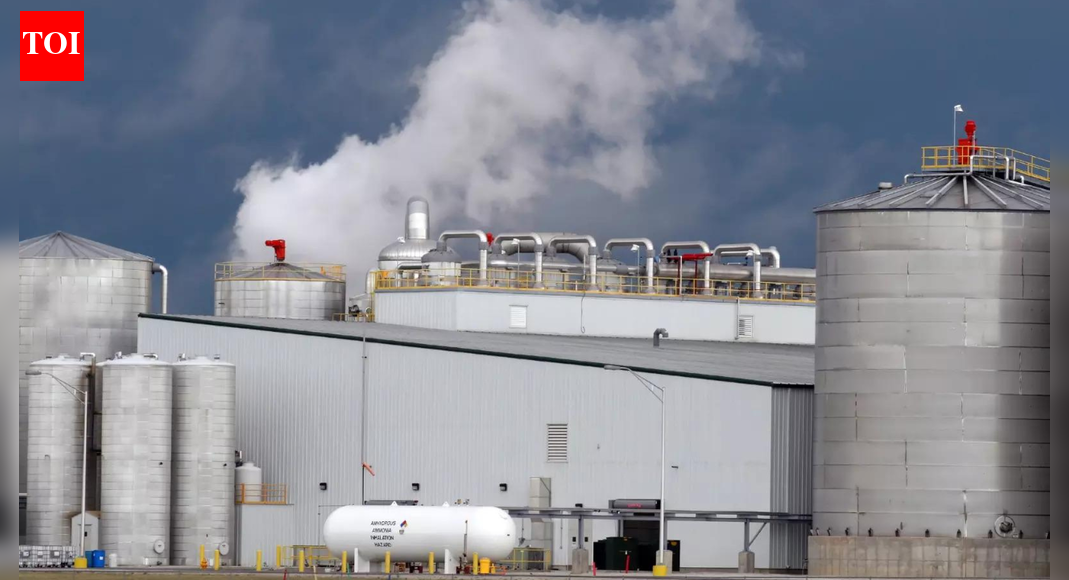
A $10-billion green hydrogen and green ammonia project at Kakinada in Andhra Pradesh is set to cross a major construction milestone, reinforcing India’s ambition to emerge as a global supplier of clean energy to markets such as Germany, Japan and Singapore.The first major equipment erection ceremony of AM Green’s Green Hydrogen and Green Ammonia Complex will be held on January 17 and will be attended by Chief Minister N Chandrababu Naidu and Deputy Chief Minister Konidala Pawan Kalyan, state government officials said, PTI reported.Billed as one of the largest clean-energy investments in India to date, the project involves a total outlay of $10 billion and is expected to generate up to 8,000 jobs during the construction phase, besides substantial high-skill employment during operations and across allied sectors including renewable energy, logistics, storage and port services.AM Green is developing India’s first and the world’s largest green ammonia complex at Kakinada, with a planned capacity of 1.5 million tonnes per annum, through the brownfield conversion of an existing ammonia-urea facility. The project will be commissioned in phases, beginning with 0.5 million tonnes per annum by 2027, scaling up to 1 million tonnes by 2028 and reaching full capacity by 2030.Once operational, the facility will enable India’s first exports of green ammonia, which is increasingly being adopted globally as a clean shipping fuel, for power generation and as a carrier for green hydrogen.The integrated project spans 7.5 gigawatts of solar and wind capacity, 1,950 megawatts of electrolyser capacity and 2 gigawatts of round-the-clock renewable power, supported by pumped hydro storage, including India’s first such facility at Pinnapuram in Andhra Pradesh.AM Green has already signed long-term supply agreements with Germany-based utility Uniper and is in advanced discussions with potential buyers in Japan and Singapore, establishing India’s first green-energy export linkages with Europe and advanced Asian economies.The project is aligned with Andhra Pradesh’s Integrated Clean Energy Policy, 2024, which seeks to position the state as India’s primary hub for green hydrogen and green ammonia. Once fully commissioned, the facility is expected to mark a structural shift from energy import dependence towards clean-energy exports, placing Andhra Pradesh at the centre of the global green-energy value chain.AM Green, backed by the founders of the Greenko Group, is developing the project through AM Green Ammonia, a partnership involving Malaysia-based Gentari, Singapore’s sovereign wealth fund GIC and the Abu Dhabi Investment Authority. Construction at the Kakinada site is already under way, placing it among a limited set of large-scale green ammonia facilities globally that meet Renewable Fuels of Non-Biological Origin (RFNBO) standards.Beyond production, the project showcases an end-to-end clean-energy ecosystem within a single state, encompassing large-scale renewable generation, round-the-clock green power backed by storage, hydrogen and ammonia production, and port-based export infrastructure.AM Green has also moved to strengthen global linkages. In May last year, it announced a partnership with the Port of Rotterdam Authority to create a dedicated green-fuel corridor linking India with north-western Europe, aimed at enabling annual trade of up to 1 million tonnes of green fuels valued at nearly $1 billion. Earlier, it tied up with global logistics firm DP World to develop green fuel storage and export facilities in India and overseas.“This is not merely an industrial project, but a strategic step in positioning Andhra Pradesh and India as leaders in clean-energy exports and climate action,” the state government said.
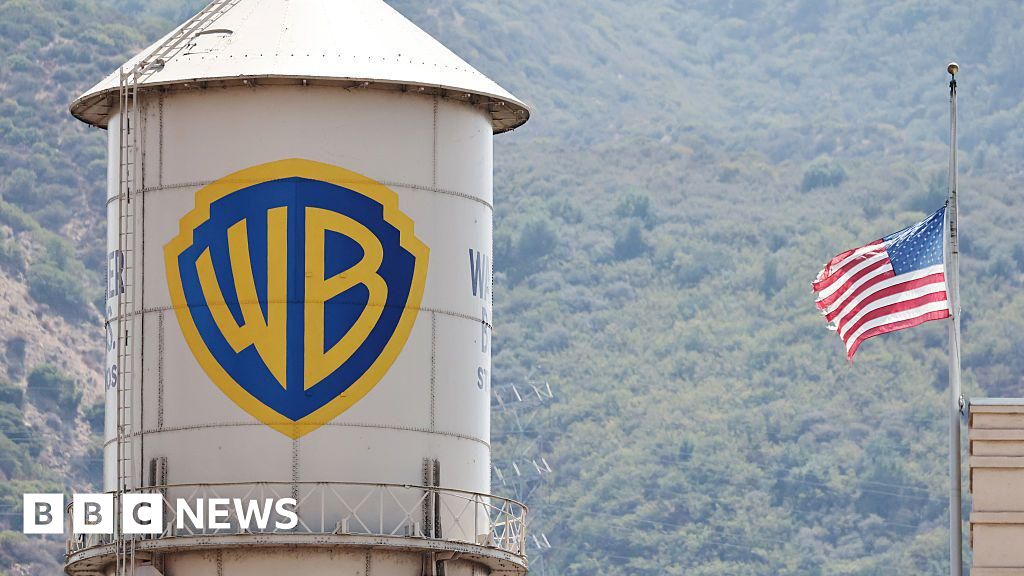
The approval came as Donald Trump is to attend a dinner with billionaire Paramount backers the Ellisons.
Source link
Business
France Ends Airport Transit Visa Requirement for Indian Travellers | Business – The Times of India
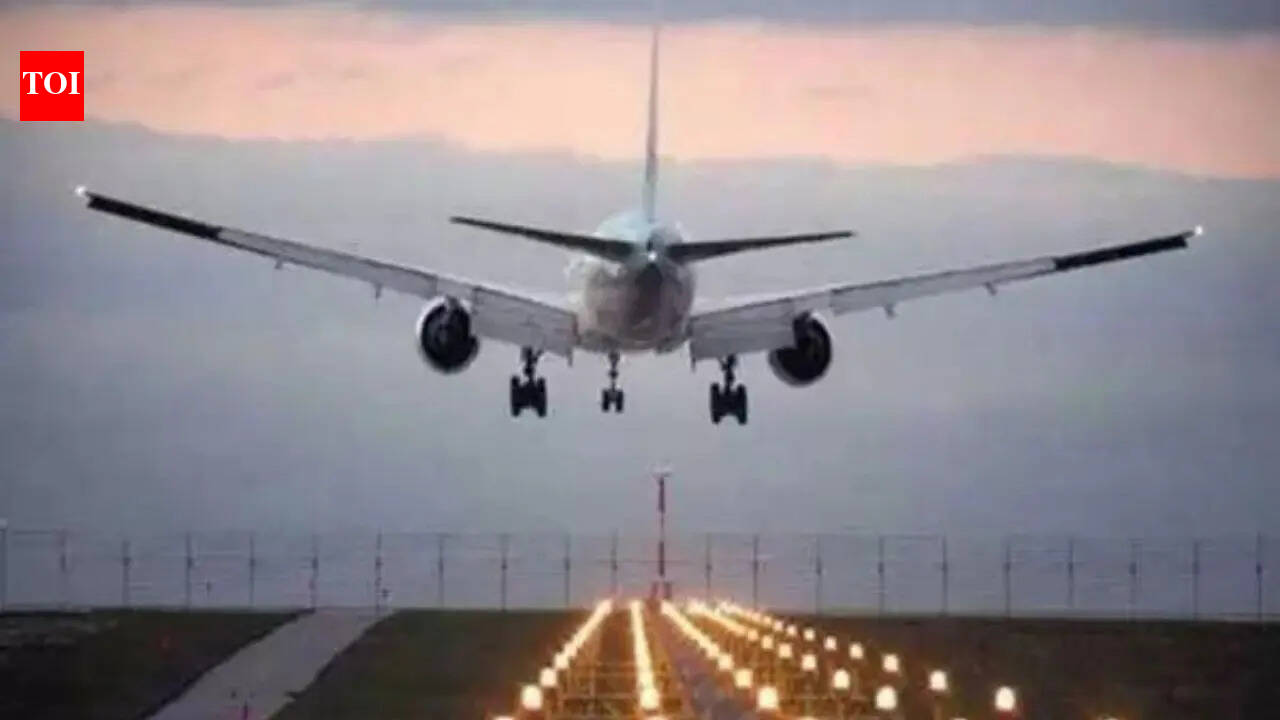
France has lifted the airport transit visa requirement for Indian nationals with effect from April 10, the French Embassy in India announced on Thursday.Indian nationals holding ordinary passports are no longer required to obtain an airport transit visa when passing through the international zone of airports located on French territory during a layover en route to a third country.The change follows a decree amending the 2010 regulations on documents and visas required for the entry of foreigners into French territory. The decree was adopted and published in the French Official Gazette (Journal Officiel) on April 9, 2026.MEA welcomes the moveThe Ministry of External Affairs welcomed the announcement.“We welcome the announcement on the operationalisation of visa-free transit for Indian nationals transiting through French airports,” MEA Spokesperson Randhir Jaiswal said.He recalled that the removal of the transit visa requirement for Indian passport holders was agreed between Prime Minister Narendra Modi and French President Emmanuel Macron during their meeting in Mumbai in February this year.“The government of France has now operationalized this agreement,” Jaiswal added.Who benefitsThe measure applies to Indian nationals transiting through mainland France exclusively by air, remaining in the international airport zone without entering French territory.President Macron had announced during his visit to India in February that measures would be taken to ease travel for Indian nationals via France.
Poll
What do you think is the main advantage of this visa policy change?
The updated procedures have been reflected on the France-Visas platform.

Comcast topped Wall Street’s revenue and earnings estimates for the first quarter on Thursday, lifted by NBC’s sports slate in February and improving broadband customer losses.
The company said it lost 65,000 broadband customers compared with 183,000 losses in the same period last year. Heightened competition from wireless providers like Verizon and T-Mobile has led to quarterly customer losses for Comcast and its cable peers in recent years – which has weighed on these companies’ stocks in particular.
In response, Comcast in the last year has shifted its strategy and introduced more competitive pricing packages in a bid to reduce the broadband losses. The company has also leaned on its mobile business for growth, which added 435,000 new lines during the quarter. In total, Comcast now has 9.7 million mobile customers.
The company also reported 322,000 cable TV customer losses – fewer than the 427,000 in the same period last year.
Revenue for Comcast’s connectivity and platforms unit, which includes its Xfinity-branded broadband, cable TV, and mobile businesses, decreased 2% to $17.32 billion.
The company’s stock climbed as much as 8% in premarket trading.
Here’s how Comcast performed for the period compared with average analyst estimates, according to LSEG:
- Earnings per share: 79 cents adjusted vs. 73 cents expected
- Revenue: $31.46 billion vs. $30.43 billion expected
Comcast’s net income fell nearly 36% to $2.17 billion, or 60 cents per share, compared to $3.38 billion, or 89 cents a share, during the same period last year. Adjusting for one-time items including amortization and investments, Comcast reported earnings per share of $0.79.
Adjusted earnings before interest, taxes, depreciation and amortization were down roughly 17% to $7.93 billion.
Comcast’s overall revenue increased roughly 5% to $31.46 billion for the quarter.
Revenue got a boost from Comcast’s NBCUniversal, which aired a slate of sports – including the Super Bowl, Winter Olympics and NBA All-Star Weekend, during the quarter – that the company coined as “Legendary February.”
The media business, which is made up of NBCUniversal, recorded a nearly 61% increase in revenue to $7.28 billion during the quarter. Excluding the Olympics and Super Bowl – which provided significant boosts to advertising sales – revenue for the unit was up about 13%.
Live sports remains the highest rated programming on traditional TV and streaming, and beckon the most advertising dollars. The Super Bowl, in particular, breaks records annually when it comes to its pricey commercial spots. NBC received an average $8 million per 30-second ad, CNBC reported.
Domestic advertising for the media unit was up 135% to $3.45 billion for the quarter. Excluding the Super Bowl and Winter Olympics, it was up 4.7% to $1.54 billion.
NBC’s sports roster also helped lift streaming service Peacock during the quarter. Peacock subscribers increased 12% year over year to 46 million. Peacock nearly doubled revenue to $2.1 billion compared to the same period last year. The streamer recorded a quarterly loss of $432 million compared to a loss of $215 million in the prior year period.
Adjusted EBITDA for the media segment decreased to a loss of $426 billion due to higher operating expenses related to the costs associated with the Winter Olympics and Super Bowl, as well as the cost of the NBA rights.
NBCUniversal is part of the overall content and experiences segment, which also includes the film studio and theme parks – each of which saw sales climb year-over-year.
Revenue for the film studio was up 21% to $3.43 billion, while Universal theme parks revenue increased 24% to $2.33 billion. The theme parks were boosted by the opening of Epic Universe last May.

Warner Bros shareholders approve Paramount’s $111bn takeover

Spoiler alert! "Survivor" castaway on elimination from game, role on the jury

‘Summer House’ is going to get cancelled? details revealed

-

 Fashion1 week ago
France’s LVMH Q1 revenue falls 6%, shows resilience amid Iran war
-

 Entertainment1 week ago
Is Claude down? Here’s why users are seeing errors
-

 Sports1 week ago
PSL 11: Peshawar Zalmi win toss, opt to field first against Quetta Gladiators
-

 Tech1 week ago
The Deepfake Nudes Crisis in Schools Is Much Worse Than You Thought
-

 Politics1 week ago
Iran in continuous message exchange with mediator Pakistan after US talks: Report
-
 Business1 week ago
Standard Life buys rival in £2b deal to create savings giant
-

 Tech1 week ago
CYBERUK ’26: UK lagging on legal protections for cyber pros | Computer Weekly
-

 Sports1 week ago
World Cup kit ranking: Which teams will look best in 2026?