

Business
GST Overhaul From September 22: All Your Questions Answered

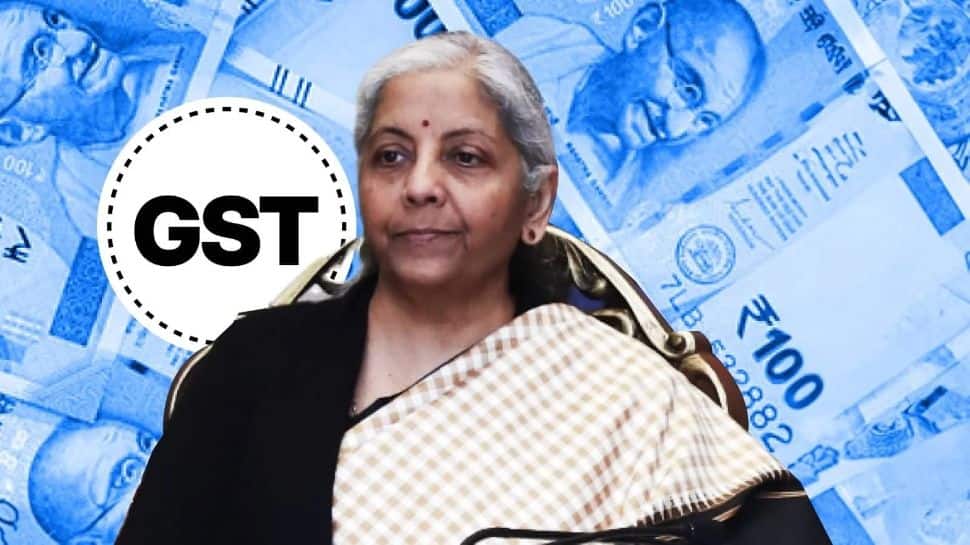
New Delhi: The GST Council has rolled out one of the biggest reforms since the introduction of the Goods and Services Tax. From September 22, 2025, India will move to a simplified two-slab system of 5% and 18%, along with a special 40% rate for luxury and sin goods. Everyday essentials such as milk, paneer, and roti have been exempted, insurance has been made tax-free, and costs for construction and farming equipment are being reduced.
But big changes always come with bigger questions. What exactly gets cheaper? What stays the same? How will billing work if you have already made an advance payment? And what about services such as travel, insurance or e-commerce? To cut through the noise, here are answers to the most frequently asked questions on the new GST rates, explained in simpler language.
1. When do the new GST rates apply?
The revised GST rates will take effect across India on September 22, 2025. The only exceptions are tobacco products and gutkha, which will continue under the old regime until further notice.
2. What are the new slabs?
The tax structure has been reduced to two main slabs, which are 5% and 18%. A higher slab of 40% has been introduced for goods such as luxury cars, large SUVs, alcohol substitutes, betting, casinos and other high-end products.
3. What about food items?
Essential food items remain exempt from GST. This includes UHT milk, paneer, pizza bread, chapatti and roti. All of these will now carry no tax.
4. Are insurance policies included?
Yes, both life and health insurance are exempt from GST under the new system. This includes term insurance, ULIPs, family floater health policies and senior citizen health plans.
5. What happens if I supply goods before September 22 but bill after?
The tax rate will depend on the date of payment. If payment is made after September 22, the new rate applies. If it is made before that date, the old rate continues.
6. What about imports?
Imported goods will be taxed at the same GST rates as domestic goods, unless they fall under the exempt category.
7. Can I still use my old input tax credit?
Yes, the input tax credit already available in your ledger will remain valid and can be used to settle future tax liabilities.
8. What if my goods become exempt after September 22?
If your goods are moved to the exempt category after September 22, you will have to reverse any input tax credit claimed on such supplies.
9. Will e-way bills change?
No. The rules for e-way bills remain unchanged. Even if the GST rate changes while goods are in transit, the existing e-way bill will remain valid.
10. Are plant-based milk drinks covered?
Yes, plant-based milk products, including soya milk, will now attract a 5% GST rate.
11. Why a 40% slab for some drinks?
The 40% slab has been created to group similar beverages and avoid classification disputes.
12. What is the GST on medicines?
All medicines are now taxed at 5%, except those that are specifically exempt.
13. What about medical devices?
Medical devices are taxed at 5%, which is lower than earlier rates and is expected to reduce costs for patients and hospitals.
14. What about small cars?
Cars with petrol, LPG or CNG engines up to 1200cc and diesel cars up to 1500cc will now be taxed at 18% instead of 28%.
15. And bigger cars?
Large cars, SUVs and utility vehicles are placed in the 40% slab, as they are considered luxury items.
16. Motorcycles?
Motorcycles with engines up to 350cc will be taxed at 18%, while those above 350cc will attract 40% GST.
17. What about buses and trucks?
Buses and trucks will now be taxed at 18%, which is a reduction from the previous slab.
18. Agriculture equipment?
Agricultural machinery such as sprinklers, drip irrigation systems and harvesters are taxed at 5%, making them more affordable for farmers.
19. Why not exempt tractors?
Tractors have not been exempted because exemptions block input tax credit. Instead, they have been placed under a lower rate to reduce costs while preserving the credit chain.
20. Household items?
Common household items such as soaps, shampoos and talcum powders are taxed at 5%. Toothpaste, toothbrushes, and dental floss also fall under this category.
21. Electronics?
Consumer electronics such as air conditioners, dishwashers and televisions will now attract 18% GST. The 18% slab applies even to larger TVs.
22. Energy sector?
Renewable energy devices are placed under the 5% slab, while coal has been restructured so that there is no additional burden.
23. Hotels and travel?
Hotel rooms priced up to Rs 7,500 per night are taxed at 5%. Bus and train fares are also at 5%. Air travel attracts 5% in economy and 18% in business class.
24. Entertainment?
Casinos, betting and IPL tickets fall under the 40% slab. Other sporting events are taxed at 18% if the ticket price is above Rs 500.
25. What about cinema tickets?
Cinema tickets up to Rs 250 are taxed at 5%, while those above Rs 250 attract 18% GST.
26. How does GST change for education?
Education services such as school tuition remain exempt. Coaching classes and training programmes are taxed at 18%.
27. Will GST apply to hospital services?
Basic hospital services remain exempt, but certain value-added services inside hospitals may attract 18% GST.
28. What about telecom services?
Telecommunication services, including mobile and internet, are taxed at 18%.
29. How are financial services treated?
Financial services such as bank charges and processing fees continue to attract 18% GST.
30. What about insurance renewals?
Renewals of life and health insurance policies are exempt in line with the exemption for insurance products.
31. Is GST applicable on gold?
Yes. Gold jewellery and bullion are taxed at 3%, while jewellery making charges attract 5%.
32. What about real estate?
Under-construction flats are taxed at 5% without ITC. Affordable housing projects continue to enjoy concessional rates.
33. How does GST impact restaurants?
Standalone restaurants and those in hotels with tariffs below Rs 7,500 are taxed at 5%. Restaurants in higher-end hotels may be taxed at 18%.
34. Are services like cab rides affected?
Yes. App-based cab aggregators and regular taxi services are taxed at 5%.
35. What about railways?
Rail passenger fares are taxed at 5%, while freight services attract 12%.
36. How are airlines taxed?
Economy class tickets are taxed at 5%, while business class tickets are taxed at 18%.
37. What about tour packages?
Tour operator services attract 5% GST without ITC.
38. Is GST applicable on e-commerce?
Yes. Goods and services sold via e-commerce platforms are taxed at the same rates as offline products.
39. What about alcohol?
Alcohol for human consumption remains outside GST and continues to be taxed by states.
40. How is tobacco treated?
Tobacco products attract GST along with an additional cess, keeping them in the higher tax range.
41. What about petroleum products?
Petrol, diesel and natural gas are outside GST and continue under excise and Value Added Tax (VAT).
42. How is electricity treated?
Electricity supply remains exempt, as it is considered essential.
43. Are fertilizers covered?
Fertilizers are taxed at 5% to reduce costs for farmers.
44. What about seeds?
Seeds for sowing are exempt from GST.
45. How does GST apply to textiles?
Textiles fall under the 5% or 12% slab, depending on the product.
46. What about footwear?
Footwear priced up to Rs 1,000 is taxed at 5%. Above Rs 1,000, it is taxed at 18%.
47. Are cosmetics affected?
Yes. Cosmetics and beauty products attract 18% GST.
48. What about sanitary napkins?
Sanitary napkins are exempt from GST.
49. How are packaged foods taxed?
Packaged foods like biscuits, chocolates and snacks attract 18%. Unbranded staples remain exempt.
50. What about bottled water?
Packaged drinking water attracts 18% GST.
51. Are aerated drinks included?
Yes. Aerated drinks fall under the 40% slab.
52. How are sweets and confectionery taxed?
Most sweets and confectionery attract 18% GST, though unbranded mithai may remain exempt.
53. What about edible oils?
Edible oils are taxed at 5%.
54. How does GST affect fuel like LPG?
Domestic LPG is taxed at 5%, while commercial cylinders attract 18%.
55. What about kerosene?
PDS kerosene remains exempt.
56. Are books taxed?
Printed books are exempt from GST.
57. What about newspapers?
Newspapers and periodicals are exempt, but advertisements within them are taxed at 5% or 18%, depending on the medium.
58. How is stationery treated?
Stationery such as pens, pencils and notebooks is taxed at 12% or 18%.
59. What about printing services?
Printing of books and newspapers is exempt, while commercial printing attracts 18%.
60. Are digital services taxed?
Yes. Online subscriptions, streaming platforms and cloud services are taxed at 18%.
61. What about software?
Software products and services are taxed at 18%.
62. How are IT services treated?
IT consultancy and related services attract 18% GST.
63. Are exports covered?
Exports are zero-rated, meaning they are exempt from tax but still allow input credit.
64. What about SEZs?
Supplies to SEZs are also zero-rated.
65. How are imports handled?
Imports are taxed at the same rate as domestic supplies, in addition to customs duties.
66. Are charitable trusts exempt?
Charitable trusts remain exempt for their core activities, but commercial services are taxable.
67. What about religious services?
Religious services provided by places of worship are exempt.
68. How are government services taxed?
Most government services are exempt, but commercial activities by government bodies may attract GST.
69. What about lottery and betting?
Lotteries, betting and gambling are taxed at 40%.
70. Are second-hand goods taxed?
Second-hand goods are taxed only on the margin between purchase and resale price.
71. What about real estate resale?
Sale of ready-to-move-in flats or resale properties remains outside GST. Stamp duty and registration fees continue.
72. How are works contracts treated?
Works contracts, including those for government projects, are taxed at 18%.
73. What about transport of goods?
Goods transport by road is taxed at 5% without ITC or 12% with ITC.
74. How does GST apply to courier services?
Courier and logistics services are taxed at 18%.
75. What about financial markets?
Stockbroking, mutual funds and asset management services remain under the 18% slab.
Some seven in 10 British adults without a full driving licence say learning to drive is currently unaffordable, according to a survey.
The figure is even higher among younger people, with 76% of 18 to 29-year-olds without a licence saying driving lessons are financially out of reach, the poll for car insurer Prima found.
Overall, 38% said the cost of driving lessons was the biggest deterrent to learning to drive.
Some 32% were put off by the price of buying a car and 15% said the cost of car insurance was the main barrier to learning to drive.
Almost half (45%) said they would consider learning to drive if it became significantly cheaper.
Nick Ielpo, UK country manager at Prima, said: “For a growing number of people, driving is no longer a symbol of freedom – it’s a financial stretch too far.
“Between lessons, buying a car and insuring it, the upfront and ongoing costs are pricing many people out before they even start.”
Find Out Now surveyed 1,134 adults who do not hold a full driving licence between January 21 and 23.
Go Digit General Insurance on Saturday said it has received a demand notice of about Rs 170 crore for short payment of goods and services tax (GST) for nearly five years. The company has received an order copy from the Office of the Commissioner of GST & Central Excise, Chennai South Commissionerate on March 6, confirming GST demand of Rs 154.80 crore levying penalty of Rs 15.48 crore and Interest u/s 50 of CGST Act, 2017 for the period July 2017 to March 2022, the insurer said in a regulatory filing. The company is in the process of evaluating the legal advice on the implications and would file an appeal, it said.
Business
Iran war threatens $11.7 trillion global travel industry as passengers get caught in crossfire

Zoey Gong, a Chinese medicine food therapist, was days away from boarding an Emirates flight from Paris to Shanghai via Dubai, United Arab Emirates, when the U.S. and Israel attacked Iran last Saturday.
Gong, 30, had her flight plans derailed as a result, and she told CNBC that she had to pay $1,600 to get to Shanghai, more than double the price of her original ticket.
She’s one of millions of travelers swept up in war and other conflicts from Iran to Mexico this year, problems that are threatening the global tourism industry that’s worth an estimated $11.7 trillion to the world’s economy, according to industry group World Travel & Tourism Council. It’s showing that people who are far from falling missiles, drone attacks and other geopolitical flashpoints aren’t immune to ripple effects.
‘Aviation quagmire’
Stranded passengers wait with their luggage outside the Hazrat Shahjalal International Airport in Dhaka on March 3, 2026 after carriers cancelled flights amid the Middle East conflict.
Munir Uz Zaman | Afp | Getty Images
The U.S.-Israel attack on Iran set off massive aviation, travel, and safety crises.
More than a million people around the world were stranded because of airspace closures that have grounded over 20,000 flights since Saturday, according to aviation data firm Cirium. Some were also stuck on cruise ships. Inquiries for more expensive “cancel for any reason” travel insurance policies surged 18-fold this week, said Chrissy Valdez, senior director of operations for Squaremouth, an online insurance marketplace.
Since the Feb. 28 attacks on Iran, that country has launched retaliatory strikes on the United Arab Emirates — home to Dubai International Airport, the world’s busiest for international passenger traffic, according to Airports Council International — as well as Qatar, Jordan, Israel and Cyprus. The back-and-forth attacks have left airlines with little recourse to repatriate travelers.
Days after the attack, the U.S. State Department told citizens in a large part of the region to leave immediately, with few options at hand. The department said it is organizing charter flights for U.S. citizens who want to return from Saudi Arabia, Israel, UAE and Qatar.
“This has spiraled into an aviation quagmire,” said Henry Harteveldt, a former airline executive and founder of travel consulting firm Atmosphere Research Group.
Other sectors of the travel industry are also dealing with the war’s impact. Debris rained down near Accor‘s Fairmont The Palm Hotel in Dubai over the weekend. The company said four people were injured, but none were guests, visitors, or staff. Meanwhile, the iconic Burj Al Arab hotel had a fire earlier this week after it was hit by debris from an Iranian drone.
(L to R) The Malta-flagged cruise ships Aroya Manara and MSC Euribia are anchored at the port of Dubai on March 4, 2026.
Giuseppe Cacace | AFP | Getty Images
MSC Cruises’ more than 6,300-passenger MSC Euribia ship has been stranded in Dubai and the company is trying to get flights for affected guests, it said. “We are requesting priority for our guests from our partners,” the company said in a statement.
“In order to speed up the repatriation, we are working on other options such as chartering flights” from Dubai, Abu Dhabi, UAE, or Muscat, Oman, but the situation on board “remains calm,” the cruise company said.
Earlier this week, MSC said it would cancel its remaining sailings from Dubai for the winter. “We understand that this will be disappointing, but we are sure that guests impacted will understand this decision,” it said.
Putting aside the Covid-19 health crisis that ground most international travel to a halt, Harteveldt called this week “the most chaotic event we’ve seen frankly since 9/11 when the U.S. chose to close its airspace. We haven’t seen anything that has had such a long and geographically widespread impact on travel.”
Global conflicts
Flightradar24 still of flight traffic across the Middle East on March 4th, 2026.
Source: Flightradar24.com
The Iran war is the most severe military conflict this year, but it’s one of a series of obstacles that have threatened travel demand and profits for hotels, airlines and cruise companies, as well as local economies that depend heavily on travel, especially international tourists, who tend to spend more than local visitors.
Three days into 2026, the U.S. struck Venezuela and captured its president, Nicolás Maduro, and his wife, Cilia Flores. The attack prompted the U.S. to close airspace throughout the Caribbean, stranding travelers, many at pricey resorts and home rentals they had booked for the holidays.
Then in February, flights were grounded in parts of Mexico, including in the coastal resort city of Puerto Vallarta and in Guadalajara, after violence broke out following the Mexican army’s killing of a cartel leader.
Executives have already had to make costly changes: rerouting or cancelling sailings, issuing flexible booking and refund policies, grounding planes and changing flight plans altogether, or discounting hotel rooms.
The cost of these conflicts is still being tallied, including for fuel, one of the biggest expenses for cruise companies and airlines, along with labor, and is usually passed along to consumers, but signs are emerging on how customers will be affected.
First: Pricier tickets and stays are in the cards.
Higher airfare
United Airlines CEO Scott Kirby said on Thursday that jet-fuel prices, which have surged 60% since the U.S. and Israel’s first strikes on Iran last week, would hit first-quarter results, if not the second quarter as well. That will likely translate quickly to higher airfare, he added.
Despite the higher fuel, which accounted for 20% of United’s operating expenses last year, according to a securities filing, with few flights operating in the Middle East, bookings have jumped from regions like Australia for United flights because it offers different routes to the U.S., he said.
Speaking outside an event at Harvard University, Kirby said that demand overall has remained resilient since the conflict broke out.
Airlines around the world have been forced to take longer, more costly routes because of airspace closures.
Australian carrier Qantas, for example, told CNBC that its flight from Perth, Australia, to London will now take a route that requires it to refuel in Singapore, though that will also allow it to pick up another roughly 60 passengers.
Best year ever?
Passengers look at departure screens showing cancelled flights to Puerto Vallarta at Benito Juarez International Airport after authorities reinforced security following roadblocks and arson attacks carried out by organized crime in several states, after a military operation in which a government source said Mexican drug lord Nemesio Oseguera, known as “El Mencho,” was killed in Jalisco state, in Mexico City, Mexico, February 22, 2026.
Luis Cortes | Reuters
Travel executives started off 2026 as they often do: upbeat. Some airline executives, including those at the most profitable U.S. carriers, Delta Air Lines and United, forecast record earnings within reach this year.
The war and other incidents erupted as the travel industry has been leaning on premium options to woo wealthier customers, who make up a greater share of spending overall. Losing the base for more expensive trips could be extra disadvantageous to those companies and local economies.
In Mexico, for example, tourism makes up close to 9% of the economy and international tourist arrivals rose 13.6% last year to 98.2 million people, who spent close to $35 billion, according to the country’s Tourism Ministry.
Now, airlines are pulling back on traveling to Puerto Vallarta, at least from the United States in the near term. Delta cut routes from April 3 through the end of the month to the city, except for once-daily flights from Los Angeles and Atlanta, according to the Cranky Network Weekly newsletter, which covers the airline industry’s network changes. Alaska Airlines and Southwest Airlines also cut service in March.
“Perhaps people will forget about the PVR [Puerto Vallarta International Airport] concerns now that headlines will shift to the Middle East and bookings will rebound, but we will be watching capacity changes as leading indicators,” Brett Snyder and Courtney Miller, the newsletter’s authors, said in the March 1 edition.
Smoke billows amid a wave of violence, with torched vehicles and gunmen blocking highways in more than half a dozen states, following a military operation in which a government source said Mexican drug lord Nemesio Oseguera, known as “El Mencho,” was killed, in Puerto Vallarta, Jalisco, Mexico, February 22, 2026.
@morelifediares via Instagram | Reuters
The recent issues also come three months ahead of the FIFA World Cup, which is set to be hosted by cities in Canada, Mexico and the United States.
Some hotels in Mexico are starting to notice a change, too.
Victor Razo, manager at the Rivera del Rio hotel in Puerto Vallarta, told CNBC that bookings are down around 10% compared with last year.
“We’ve had some promotions given what had happened,” he said, adding it brought down rates between 10% and 20% ahead of the busy spring break and Holy Week period in the coming month.
He added that the hotel wasn’t near the problems, which included road blockades, and that bookings have since stabilized.
“It’s not like the beginning of the pandemic,” he said. “There is no comparison.”

70% of adults without a licence say learning to drive is unaffordable

I Test Many Coffee Machines for a Living. This One Gets to Stay

Cristiano Ronaldo injury ‘more serious’ than expected

LPGA legend shares her feelings about US women’s Olympic wins: ‘Gets me really emotional’

India Us Trade Deal: Fresh look at India-US trade deal? May be ‘rebalanced’ if circumstances change, says Piyush Goyal – The Times of India

South Korea’s Misto Holdings completes planned leadership transition

-
 Sports1 week ago
LPGA legend shares her feelings about US women’s Olympic wins: ‘Gets me really emotional’
-
Business1 week ago
India Us Trade Deal: Fresh look at India-US trade deal? May be ‘rebalanced’ if circumstances change, says Piyush Goyal – The Times of India
-
 Fashion1 week ago
South Korea’s Misto Holdings completes planned leadership transition
-

 Entertainment1 week ago
Pakistan’s semi-final qualification scenario after England defeat New Zealand
-

 Entertainment1 week ago
Bobby J. Brown, “The Wire” and “Law & Order: SUV” actor, dies of smoke inhalation after reported fire
-

 Fashion1 week ago
Texwin Spinning showcasing premium cotton yarn range at VIATT 2026
-
 Business1 week ago
Greggs to reveal trading amid pressure from cost of living and weight loss drugs
-
 Business1 week ago
CNBC To Merge TV And Digital News Operations, Nearly A Dozen Jobs To Be Cut: Report