

Business
Gulf war risks global economic shock | The Express Tribune


ISLAMABAD:
The Middle East once again stands on the verge of a dangerous escalation. What began as a confrontation between Iran and Israel risks evolving into a broader regional conflict involving the Gulf states and major global powers. Such a development would carry profound implications for global energy security and economic stability.
The big war clouds gathering over the Gulf are not merely a regional security concern. They represent a geopolitical confrontation with the potential to reshape global energy markets, international trade and economic stability. If the current escalation expands into a wider Gulf conflict, the shockwaves will be felt far beyond the Middle East.
The rapidly intensifying tensions in the region risk transforming what began as limited strikes and retaliatory attacks between Iran and Israel, backed by the United States and its allies, into a broader regional confrontation. Increasing missile and drone exchanges have heightened fears that the Gulf Cooperation Council (GCC) states may become directly involved. Should this happen, the Middle East could once again become the epicentre of a conflict with global consequences.
The Gulf occupies a uniquely strategic position in the global economy, both for sea and air routes. Nearly one-third of the world’s seaborne oil trade passes through the Strait of Hormuz, making it one of the most sensitive chokepoints in international commerce. Even a temporary disruption in this narrow corridor can trigger volatility in energy markets, driving up oil and LNG prices, increasing transport costs and fuelling inflation worldwide.
History offers a sobering reminder that conflicts in the Gulf rarely remain localised. From the Iran-Iraq war in the 1980s to the Gulf wars that followed, instability in the region has repeatedly reshaped global energy markets and geopolitical alliances. The current escalation carries similar risks at a time when the global economy is already grappling with inflation, supply chain disruptions and geopolitical fragmentation.
Beyond the immediate military dimension, the crisis must also be understood within the broader context of global power competition. The Middle East has long been central to international geopolitics due to its vast energy reserves and its geographic location linking Asia, Europe and Africa. Control over energy supply routes has historically been a key determinant of global influence.
In today’s evolving geopolitical landscape, this factor has gained renewed significance. China, now one of the world’s largest energy consumers, relies heavily on oil imports from the Middle East. Any disruption in regional energy supplies would therefore have consequences not only for global energy markets but also for the balance of economic power among major economies.
Behind the immediate military confrontation lies a deeper strategic contest shaping global geopolitics. The Gulf remains central to the control of energy flows that sustain the world economy, and influence over these supply routes has historically translated into geopolitical leverage. As emerging economies, particularly China, depend heavily on Middle Eastern energy imports, disruptions or shifts in regional alliances could alter the balance of economic influence among major global powers. In this sense, the current escalation reflects not only regional rivalries but also a broader strategic competition unfolding across the international system.
For the Gulf states themselves, the stakes are particularly high. Over the past several decades, many GCC economies have pursued ambitious strategies to diversify beyond oil by investing in financial services, logistics, real estate development, tourism and advanced industries. These economic transformation plans depend heavily on regional stability, peace and investor confidence.
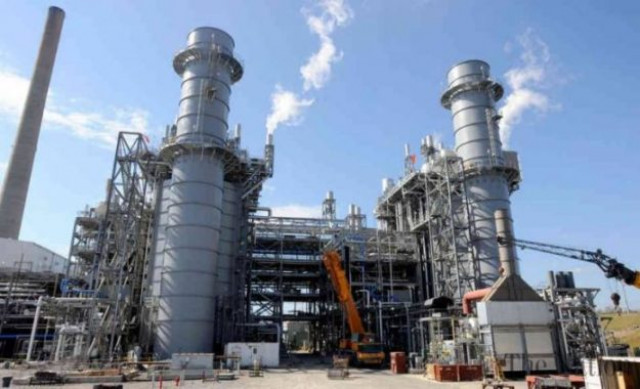
A prolonged military confrontation would threaten these gains. Conflict in the initial days has already disrupted airlines and shipping routes, endangered energy infrastructure and triggered capital flight from regional markets. Brent surged near $85 per barrel. LNG shipping rates soared 650% to $300,000 per day. QatarEnergy declared force majeure, shut down production and halted LNG supplies. Export cargoes of essential food commodities such as rice, fresh fruits and vegetables have halted at various points of origin, endangering the food security of GCC states, particularly those small states with limited local production.
Rising defence expenditures may also divert resources away from long-term development priorities such as infrastructure, education and technological innovation. Another troubling dimension of the current tensions is the risk that geopolitical rivalry may increasingly be framed through sectarian narratives. Relations between Iran and several Gulf states already contain elements of Sunni-Shia competition. If the confrontation intensifies, sectarian polarisation could deepen divisions across the region and make diplomatic solutions more difficult.
Such a development would weaken the Muslim world economically and politically and may send it back to conditions reminiscent of the 1960s. Instead of focusing on economic modernisation, innovation and human capital development, states could find themselves allocating growing resources to defence procurement and military alliances.
For countries like Pakistan, the economic consequences of a wider Gulf war would be immediate and significant. Pakistan remains heavily dependent on imported fuel from Saudi Arabia, the wider Middle East and LNG from Qatar. Food commodities are imported from global sources, and any sharp increase in global energy, shipping costs and food prices would widen the country’s trade deficit by around $4-5 billion and intensify inflationary pressures, while exacerbating the current account deficit.
Furthermore, Pakistan’s external trade relies substantially on foreign shipping companies. War-risk insurance premiums, higher sea freight charges and disruptions in maritime routes would raise the cost of both imports and exports. These pressures would further strain an economy already navigating fiscal and external sector challenges.
Remittances present another important concern, providing a cushion for the current account. Millions of Pakistani workers are employed across Gulf economies and send a major share of remittances from Gulf countries. Any economic slowdown or instability in the region could affect employment opportunities and remittance inflows – one of Pakistan’s most vital sources of foreign exchange and rupee stability.
At this critical moment, restraint and diplomacy are essential. Escalation may serve short-term strategic objectives, but the long-term costs of a wider regional war would be immense. The Middle East has already endured decades of instability and conflict; another large-scale confrontation would deepen humanitarian suffering while undermining economic progress.
History offers a clear lesson: wars in the Gulf rarely remain confined to the region. They reshape global markets, redraw alliances and influence the trajectory of the world economy. Preventing such an outcome requires diplomacy, dialogue and leadership capable of recognising the heavy cost of further escalation.
The Gulf has long been the world’s energy heartland; turning it into a battlefield would endanger not only regional stability but the foundations of the global economy itself.
The writer is a former vice president of KCCI, an independent economic analyst focusing on global trade, energy economics and geopolitical risk






Business
Top stocks to buy today: Stock recommendations for April 24, 2026 – check list – The Times of India

Stock market recommendations: Bharat Electronics, and Colgate-Palmolive (India) have been recommended as the top stocks to buy today (April 24, 2026) by Bajaj Broking Research. Take a look at the target prices and expected returns:Bharat ElectronicsBuy in the range of ₹ 440.00-450.00
The stock is in structural up trend forming higher high and higher low in all time frame signaling strength and continuation of the uptrend. The entire up move of the last 8 months is in a rising channel as can be seen in the chart highlighting sustained demand at an elevated level.On the smaller time frame, the stock is at the cusp of generating a breakout above the bullish Flag like formation as post a sharp up move in the first 3 weeks of April the stock went into a consolidation phase in the last four sessions. It is seen resuming up move and is at the cusp of generating a breakout above the bullish Flag formation highlighting continuation of the up move and offers fresh entry opportunity.We expect the stock to extend the up move and head towards 495 levels in the coming months being the confluence of the 123.6% external retracement of the previous decline 473 – 400 and the upper band of the rising channel of the last 8 months.Colgate-Palmolive (India)Buy in the range of 2120-2160
The share price of Colgate-Palmolive has generated a breakout above bullish Flag pattern signaling continuation of the up move and offers fresh entry opportunity.We expect the stock to head higher towards 2330 levels in the coming months being the measuring implication of the bullish flag breakout.The daily 14 periods RSI is in buy mode thus supports the positive bias in the stock.(Disclaimer: Recommendations and views on the stock market, other asset classes or personal finance management tips given by experts are their own. These opinions do not represent the views of The Times of India)
It is unusual for a senior figure at the Bank to be so forthright on market movements.
Source link

Consumer confidence has fallen for the third consecutive month amid household “jitters” over rapid price rises, figures show.
GfK’s long-running consumer confidence index fell four points to minus 25 in April, following falls of two points and three points in March and February respectively.
The deepening concern was driven by perceptions of the UK economy, with a six-point slide in confidence for the next 12 months to minus 43, its lowest level since February 2023.
Confidence in personal finances over the coming year fell five points to minus four – one point lower than this time last year.
The major purchase index – an indicator of confidence in buying big ticket items – held steady, albeit at minus 18 but one point better than last April.
The only measure to improve was the savings index – often an indication that households are concerned about their finances and looking to build contingency funds – which is up five points to 32.
Neil Bellamy, consumer insights director at GfK, said: “Consumers really do have the jitters now.
“It is a year since we last saw a monthly drop of this size, and we have to go back to October 2023 to find the last time consumer confidence was lower.
“Everyone is grappling with rapid price rises, especially at the fuel pumps, which are taking a dent out of household budgets, and people know further price hikes are coming.
“Consumer confidence is deteriorating sharply, with fuel prices and threats of more energy price increases acting as constant reminders of inflation.
“While the Gulf crisis is intensifying pressures, much of the current strain reflects earlier domestic cost increases.
“How long can all this disruption and pain continue?”


22 India-backed terrorists killed in Khyber intelligence-based operation, says ISPR

Former Giants co-owner Steve Tisch seen in team’s draft room

UK’s clothing exports down 7.6% to $293 mn in Jan-Feb

-

 Fashion1 week ago
France’s LVMH Q1 revenue falls 6%, shows resilience amid Iran war
-

 Entertainment1 week ago
Is Claude down? Here’s why users are seeing errors
-

 Tech1 week ago
The Deepfake Nudes Crisis in Schools Is Much Worse Than You Thought
-

 Sports1 week ago
PSL 11: Peshawar Zalmi win toss, opt to field first against Quetta Gladiators
-
 Business1 week ago
Standard Life buys rival in £2b deal to create savings giant
-

 Tech1 week ago
CYBERUK ’26: UK lagging on legal protections for cyber pros | Computer Weekly
-

 Fashion1 week ago
Raymond unveils luxury Chairman’s Collection Store in Mumbai
-
 Business1 week ago
PepsiCo earnings beat estimates as North American food business improves