

Politics
Gulf-wide rail network to launch by late 2030



ABU DHABI: Passengers will be able to travel by train across the Gulf without stopping at borders by December 2030, UAE official media reported, citing senior officials at the Global Rail Conference in Abu Dhabi.
The 2,120km GCC railway will link all six member states, running from Kuwait to Oman. The route will pass through Saudi Arabia, connect to Bahrain and Qatar, and traverse the UAE’s Etihad Rail before reaching Muscat, Oman.
Nasser Al Qahtani, interoperability director at the GCC Railways Authority, said work was advancing across member states, with the deadline set by the GCC ministerial council firmly on track.
“Border stopping is not on the map. Immigration will be cleared before boarding, just like international air travel,” he explained.
Construction has already commenced on the Hafeet Rail project — the UAE-Oman line is expected to open within three years. The 303km line is designed to enhance passenger movement and strengthen freight connectivity between the two countries.
Progress is evident, with over 21 bridges under construction, two tunnels initiated, and more than two million safe work hours recorded.
Officials said the passenger experience would mirror air travel, with passport checks completed at departure and arrival points. Hafeet Rail is also prioritising freight, with a single 15,000-tonne train expected to replace around 130 lorries.
The long-term objective, officials stressed, is not only to improve trade and transport within the GCC but also to ultimately connect the Gulf by rail to international networks.
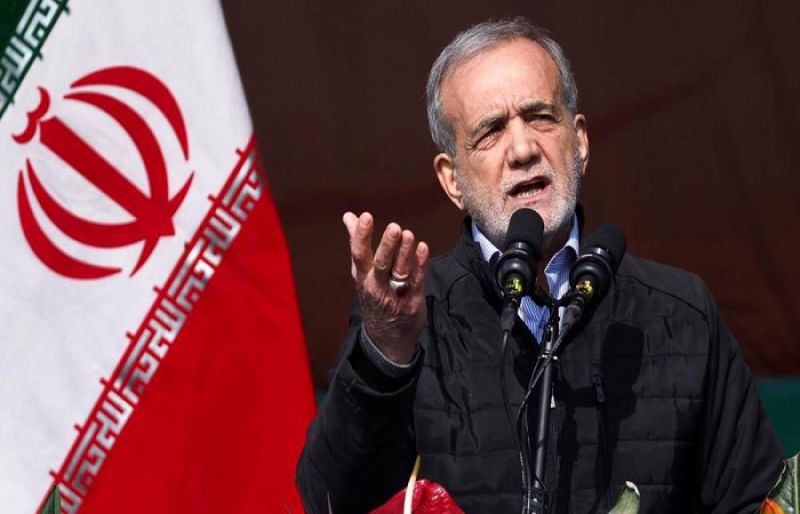
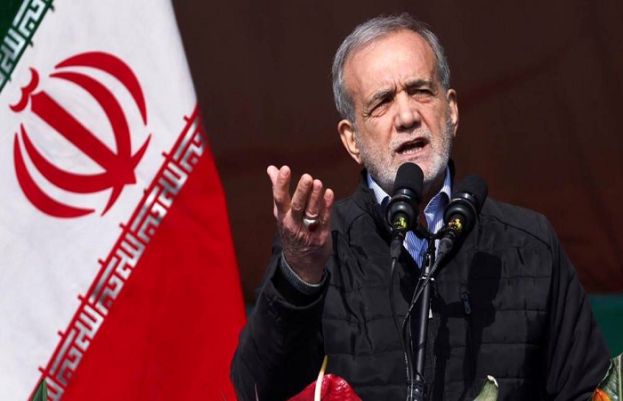
The Islamic Republic of Iran has invariably welcomed dialogue and agreement, but Washington’s constant breach of commitments, naval blockade and military threats remain the main obstacles to genuine negotiations, President Masoud Pezeshkian said on Wednesday.
In a post on X, the president reiterated Tehran’s openness to diplomacy while calling out Washington’s contradictory behavior.
“The Islamic Republic of Iran has welcomed dialogue and agreement and continues to do so,” Pezeshkian wrote.
“Breach of commitments, blockade and threats are the main obstacles to genuine negotiations. The world sees your endless hypocritical rhetoric and contradiction between claims and actions,” he added.
The United States and Israel launched their illegal, unprovoked war of aggression against Iran on February 28, assassinating Leader of the Islamic Revolution Ayatollah Seyyed Ali Khamenei and striking military installations and civilian infrastructure, including schools, hospitals and bridges.
Since then, Iran has demonstrated its responsible approach by agreeing to a two-week ceasefire brokered by Pakistan, despite having the upper hand on the battlefield after 100 waves of decisive retaliatory strikes under Operation True Promise 4.
Despite the ceasefire, Washington keeps highlighting a naval blockade of Iranian ports. Tehran considers it illegal under international law and a clear violation of the truce.
The United States has also threatened further military action, while its officials have issued contradictory statements about their commitment to diplomacy.
Iranian officials have said no decision has been made yet on whether to take part in a second round of negotiations in Islamabad, citing US violations of the ceasefire, including the naval blockade.
- Pentagon says US forces boarded tanker carrying Iranian oil.
- Says it will continue maritime enforcement against illicit networks.
- Ceasefire only meaningful if not violated through blockade: Ghalibaf.
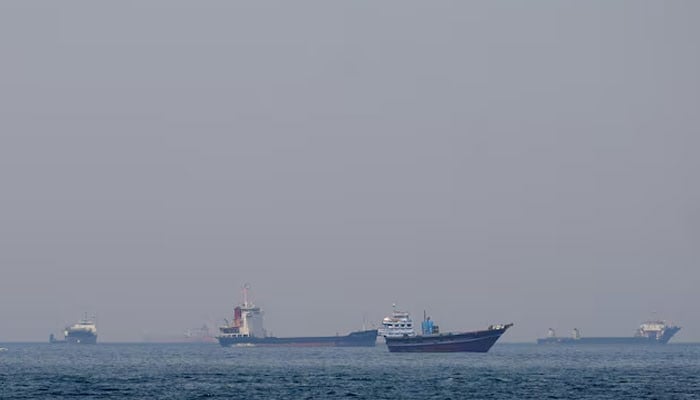
TEHRAN: President Donald Trump ordered the US Navy on Thursday to destroy any Iranian boat caught laying mines in the Strait of Hormuz, putting more pressure on a fraying ceasefire as disruption from the Gulf stand-off battered the world economy.
Trump’s announcement came after the US fleet boarded a vessel in the Indian Ocean that was transporting oil from Iran and after a senior Iranian official said Tehran had banked its first proceeds from the tolls it exacts on shipping through the strait.
With plans for renewed peace talks in Pakistan hanging in the balance, more fuel-hungry airlines cancelled flights, oil prices climbed higher once again and the keenly-watched S&P Global PMI index showed eurozone business activity shrinking for the first time in 16 months.
“I have ordered the United States Navy to shoot and kill any boat, small boats though they may be… that is putting mines in the waters of the Strait of Hormuz,” Trump posted.
Iran vowed it would keep the strait closed to all but a trickle of approved vessels for as long as the US Navy blockades its ports, brushing off demands from Trump to both reopen Hormuz and surrender its enriched uranium.
The US responded to Iran’s action by imposing its own blockade of Iranian ports, and on Thursday the Pentagon announced on social media that US forces had “carried out a maritime interdiction and right-of-visit boarding of the sanctioned stateless vessel M/T Majestic X transporting oil from Iran, in the Indian Ocean”.
The post included footage of US military personnel rappelling from helicopters onto the deck of a large tanker.
The statement said the US would “continue global maritime enforcement to disrupt illicit networks and interdict vessels providing material support to Iran, wherever they operate”.
‘Not possible’
While strikes around the region have mostly ceased since the two-week-old truce began, there has been no letup in the confrontation over Hormuz, with both sides seeking economic leverage — only for Trump to announce an indefinite ceasefire to create space for more talks.
“A complete ceasefire only has meaning if it is not violated through a naval blockade,” said Iran’s parliamentary speaker Mohammad Bagher Ghalibaf, who led Tehran’s delegation at a first round of talks in Pakistan.
“Reopening the Strait of Hormuz is not possible amid a blatant violation of the ceasefire.”
Ghalibaf’s deputy, Hamidreza Hajibabaei, said Iran received its first revenue from tolls it is imposing on ships seeking to cross Hormuz, a route that in peacetime accounts for a fifth of the world’s oil and gas flows, and other vital commodities.
Analysts said Tehran, in particular its hardline leaders associated with the Islamic Revolutionary Guards Corps (IRGC), believes that Iran’s blockade gives it sufficient economic leverage to force Washington to back down on its main demands in peace talks.
And some, such as Danny Citrinowicz of the Tel-Aviv Institute for National Security Studies, criticised Israel and the US for misreading the Iranian government’s position.
“Tehran has consistently demonstrated a willingness to absorb economic pain while holding firm on what it views as core national interests. There is little reason to believe this time will be different,” he said in a social media post.
“Rather than moving toward concession, Iran is positioning itself to escalate.”
A brief from the Soufan Centre think tank said Iran’s hardliners “argue that a prolonged elevation of global energy prices and mounting global shortages of some goods will increasingly pressure Trump to accede to Iran’s positions, end the war, and eventually withdraw US forces from the region.
“Trump and his team calculate the opposite — that the US blockade of Iran’s seaborne trade, which carries all of its oil exports, will quickly cripple Iran’s economy and force Iran to accept US demands.”
Peace talks
On Wednesday, Trump told the New York Post that talks could resume in Pakistan within two to three days, even though Iran has not confirmed participation and Vice President JD Vance put his travel to Islamabad on hold on Tuesday.
Iran’s Revolutionary Guards on Wednesday said they forced two ships to the Iranian shore from the Strait of Hormuz.
The US military’s Central Command said, prior to Thursday’s announcement, that its forces blockading Iran’s ports had so far “directed 31 vessels to turn around or return to port”.
After agreeing the ceasefire with Iran, the United States helped broker a truce between Israel and Lebanon, including Hezbollah.
Despite the declared truce, Israeli strikes killed five more people on Wednesday, Lebanese media said.
Israel and Lebanon will hold a second round of talks in Washington on Thursday, during which Beirut will request a one-month extension of the ceasefire during the meeting, according to a Lebanese official.
Israeli attacks on Lebanon have killed more than 2,450 people since the start of the war, according to Lebanese authorities.


Cyber criminals hacked into the Sri Lankan finance ministry’s computer system and siphoned off $2.5 million, the government said on Thursday, the most amount of cash ever stolen by hackers from a state institution in the debt-saddled country.
The cyberattack is a major blow to Sri Lanka, which is recovering from a crippling economic crisis in 2022 after Colombo defaulted on its $46 billion external debt.
The money was destined as debt repayment to Australia, finance ministry secretary Harshana Suriyapperuma told reporters in the capital.
Four senior officers at the Public Debt Management Office (PDMO) were suspended after the breach, he said.
Authorities were alerted to an attempt to break into the ministry’s e-mail server, and investigations showed that a $2.5 million payment owed to Australia had disappeared.
“Criminal investigators are looking into this and we are not in a position to give further details,” Suriyapperuma said, adding that Sri Lankan authorities were seeking help from foreign law enforcement agencies.
Sri Lanka established the PDMO earlier this year in line with an IMF-backed $2.9 billion bailout loan from early 2023, following the island’s economic meltdown.
Australia’s High Commissioner in Sri Lanka, Matthew Duckworth, said Canberra was aware of “irregularities” in payments owed to it.
“Sri Lankan authorities are investigating the matter and are coordinating with Australian officials, who are assisting the investigation,” Duckworth said on X.
“Australia remains committed to supporting Sri Lanka’s return to debt sustainability.”
The attack came as Sri Lanka’s central bank and finance ministry launched an advertising blitz in local newspapers earlier this year, warning Sri Lankans not to fall prey to cyber scams.


2 critical out of 10 injured in Baton Rouge, shooter at large

Violations, threats, blockade main obstacle to genuine talks: President Pezeshkian

Fernando Mendoza reveals Tom Brady’s no-nonsense mentorship pledge ahead of NFL Draft

-

 Fashion1 week ago
France’s LVMH Q1 revenue falls 6%, shows resilience amid Iran war
-

 Entertainment1 week ago
Is Claude down? Here’s why users are seeing errors
-

 Sports1 week ago
PSL 11: Peshawar Zalmi win toss, opt to field first against Quetta Gladiators
-

 Tech1 week ago
The Deepfake Nudes Crisis in Schools Is Much Worse Than You Thought
-
 Business1 week ago
Standard Life buys rival in £2b deal to create savings giant
-

 Tech1 week ago
CYBERUK ’26: UK lagging on legal protections for cyber pros | Computer Weekly
-

 Sports1 week ago
World Cup kit ranking: Which teams will look best in 2026?
-
 Business1 week ago
PepsiCo earnings beat estimates as North American food business improves