

Politics
Gunmen stage simultaneous attacks in and outside Mali capital, says army

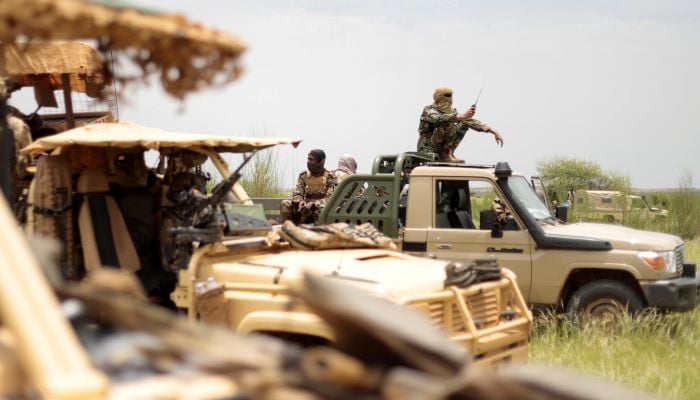
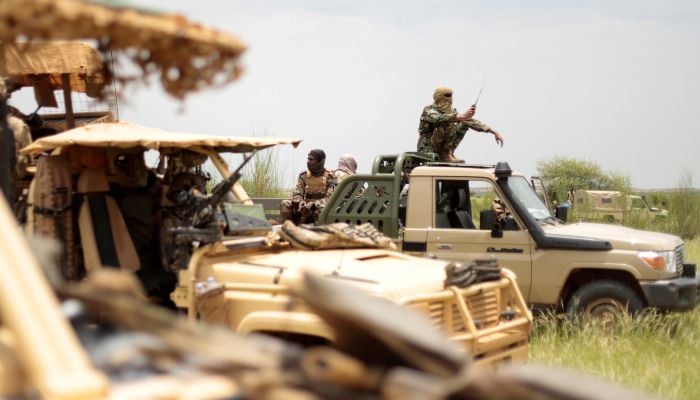
BAMAKO: Militants staged attacks in Mali’s capital Bamako and in several locations in the interior of the country on Saturday morning, the Mali army said, in an apparently coordinated assault involving multiple groups.
Two loud explosions and sustained gunfire were heard shortly before 6am local time near Mali’s main military base Kati outside the capital Bamako, and soldiers were deployed to block off roads in the area, a Reuters witness said.
There was similar unrest at around the same time in the central town of Sevare and the town of Kidal and city of Gao in northern Mali. “There’s gunfire everywhere,” a witness in Sevare said.
Mali is battling insurgencies by the West Africa affiliates of al Qaeda and Daesh. It is also grappling with a much longer history of Tuareg-led rebellion in the north.
Mali’s army said in a statement that unidentified “terrorist” groups attacked several positions in the capital and elsewhere in the country, without specifying locations. It said fighting was ongoing and asked the population to remain calm.
Mali’s military leaders took power after coups in 2020 and 2021, vowing to restore security, but militants continue to stage frequent attacks on the army and civilians.
Mohamed Elmaouloud Ramadane, a spokesperson for the Azawad Liberation Front (FLA), a Tuareg-dominated rebel alliance, said on social media its forces had taken control of multiple positions in Kidal and Gao. Reuters could not independently verify this claim.
Four security sources said the regional al Qaeda affiliate Jama’at Nusrat al-Islam wal-Muslimin (JNIM) was also involved in Saturday’s attacks.
There was no immediate claim of responsibility from JNIM, which frequently stages attacks on military installations throughout much of Mali, or from Daesh in the Sahel Province (ISSP).
A government spokesperson and a spokesperson for Mali’s army did not immediately respond to requests for comment.
Gunfire heard near airport, say residents
Gunfire could also be heard early on Saturday near a military camp close to Bamako’s airport that houses Russian mercenary forces, a resident said.
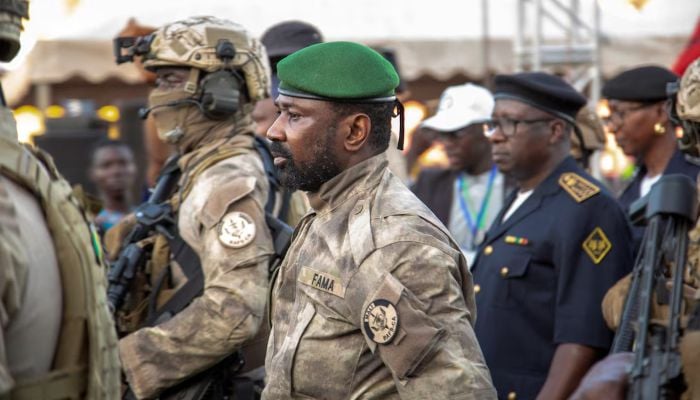
“We hear gunfire towards the military camp. It’s not the airport itself, but the camp that secures the airport,” said the resident, who spoke on condition of anonymity for safety reasons.
The government led by Assimi Goita has leaned on Russian mercenaries for security support while initially spurning defence cooperation with Western countries.
Recently it has pursued closer ties with the US.
Reuters reported in March that Mali and the US were nearing a deal that would allow Washington to resume flying aircraft and drones over the West African country’s airspace to gather intelligence on insurgent groups.
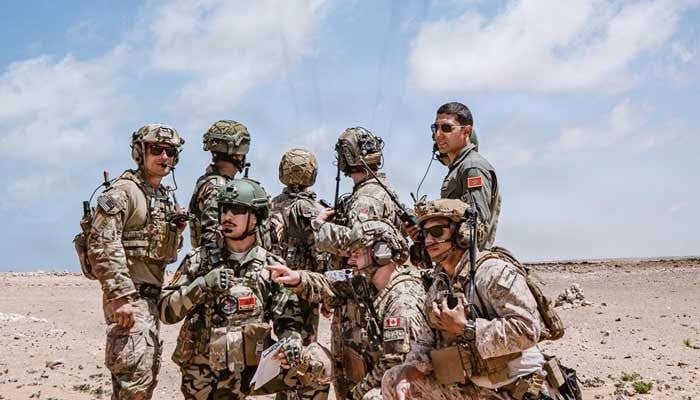
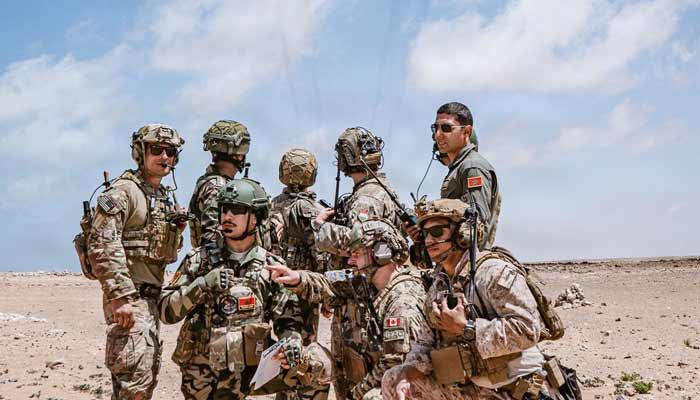
Two US service members participating in the African Lion joint military exercises were reported missing near the city of Tan Tan in southern Morocco, the US Africa Command (Africom) and the Moroccan Royal Armed Forces said on Sunday.
US, Moroccan and other partner forces launched coordinated search-and-rescue operations, including ground, air and maritime assets, to find the service members, who went missing near the training site of Cap Draa, the two militaries said in separate statements.
The Moroccan army said the service members went missing near a cliff.
“Initial reports indicate the two soldiers may have fallen into the ocean,” a US defence official told Reuters by email. “I can confirm this incident is not related to terrorism.”
African Lion is the US Africa Command’s largest annual joint exercise, aimed at improving interoperability among US forces, Nato Allies and African partner nations.
This year’s edition runs from April 27 to May 8 across the four nations of Ghana, Morocco, Senegal and Tunisia.
The largest part of the drills takes place in Morocco, involving approximately 5,000 personnel from over 40 countries, according to Africom.
- Plan aims at “Israel’s air superiority”: defence minister.
- Netanyahu vows to increase defence budget to $118bn.
- Israel to make “blue-and-white” groundbreaking aircraft: PM.
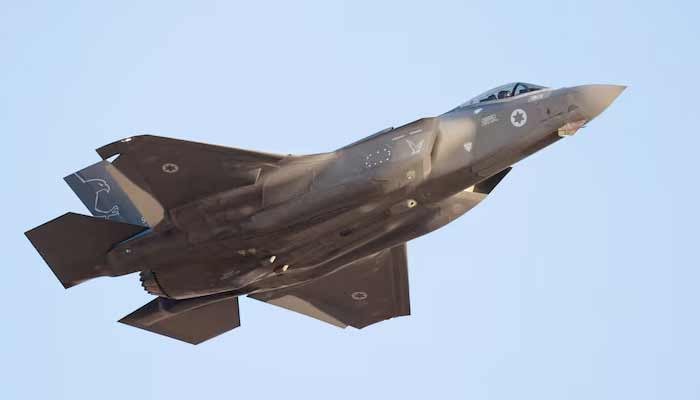
Israel on Sunday approved a multi-billion-dollar deal to acquire two combat squadrons of fighter jets from the United States, with Prime Minister Benjamin Netanyahu saying it would “reinforce” its air superiority.
The purchase includes a squadron of F-35 multi-role stealth fighters from Lockheed Martin and another of F-15IA warplanes from Boeing, Israel’s defence ministry said.
The plan aims to “ensure Israel’s air superiority for decades to come,” Defence Minister Israel Katz said in a statement.
“The F-35 and F-15IA acquisitions are central to the ‘Shield of Israel’ plan, which is designed to give the IDF (Israeli military) a lasting qualitative edge,” he said.
The F-35, a joint project between the United States and a number of allies, is one of the world’s most advanced military aircraft. Israel already operates several dozen of the jets.
Netanyahu said it would bolster Israel’s “overwhelming air superiority” but pledged to start building its own weapons and fighter planes.
“Our pilots can reach anywhere in the skies of Iran and are ready to do so, if needed,” he said.
“Over the next decade, we will add 350 billion shekels ($118 billion) to the defence budget in order to manufacture such weaponry in Israel and not be dependent on foreign suppliers,” he said.
“At the same time, we will develop ‘blue-and-white’ groundbreaking aircraft. This will change the entire picture,” he said, using a term for products developed in Israel.
Israel’s air force played a central role in the war in Gaza, carrying out one of the most intense aerial bombardment campaigns in recent history.
Thousands of strikes targeted what Israel said were Hamas positions, including tunnels, command centres and rocket launch sites, but vast areas of the densely populated territory were devastated, including homes, hospitals and schools.
Israel has also fought two wars against Iran in less than a year, during which its air power has been used for long-range strikes deep inside Iranian territory.
Israel recently approved its 2026 budget, which includes an increase in defence spending of billions of dollars.
Israel’s military spending has steadily increased since the war in Gaza began.
- Iranian envoy describes Islamabad’s efforts as “valuable”.
- Tehran transparent in its demands: Ambassador Moghadam.
- Says Washington must abandon its “aggressive posture”.
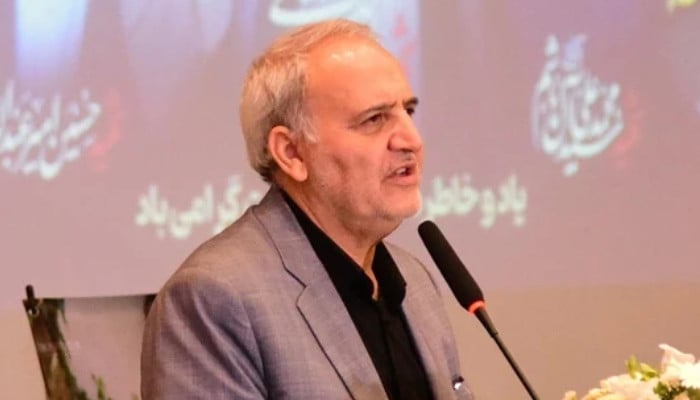
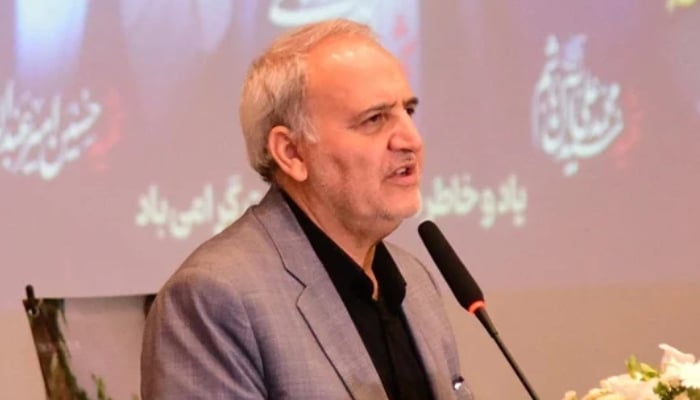
Iranian Ambassador to Pakistan Reza Amiri Moghadam on Sunday said Islamabad continues to serve as a central mediator in Iran’s negotiations with the United States.
“Pakistan remains a mediator, and no decision has been made to alter this,” the envoy said in an interview with an Iranian news agency, adding that progress in talks depends on a shift in Washington’s approach.
His comments came a day after US President Donald Trump cast doubt over the prospects of a new Iranian peace proposal.
Iran’s Tasnim and Fars news agencies reported on Saturday that Tehran submitted a 14-point proposal to mediator Islamabad.
Details included ending the conflict on all fronts and enacting a new framework for the crucial Strait of Hormuz, Tasnim said.
Ambassador Moghadam confirmed the same in today’s interview, saying Iran had conveyed a new negotiation plan to Washington via Pakistan.
He described Islamabad’s efforts in the negotiations process as “valuable” and central to the current diplomatic outreach.
Ambassador Moghadam maintained that Tehran was “transparent in its position and demands”, saying any meaningful progress was conditional on a change in US behaviour.
He stressed that Tehran would not compromise on its national interests or defence.
Talks between Iran and the US have remained stalled since the April 8 ceasefire, after a round of peace negotiations, held in Islamabad, failed to resolve the conflict.
The Pakistani government helped broker the ceasefire in the six-week conflict, which erupted after US and Israeli forces launched joint attacks on Iran on February 28.
The Middle East war has had a severe impact on the global economy after Iran effectively shut the Strait of Hormuz, a vital energy shipping route.
Tehran briefly reopened the strait for commercial traffic but closed it again, citing US ceasefire violations and the continued naval blockade of Iranian ports.
Meanwhile, the Iranian ambassador said that the international community was observing Tehran’s “clear and logical stance”, while criticising what he described as inconsistency in US policy.
Reaffirming Iran’s commitment to diplomacy, he said that Washington must abandon its “aggressive posture” and respect Iran’s rights for negotiations to move forward.
Ambassador Moghadam also highlighted growing political, economic and trade ties between Pakistan and Iran, noting that border crossings between the two nations played a crucial role in bilateral trade and regional connectivity.


Yvette Cooper praises ‘truly historic’ royal tour marking America’s anniversary

Peshawar Zalmi down Hyderabad Kingsmen to lift second PSL title – SUCH TV

5/3: Sunday Morning – CBS News

-

 Tech6 days ago
A Brain Implant for Depression Is About to Be Tested in Humans
-

 Tech7 days ago
Almost 90% of women leave tech industry within 10 years | Computer Weekly
-
 Business6 days ago
‘I had £20,000 stolen and had to fight a 13-month fraud reporting rule to get it back’
-
 Business1 week ago
Pakistan’s oil market is fuelling the crisis | The Express Tribune
-

 Tech5 days ago
This Ambitious Laptop Doesn’t Leave Much Room for Your Hands
-

 Sports5 days ago
Pro wrestling star Steph De Lander reveals how colleague’s advice helped lead her to title triumph at ACW
-

 Entertainment6 days ago
Norway joins Type 26 Frigate Programme to boost NATO naval power
-

 Entertainment6 days ago
Melania Trump says ABC should ‘take a stand’ on late-night host Kimmel