

Business
Heathrow scraps 100ml liquid container limit

Katy AustinTransport correspondent
 Getty Images
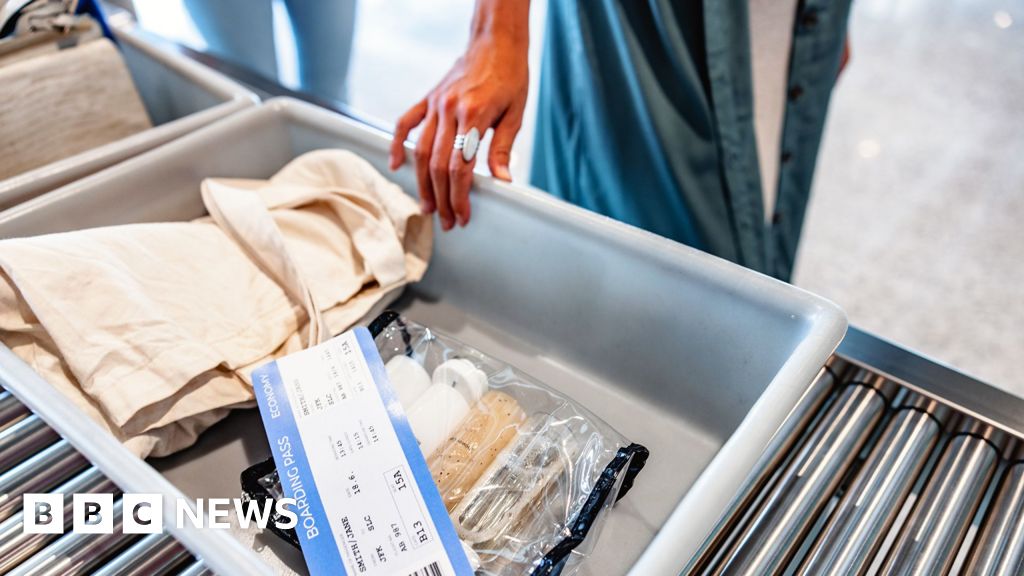
Passengers at Britain’s biggest airport, Heathrow, can leave liquids in containers up to two litres in their bags while going through security, after it finally completed the rollout of new high-tech CT scanners.
Electronics such as laptops can also be left in luggage, while clear plastic bags for liquids no longer have to be used.
Heathrow now says it is the biggest airport in the world to have the new equipment fully rolled out across all its terminals.
But while it has become the largest airport to roll out the new high-tech scanners, it is far from the UK’s first, with Gatwick, Edinburgh and Birmingham airports having upgraded to them in recent years and increased to a two-litre limit.
At most UK airports, passengers can keep liquid containers of up to 100ml in their luggage, without having to remove them and use clear plastic bags.
Bristol and Belfast airports have also raised their liquid limits to two litres.
However, other airports that have the new scanners installed are waiting for the green light from the Department for Transport (DfT) to raise the limit from 100ml.
A recent report by consumer group Which? found that the sensitivity of the new scanners being rolled out means that at some airports, more bag searches end up being carried out by hand after passing through them.
Heathrow said the scanners, which provide better images of cabin bags, could service “thousands of passengers an hour with significantly greater efficiency, while maintaining high safety and security standards”.
The rule change only applies to flights leaving Heathrow, and passengers must check restrictions on luggage at the airports they are returning from before boarding flights to the UK.
The rollout of the new high-tech scanners across the UK has suffered a series of setbacks over the past few years.
Boris Johnson promised in 2019 that the rules about taking liquids through security in containers of no more than 100ml, inside plastics bags, would be scrapped by the end of 2022. The pandemic eventually put paid to that.
In December 2022, the Conservative government promised state-of-the-art scanning equipment would be installed in security lanes by June 2024 in the “biggest shake-up of airport security rules in decades”.

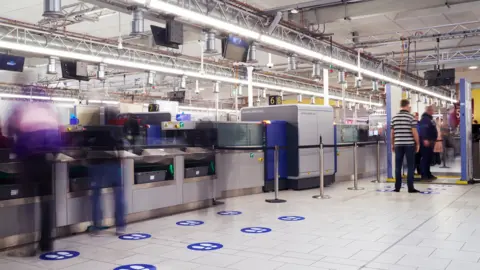 Gatwick Airport
Then-Transport Secretary Mark Harper said the dominance of “tiny toiletry” was nearly over.
But, as it turned out, the June 2024 deadline was not achievable for the biggest airports – although a number of smaller ones, with fewer lanes to get sorted, did install the scanners in place before that date.
Then, on the evening of Friday 13 June, 2024, the government said those smaller airports who had already introduced the new scanners and dropped their 100ml liquids rules, must reinstate them. This triggered anger among airport operators.
The EU also announced a reversion to the 100ml rule in July that year.
There has since been a period of inconsistency. Last summer, the Transport Secretary was telling passengers to assume the 100ml rule still applied.
Heathrow chief executive Thomas Woldbye said the £1bn package of upgrades would mean passengers could spend “less time preparing for security and more time enjoying their journey”.
Of the world’s busiest 10 airports, Heathrow is the only one to have scrapped the 100ml rule for liquid containers on international flights.
A DfT spokesperson said: “Heathrow is the latest UK airport to complete its rollout of next-generation security equipment for passengers, helping ensure security checks remain robust and can be completed smoothly.
“Airports are responsible for the installation and operation of security equipment.
“Passengers should continue to check security requirements with airports before they travel and come prepared with liquids in containers no larger than 100ml in hand baggage unless advised otherwise.”
The Advantage Travel Partnership, a network of travel agents, said airports setting their own timelines on the lifting of the 100ml cap has “led to confusion and frustration” and passengers have been “tripped up”.
Chief executive Julia Lo Bue-Said said: “We would urge UK airports to work collectively with the government to ensure there is clear messaging around the rules to avoid confusion and delays where possible.”
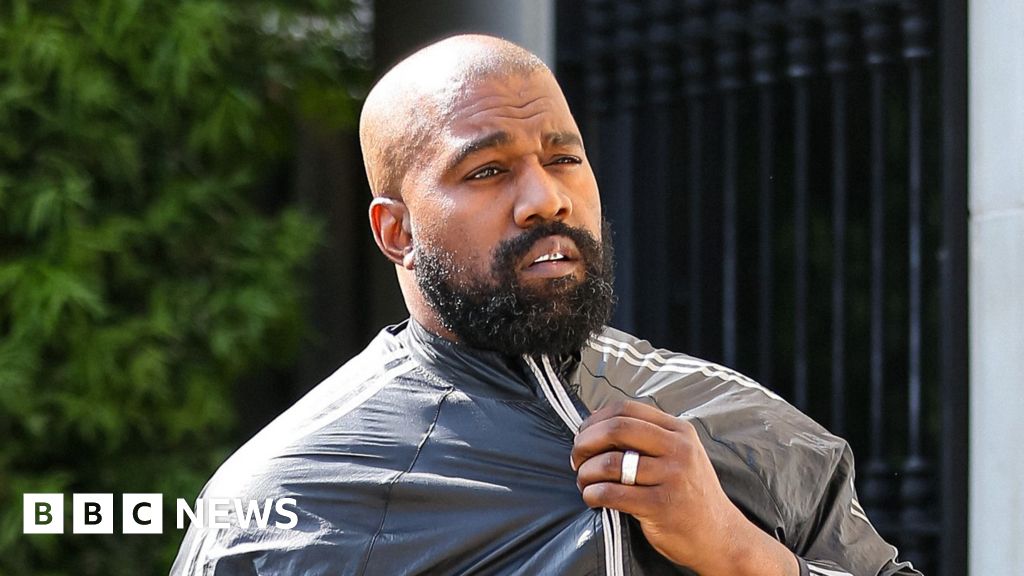
Sir Keir Starmer says it is “deeply concerning” the rapper is set to headline a festival after recent antisemitic comments.
Source link
Business
Stock markets outlook: Dalal Street braces for swings as RBI MPC decision, war risks weigh on sentiment–Check key triggers – The Times of India

Domestic equities are expected to remain volatile this week as investors track the Reserve Bank’s monetary policy decision, global macroeconomic cues and evolving developments in the West Asia conflict, analysts said, according to PTI.Market participants will also keep a close watch on crude oil price movements and foreign fund flows, which continue to influence sentiment.Vinod Nair, Head of Research at Geojit Investments Ltd, said the RBI’s Monetary Policy Committee (MPC) meeting will be the key domestic trigger, with investors focusing on the central bank’s stance on inflation and growth.“A rate pause is near-certain consensus, the central bank walks a tightrope between crude-driven inflation risks and a four-year low Manufacturing PMI signalling a softening growth impulse. The governor’s commentary on the rate cycle trajectory and FY27 projections will be closely monitored.“Globally, the US March CPI reading will carry significant importance, as it buries residual Fed rate-cut hopes, strengthens the dollar and tightens financial conditions for emerging markets, including India,” Nair said.He added that geopolitical developments in West Asia will remain the dominant factor shaping market direction.“Indian markets return after a three-day gap and remain acutely vulnerable to weekend war developments, with crude trajectory and any credible ceasefire signal being the decisive variable that could either trigger a sharp relief rally or extend the current sell-on-rise mode,” he said.In the previous holiday-shortened week, the BSE Sensex declined 263.67 points, or 0.35%, while the NSE Nifty fell 106.5 points, or 0.46%.Siddhartha Khemka, Head of Research (Wealth Management) at Motilal Oswal Financial Services Ltd, said investor sentiment will remain closely linked to developments in the West Asia conflict.Brent crude prices have stayed elevated near $107 per barrel, fuelling concerns around imported inflation. Currency pressures have also intensified, with the rupee weakening sharply before recovering towards Rs 93 against the US dollar following RBI intervention, he noted.Foreign institutional investor (FII) outflows remain a key overhang, with March witnessing heavy selling of Rs 1.2 lakh crore, among the highest monthly outflows in recent years.“Investors will monitor the US Federal Open Market Committee (FOMC) meeting minutes, GDP data, and initial jobless claims for further cues on growth and the policy trajectory.“Overall, markets are expected to remain volatile as geopolitical developments, crude price movements, FII flows and global macro data continue to drive sentiment,” Khemka said.Analysts said any signs of de-escalation in the West Asia conflict could ease crude prices and stabilise the currency, offering relief to markets, while further escalation may prolong risk aversion and keep pressure on foreign flows.

One elderly couple had to find £1,000 for an oil delivery and suppliers are not giving quotes, a councillor says.
Source link


Actress Tori Spelling hospitalized after Southern California crash; authorities investigating cause

With Messi goal, Inter Miami open new stadium with dream moment

Justin Bieber ignites documentary release speculations ahead of Coachella

-

 Sports1 week ago
USMNT handed reality check by Doku, Belgium ahead of World Cup
-

 Sports1 week ago
2026 NCAA men’s hockey tournament: Schedule, results
-
 Fashion1 week ago
EU apparel imports slump 15.48% YoY in Jan; Bangladesh hardest hit
-
Uncategorized3 days ago
[CinePlex360] Please moderate: “Trump signals p
-
Uncategorized6 days ago
[CinePlex360] Please moderate: “Further tariff
-

 Tech2 days ago
Our Favorite iPad Is $50 Off
-
Uncategorized1 week ago
[CinePlex360] Please moderate: “Apple scrapping
-
 Entertainment1 week ago
The Avett Brothers’ bassist explains why he wrote a book about John Quincy Adams