

Politics
Hegseth warns Iran miscalculating US ability to sustain war

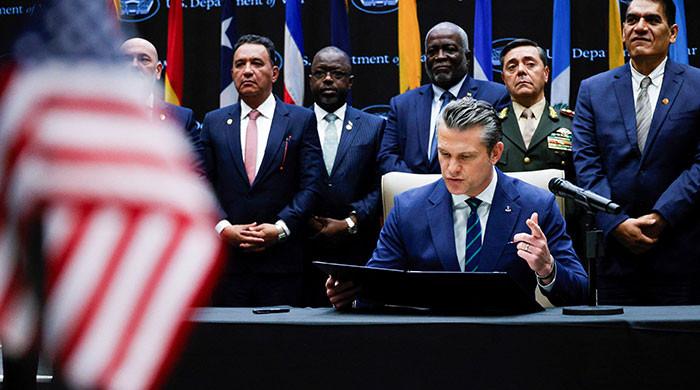
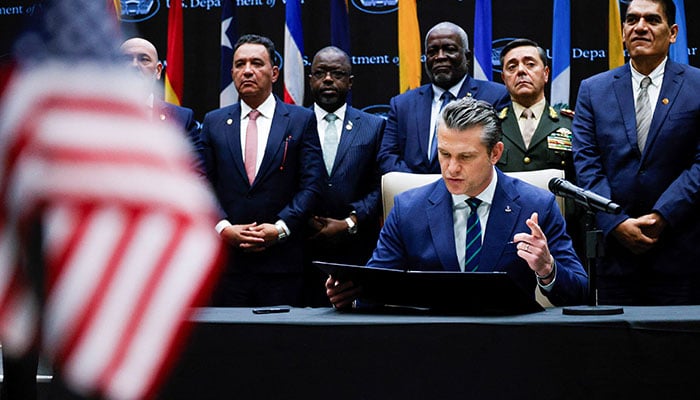
- Pentagon chief warns Iran miscalculating US ability to sustain the war.
- Says US campaign targets Iranian missiles, missile production and navy.
- Says Iran making ‘bad calculation’ believing US can’t sustain war.
TAMPA: TAMPA: US Defence Secretary Pete Hegseth warned on Thursday that Iran was making a serious miscalculation if it believed the United States could not sustain the ongoing war, stressing that Washington had the resources and resolve to continue the military campaign for as long as necessary.
The Pentagon earlier this week said the military campaign, known as Operation Epic Fury, is focused on destroying Iran’s offensive missiles, missile production and navy, while not allowing Tehran to have a nuclear weapon.
“There’s no expansion in our objectives. We know exactly what we’re trying to achieve,” Hegseth said.
He added that Trump was “having a heck of a say in who runs Iran given the ongoing operation.”
In a telephone interview with Reuters on Thursday, Trump said the United States would have to help pick the next person to lead the country.
The US and Israeli military campaign that started on Saturday has hit targets across the country and triggered Iranian retaliatory strikes in the region as Tehran seeks to impose a high cost on the United States, Israel and their allies.
Iran has attacked countries including Israel, the United Arab Emirates and Qatar. Fire crews in Bahrain extinguished a blaze at a refinery following a missile strike.
Azerbaijan became the latest country drawn in, as it accused Iran of firing drones at its territory and ordered its southern airspace closed for 12 hours.
Hegseth said by striking countries in the region, Iran would only bring them closer to the United States.
“It’s actually firming up the unity of the resistance in order to focus exactly where we need to,” Hegseth said.
Next phase of operations
The United States has hit more than 2,000 targets in Iran, including Iranian warships.
Admiral Brad Cooper, the head of US Central Command, said US forces had destroyed 30 Iranian warships, including an Iranian drone carrier ship earlier on Thursday.
Cooper said the United States was hitting Iran’s ability to rebuild.
“As we transition to the next phase of this operation, we will systematically dismantle Iran’s missile production capability for the future, and that’s absolutely in progress,” Cooper said, adding that it would take some time.
The US military has identified the six US Army Reserve soldiers killed when a drone slammed into a US military facility in Port Shuaiba, Kuwait.
Trump and other senior officials have warned the Iran conflict will result in more US military deaths.
Hegseth, during the press conference, said Iran was making a mistake if it believed that the United States could not sustain the ongoing war, adding that Washington had just begun to fight.
“Iran is hoping that we cannot sustain this, which is a really bad miscalculation,” Hegseth said. “We set the timeline.”
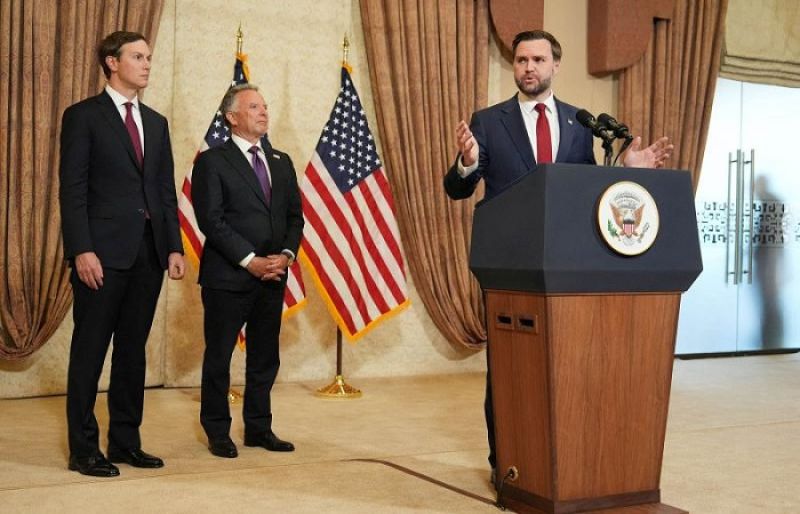
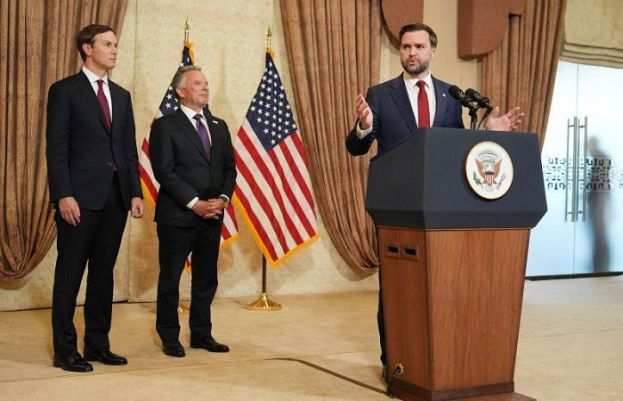
A US delegation led by Vice President JD Vance is en route to Pakistan and expected to land in Islamabad within hours for the second round of talks with Iran, President Donald Trump said on Monday.
Trump confirmed the development in an interview with the New York Post, saying he would be willing to meet Iranian leaders himself if progress is made in the talks.
Apart from Vance, the US delegation includes Trump’s son-in-law, Jared Kushner, and Special Envoy to the Middle East Steve Witkoff, as per a report by Axios.
If reports about the other delegation members are accurate, it would mean the US delegation is the same as in the first round of Iran talks held in Islamabad on April 11.
However, a source familiar with the plan told AFP on Monday that a US delegation will head to Pakistan “soon” for a new round of peace negotiations with Iran.
Meanwhile, mediator Pakistan — which brokered a two-week ceasefire between the two sides on April 8 — was making efforts to end the US naval blockade of Iranian ports and to ensure Iran’s participation in the peace talks.
With the ceasefire set to expire, a senior Iranian official told Reuters that Tehran was “positively reviewing” its participation following Pakistan’s efforts, but no final decision had been made.
The comments conveyed a clear change of tone from earlier statements ruling out attendance and pledging to retaliate for US aggression.
Separately, Deputy Prime Minister and Foreign Minister Ishaq Dar held a phone call with Iranian Foreign Minister Abbas Araghchi, emphasising the importance of continued dialogue and engagement to resolve all pending issues.
DPM Dar stressed that persistent dialogue was essential to ensure regional peace and stability, read a statement issued by the Foreign Office.
Since the announcement of the ceasefire, Tehran and Washington have disagreed on a number of issues, including Iran’s blockade of the Strait of Hormuz and the US naval blockade of Iranian ports.
Tehran effectively blocked the waterway and launched attacks against Israel and US bases across the Middle East in response to the joint US-Israel attacks on February 28.
Iranian Foreign Minister Abbas Araghchi, on April 17, announced the reopening of the strait for commercial vessels following the ceasefire in Lebanon.
However, Iranian authorities blocked the waterway again the following day, citing the US blockade of Iranian ports.
On April 18, the Islamic Revolutionary Guard Corps (IRGC) said that the US blockade represented “acts of piracy and maritime theft”.
“Until the US restores full freedom of navigation for vessels travelling from Iran to their destinations and back, the status of the Strait of Hormuz will remain tightly controlled and in its previous condition,” it said.
US Marines board Iranian vessel
The ceasefire had appeared in jeopardy after the US said it had seized an Iranian cargo ship that tried to run its blockade, and Tehran vowed to retaliate.
The US military said it had fired on an Iranian-flagged cargo ship headed towards Iran’s Bandar Abbas port on Sunday after a six-hour standoff, disabling its engines.
US Central Command released a video showing Marines descending ropes from helicopters onto the vessel.
Iran’s military said the ship had been travelling from China and accused the US of “armed piracy”, according to state media.
They said they were ready to confront US forces over the “blatant aggression”, but were constrained by the presence of crew members’ families on board.
Trump on Sunday warned that the US would destroy every bridge and power plant in Iran if it rejected his terms, continuing a recent pattern of such threats.
Iran has said that if the US were to attack its civilian infrastructure, it would strike power stations and desalination plants in its Gulf Arab neighbours.
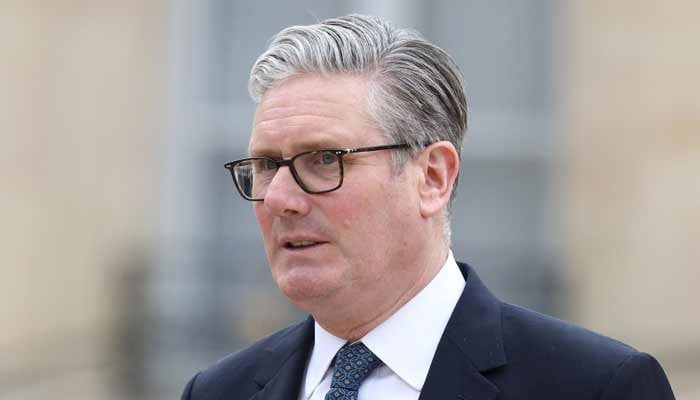
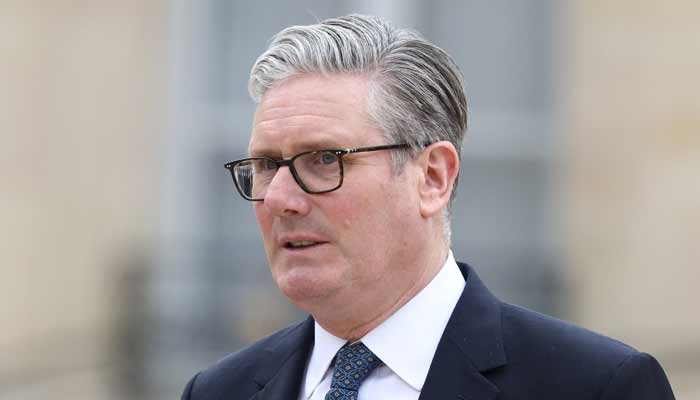
Embattled Prime Minister Keir Starmer said on Monday he had been wrong to appoint Labour politician Peter Mandelson as UK envoy to Washington, seeking to quell anger over a scandal surrounding Jeffrey Epstein’s long-time associate.
Starmer, already widely unpopular with the public and many Labour MPs, is struggling to manage a controversy that has threatened to bring down his leadership.
Addressing parliament about the deepening political row, Starmer said: “At the heart of this, there is also a judgment I made that was wrong. I should not have appointed Peter Mandelson.”
He faced fresh calls to quit last week after it was revealed that Mandelson — whose friendship with the late convicted US sex offender was long known — had become Britain’s envoy to Washington last year despite failing security checks.
Starmer has insisted that he and other ministers were not told until last week that Mandelson had failed the independent vetting process.
“It beggar’s belief that throughout the whole timeline of events, officials in the Foreign Office saw fit to withhold this information from the most senior ministers in our system, in government,” he told MPs.
“If I had known before he took up his post that (the) recommendation was that developed vetting clearance should be denied, I would not have gone ahead with the appointment.”
‘Unconventional’
Last Thursday, Starmer sacked the Foreign Office’s top civil servant, Olly Robins, telling MPs that he had set in motion a review of the security vetting process.
But ex-civil servants have accused Starmer of scapegoating Robbins, who will give his own account to a parliamentary watchdog committee on Tuesday.
Opposition leaders have called for the centre-left Labour leader to step down, with accusations ranging from incompetence to willful misleading of parliamentarians and the public.
Starmer told parliament in February that “full due process” was followed when Mandelson was vetted and cleared for the key role.
His Downing Street office has insisted that remains true because government rules meant the Foreign Office had the power to overrule vetting concerns, without the knowledge of Starmer and his top team.
On Friday, Downing Street took the unusual step of releasing a memo that insisted he had only found out about the vetting failure last Tuesday.
Senior ministers have so far rallied around Starmer.
“A judgement was made that the Trump administration was an unconventional administration and an unconventional ambassador could do a job for the United Kingdom,” Scotland Secretary Douglas Alexander said Monday.
“That judgement was wrong and the prime minister accepts that.”
‘He has to go’
Other ministers have argued that Starmer should remain in power amid the global tumult sparked by the Middle East war and other issues, including forging closer relations with the European Union.
But polls suggest Starmer is one of Britain’s most unpopular prime ministers ever.
If Starmer had known about the failed vetting “then he has to go, he has to resign”, retired dentist Andrews Connell, 59, told AFP.
“If he knew that’s really bad. If he didn’t know, he should have known.”
Pensioner Lyndia Shaw, 73, agreed saying Starmer is “absolutely hopeless, hopeless, and I feel that yes Mandelson should face the full force of the law without doubt”.
But retiree Duncan Moss, 67, said he would be “very worried if Starmer was to leave and to not run the country. I think he’s doing a very good job. I think he’s a very mature, experienced leader”.
Starmer sacked Mandelson in September 2025, seven months after he took up the post, after new details emerged about the depth of the ex-envoy’s ties to Epstein, who died in a US prison in 2019 while facing sex-trafficking charges.
UK police are investigating allegations of misconduct in office by Mandelson, 72, when he was a Labour minister more than 15 years ago. He was arrested and released in February.
Mandelson has not been charged and denies criminal wrongdoing.
Starmer and his Labour party are also bracing for a chastening set of local elections next month, including in the devolved Scottish and Welsh parliaments.
Politics
FBI Director Kash Patel sues The Atlantic claiming false reporting about drinking, absences
- Patel denies all allegations in The Atlantic article.
- Magazine cites anonymous sources alleging drinking.
- Lawsuit claims referencing ignored denials, rushed timeline.
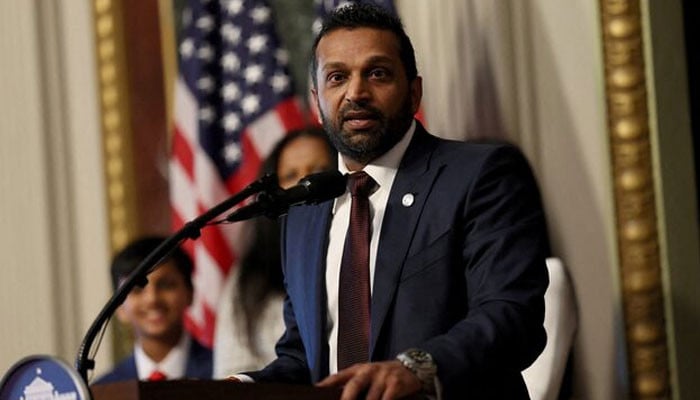
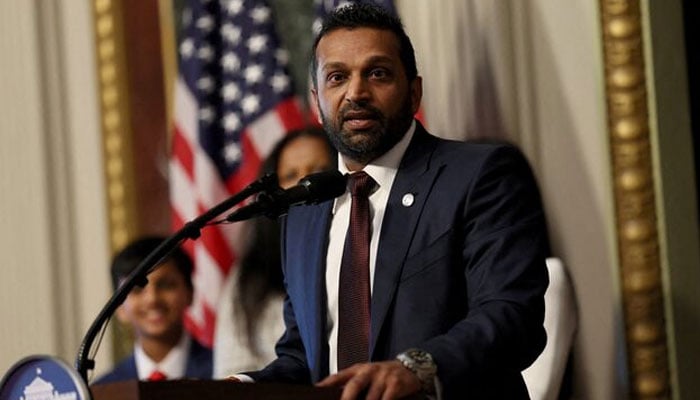
FBI Director Kash Patel filed a defamation lawsuit against The Atlantic and its reporter, Sarah Fitzpatrick, following the publication of an article on Friday alleging the director had a drinking problem that could pose a threat to national security.
The magazine’s story, initially titled “Kash Patel’s Erratic Behaviour Could Cost Him His Job,” cited more than two dozen anonymous sources expressing concern at Patel’s “conspicuous inebriation and unexplained absences” that “alarmed officials at the FBI and the Department of Justice.”
The article, which The Atlantic subsequently titled “The FBI Director Is MIA” in its online version, reported that during Patel’s tenure, the FBI had to reschedule early meetings “as a result of his alcohol-fueled nights” and that Patel “is often away or unreachable, delaying time-sensitive decisions needed to advance investigations.”
In The Atlantic’s story, the White House, the Department of Justice and Patel denied the allegations. The article included a statement from the FBI attributed to Patel, “Print it, all false, I’ll see you in court, bring your checkbook.”
“The Atlantic’s story is a lie,” Patel said in an interview with Reuters. “They were given the truth before they published, and they chose to print falsehoods anyway.”
“We stand by our reporting on Kash Patel, and we will vigorously defend The Atlantic and our journalists against this meritless lawsuit,” The Atlantic said in a statement.
Reuters could not independently establish the accuracy of the article or why the publication changed the title.
Patel’s complaint says that while The Atlantic is free to criticise the leadership of the FBI, “they crossed the legal line” by publishing an article “replete with false and obviously fabricated allegations designed to destroy Director Patel’s reputation and drive him from office.”
The lawsuit, filed in the US District Court for the District of Columbia, seeks $250 million in damages.
The lawsuit alleges The Atlantic ignored the FBI’s denials and did not respond to a Friday letter from Patel’s lawyer Jesse Binnall to senior editors and The Atlantic’s legal department asking for more time to refute the 19 allegations the reporter told the FBI’s press office she would be publishing.
The letter, which Reuters has seen, was sent shortly before 4 p.m. on Friday, and the story was published at 6:20pm, according to the complaint. Reuters could not establish how or if The Atlantic responded to Binnall’s request.
The lawsuit alleges the publication acted with “actual malice,” a legal standard that requires public figures such as Patel to show the publisher knowingly printed false information or recklessly ignored doubts about its accuracy.
“Defendants’ conscious decision to ignore the detailed, specific, and substantive refutations in the Pre-Publication Letter, and their refusal to give a reasonable amount of time for the FBI and Director Patel to respond, is among the strongest possible evidence of actual malice,” the lawsuit says.
The lawsuit is the latest instance of a Trump administration figure suing a media outlet. A judge dismissed Trump’s lawsuit against CNN for describing election denialism as “the big lie.” Judges also dismissed Trump’s lawsuits against the New York Times and the Wall Street Journal. Trump has refiled his lawsuit against the New York Times and may refile against the Wall Street Journal.
He has also secured some settlements. ABC News agreed to settle a case for $15 million plus $1 million in legal fees. Paramount Global agreed to pay $16 million for what the Trump administration called “deceptive editing” of a CBS News interview with his opponent in the 2024 election, Kamala Harris.


War Memes Are Turning Conflict Into Content

‘It’s his superpower’: Inside Fernando Mendoza’s extraordinary rise to No. 1

US delegation ‘en route’ to Islamabad as Iran ‘positively reviews’ participation in talks

-

 Fashion4 days ago
France’s LVMH Q1 revenue falls 6%, shows resilience amid Iran war
-

 Sports1 week ago
The case for Man United’s Fernandes as Premier League’s best
-

 Entertainment1 week ago
Palace left in shock as Prince William cancels grand ceremony
-
 Business1 week ago
UK could adopt EU single market rules under new legislation
-

 Entertainment5 days ago
Is Claude down? Here’s why users are seeing errors
-

 Fashion1 week ago
Energy emerges as biggest cost driver in textile margins
-
 Business1 week ago
Delta Air Lines unveils first new Delta One suite in premium cabin arms race
-

 Tech1 week ago
A Lot of Shops Won’t Fix Electric Bikes. Here’s Why