

Business
High Court rules Baroness Mone-linked company breached £122m Covid contract

Rachel ClunBusiness reporter
 Getty Images
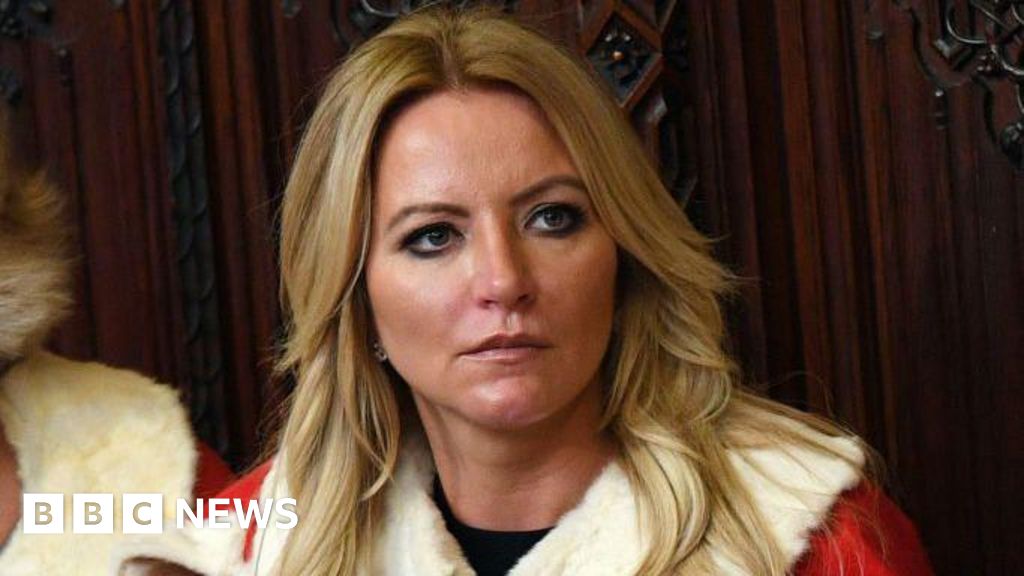
A company linked to peer Baroness Mone and her husband Doug Barrowman has been ordered to pay £122m in damages after a judge ruled it breached a government contract for the supply of personal protective equipment (PPE) during the Covid pandemic.
The Department of Health and Social Care sued PPE Medpro over claims the medical gowns it supplied did not comply with relevant healthcare standards.
The High Court ruled Medpro failed to prove whether or not its surgical gowns, which were to be used by NHS workers, had undergone a validated sterilisation process.
Chancellor Rachel Reeves said it was beyond her powers for Baroness Mone to be stripped of her peerage.
But speaking to Matt Chorley on BBC Radio 5 Live, Reeves said: “I hope she won’t be back in the House of Lords.”
Peerages can only be removed by an act of Parliament. While a life peerage cannot be relinquished, Baroness Mone could choose to resign from being a member of the House of Lords.
Reeves said she would “do everything” in her power “to get that money back” and that the money belongs “in our schools, in our hospitals and in our communities”.
During the outbreak of the Covid pandemic in 2020, the government scrambled to secure supplies of PPE as the country went into lockdown and hospitals across the country were reporting shortages of clothing and accessories to protect medics from the virus.
In May that year, PPE Medpro was set up by a consortium led by Baroness Mone’s husband, Doug Barrowman, and won its first government contract to supply masks through a so-called VIP lane after being recommended by Baroness Mone.
The judgement said the government later ordered 25 million sterile gowns from Medpro, which were delivered in August and October 2020, after being manufactured in China.
However, just before Christmas that year, the Department of Health served the company with a notice rejecting the gowns and asking for a refund.
The judgement said the government decided it was “not satisfied that the gowns were contractually compliant” after inspecting them, and claimed subsequent tests conducted found “a number of them were not sterile”.
Paul Stanley KC, representing the government, told the trial that of 140 gowns that were tested, 103 failed.
It led to the government launching legal action in 2022 through the High Court, claiming the gowns did not comply with the agreed contract.
Medpro, however, argued it had complied with the contract and that the gowns were sterile.
Having previously denied gaining directly from the contracts, Baroness Mone, a former Conservative peer and lingerie tycoon, admitted in December 2023 that she stood to benefit from tens of millions of pounds of profit.
She also admitted to the BBC that she and her husband lied about their involvement with Medpro to avoid “press intrusion”.
The court found firm’s director Anthony Page called on his “big gun” – Baroness Mone – during negotiations in order to secure the gown contract.
In the court ruling on Wednesday, Justice Cockerill said the contract between Medpro and the government was “complex”, but found that the company did in fact have to demonstrate it had undertaken a “validated sterilisation process”.
“That was not complied with by Medpro,” she said. “It followed that Medpro had breached the contract.”
The ruling also said the gowns lacked the “notified body number” required to mark them as sterilised, and that Medpro had provided no evidence such a process had taken place.
Medpro had also argued that the government could have sold the gowns if it no longer wanted them, or repurposed to be used as non-sterile or isolation gowns.
During the case, the company said any lack of sterility or valid sterility marking “did not prevent the said gowns from being used within the NHS or from being sold to third parties outside of the EU”.
Justice Cockerill said there were problems with that argument, including the fact that the NHS did not need any more isolation gowns.
However, she noted that the DHSC did not effectively reject the gowns within a reasonable timeframe, and also dismissed the government’s claim for £8.65m in storage costs over lack of evidence.
The judge ruled the company must pay £121,999,219 in damages, plus interest, however, it remains unclear how Medpro will pay the fee, with the company appointing administrators the day before the court decision.
Its last set of accounts said it only had £666,025 of shareholders’ funds.
The court said the firm had until 15 October to pay the damages to the government.
Speaking after the judgement, Chancellor Rachel Reeves said the government was working with administrators and “all different authorities” to try and claim the money.


‘A win for the establishment’
In response to the ruling, Baroness Mone said it was “shocking but all too predictable”.
“It is nothing less than an Establishment win for the Government in a case that was too big for them to lose,” she said in a social media post.
A spokesperson for Mr Barrowman described the ruling as “a travesty of justice”.
“[Mrs Justice Cockerill’s] judgment bears little resemblance to what actually took place during the month-long trial, where PPE Medpro convincingly demonstrated that its gowns were sterile,” the spokesperson added.
Baroness Mone was once described as one of the UK’s most successful businesswomen, creating the gel-padded Ultimo bra in the late 1990s.
In 2015, then-Prime Minister David Cameron made her the government’s “entrepreneurship tsar”, and shortly after she became a Conservative peer.
The next year she announced she was in a relationship with Mr Barrowman, a billionaire businessman who founded The Knocks Group of Companies and was a director of Aston Management Limited.
In December 2022, Baroness Mone sought a leave of absence from the House of Lords.
Neither Baroness Mone nor Mr Barrowman appeared in court for the decision.
A separate National Crime Agency (NCA) investigation into Medpro was launched in May 2021, into suspected criminal offences committed over the procurement of PPE.
An NCA spokesperson said on Wednesday its investigation was ongoing.

The UK could face some food shortages by the summer under a worst case scenario drawn up by government officials.
Source link

The U.S. Internal Revenue Service (IRS) building stands after it was reported the IRS will lay off about 6,700 employees, a restructuring that could strain the tax-collecting agency’s resources during the critical tax-filing season, in Washington, D.C., Feb. 20, 2025.
Kent Nishimura | Reuters
A version of this article first appeared in CNBC’s Inside Wealth newsletter with Robert Frank, a weekly guide to the high-net-worth investor and consumer. Sign up to receive future editions, straight to your inbox.
For seven years, wealthy Americans faced a looming deadline to take advantage of tax provisions that were set to expire at the end of 2025. While the One Big Beautiful Bill Act alleviated much of the uncertainty by making most of the cuts permanent, lawyers and tax accountants say the ever-shifting tax code requires constant planning.
With this year’s Tax Day now behind us, here are five of the most important planning strategies wealthy investors and high earners are thinking about for next year and beyond.
1. Long-short tax-loss harvesting
Last year’s tax bill permanently raised the estate tax exemption to $15 million per person, up from $13.99 million. (It was initially set to be cut in half at the end of 2025.)
The higher threshold has prompted a shift in focus from minimizing federal estate taxes to lowering taxes on income and capital gains. Minimizing capital gains has become crucial after several years of strong market gains, according to Mitchell Drossman, head of national wealth strategies in Bank of America’s chief investment office. The S&P 500 has surged more than 75% since the beginning of 2023.
“The biggest tax story to me is a capital gains and investing story,” said Drossman. “You have lots of clients who are sitting on significant gains.”
Investors are increasingly turning to long-short tax-loss harvesting, an aggressive form of a popular strategy, in order to minimize capital gains, Drossman said. With traditional tax-loss harvesting, investors sell losing assets to offset realized gains on others. Long-short tax strategies, on the other hand, borrow against the portfolio to buy short positions expected to fall and maintain long positions expected to thrive.
“If there’s natural volatility in the markets, you have, now, a greater amount of an asset base to choose from in terms of harvesting losses,” he said. “But when you look at your overall portfolio, you’re still kind of neutral.”
2. Bonus depreciation
The 2025 tax bill renewed bonus depreciation, allowing businesses to deduct the full cost of qualifying assets like machinery, computers or vehicles the first year they are used.
Adam Ludman, head of tax strategy at J.P. Morgan Private Bank, said many clients with operating businesses are investing with bonus depreciation in mind, such as buying private jets.
Real estate developers and investors are trying to get the most bang for their buck by assessing which parts of their properties can be depreciated faster, according to Ludman. For instance, while a commercial building can take 39 years to depreciate, a parking lot can be depreciated over 15 years, allowing owners to recover costs faster.
3. Changing domiciles
A wave of blue states are considering new taxes on top earners and high-net-worth individuals in order to cover cuts in federal aid. California’s one-time billionaire tax proposal may end up on the November ballot, while Maine and Washington have recently passed millionaire taxes.
Jane Ditelberg, chief tax strategist for Northern Trust Wealth Management, said a growing number of clients are asking how to change their tax status as these proposals gain traction. Depending on their state, residents can avoid state-level taxes by creating trusts in states with favorable trust income laws like Delaware.
The most straightforward way to avoid local taxes is to change your domicile, which is easier said than done, according to Jere Doyle of BNY Wealth. The senior estate planning strategist based in Massachusetts, which imposes a millionaire tax, said he has had clients move to New Hampshire and establish residency before selling their businesses.
But clients are often loath to take the steps necessary to establish intent not to return, Doyle said. For instance, moving to Florida may not be enough to avoid Massachusetts taxes if you refuse to sell your Martha’s Vineyard home, he said.
“Everyone thinks that if they spend 183 days in another state, you’re domiciled in that state. That’s not necessarily true. Each state’s a little bit different,” he said. “You [have] got to change where you vote, where your car is registered, even where your doctors are, what clubs you belong to, golf clubs, country clubs, things like that.”
4. Bunching charitable gifts
One notable drawback of last year’s tax bill was a reduction in the tax benefits of charitable giving for top earners.
The bill limits top-earning donors in two ways. First, starting this year, donors who itemize will only be able to deduct charitable contributions in excess of 0.5% of their adjusted gross income, or AGI.
Second, taxpayers in the 37% tax bracket will have their itemized deductions reduced by 2/37th of the value. This ceiling reduces the effective tax benefit from 37% to 35%.
Ditelberg said many clients accelerated their charitable giving last year before these new rules took effect. She said she anticipates clients will continue to “bunch” their donations, by giving a larger sum in one year rather than spreading it over multiple years, so they only trigger the 0.5% haircut once, either through their foundations or donor-advised funds.
5. Opportunity zones
The tax bill also offered an incentive for business owners and real estate owners to postpone selling their assets. The bill made permanent the qualified opportunity zone program, which allows investors to defer capital gains by rolling them over into a fund that invests in a low-income community.
The opportunity zone funds created under the first Trump administration still exist, but you can only defer the taxes until the end of the year. The new opportunity zones, which have yet to be designated, come with enhanced benefits, especially for investors in rural communities. For instance, if you hold your investment in a qualified rural opportunity fund for five years, your capital gains are reduced by 30% for tax purposes.
But you only have 180 days to roll over your gains, and the new opportunity zone rules don’t take effect until 2027, Ditelberg noted.
“If you’re thinking of incurring a major gain, you may want to defer it until August or September, instead of doing it in May or June, if you think you would like to take advantage of the opportunity zone deferral,” she said. “I think we’re going to see people who are incurring gains in the second half of this year.”
That said, investors are waiting to see what the new funds entail. Drossman said some clients are reluctant to invest in opportunity zones again after their previous investments underperformed.
“It’s a classic example of not letting the tax-tail wag the dog because these need to be sound investments,” he said. “Like with all investments, there is an element of risk and return.”

Illuminated logo for Pepsi on a soda fountain in Walnut Creek, California, March 4, 2026.
Smith Collection | Gado | Archive Photos | Getty Images
PepsiCo on Thursday reported quarterly earnings and revenue that topped analysts’ expectations as its struggling North American food business reported a return to volume growth.
Here’s what the company reported compared with what Wall Street was expecting, based on a survey of analysts by LSEG:
- Earnings per share: $1.61 adjusted vs. $1.55 expected
- Revenue: $19.44 billion vs. $18.94 billion expected
Pepsi reported first-quarter net income attributable to the company of $2.32 billion, or $1.70 per share, up from $1.83 billion, or $1.33 per share, a year earlier.
Excluding items, the company earned $1.61 per share.
Net sales rose 8.5% to $19.44 billion.


Princess Anne keeps up her relentless royal pace in Dartmouth

France’s Kering begins 2026 on stable footing, eyes Gucci revival

ICE cotton rallies to 22 month-high on weaker dollar, drought worries

-

 Entertainment1 week ago
Queen Elizabeth II emotional message for Archie, Lilibet sparks speculation
-

 Tech1 week ago
Azure customers up in arms over ‘full’ UK South region | Computer Weekly
-

 Tech1 week ago
As the Strait of Hormuz Reopens, Global Shipping Will Take Months to Recover
-

 Fashion1 week ago
CII submits 20-pt agenda to Indian govt to back firms hit by Iran war
-

 Tech1 week ago
This AI Button Wearable From Ex-Apple Engineers Looks Like an iPod Shuffle
-

 Politics6 days ago
Indian airlines hit hardest after Dubai limits foreign flights until May 31
-

 Politics6 days ago
Chinese, Taiwanese will unite, Xi tells Taiwan opposition leader
-

 Entertainment1 week ago
Why Lionel Richie saved Rae?