

Business
Holiday spending, especially by Gen Z, is expected to drop this year, survey says


Shoppers at the Walmart Supercenter in Burbank during Walmart’s multi-week Annual Deals Shopping Event in Burbank Thursday, Nov. 21, 2024.
Allen J. Schaben | Los Angeles Times | Getty Images
Holiday shoppers expect to trim the tree and their spending this upcoming season, according to a survey by consulting firm PwC.
Across generations, consumers said they plan to spend an average of $1,552 on holiday gifts, travel and entertainment — which represents a 5% drop from the planned holiday spending average in the year-ago period.
Yet the sharpest decline comes from Generation Z, whose members said they plan to spend 23% less on average than a year ago. That’s the biggest drop of any generation and a significant swing from last year when they said they expected to spend 37% more. Their pullback is also contributing to the overall decline in holiday spending.
“Price is Gen Z’s love language,” said Ali Furman, the U.S. consumer markets industry leader for PwC. “They’ve been raised in an era of rising costs. They’re laser-focused on value and cost transparency. For them, dupes aren’t a downgrade. They’re proof of smart shopping.”
For retailers, Gen Z customers — who span in age from 13 to 29 and have an average age of 22 — are both an opportunity and a challenge, Furman said. As they enter adulthood, they tend to have smaller salaries, new expenses and debt to pay down, she said. Plus, she said, they are experience-driven, often prioritizing concert tickets, hotel stays and plane trips over buying new items, and they’re feeling the pinch as those experiences cost more.
“Entertainment and vacations are taking up more of their wallet than they have, and therefore they have less to spend on holiday,” Furman said.
It’s also been hard for retailers to keep up with young shoppers, who “are the fastest generation to adopt trends and abandon trends,” she said.
For retailers, the survey’s findings highlight the uncertain backdrop for a holiday season that could be shaped, at least in part, by price sensitivity as companies debate how much to absorb and pass on higher tariff costs.
All other generations’ holiday spending expectations were roughly flat compared with a year ago — with the exception of baby boomers, who plan to spend 5% more on average, according to PwC’s survey, which included a representative sample of 4,000 U.S. consumers and was conducted in late June and early July.
Consumers who have already grown weary of the rising cost of living, such as higher utility bills, are also wary of potential price increases from higher tariffs, Furman said. That’s made shoppers pay closer attention to price tags and intensified their resolve to delay or shop early to get the best deal, she said.
“It’s not necessarily the tariffs themselves that are driving sentiment and behavior,” she said. “It’s the threat prices may go up, and people have a consciousness around that.”





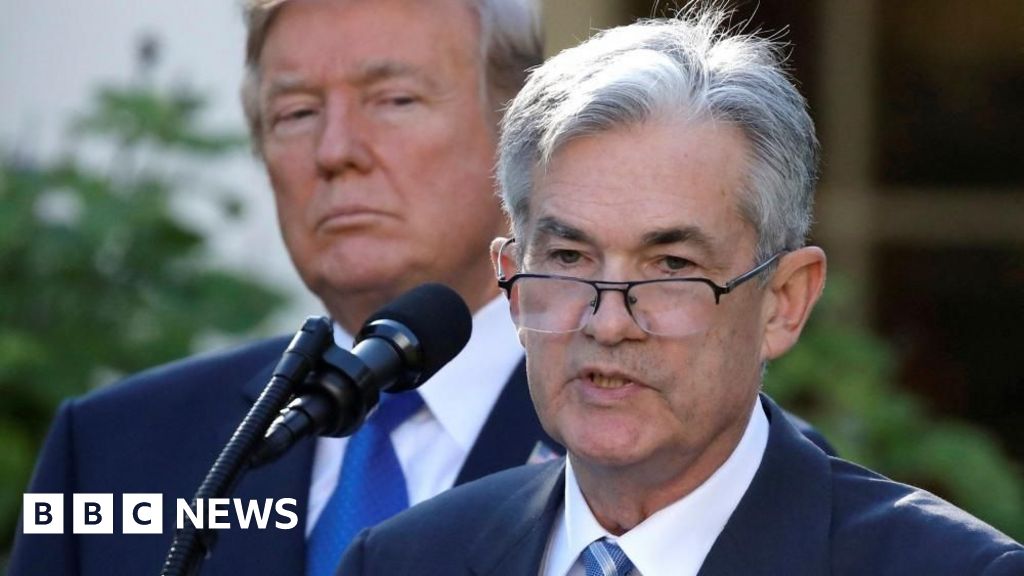
Powell’s term is nearing its end and the US Senate is considering Trump’s nominee for his replacement, Kevin Warsh. A key Republican, Thom Tillis, has withheld his support for Warsh unless the Trump administration would drop its investigation into Powell.
Business
Intel bags big gains! Chipmaker’s shares jump 26% on blockbuster results; how Trump admin benefits – The Times of India
Intel share price soared sharply on Friday after the chipmaker delivered a first-quarter performance that exceeded market expectations. And the win was not just for the chipmaker, but also the whole of US!The stock climbed 26.7% during trading on Friday, marking what could be its strongest single-day gain since 1987. Momentum continued after the closing bell, with shares rising a further 20% in after-hours trading as investors reacted to signs of a sustained turnaround driven by artificial intelligence.Intel reported revenue of $13.58 billion (€11.6bn) for the quarter, ahead of the $12.3 billion (€10.5 bn) forecast and up 7.2% from a year earlier. Adjusted earnings per share came in at $0.29, far exceeding expectations of $0.01.A key contributor to this performance was the company’s Data Centre and AI (DCAI) division, which delivered revenue of $5.05 billion (€4.2bn), up 22.4% year-on-year and well above analyst estimates of $4.41 billion (€3.77bn). The results indicate strong demand for Intel’s Xeon 6 processors and Gaudi 3 AI accelerators, particularly among enterprise clients and cloud service providers.Chief executive Lip-Bu Tan pointed to a broader shift in artificial intelligence usage as a major factor behind the growth. He said, “the next wave of AI will bring intelligence closer to the end user, moving from foundational models to inference to agentic.” He added, “This shift is significantly increasing the need for Intel’s CPUs and wafer and advanced packaging offerings.”The company also issued an upbeat outlook for the second quarter, forecasting revenue in the range of $13.8 billion (€11.8billion) to $14.8 billion (€12.6billion), surpassing investor expectations of $13 billion (€11.1billion).
But how is Washington winning?
The rally has had a direct impact on the US administration’s investment in Intel. In 2025, during a period of severe financial strain for the company, the administration of Donald Trump acquired a 9.9% stake in a move aimed at stabilising the business. The government invested $8.9 billion (€7.8bn) at a share price of $20.47 (€18.01), with $5.7 billion (€5bn) of that amount coming from previously approved but unpaid grants, according to the Euro News.At the time, Intel was facing multi-billion dollar losses and operational challenges, prompting concerns over its viability. As part of the intervention, the company cancelled planned factory projects in Germany and Poland, redirected focus towards US-based manufacturing, and reduced its global workforce by 25%, cutting around 25,000 jobs.Following the latest jump, Intel’s shares are now trading at $81.3 (€71.5), representing an increase of nearly 300% since the government first took its stake. The sharp rise highlights how the company’s improved financial performance has translated into substantial gains for the US administration.

Statistics Jersey says there have been “sharp increases” in some energy prices.
Source link


Iranian FM Abbas Araghchi lands in Pakistan ahead of renewed US talks

Mom’s Microwaved Coffee Won’t Stand a Chance With This Ember Smart Mug Deal

Giants legend Lawrence Taylor, 67, hospitalized after medical emergency: report

-

 Fashion1 week ago
France’s LVMH Q1 revenue falls 6%, shows resilience amid Iran war
-

 Tech1 week ago
CYBERUK ’26: UK lagging on legal protections for cyber pros | Computer Weekly
-

 Sports5 days ago
WWE WrestleMania 42 Night 2: Live match results and analysis
-

 Sports1 week ago
Faheem Ashraf backs Islamabad United’s push, calls league a ‘career-changing platform’
-

 Sports5 days ago
NCAA men’s gymnastics championship: All-time winners list
-
 Business1 week ago
PepsiCo earnings beat estimates as North American food business improves
-

 Tech1 week ago
Anthropic Plots Major London Expansion
-
 Business1 week ago
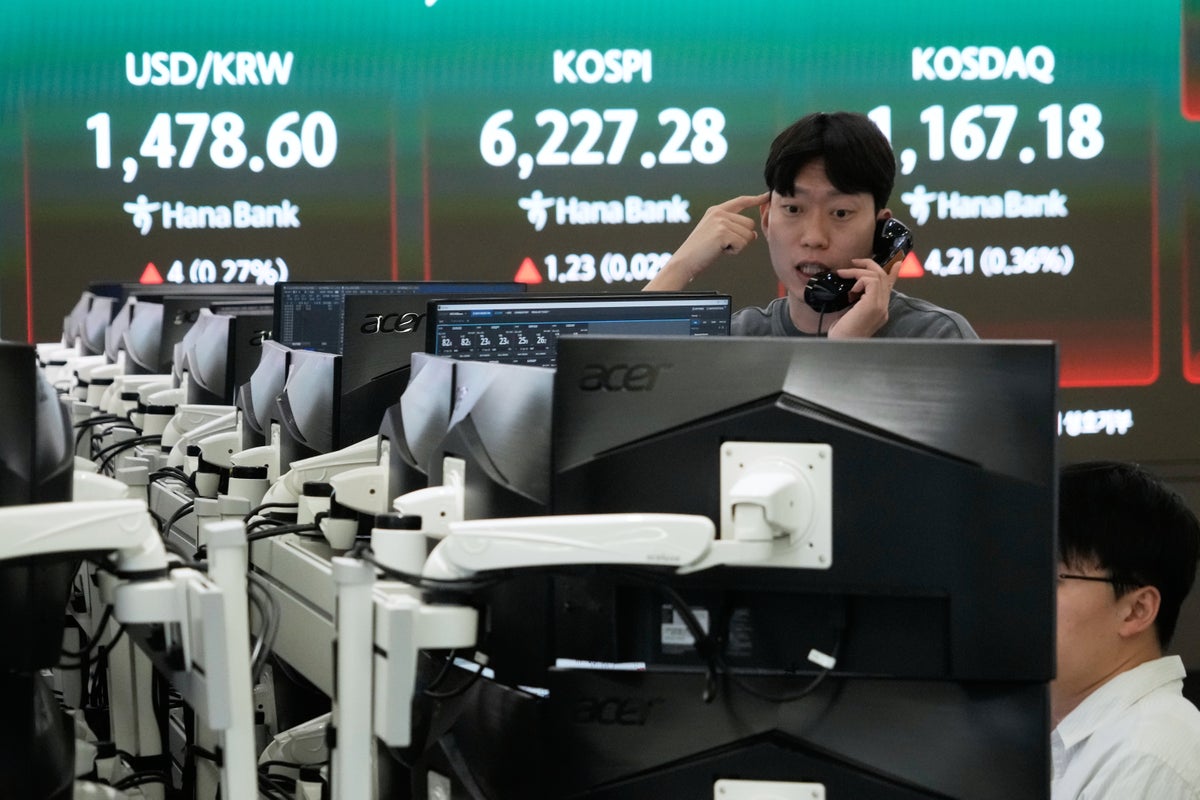
Oil prices fall again amid Middle East ceasefire hopes