

Tech
How blind and low-vision users manage their passwords

Passwords remain the go-to authentication tool in everyday life, says CISPA researcher Alexander Ponticello. At the same time, passwords are often a security weak spot: too short, too simple, and reused far too often. Blind and low-vision people face an additional hurdle: Systems need to work together sensibly for authentication processes to run smoothly.
A new qualitative study with 33 U.S. participants shows how this group manages passwords—and where improvements are needed. Ponticello presented his paper “How Blind and Low-Vision Users Manage Their Passwords” at the IT security conference CCS 2025 in Taipei.
Passwords are still the default tool for online security—but they’re also a constant source of problems. Many people today have hundreds of accounts and for which they must manage passwords of varying complexity. Password managers can help: They create strong passwords, store them, and autofill login credentials—problem solved, right?
Unfortunately, this isn’t the case, because password managers are far from being used consistently by everyone. Previous studies show that the main reasons are the fear of complicated setup, lack of trust, and lack of knowledge about existing tools. Older user groups also tend to be generally hesitant about digital tools. Ponticello’s new study expands research on password management and password manager use to a group that has received little attention so far: blind and low-vision users.
Widespread use of password managers in the community
Password managers can be an important tool for blind and low-vision people to manage their login credentials. “In fact, all 33 respondents in our study used password managers—sometimes consciously, sometimes unconsciously, simply because their browser or device offered to manage them,” says Ponticello. These included third-party programs such as LastPass or 1Password, as well as browser-integrated password managers like the one built into Google Chrome and system-integrated password managers such as Apple Passwords.
“Those who intentionally chose a password manager usually relied on recommendations from acquaintances or advice in relevant forums. Accessibility played at least as important a role as system security,” Ponticello explains.
Real accessibility only if systems work together
“Depending on the degree of impairment, blind and low-vision users rely primarily on screen readers to use their devices in everyday life. Our first intuition was that it must be a big problem that screen readers read passwords aloud in public. However, this proved to be less of a problem, as almost all study participants told us that they use headphones,” says the researcher.
In addition, the speech output usually runs so fast that bystanders can hardly understand anything. However, for blind and low-vision people to use password managers smoothly, screen readers, password managers, apps, and websites must work together accordingly.
“If one of these parties fails, the whole system breaks down,” says Ponticello.
Unfortunately, there are still programs where accessibility seems to be an afterthought. At the latest when updates need to be installed, some users have experienced that programs no longer work properly. The result: Users feel they cannot reliably depend on the systems.
Security versus everyday life: Compromises are common
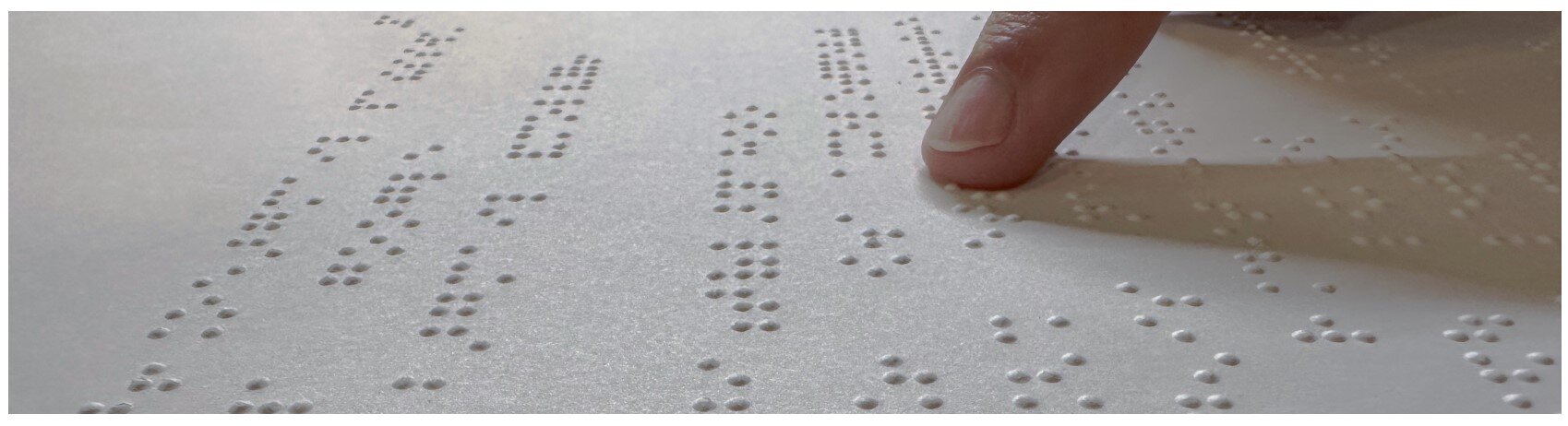
Many of the users surveyed therefore combine password managers with backup strategies. Some even keep password lists in Braille—safely stored, but still analog.
“That’s not inherently insecure,” the researcher explains. “But you have to be aware of who might have access to that list.” Other study participants said they intentionally create simpler passwords so they can enter them without a tool if necessary.
“That contradicts security best practices,” he says, “but above all it shows that systems need to become more reliable.”
What (still) needs to be done—and how to do it better
According to Ponticello, one problem is how password managers generate passwords: Random passwords with special characters are often hard for blind people to find on the keyboard. A better alternative would be passphrases that string whole words together.
“Unfortunately, screen readers then read those passwords letter by letter instead of recognizing the words. The integration hasn’t been thought through to the end,” the researcher says. App stores could also help by clearly labeling a tool’s accessibility and introducing special review categories for affected users where blind and low-vision people can get information directly.
“But the most important thing is: We need accessibility by design—correct labels for buttons, a sensible focus order, and consistent screen reader flows.”
Outlook
Conducting a similar study with German users could be Ponticello’s next step. So far, legislation in the U.S. has been stricter than in the EU. Laws such as the Americans with Disabilities Act have long enforced strict accessibility standards for websites and digital services there. The EU is following suit with the European Accessibility Act (EAA).
In Germany, this led to the Accessibility Strengthening Act, which has been required to be applied since June 28, 2025. “I’m curious to see what effects this will have in the future,” says Ponticello.
Ponticello’s study shows: Accessibility is not a luxury but a basic prerequisite for digital security. Many hurdles—from lack of labeling to fragile integrations—can be solved if platforms, developers, and lawmakers take them seriously.
“We need to adapt the systems, not the people,” the researcher says. “Only then can passwords be used securely by everyone.”
More information:
How Blind and Low-Vision Users Manage Their Passwords. cispa.de/en/research/publicati … nage-their-passwords
Provided by
CISPA Helmholtz Center for Information Security
Citation:
How blind and low-vision users manage their passwords (2025, October 27)
retrieved 27 October 2025
from https://techxplore.com/news/2025-10-vision-users-passwords.html
This document is subject to copyright. Apart from any fair dealing for the purpose of private study or research, no
part may be reproduced without the written permission. The content is provided for information purposes only.











The WIRED Reviews Team has been covering Amazon’s Big Spring Sale since it began at on Wednesday, and the overall deals have been … not great, honestly. So far, we’ve found decent markdowns on vacuums, smart bird feeders, and even an air fryer we love, but I just saw that Cadence Capsules, those colorful magnetic containers you may have seen on your social media pages, are 20 percent off. (For reference, the last time I saw them on sale, they were a measly 9 percent off.)
If you’re not familiar, they allow you to decant your full-sized personal care products you use at home—from shampoo and sunscreen to serums and pills—into a labeled, modular system of hexagonal containers that are leak-proof, dishwasher safe, and stick together magnetically in your bag or on a countertop. No more jumbled, travel-sized toiletries and leaky, mismatched bottles and tubes.

Cadence Capsules have garnered some grumbling online for being overly heavy or leaking, but I’ve been using them regularly for about a year—I discuss decanting your daily-use products in my guide to How to Pack Your Beauty Routine for Travel—and haven’t experienced any leaks. They do add weight if you’re trying to travel super-light, and because they’re magnetic, they will also stick to other metal items in your toiletry bag, like bobby pins or other hair accessories. This can be annoying, especially if you’re already feeling chaotic or in a hurry.
Otherwise, Capsules are modular, convenient, and make you feel supremely organized—magnetic, interchangeable inserts for the lids come with permanent labels like “shampoo,” “conditioner,” “cleanser,” and “moisturizer.” Maybe you love this; maybe you don’t. But at least if you buy on Amazon, you can choose which label genre you get (Haircare, Bodycare, Skincare, Daily Routine). If this just isn’t your jam, the Cadence website offers a set of seven that allows you to customize the color and lid label of each Capsule, but that set is not currently on sale.
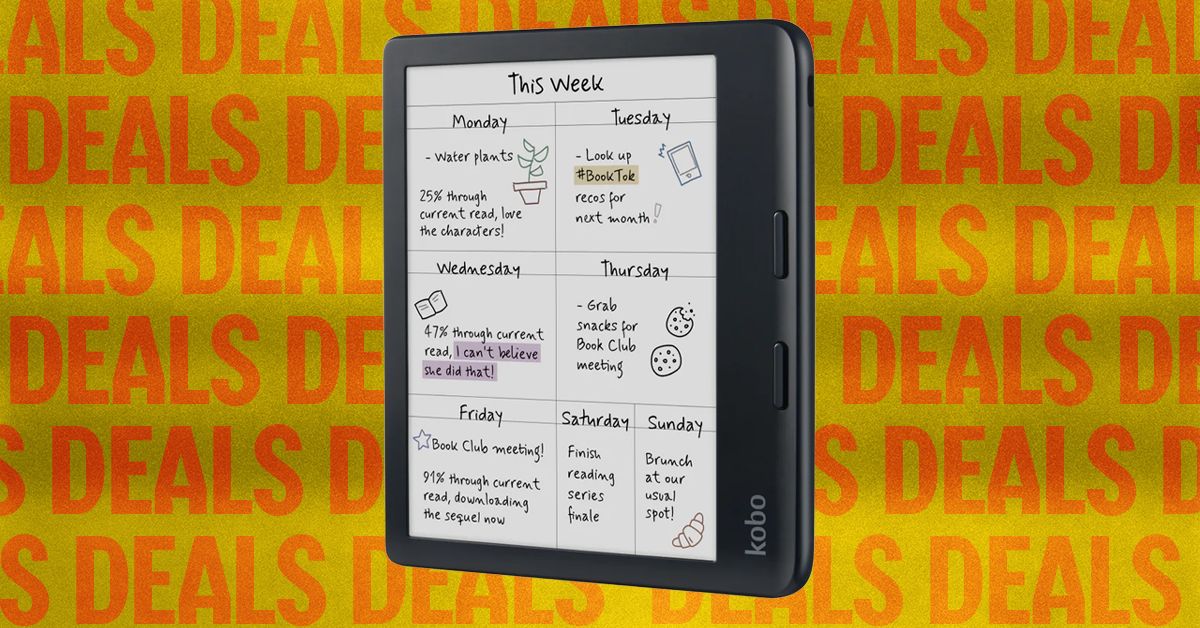
This is the older Kindle Scribe, but the price and features are the best you’ll get, especially when it’s on sale like this. I still reach for this model even though I have the newer third generation, and keep in mind the second generation will also get some of the newer software and experiences over time. With the sale, it’s half the price of the newer model.
If you’re already a Kindle reader and looking to upgrade, it’s likely because you want a new feature like a color screen. While the Kobo above is the better buy, if you want to stay in the Kindle ecosystem but add some color to your books, both the Colorsoft and Colorsoft Signature are on sale.

Amazon
Kindle (2024, 11th Gen)
If you’re looking to spend as little as possible, the basic Kindle (11th generation) is still a great e-reader and is currently under $100. It can do almost everything the other Kindles can (except the Scribe) on a snappy black-and-white screen. It doesn’t have a warm front light either, but it’s still a great purchase for the price.
Power up with unlimited access to WIRED. Get best-in-class reporting and exclusive subscriber content that’s too important to ignore. Subscribe Today.
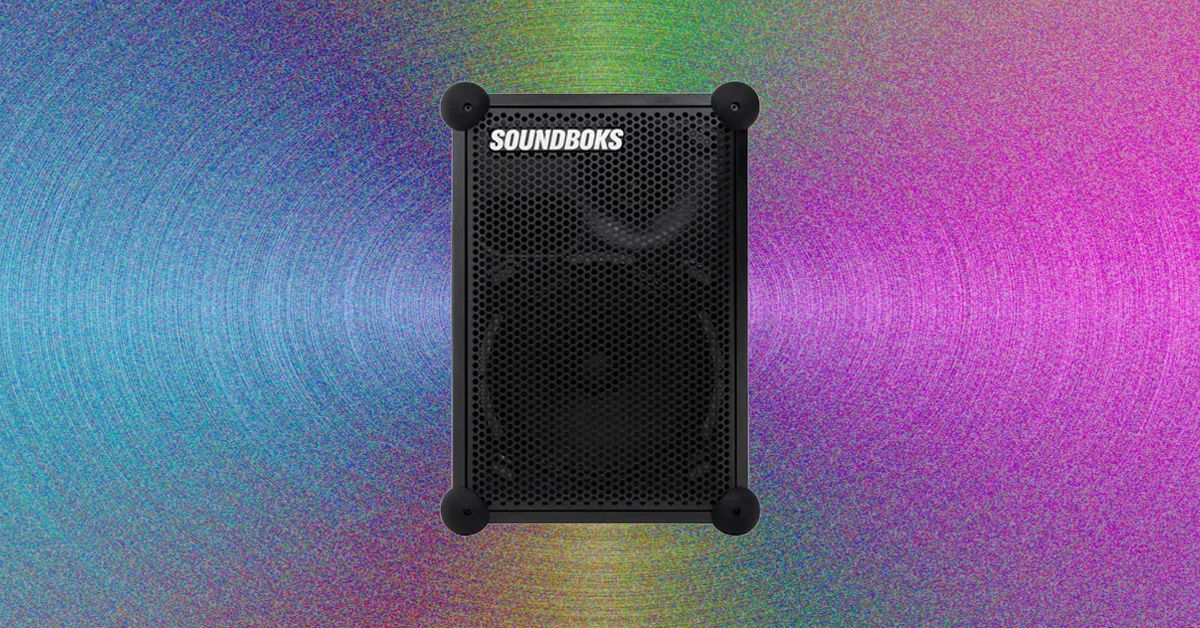
In addition to the rubber balls, there’s a nice physical interface on the side for adjusting volume and pairing multiple Mix speakers together if you have multiple on hand (I was only sent the single mono speaker). Setup involves installing the Soundboks app, pairing to the speaker via Bluetooth on your phone, and picking whatever you want to play. It’s all quick and painless, especially for my first-time pairing with a Samsung Galaxy S24 Ultra.
Otherwise, it’s all very pro audio. Everything reminds me very much of the Peavey PA system I have in my music rehearsal space. The top of the speaker features a built-in carrying handle and a place for a strap (an accessory you have to buy aftermarket, or you can fasten it with any strap you have that fits through the hole). There are also top-hat mounts for the speakers to slide onto traditional PA pole stands, if you wanted to use them in that way at a party or event.
The grill is replaceable, as is the massive internal battery, which means that these things are pretty much indestructible as long as the amp and speakers themselves still work—the battery is the weak point of most portable speakers in 2026.
I bounced it around my yard, dropped it off my patio, and generally beat the crap out of it during my two-week testing period, and the thing just needed a little wipe down and a charge when it ran out of juice. The claimed 40 hours of battery at reasonable volume is accurate, but you’ll get about eight hours at max volume (which is very good for the category). If you need to bring some walk-out music to your kid’s all-day Little League tournament, this a great way to go.
Big Sound
Photograph: Parker Hall
Soundboks calls this speaker midsize, but at 21.4 pounds and the size of a medium-size cooler, I’d still call it a large speaker. That said, the size doesn’t make it any less portable than competitors from JBL and others; you still need a car or cargo ebike to take one of these with you, so what’s a couple inches here or there? The fact that this is a rectangle actually makes it easier to strap down than many others, especially with the holes for the strap and the built-in handle to tie down through.


Amazon’s Spring Sale Is So-So, but Cadence Capsules Are a Bright Spot

The unexpected path that led Morgan and Frankie Price to Arkansas gymnastics

US-Iran mediation: Politicians castigate India’s Jaishankar for spiteful remarks on Pakistan

Sales at US apparel, clothing accessories stores up 4% YoY in Jan 2026

Justice Department Says Anthropic Can’t Be Trusted With Warfighting Systems

March Madness 2026 – How to watch in SA, start time, schedule, TV channel for NCAA championship basketball tournament

-
 Fashion1 week ago
Sales at US apparel, clothing accessories stores up 4% YoY in Jan 2026
-
 Tech1 week ago
Justice Department Says Anthropic Can’t Be Trusted With Warfighting Systems
-
 Sports1 week ago
March Madness 2026 – How to watch in SA, start time, schedule, TV channel for NCAA championship basketball tournament
-

 Fashion1 week ago
Spain’s Inditex FY25 sales rise 3.2% to $46.28 bn amid strong demand
-

 Politics1 week ago
Iran strikes Tel Aviv with cluster-warhead missiles in retaliation of Larijani’s martyrdom
-

 Entertainment1 week ago
Val Kilmer revived 1 year after death through AI
-

 Entertainment1 week ago
With few new leads 45 days after Nancy Guthrie’s disappearance, investigation “becomes much harder,” expert says
-
 Business1 week ago
Brits cashing in jewellery as gold price hits record high