

Business
How nervous are investors about the stock market?

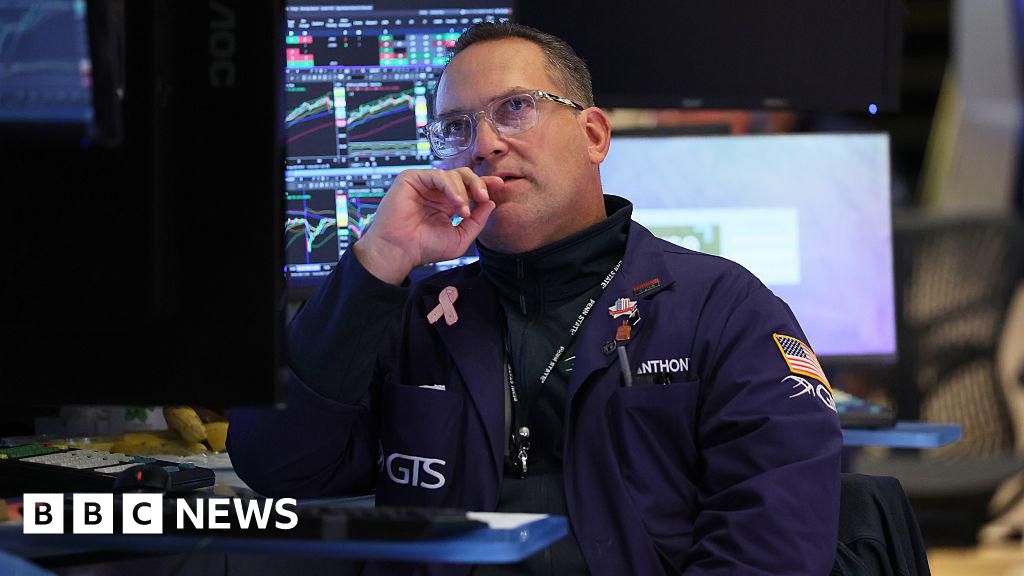
Every week it seems US financial markets are hit by another bout of fear.
The latest worries spread this week from the banking sector in the US, after two regional lenders warned they would be hit by losses from alleged fraud.
But before that, markets swooned over signs of rekindled US-China tensions, as the two superpowers face off over tariffs, advanced technology and access to rare earths.
The bankruptcies of car parts supplier First Brands and subprime car lender Tricolor acted as a trigger for nervous chatter in September.
Over the last month, US shares, which had been climbing since their tariff-induced rout in April, have flattened.
But in many ways the market swings so far – down roughly 3% at the steepest – are not unusual.
Zooming out, the major indexes have still posted gains since the start of the year, with the S&P 500 up roughly 13%. That’s smaller than 2024 but still solid.
“The market has done surprisingly well so far this year … driven by an improvement in corporate profits and the enthusiasm surrounding AI,” says Sam Stovall, chief investment strategist at CFRA Research.
The resilience of the stock market is, ironically, exactly what is driving some of the jitters.
Put simply, when set against other standard metrics like profits, share prices in the US are very high.
Meanwhile, concerns about a possible bubble emerging in the artificial intelligence (AI) industry have generated a steady undercurrent of talk since the start of the year – discussions that have ramped up as analysts struggle to see how the vast sums of money the biggest players are throwing at one another all fit together.
The Bank of England warned recently of “stretched valuations” and rising risk of a “sharp market correction”.
Those concerns were echoed in remarks from JP Morgan Chase boss Jamie Dimon and to some extent US central bank chair Jerome Powell.
The International Monetary Fund was the latest to chime in this week.
“Markets appear complacent as the ground shifts,” it said in its financial stability report, which noted risks from trade tensions, geopolitical uncertainty and rising sovereign indebtedness.
James Reilley, senior markets economist at Capital Economics, said the market falls triggered by the regional banks were a sign of investors alert to risk and moving quickly to reduce exposure amid uncertainty about whether the losses were indicative of wider issues.
But he said the brief nature of the drops showed how quickly such worries could clear.
Many investors remain optimistic, with analysts at firms such as Goldman Sachs and Wells Fargo in recent weeks boosting their forecasts for where the S&P 500 might climb by the end of the year.
David Lefkowitz, head of US equities at UBS Global Wealth Management, said he thought a sharp sell-off was unlikely at a time when growth in the US remains solid and the US central bank is lowering borrowing costs.
He is expecting the S&P 500 to end the year hovering around 6,900 points, about 4% higher than where it sits on Friday.
While he acknowledged the troubles popping up at banks, he noted that the lenders involved have alleged fraud.
He said the overall picture, when looking at default levels, appears healthy, and he saw little risk that demand for AI would suddenly decline, puncturing valuations.
“I’m not saying we’re in a bubble. I’m not saying we’re not in a bubble. The question is what’s going to drive the downside,” he said. “Things don’t usually spontaneously decline.”
A typical bull market – when shares are rising – lasts about four and a half years, said Mr Stovall.
With inflation still sticky, and investors wary of events in Washington, like the government shutdown and Trump administration’s efforts to influence the US central bank, this year’s market rally has been “unloved”, said Mr Stovall.
On the other hand, he noted: “It’s just a matter of time. Corrections and bear markets have not been repealed. They might simply be delayed.”
Business
Top stocks to buy today: Stock recommendations for April 24, 2026 – check list – The Times of India

Stock market recommendations: Bharat Electronics, and Colgate-Palmolive (India) have been recommended as the top stocks to buy today (April 24, 2026) by Bajaj Broking Research. Take a look at the target prices and expected returns:Bharat ElectronicsBuy in the range of ₹ 440.00-450.00
The stock is in structural up trend forming higher high and higher low in all time frame signaling strength and continuation of the uptrend. The entire up move of the last 8 months is in a rising channel as can be seen in the chart highlighting sustained demand at an elevated level.On the smaller time frame, the stock is at the cusp of generating a breakout above the bullish Flag like formation as post a sharp up move in the first 3 weeks of April the stock went into a consolidation phase in the last four sessions. It is seen resuming up move and is at the cusp of generating a breakout above the bullish Flag formation highlighting continuation of the up move and offers fresh entry opportunity.We expect the stock to extend the up move and head towards 495 levels in the coming months being the confluence of the 123.6% external retracement of the previous decline 473 – 400 and the upper band of the rising channel of the last 8 months.Colgate-Palmolive (India)Buy in the range of 2120-2160
The share price of Colgate-Palmolive has generated a breakout above bullish Flag pattern signaling continuation of the up move and offers fresh entry opportunity.We expect the stock to head higher towards 2330 levels in the coming months being the measuring implication of the bullish flag breakout.The daily 14 periods RSI is in buy mode thus supports the positive bias in the stock.(Disclaimer: Recommendations and views on the stock market, other asset classes or personal finance management tips given by experts are their own. These opinions do not represent the views of The Times of India)
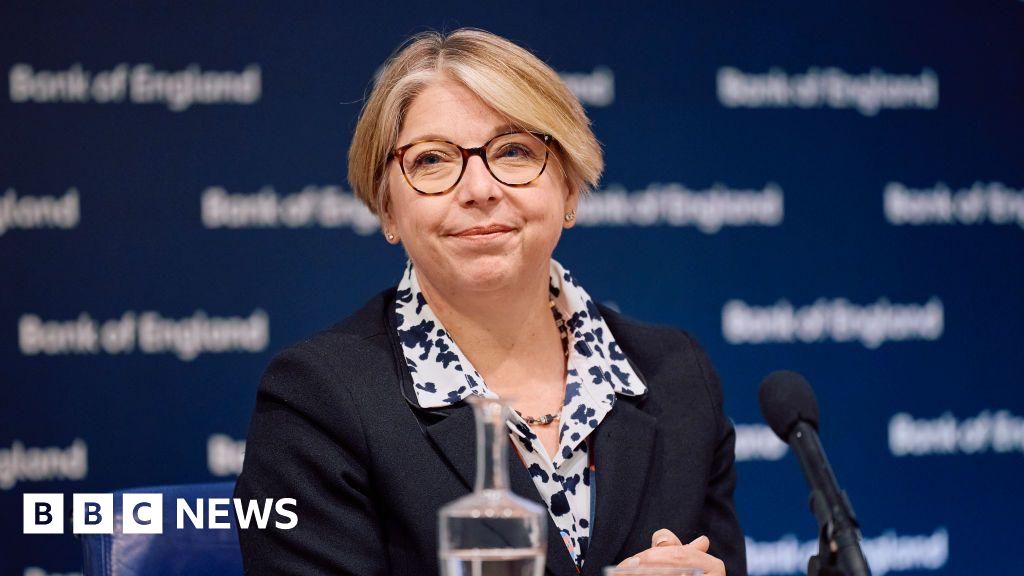
It is unusual for a senior figure at the Bank to be so forthright on market movements.
Source link

Consumer confidence has fallen for the third consecutive month amid household “jitters” over rapid price rises, figures show.
GfK’s long-running consumer confidence index fell four points to minus 25 in April, following falls of two points and three points in March and February respectively.
The deepening concern was driven by perceptions of the UK economy, with a six-point slide in confidence for the next 12 months to minus 43, its lowest level since February 2023.
Confidence in personal finances over the coming year fell five points to minus four – one point lower than this time last year.
The major purchase index – an indicator of confidence in buying big ticket items – held steady, albeit at minus 18 but one point better than last April.
The only measure to improve was the savings index – often an indication that households are concerned about their finances and looking to build contingency funds – which is up five points to 32.
Neil Bellamy, consumer insights director at GfK, said: “Consumers really do have the jitters now.
“It is a year since we last saw a monthly drop of this size, and we have to go back to October 2023 to find the last time consumer confidence was lower.
“Everyone is grappling with rapid price rises, especially at the fuel pumps, which are taking a dent out of household budgets, and people know further price hikes are coming.
“Consumer confidence is deteriorating sharply, with fuel prices and threats of more energy price increases acting as constant reminders of inflation.
“While the Gulf crisis is intensifying pressures, much of the current strain reflects earlier domestic cost increases.
“How long can all this disruption and pain continue?”


UK’s clothing exports down 7.6% to $293 mn in Jan-Feb
Top stocks to buy today: Stock recommendations for April 24, 2026 – check list – The Times of India

Mariska Hargitay expresses love for Christopher Meloni’s ‘Law & Order’ series

-

 Fashion1 week ago
France’s LVMH Q1 revenue falls 6%, shows resilience amid Iran war
-

 Entertainment1 week ago
Is Claude down? Here’s why users are seeing errors
-

 Sports1 week ago
PSL 11: Peshawar Zalmi win toss, opt to field first against Quetta Gladiators
-

 Tech1 week ago
The Deepfake Nudes Crisis in Schools Is Much Worse Than You Thought
-
 Business1 week ago
Standard Life buys rival in £2b deal to create savings giant
-

 Tech1 week ago
CYBERUK ’26: UK lagging on legal protections for cyber pros | Computer Weekly
-

 Fashion1 week ago
Raymond unveils luxury Chairman’s Collection Store in Mumbai
-
 Business1 week ago
PepsiCo earnings beat estimates as North American food business improves