

Business
How online trading apps are draining Pakistanis’ savings | The Express Tribune


KARACHI:
Pakistan’s financial regulators face a growing challenge from the rapid spread of unregulated online investment and trading apps. These apps promise easy profits but often result in financial losses, data theft, and negative impacts on the economy.
The proliferation of such platforms, many operating beyond the oversight of the Securities and Exchange Commission of Pakistan (SECP) and the State Bank of Pakistan (SBP), has raised serious concerns about investor protection and the integrity of the country’s financial system.
“With the increasing penetration of broadband internet service and its users, cybercrimes are on the rise in Pakistan and worldwide, causing monetary losses to consumers and building mistrust about legal digital services,” said Ibrahim Amin, a banking and financial expert.
The case of Ducky Bhai, a popular social media influencer, illustrates the issue vividly. Initially known for his humorous roasting videos, he transitioned to gaming and then family vlogging before venturing into app promotions, including investment and trading apps that turned out to be illegal.
When authorities discovered his involvement in promoting these platforms, he was apprehended. Officials stated that these apps, while appearing to offer investment opportunities, were often thinly disguised betting or gambling services.
According to the SECP, such promotions violate investment laws, particularly those prohibiting advertisers from guaranteeing or implying assured returns. Many influencers, however, continue to promote these apps under the guise of “financial opportunities,” often motivated by affiliate commissions or kickbacks.
This trend reflects a dangerous combination of financial illiteracy and misleading marketing, exposing millions of users to scams and unregulated investment channels.
Crackdown on illegal apps
In a major development, the National Cyber Crime Investigation Agency (NCCIA) recently declared 46 mobile applications and websites, including betting, forex, and online trading platforms, illegal in Pakistan.
The list included popular global names like 1xBet, Aviator, Dafabet, and Bet365. The Pakistan Telecommunication Authority (PTA) subsequently blocked these applications to safeguard users from fraud, data theft, and identity misuse.
Unregulated investment apps continue to attract millions of Pakistani users. The allure lies in their convenience, easy-to-use interfaces, and promises of high returns with minimal effort. “These apps are designed to look simple and exciting – you just download and start earning. But what users don’t realise is that there’s no legal protection if things go wrong,” said fintech analyst Mutaher Khan, Co-Founder of Data Darbar.
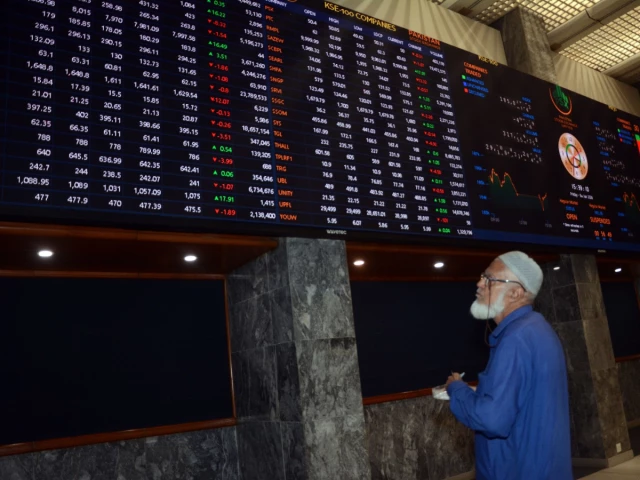
The numbers are staggering. Olymp Trade, for instance, has amassed over 5.6 million downloads in Pakistan. Even if only 5% of these are active users, that still exceeds half the number of investors in the Pakistan Stock Exchange (PSX).
Similarly, IQ Option has been downloaded 3.9 million times in Pakistan, placing the country sixth globally, behind India and Brazil. Binance, the cryptocurrency platform, has recorded 14.2 million downloads from Pakistan since 2017, making the country its second-largest market by downloads after India.
In the finance apps category, the most downloaded app is EasyPaisa with 12.1 million downloads, followed by JazzCash with 10.4 million, and Binance with 5.4 million – despite not being regulated in Pakistan.
In e-commerce, Temu is the most downloaded app with 8 million downloads in its debut year, followed by Daraz with 7.7 million. The irony, experts note, is that Daraz is a regulated platform, while Temu is not registered or regulated in Pakistan, which indicates the state of regulation in the country.
Such popularity reflects both the public’s interest in quick financial gains and the lack of accessible, appealing, and well-marketed regulated investment options. “The cybercrimes could be controlled through raising awareness among users and taking strict action against criminals within and beyond borders,” said Amin.
Deputy Chief of the Citizens-Police Liaison Committee (CPLC) Sindh, Shabbar Malik, said scams have been reported nationwide and, in certain regions, have developed into “organised, patronised systems” that coordinate such activities.
Malik emphasised that tackling the issue requires joint responsibility between the government and the public. “Half the responsibility lies with the authorities, and the other half with citizens. People must be made aware and learn to be smart when using digital devices,” he said.
Experts warn that unregulated investment platforms pose not just individual risks but also macroeconomic threats. Since many of these apps facilitate trading in foreign assets or cryptocurrencies, they contribute to dollar outflows, a serious concern for a country with fragile foreign exchange reserves of less than $20 billion.
“When Pakistanis invest in offshore assets through these apps, it drains dollars out of the system. With reserves hovering around $20 billion, even modest outflows can exacerbate pressure on the rupee and the balance of payments,” explained an economist at a Karachi-based think tank.







Two ads promoting British beef and milk have been banned after television presenter and environmental campaigner Chris Packham complained that they misled consumers about the products’ carbon footprints.
Both ads for the Agriculture and Horticulture Development Board’s (AHDB) Let’s Eat Balanced campaign used the carbon footprint of British beef and milk to promote the products, firstly stating: “British beef not only tastes great, but has a carbon footprint that’s half the global average*.”
The asterisk linked to text that stated: “Full lifecycle emissions of CO2 eq (carbon dioxide equivalent) per kg of beef.”
The ad for milk stated: “British milk not only tastes good, but is also produced to world-class standards, and has a carbon footprint a third lower than the global average.”
Packham complained to the Advertising Standards Authority (ASA) that the ads, and specifically the carbon footprint claims, were misleading as they did not reflect the full environmental impact of British meat and dairy.
The AHDB said the ads’ mention of carbon emissions would be understood in relation to the environmental impact of beef and milk that occurred between the “cradle-to-retail” stages.
But the ASA said the average consumer “being reasonably well-informed, observant and circumspect” would understand the claims to apply beyond the retail stage and include actions such as cooking and wastage.
The ASA said: “While we acknowledged the potential difficulties in producing post-retail emissions data, the claims in the ads suggested those emissions were included and we therefore expected the evidence provided to also include them.
“We therefore concluded that the evidence presented was insufficient to support the full life-cycle claims in the ads, which was how the average consumer was likely to interpret them.
“We reminded AHDB that environmental claims should be based on the full life cycle unless the ad stated otherwise.”
AHDB’s director of communications and market development, Will Jackson, said: “Let’s Eat Balanced is doing what it was designed to do, providing clear, factual, evidence-led information about British food, nutrition and farming standards.
“Since the investigation began, we have conducted independent consumer research which found that the majority of respondents interpreted these adverts as relating to the production phase only, from farm to retail.
“This research provides important insight into consumer understanding and supports our belief that consumers were not misled by the information we shared in these two specific adverts.”
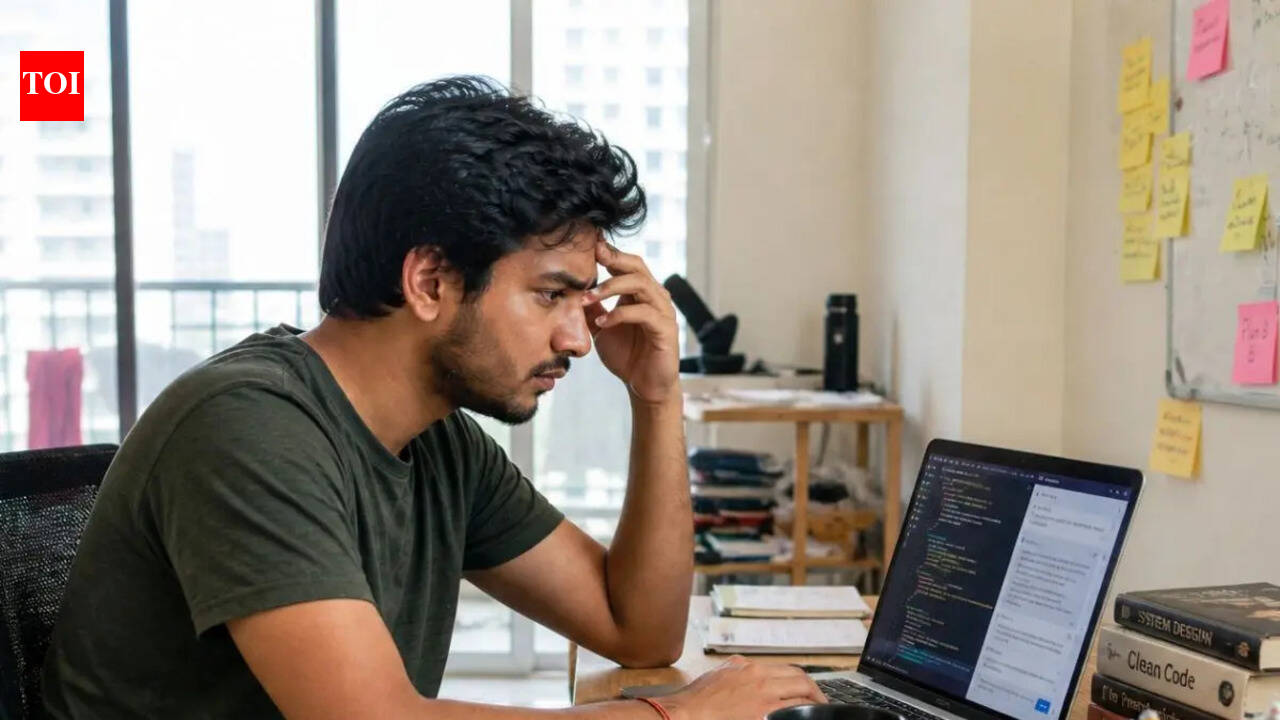
BENGALURU: India’s Gen Z workforce is embracing what experts describe as “portfolio careers” – balancing multiple professional identities and income streams simultaneously. New research from LinkedIn shows that 75% of Gen Z entrepreneurs in India now manage multiple income streams, significantly higher than the 62% among Gen X entrepreneurs. The findings point to a growing preference among younger professionals for flexibility, autonomy and diversified sources of income. “We’re also seeing the rise of the ‘portfolio era’, with more professionals creating multiple income streams and redefining what a career can look like. This shift is making entrepreneurship more accessible than ever before,” said LinkedIn India country manager Kumaresh Pattabiraman.Rather than depending on a single full-time role, many professionals are simultaneously building businesses, freelancing, consulting, creating online content and monetising specialised skills through digital platforms. The trend comes amid a broader rise in entrepreneurial activity in India. LinkedIn recorded a 104% year-on-year increase in members adding “Founder” to their profiles – the highest growth among all global markets.AI is also emerging as a major enabler of this shift. The report found that 85% of Gen Z entrepreneurs consider AI and digital tools important to their business operations.

Sam Altman said Elon Musk tried many times for total control of OpenAI, which he’s now suing.
Source link


India’s apparel sourcing window reopens—for now

Will LeBron James retire after current season?

South Korea reviews phased support for Strait of Hormuz security efforts

-

 Tech1 week ago
DHS Demanded Google Surrender Data on Canadian’s Activity, Location Over Anti-ICE Posts
-
 Business1 week ago
Heineken plans huge investment in hundreds of UK pubs ahead of World Cup
-

 Tech5 days ago
A new frontier: Identity stack evolves for agentic systems | Computer Weekly
-

 Tech4 days ago
‘Orbs,’ ‘Saucers,’ and ‘Flashes’ on the Moon: Pentagon Drops New UFO Files
-
 Business1 week ago
India among most resilient large EMs, better placed for future global shocks; policy reforms & strong buffers help: Moody’s – The Times of India
-

 Tech5 days ago
What Microsoft Executives Really Thought About OpenAI in 2018
-

 Fashion5 days ago
New orders in German manufacturing up 5% MoM in Mar 2026: Destatis
-

 Sports5 days ago
Shaheen Afridi achieves landmark feat during opening Test against Bangladesh