

Business
How packaging and logistics companies are automating their warehouses


DHL Autonomous Robot at work.
Source: DHL
Workers at DHL Group used to walk close to a half marathon each day just to classify, pick and move items across massive warehouses.
Now, their distance and efforts are greatly reduced by autonomous mobile robots that can unload containers for the package delivery and supply chain management company with a speed of up to 650 cases per hour.
“That is what we look forward to, and where we’ve been successful in deploying technology at scale over the last five years, going from when we started in 2020 with 240 projects, and now we’re up to 10,000 projects,” Tim Tetzlaff, DHL’s global head of digital transformation, told CNBC.
The company’s autonomous innovations have accelerated processes at 95% of DHL’s global warehouses. Item-picking robots in one warehouse have increased units picked per hour by 30%, while autonomous forklifts at that same warehouse have contributed a 20% increase in efficiency, the company said.
Tetzlaff said automation is important for the company because it’s such a labor-intensive business.
“We still have the ambition to grow our business even further, but if you look at where these distribution centers should be located … it’s typically very tough to find additional labor or even additional spaces just to build these warehouses there,” he said.
DHL is one of multiple fulfillment companies moving toward automation and leveraging artificial intelligence as the industry works toward greater efficiency.
On an earnings call with analysts in late January, United Parcel Service CEO Carol Tomé said the company deployed automation in 57 buildings in the fourth quarter, bringing its total to 127 automated buildings, with plans for 24 more in 2026.
“This year, we plan to further automate our network and as a result, we expect to increase the percentage of U.S. volume we process through automated facilities to 68% by the end of the year, up from 66.5% at the end of 2025,” she said.
Similarly, FedEx has said it sees automation as an opportunity to enhance its workers’ jobs, installing robotic arms to help process small packages at its Memphis hub and working with AI company Dexterity to leverage robots for loading boxes into containers. Its “Network 2.0” initiative is working to increase the efficiency of its package processes.
The company recently announced a partnership with Berkshire Grey to launch a fully autonomous robot to unload containers and optimize operations.
It estimates that the global warehouse automation market is expected to exceed $51 billion by 2030.
“We now have about 24% of our eligible average daily volume flowing through 355 Network 2.0-optimized facilities,” CEO Raj Subramaniam said on a call with analysts in December.
A human fleet
A worker unloads packages from a FedEx truck in San Francisco, California, US, on Wednesday, Dec. 17, 2025.
David Paul Morris | Bloomberg | Getty Images
With the rise of automation, companies are weighing the balance between their human workers and their technological innovations.
UPS has announced layoffs north of 75,000 over the past year as the company focuses on efficiency and cuts down its partnership with Amazon amid a multiyear turnaround plan.
The company also said it closed 93 buildings in 2025 and plans to shutter at least 24 buildings in the first half of 2026.
“What’s happening is you’re seeing a cascading effect of sites being closed that are legacy conventional facilities, a lot of labor required to run those facilities, to a much more nimble, quicker, automated, consolidated facility,” Executive Vice President Nando Cesarone said on the January call.
In a statement to CNBC, a UPS spokesperson said the company is focused on making jobs easier for its employees and that the AI and robotics take on repetitive tasks that “make us more efficient in other functions.”
FedEx did not respond to requests for comment on how the company is balancing its workforce and technology. Subramaniam said on the most recent earnings call that the Network 2.0 initiative has resulted in “structural cost reductions” but the company has not publicly disclosed job cut amounts.
Teamsters, the union representing workers from many of the major packaging companies, said it will remain focused on ensuring its team members have a voice at the table when it comes to technology.
“We never want to get in the way of technology and its development, but all of that, it must support workers, and it cannot work against them ever,” spokesperson Lena Melentijevic told CNBC. “It’s the workers who are the backbone of each one of these companies and who are essential to their success, and we are here to advocate for them and hold companies accountable.”
DHL’s Tetzlaff said the company wants its automation to complement human labor instead of replacing it altogether. Regardless of how much DHL’s technology improves, Tetzlaff said the dexterous tasks of packaging and shipping remain in the hands of the employees.
“In the time where we deployed 8,000 collaborative robotics into our operation worldwide, we still hired 40,000 people,” he said.
The biggest area where DHL has deployed its robotics is in item picking, with more than 2,500 robots using trained arms to select items for packages. This past holiday season, to keep up with the Black Friday and Christmas demand, the company added 30% capacity to its robotic fleet.
“There’s an advantage for us as a company, having a great human fleet of workers that is motivated and likes the job, but complementing this with a robotic fleet that we can scale up and down and have that flexible stability to deal with change, the peaks throughout the year, be it bigger changes like Covid, be it [customer] profile changes and so on,” he said.
The path forward for investment
DHL Autonomous Forklift at work.
Source: DHL
Still, it’s unlikely there will be a near future in which warehouses are full of humanoid robots, according to supply chain expert and Accenture logistics and fulfillment lead Benjamin Reich.
Humanoid robots have been gaining intense popularity as tech companies innovate human-like machines, with Nvidia CEO Jensen Huang saying he believes the innovation is fast moving. At the January CES trade show, Google announced a partnership with Boston Dynamics, the same company working with DHL, to augment the tech company’s new robot named Atlas.
But Reich said among his clients, he’s seeing that “humans are still in the lead.”
“We are also not seeing a replacement of jobs, but a shifting that you’re more looking for skill sets on the market to serve the gap between degree of automation, operational tasks as well as organizational,” Reich told CNBC.
The automation is angled toward specific jobs, he added, with robots taking over repetitive tasks and companies instead “redirecting” their hiring toward technical roles instead of eliminating job growth altogether.
Reich said the industry is seeing rising investments into automation, with the biggest gains coming not from replacing people, but through increasing the efficiency of the supply chain and warehouse execution processes.
There are also factors in the broader industry that are impacting the workforce, according to Ronny Horvath, the transportation and logistics lead at Accenture. There’s a shortage of skilled workers who have both the manual skills and the organizational skills needed for the sector, and there’s also competition among companies for warehouse personnel based on pay, benefits, lifestyle and more.
“So automation can also help, not replacing but augmenting that gap, that void, that has been left by just not getting the workers that you have today,” Horvath said. “And we see a lot of clients, they have an automation or robotic strategy … but they still have the plans to hire human workers as well.”
Horvath added that the industry is reaping the rewards of its new technology. He’s seen companies able to adjust to deliver on high demand, increase efficiency and work toward more automated processes to keep up with warehousing.
According to an Accenture study from March, 51% of factories globally expect to have fully automated warehouses by 2040, and 70% of transportation logistics executives treat autonomous supply chains as a top investment priority.
“There’s almost no autonomous structure existing at the moment,” Horvath said. “So most or some of these clients are starting from scratch, and this will take time until these investments are done and until they also reap the benefits out of it for all those areas.”


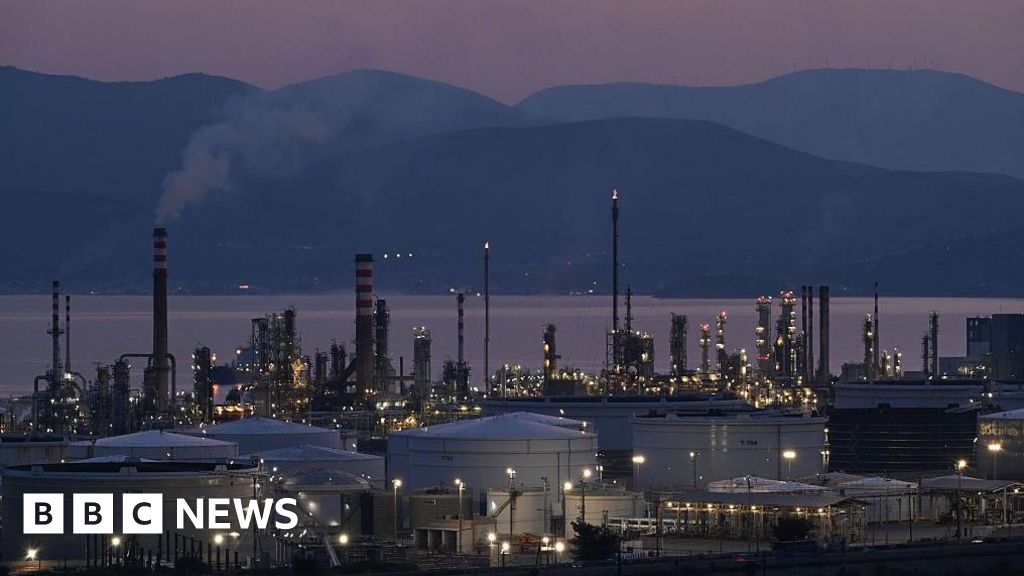
The US-Israel Iran war has halted almost all traffic in a key waterway and the price Brent crude has surged.
Source link

Crunch talks between resident doctors and the Government are set to continue in a bid to avert strike action.
Sir Keir Starmer has given the resident doctors committee of the British Medical Association (BMA) a deadline to reconsider a deal on pay and jobs which includes an offer of thousands of extra NHS training posts.
It is understood the proposal will be removed from the deal if resident doctors in England press ahead with a six-day strike from April 7 in a row over jobs and pay.
Dr Jack Fletcher, chairman of the resident doctors committee of the union, said: “It is wrong for Government to withhold desperately-needed jobs as part of negotiating tactics.
“Anyone who works in the NHS knows that patients need these 4,000 jobs created as soon as possible.
“We made that very clear to Government in our meetings today.
“We are not interested in arbitrary deadlines – we will be looking to get this dispute ended right up to the last minute.
“We believe there is a deal there to be done if Government is willing to withdraw the changes it made at the last minute that reduced the funding for pay rises. Talks continue.”
It comes as senior medics announced they were escalating their disputes with the Government.
Consultants and other senior doctors are to be balloted on industrial action after ministers announced they would be getting a 3.5% pay award.
Simultaneous ballots of consultants and specialist, associate specialist and specialty (SAS) doctors will run from May 11 until July 6.
Addressing resident doctors, Prime Minister Sir Keir Starmer wrote in The Times: “The truth is this: no-one benefits from rejecting this deal.
“Resident doctors will be worse off. Instead of improved pay, progression and support, they will receive the standard pay award this year, with none of the reforms that would have strengthened their working lives.”
The deal sets out a minimum of 4,000 new additional specialty posts to be delivered over the next three years.
NHS England boss Sir Jim Mackey confirmed the offer to expand training places will “come off the table” if an agreement is not reached.
The walkout, which is due to run from 7am on April 7 until 6.59am on April 13, will be the 15th round of strikes by resident doctors in England since 2023.
In a letter to health leaders, Mike Prentice, national director for emergency planning at NHS England, wrote: “We expect this round to be challenging as there is a shorter notice period, bank holidays within the notice period and the action itself falling during the Easter holidays.
“This will represent a significant strain on staffing resources to provide safe cover.”
Business
Iran oil returns: India set to receive first cargo in 5 years, tanker heads to Gujarat – The Times of India

India is set to receive its first shipment of Iranian crude oil since 2019, with a tanker carrying 600,000 barrels of oil en route to Gujarat following a temporary sanctions waiver by the US, according to PTI.Ship-tracking data indicates that the vessel Ping Shun is headed towards Vadinar port, marking a potential revival of Indo-Iran oil trade after nearly five years.“The Indo-Iranian oil trade has flickered back to life. Following the US administration’s decision to grant a 30-day window for Iranian oil “on the water” due to regional conflict, the vessel Ping Shun is now en route to Vadinar (in Gujarat) with 600,000 barrels of crude. This is the first such delivery since May 2019 and comes at a critical time for Indian refiners facing tightening inventories,” said Sumit Ritolia, Lead Research Analyst, Refining and Modelling at Kpler.The development follows Washington’s decision earlier this month to allow a 30-day window for the purchase of Iranian oil already at sea, aimed at easing global oil prices amid the ongoing US-Israel conflict with Iran. The window is set to expire on April 19.While the buyer of the cargo remains unidentified, Vadinar houses a 20 million tonnes per annum refinery operated by Rosneft-backed Nayara Energy and also serves as a landing point for crude supplies to inland refineries such as BPCL’s Bina unit.India’s oil ministry has so far maintained that any decision to resume imports from Iran will depend on techno-commercial viability.Before sanctions were tightened in 2018, India was among the largest buyers of Iranian crude, importing both Iran Light and Iran Heavy grades due to refinery compatibility and favourable pricing terms.Imports ceased in May 2019 after US sanctions were reimposed, with India shifting to alternative suppliers including the Middle East and the US. At its peak, Iranian crude accounted for 11.5 per cent of India’s total imports.India had imported about 518,000 barrels per day (bpd) of Iranian oil in 2018, which declined to 268,000 bpd between January and May 2019 during a sanctions waiver period before dropping to zero thereafter.“The Aframax Ping Shun (IMO 9231901) loaded with Iranian crude oil from Kharg Island in early March has emerged as the first vessel observed signalling a destination of Vadinar, India since May 2019, following sanction reimposition on Iranian oil by the first Trump administration,” Ritolia said.The tanker is estimated to have loaded around 600,000 barrels from Kharg Island around March 4 and is expected to reach Vadinar on April 4.An estimated 95 million barrels of Iranian oil are currently stored on vessels at sea, of which around 51 million barrels could be supplied to India, while the rest may be directed to China and Southeast Asian markets.However, payment mechanisms remain uncertain as Iran continues to be excluded from the SWIFT global banking system, complicating international transactions.Earlier, payments were routed in euros through Turkish banks, but that channel is no longer available following renewed sanctions restrictions.Iran was first disconnected from SWIFT in 2012 due to EU sanctions over its nuclear programme, with further disruptions in 2018 after the US reimposed sanctions, limiting its ability to receive payments and access foreign currency reserves.


Wrigley Field to host Big Ten/SEC volleyball doubleheader

Romelu Lukaku facing disciplinary action after missing Napoli training

Crew that flew Apache helicopters near Kid Rock’s house suspended from flying

-

 Politics1 week ago
Afghanistan announces release of detained US citizen
-

 Sports1 week ago
Broadcast industry CEO says consolidation is ‘essential’ to compete for NFL soaring media rights prices
-

 Entertainment1 week ago
UN warns migratory freshwater fish numbers are spiralling
-

 Tech1 week ago
Can a Home Appliance Fix the Problem of Soft-Plastic Waste?
-
 Business1 week ago
Property Play: Home flippers see smallest profits since the Great Recession, real estate data firm says
-
 Business1 week ago
Gold prices soar in Pakistan – SUCH TV
-

 Fashion1 week ago
ICE cotton slips on weaker crude, profit booking
-
 Business1 week ago
More women are entering wealth management, but few are in advisory roles, study finds